### A Past Written on Water
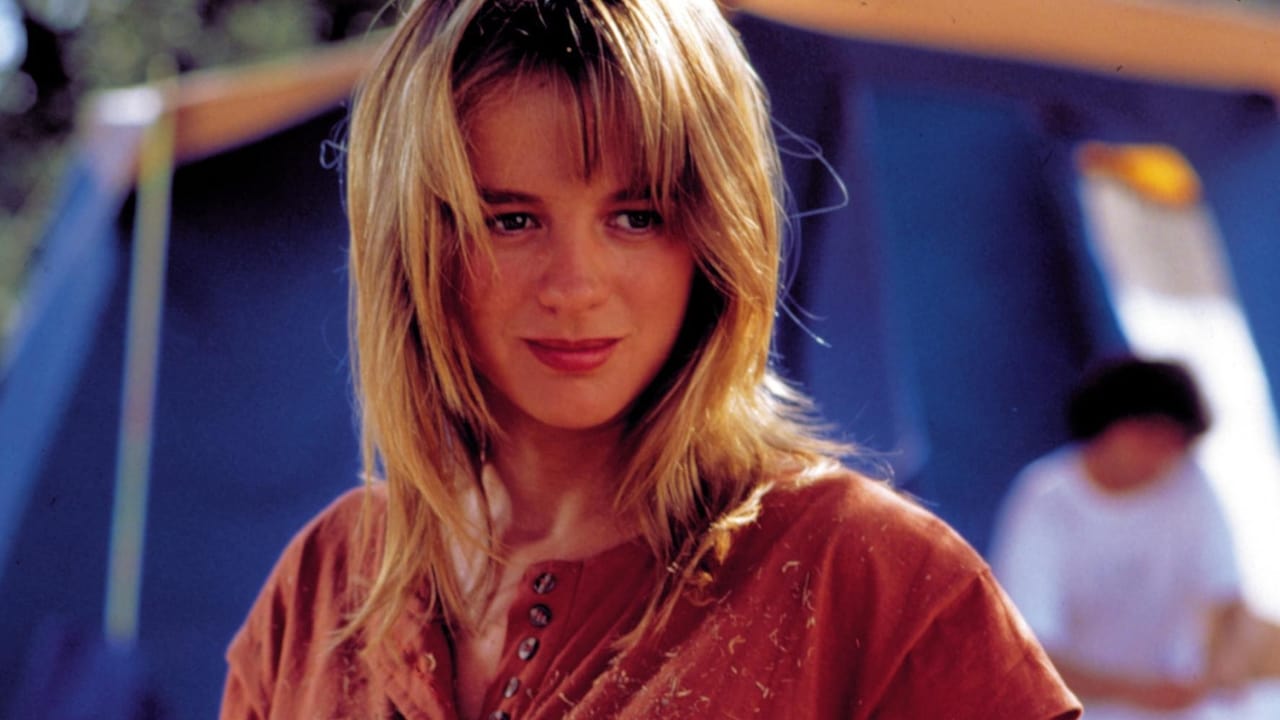
What if you found someone washed ashore, seemingly stripped bare of memory, and decided then and there to invent a past for them? Not just any past, but one intricately woven with your own desires, fears, and fantasies. This isn't the setup for a simple amnesia thriller; it's the unsettling, dreamlike premise of Julio Medem's 1993 film, La Ardilla Roja (The Red Squirrel), a movie that burrowed its way under my skin back in the days when the foreign film section of the local video store felt like uncharted territory, promising mysteries far stranger than anything playing at the multiplex. Seeing that distinctive Fox Lorber VHS box often meant you were in for something… different. And The Red Squirrel certainly delivered on that promise.
### The Accidental Creator
The film opens with Jota (Nancho Novo), a musician contemplating suicide on a lonely bridge. His despair is interrupted by a motorcycle crashing nearby, leaving its rider, a young woman (Emma Suárez), unconscious and suffering from profound amnesia. In a moment of impulsive, almost desperate invention, Jota tells the hospital staff they are lovers, christening her "Lisa" – the name of his recently departed girlfriend. From this ethically dubious act springs a bizarre, increasingly complex relationship as Jota spirits "Lisa" away to The Red Squirrel campsite, a secluded haven where he hopes to keep her isolated while constructing her (and perhaps his own) reality.
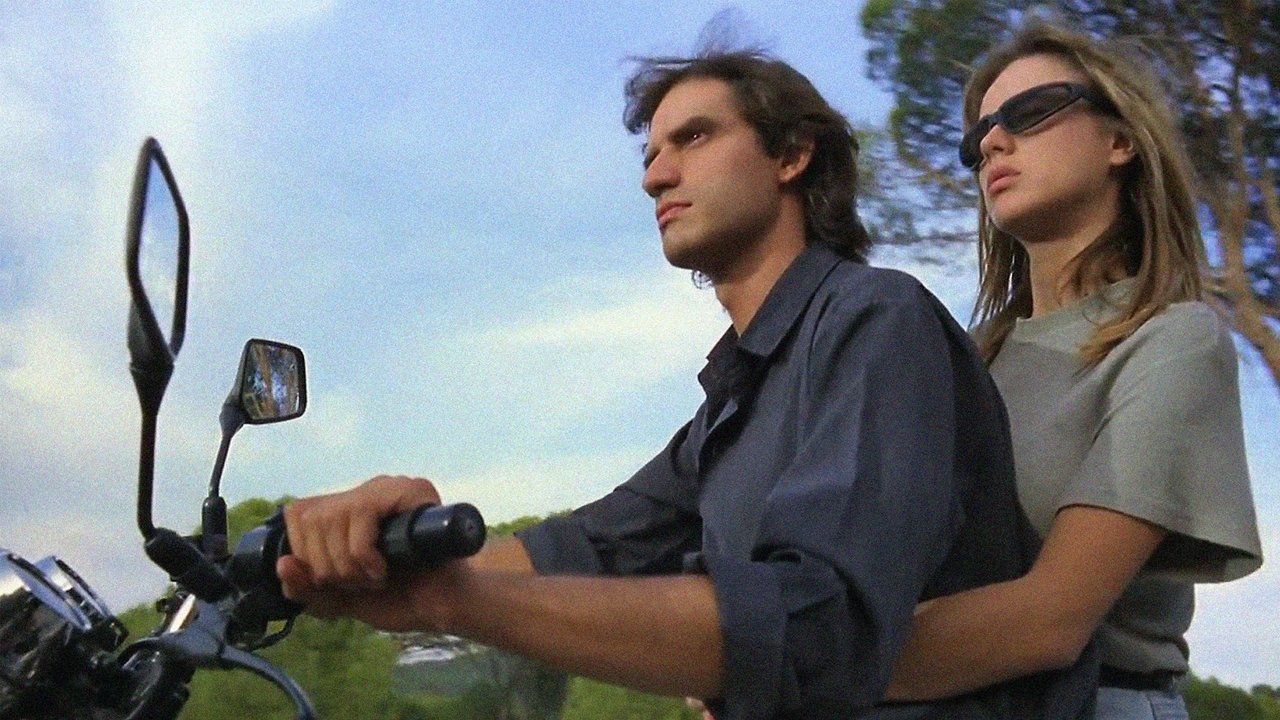
Nancho Novo navigates a treacherous path here. Jota is manipulative, obsessive, fundamentally dishonest. Yet, Novo imbues him with a palpable loneliness and a strange sort of desperate hope that makes him compelling, even if deeply flawed. You watch him, not necessarily rooting for him, but fascinated by the sheer audacity of his gamble. It's a performance that relies on subtle shifts in expression, revealing the cracks in the façade he’s so painstakingly building. Does his desperation excuse his actions? The film wisely leaves that uncomfortable question hanging in the air.
### The Blank Slate Who Wasn't
Opposite him, Emma Suárez, who was rapidly becoming one of Spain's most compelling actresses following films like Vacas (also directed by Julio Medem just a year prior in 1992), is simply captivating. As the amnesiac Lisa (or is she Sofía?), she embodies a vulnerability that slowly, almost imperceptibly, gives way to glimmers of awareness, flashes of a past Jota couldn't possibly know. Suárez masterfully portrays the confusion, the tentative trust, and the dawning suspicion. Her performance is the film's anchor, grounding the often surreal narrative in genuine human emotion. Watching her piece together fragments, both real and imagined, is the core tension of the story. Is she truly a blank slate, or is something far more complex stirring beneath the surface?
Medem, known for his visually rich and often non-linear storytelling (a style he'd refine further in later works like Lovers of the Arctic Circle (1998)), uses the campsite setting brilliantly. It becomes a microcosm, a slightly unreal bubble where Jota's constructed narrative can initially thrive, away from the prying eyes of the real world. The cinematography captures both the beauty and the claustrophobia of their enforced intimacy, using water, reflections, and the natural landscape to hint at hidden depths and submerged truths. This wasn't a low-budget affair, reportedly costing around $1.5 million USD (a decent sum for Spanish cinema then), and it shows in the assured visual style.
### Twists in the Woods
Of course, reality inevitably intrudes. The arrival of another couple (María Barranco and Karra Elejalde) at the campsite, along with the lingering shadow of Lisa/Sofía’s actual past (personified by a menacing figure played by Carmelo Gómez), threatens to unravel Jota's elaborate fiction. Medem masterfully tightens the screws, blending psychological thriller elements with moments of dark humor and surreal imagery (the titular red squirrel itself becomes a recurring, enigmatic motif).
It's fascinating to consider how Medem developed this story. He reportedly conceived the initial idea quickly but spent considerable time layering the psychological complexities and narrative twists. The film screened to considerable acclaim at the Cannes Film Festival's Directors' Fortnight in 1993, cementing Medem's reputation as a distinctive new voice in European cinema. It didn't achieve massive crossover success in the US, remaining more of a cult discovery, the kind of film passed between friends with a knowing whisper: "You have to see this."
The narrative isn't always straightforward, and its deliberate ambiguity might frustrate viewers seeking easy answers. Some plot developments stretch credulity, existing more in the realm of psychological fable than strict realism. But perhaps that's the point. The film feels less concerned with what happened and more with why – why we tell stories, why we cling to illusions, and how memory shapes (or fails to shape) identity. Remember how finding a film like this on VHS felt like uncovering a secret language? The Red Squirrel speaks that language fluently.
Rating: 8/10
This score reflects the film's undeniable power and originality, anchored by stellar performances from Suárez and Novo, and Medem's confident, atmospheric direction. It's a challenging, sometimes unsettling watch that doesn't offer neat resolutions, which might be a drawback for some but is integral to its strength. It earns its place as a standout piece of 90s Spanish cinema – a compelling, twisty psychological drama that lingers long after the tape clicks off. It forces you to ponder the stories we tell ourselves, and the ones we desperately wish were true.