Long before the term "toxic workplace" saturated our feeds, there was Buddy Ackerman. And if you stumbled upon George Huang's searing 1994 indie Swimming with Sharks nestled on the shelf of your local video store, perhaps tucked between bigger-budget studio comedies or thrillers, you likely weren't prepared for the sheer, unadulterated venom it contained. This wasn't just a dark comedy; it felt like witnessing a primal scream from the lowest rungs of the Hollywood ladder, a feeling that lingers long after the tape finished rewinding.

### Welcome to the Shark Tank
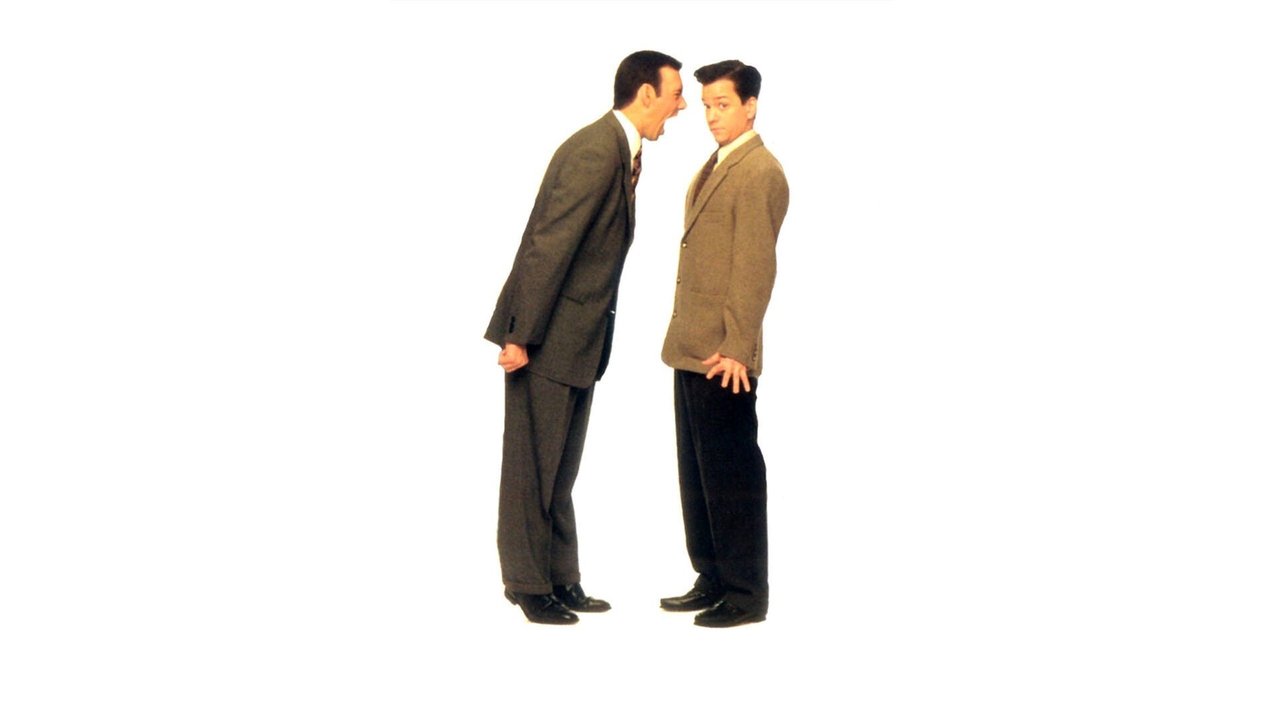
The premise is deceptively simple: Guy (Frank Whaley), a bright-eyed, aspiring screenwriter, lands the seemingly dream job as personal assistant to Buddy Ackerman (Kevin Spacey), a monstrously powerful movie executive at Keystone Pictures. Guy believes this is his foot in the door, his chance to learn from the best and eventually get his own script produced. What he finds instead is a daily crucible of psychological torture, public humiliation, and soul-crushing demands. Buddy isn't just a difficult boss; he's a predator who seems to feed on the fear and ambition of those beneath him. He embodies a certain kind of power – capricious, cruel, and utterly dehumanizing. Doesn't that kind of casual workplace cruelty, magnified through the lens of Hollywood ego, feel disturbingly familiar even decades later?
### A Masterclass in Monstrosity
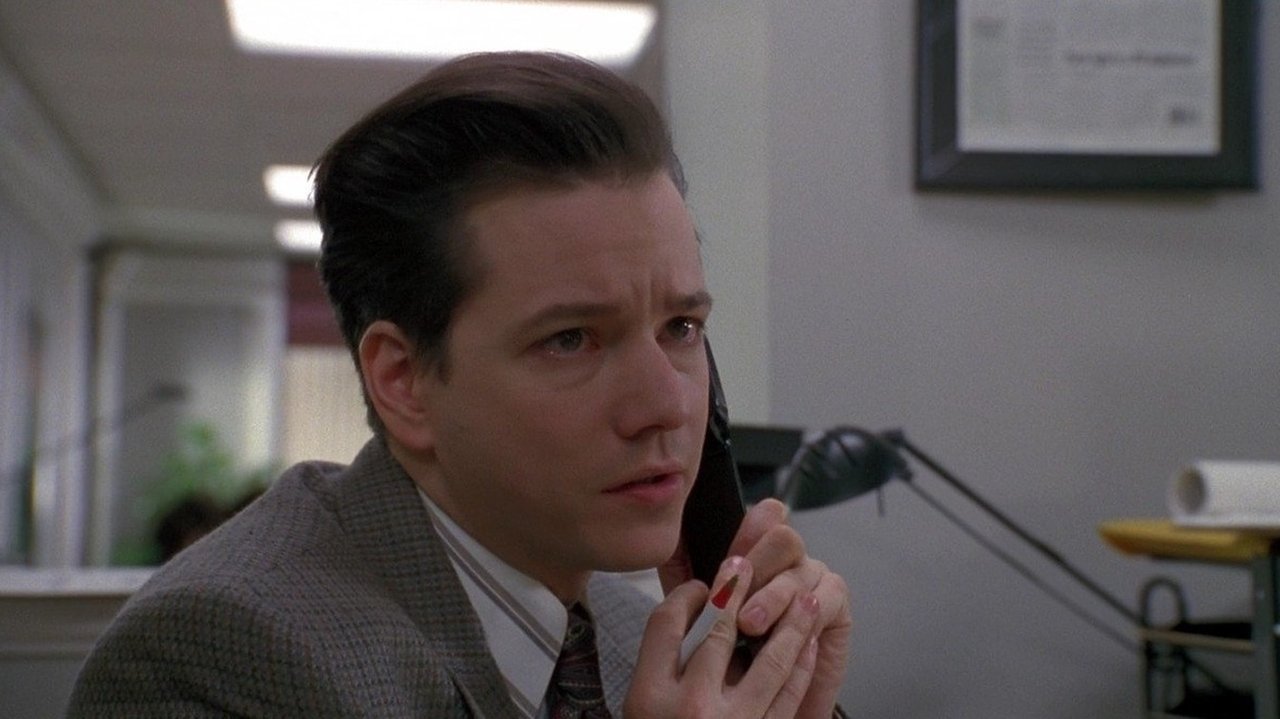
Let's be blunt: Kevin Spacey's performance as Buddy Ackerman is the stuff of legend, and rightly so. It's a hurricane of calculated cruelty, volcanic rage, and chillingly insincere charm. Spacey doesn't just play a bad boss; he crafts a portrait of profound insecurity masked by absolute power. The way he savors each verbal barb, the sudden shifts from faux-civility to screaming invective – it’s mesmerizing and terrifying in equal measure. Watching him meticulously dress down Guy over the precise type of sweetener for his coffee ("Equal! Equal! Equal!") isn't just darkly funny; it's a masterclass in demonstrating dominance through minutiae. What makes Buddy truly terrifying is the flicker of calculation in his eyes; this isn't just mindless anger, it's weaponized abuse deployed with surgical precision. This role undoubtedly paved the way for Spacey's later acclaimed turns, showcasing his incredible range long before The Usual Suspects (1995) or American Beauty (1999).
Opposite this force of nature, Frank Whaley delivers a performance that’s crucial to the film’s success. He perfectly captures Guy’s initial wide-eyed optimism curdling into exhausted cynicism and, eventually, simmering rage. We see the light drain from his eyes with each fresh humiliation. Whaley makes Guy’s journey relatable, even as the plot takes increasingly dark turns. He’s the audience surrogate, enduring the unendurable, forcing us to question how much abuse someone can take before they snap. And Michelle Forbes as Dawn Lockard, a savvy producer navigating the same treacherous waters, adds another layer of complexity. She’s pragmatic, ambitious, and perhaps possesses her own brand of ruthlessness necessary for survival in Buddy's world. Her dynamic with both Guy and Buddy complicates the simple victim/oppressor narrative.
### Straight from the Assistant's Desk
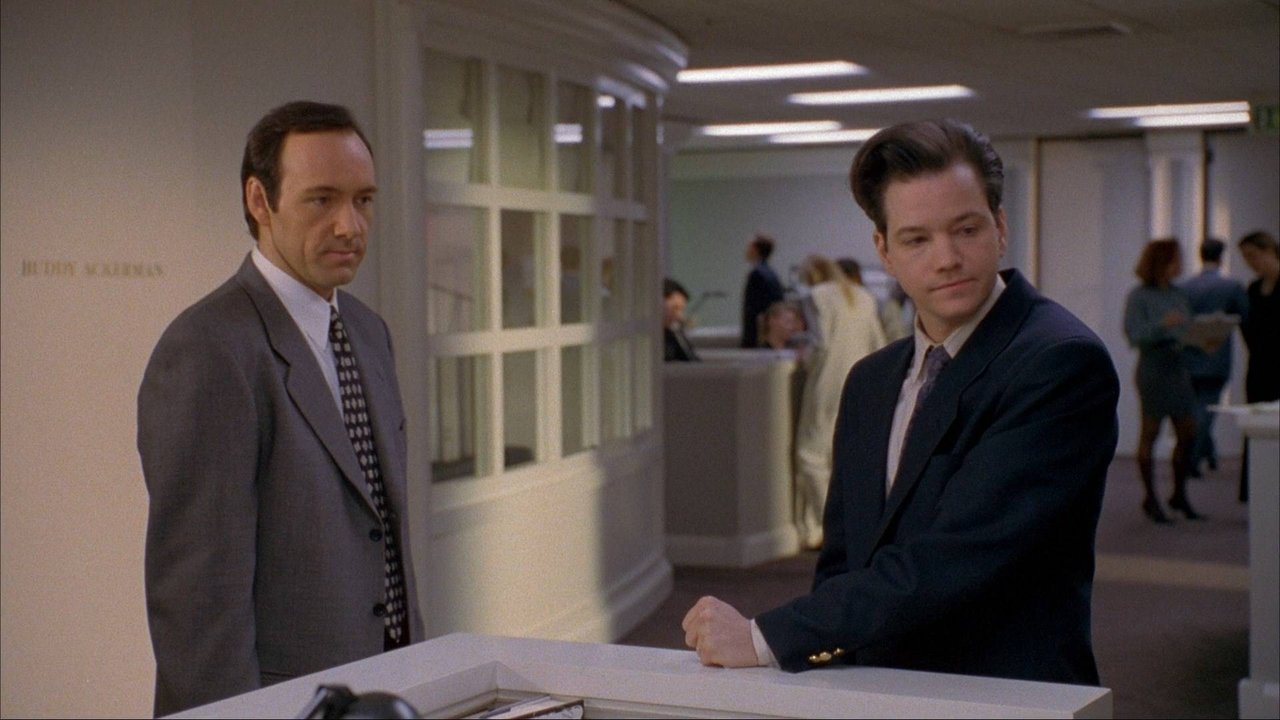
One of the reasons Swimming with Sharks hits so hard is its perceived authenticity. Writer-director George Huang, in his feature debut, famously drew upon his own experiences working as an assistant for powerful Hollywood figures – rumors often pointed towards stints with Barry Josephson and, perhaps more infamously, Joel Silver (producer of hits like Lethal Weapon (1987) and Die Hard (1988)). Huang reportedly wrote the sharp, acidic script in less than two weeks, channeling years of frustration onto the page. This raw, personal energy bleeds through every scene.
Knowing this film was made for a shoestring budget (reportedly around $700,000, a pittance even then) only adds to its scrappy, defiant charm. It became a word-of-mouth hit after its Sundance Film Festival premiere, tapping into a vein of disillusionment not just about Hollywood, but about the nature of power and ambition in any competitive field. It’s a quintessential piece of 90s indie filmmaking – low-budget, dialogue-driven, and unflinchingly cynical. I distinctly remember renting this tape purely based on the buzz from a friend who worked at the video store, promising something “brutal but brilliant.” He wasn’t wrong. The film’s tagline, "In Hollywood, one producer is about to get eaten alive," perfectly captured its cutting edge.
### Lingering Shadows
Spoiler Alert! The film takes a sharp turn in its final act, shifting from psychological drama to something closer to a thriller, culminating in a confrontation that's both shocking and, in its own twisted way, grimly inevitable. The ambiguity of the ending – who really wins in this toxic ecosystem? – is part of what makes it stick with you. It refuses easy answers, suggesting that escaping the shark tank might require becoming a shark yourself. Is compromising one's soul the ultimate price of admission to power?
Swimming with Sharks isn't a feel-good movie by any stretch. It's abrasive, uncomfortable, and deeply cynical about the dream factory. Yet, there's an undeniable thrill in its barbed wit and Spacey's powerhouse performance. It holds up remarkably well, not just as a time capsule of 90s indie angst, but as a still-relevant commentary on power dynamics and the corrosive effects of unchecked ambition.
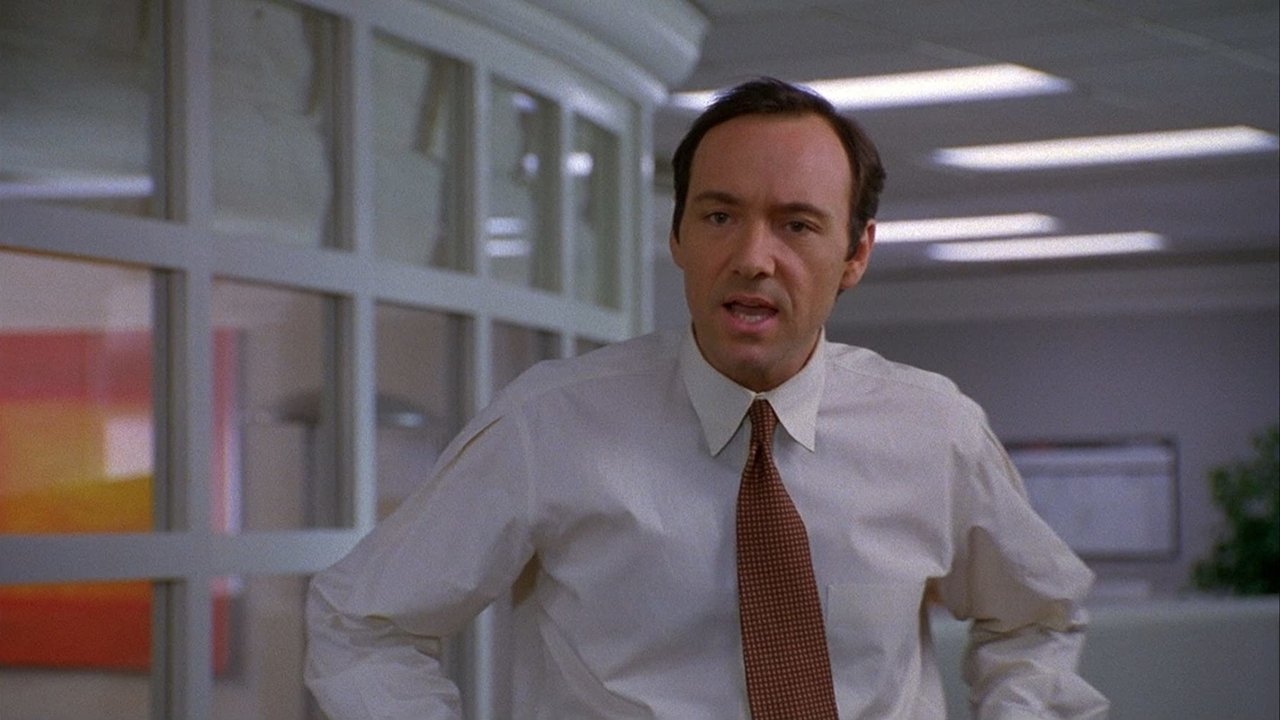
Rating: 8.5/10
This score reflects the film's razor-sharp script, its career-defining performance from Kevin Spacey, and its unflinching, authentic portrayal of toxic power dynamics, drawn from George Huang's real-life experience. It's a near-perfect distillation of cynical 90s indie spirit, held back only slightly by a third act that, while impactful, shifts tone dramatically.
For anyone who remembers the days when landing that assistant job felt like the first step towards glory, only to find yourself fetching dry cleaning and dodging metaphorical (or literal) projectiles, Swimming with Sharks remains a cathartic, if deeply unsettling, watch. It’s a reminder that sometimes, the most terrifying monsters wear bespoke suits and demand Equal in their coffee.