It starts with a dream deferred, doesn't it? That single, burning ambition that fuels our youth, the one we assume defines our entire existence. For Glenn Holland, it was the symphony – the grand, sweeping composition that would etch his name into musical history. But life, as it so often does, had other plans. Mr. Holland's Opus (1995) isn't just a story about a frustrated composer who takes a temporary teaching gig; it’s a quiet epic about the unexpected ways a life finds its meaning, often in the very detours we resist. Watching it again now, years after pulling that worn VHS copy off the rental shelf, its emotional resonance feels less like calculated sentimentality and more like earned wisdom.
### An Accidental Calling
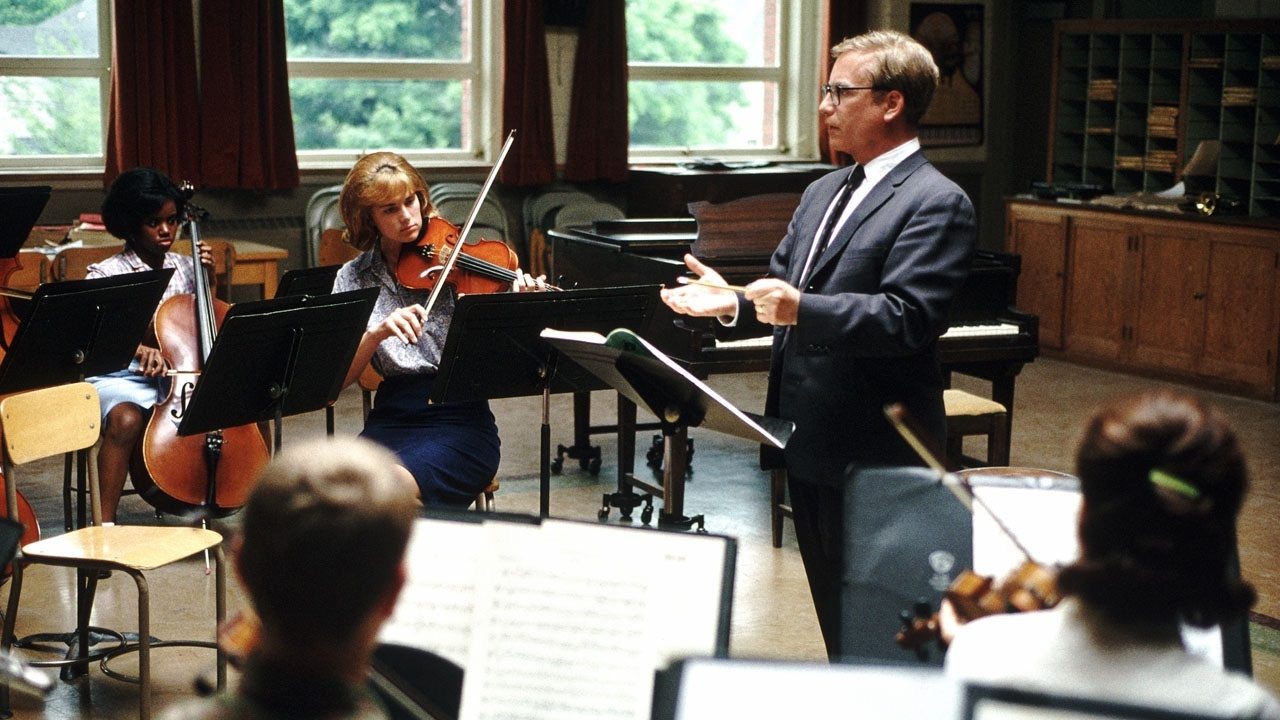
The premise is simple: In 1965, musician Glenn Holland (Richard Dreyfuss) postpones his composing dreams to teach music at John F. Kennedy High School in Oregon, intending it only as a short-term way to pay the bills while he works on his magnum opus. Decades pass. The world changes – Vietnam, rock and roll, budget cuts – and Mr. Holland remains, wrestling with his perceived failure while unknowingly shaping generations of students.
Director Stephen Herek, known more for lighter fare like Bill & Ted's Excellent Adventure (1989) and The Mighty Ducks (1992), guides this potentially saccharine material with a surprisingly steady hand. He allows the story to unfold patiently across 30 years, letting the weight of time and accumulated experience settle. The period details, from the changing hairstyles and cars to the evolving musical landscape (expertly woven together by composer Michael Kamen's brilliant score), feel authentic, grounding the emotional journey in a tangible reality we recognize. It was filmed primarily at Grant High School in Portland, Oregon, lending the school hallways a lived-in authenticity.
### The Sound of Sacrifice and Connection
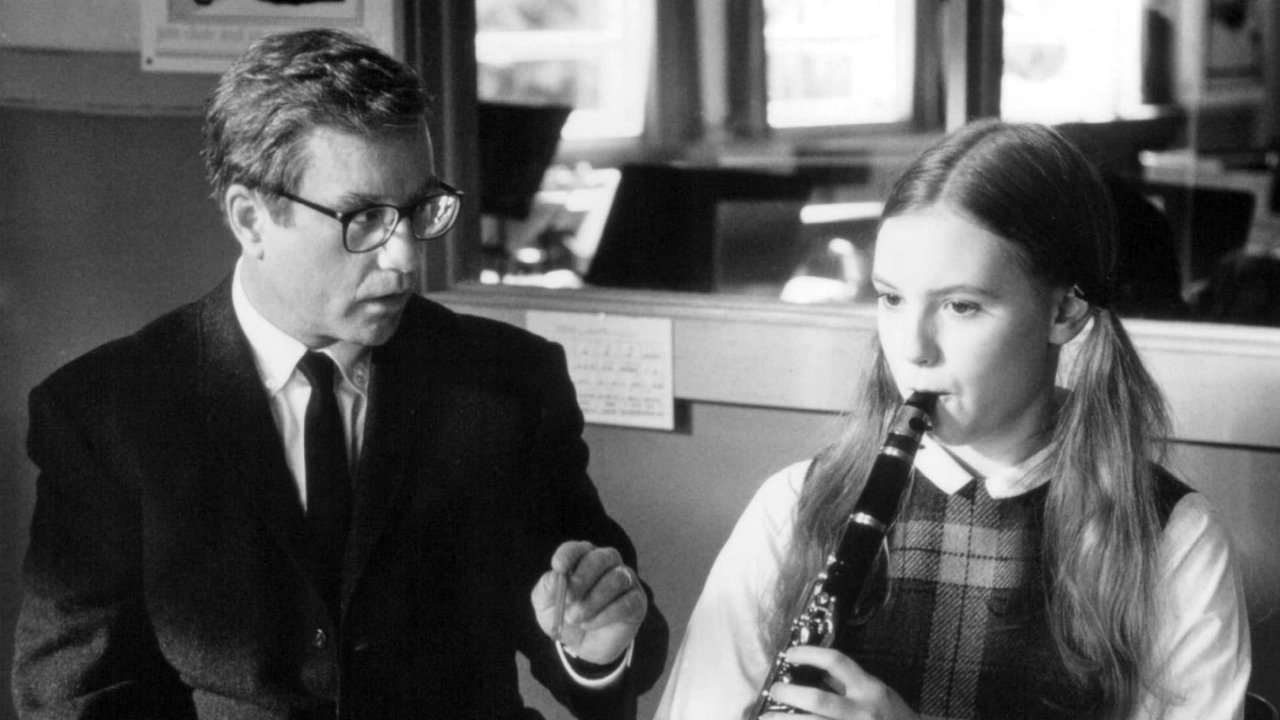
At the heart of the film is Richard Dreyfuss's magnificent performance, which rightfully earned him an Academy Award nomination. Dreyfuss embodies Holland's initial reluctance, his simmering frustration, and his eventual, almost grudging, acceptance of his true calling. He makes Holland flawed and relatable – impatient, sometimes self-absorbed, yet capable of profound connection. Remember his breakthrough with the perpetually struggling clarinetist Gertrude Lang (Alicia Witt, who, despite being a piano prodigy in real life, had to learn to play the clarinet just poorly enough for the role)? Or his dynamic with the ambitious Rowena Morgan (Jean Louisa Kelly), representing a path not taken? These aren't just plot points; they feel like genuine teacher-student moments, etched with vulnerability and discovery.
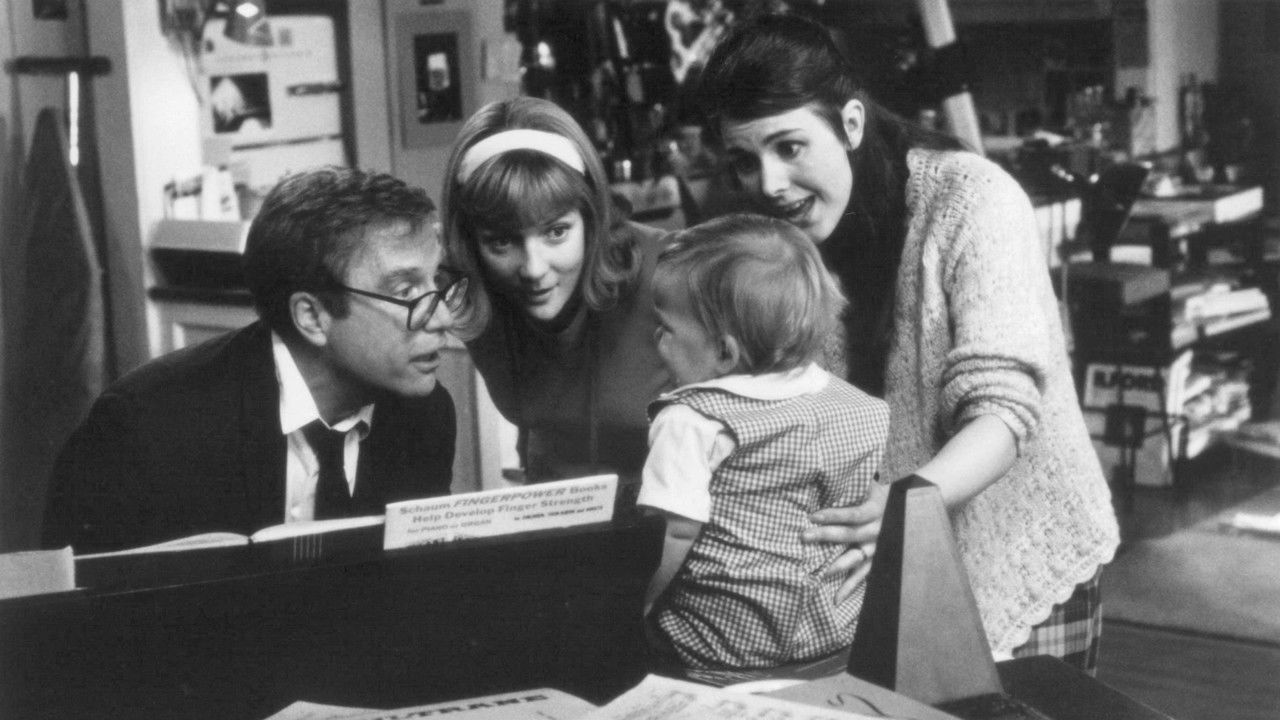
But the film's most powerful theme revolves around Holland's relationship with his deaf son, Cole (Joseph Anderson and Anthony Natale). The screenplay by Patrick Sheane Duncan (Courage Under Fire) confronts Holland's struggle to connect with a child who cannot share his passion for music. It’s a heartbreaking portrayal of communication barriers and the deep-seated pain of unmet expectations on both sides. The scene where Holland stages a concert specifically for the deaf community, using lights and vibration, remains incredibly moving – a testament to finding connection beyond conventional means. Glenne Headly as Iris, Holland’s wife, provides the essential anchor, her quiet strength and unwavering support often acting as the family’s emotional compass amidst Glenn’s self-absorption.
### More Than Just Notes on a Page
What makes Mr. Holland's Opus endure isn't just nostalgia, though it certainly evokes memories of influential teachers and the distinct feel of a mid-90s drama. It's the film's earnest exploration of legacy. Holland spends decades chasing a symphony, believing it to be his defining work. He initially views teaching as a compromise, a failure even. Yet, the film powerfully argues that his true opus wasn't written on score paper, but lived in the lives he touched. It's a message that resonates deeply, particularly today, as arts education faces perennial struggles – a battle the film depicted starkly in its final act, mirroring real-world concerns.
Interestingly, the film itself became part of that conversation. Its success (grossing over $106 million worldwide against a roughly $23 million budget) brought attention to the importance of music programs. The Mr. Holland's Opus Foundation, established in 1996 and inspired by the film and composer Michael Kamen's passion, continues to support music education across the United States, a tangible legacy extending beyond the screen. Reportedly, Dreyfuss sometimes pushed for exploring Holland's darker frustrations more intensely, clashing occasionally with Herek, who, along with the studio, aimed for the ultimately more uplifting, and arguably more commercially successful, tone. It’s a fascinating “what if,” but the film we have strikes a powerful chord.
### The Final Measure

Does the film occasionally lean into sentiment? Perhaps. Are some character arcs tied up a bit neatly? Arguably. But these are minor quibbles in the face of its genuine emotional weight and thematic depth. The performances feel authentic, the passage of time is handled convincingly, and the core message about the quiet, profound impact one life can have on many others remains deeply affecting. It challenges us to consider what truly constitutes a life well-lived. Is it the grand ambition achieved, or the ripples of influence spread through everyday connections and commitments?
Rating: 8/10
This rating reflects the film's powerful emotional core, Richard Dreyfuss's stellar performance, its resonant themes about teaching and legacy, and its skillful execution across decades. While occasionally sentimental, its heart is undeniably in the right place, earning its tears and leaving a lasting impression that justifies its place as a beloved 90s classic. It reminds us that sometimes, the most beautiful music isn't planned; it emerges from the complex, unexpected symphony of life itself. What teacher made that kind of difference for you?