My Sex Life... or How I Got Into an Argument
Okay, pull up a comfy chair, maybe pour yourself something thoughtful. We’re not diving into explosions or synth scores today. Instead, we're cracking open a different kind of 90s time capsule – one filled with tangled relationships, intellectual angst, and the specific rhythm of Parisian life captured in Arnaud Desplechin's sprawling, brilliant My Sex Life... or How I Got Into an Argument (original French title: Comment je me suis disputé... (ma vie sexuelle)) from 1996. This isn't your typical Friday night rental fare; finding this gem on the video store shelf felt like uncovering a secret passage into a world far removed from blockbuster sensibilities, demanding patience but offering rich rewards.
An Ocean of Conversation
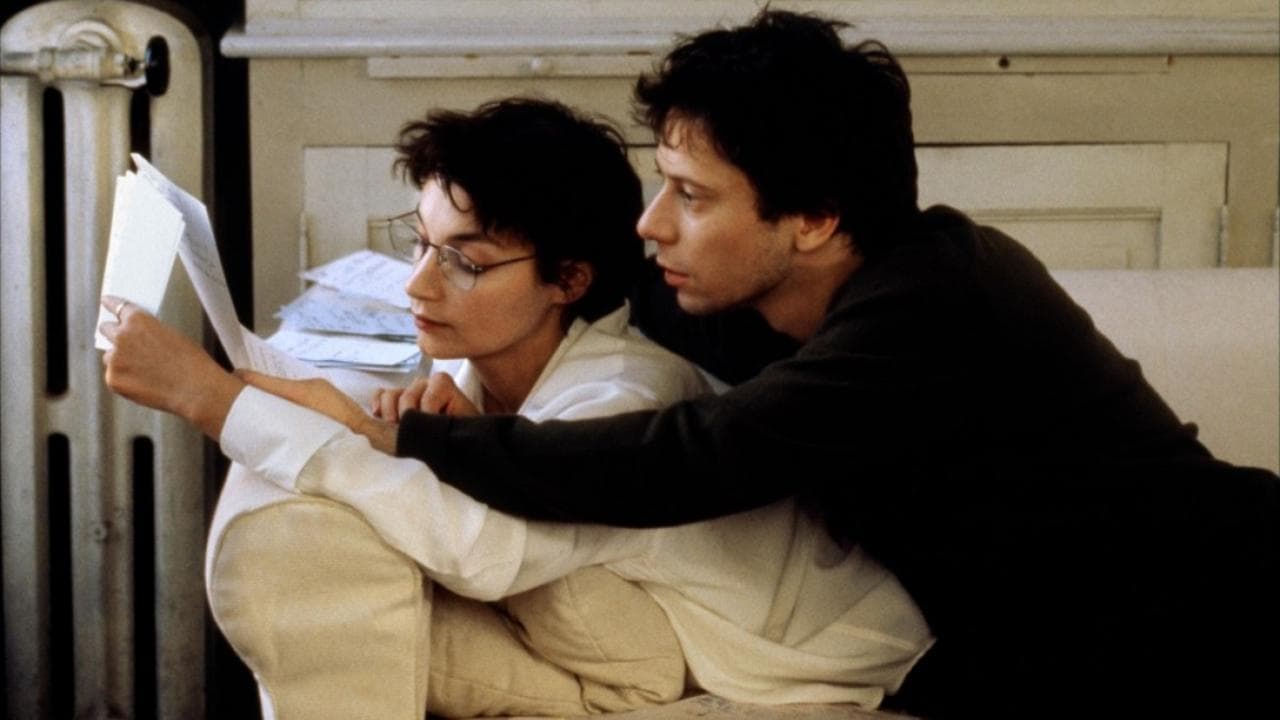
Forget tight plotting; My Sex Life... immerses you in the currents of its characters' lives, primarily Paul Dédalus (Mathieu Amalric), a young assistant philosophy professor navigating a constellation of anxieties. He's struggling to finish his thesis, grappling with the slow decay of his ten-year relationship with Esther (Emmanuelle Devos), flirting with other women, sparring with academic rivals, and generally existing in a state of eloquent indecision. The film unfolds over nearly three hours, not through dramatic set pieces, but through conversations – intense, witty, wounding, revealing dialogues that feel less like scripted scenes and more like eavesdropping on intensely private moments. It captures that specific feeling of being young, educated, and utterly lost, using words as both weapons and shields. Does the sheer volume of talk sometimes feel overwhelming? Perhaps initially, but it soon becomes the film's unique heartbeat.
The Birth of an Actor, The Complexity of a Man
This film is arguably where many outside France first took notice of Mathieu Amalric, and it's easy to see why. His Paul Dédalus is a mesmerizing creation – infuriatingly self-absorbed yet undeniably charming, intellectually sharp but emotionally immature. Amalric embodies Paul's nervous energy, his intellectual vanity, his vulnerability, and his baffling inability to simply make a choice. It's a performance devoid of easy answers; you might want to shake Paul, but you can't look away. He feels startlingly real, a complex tapestry of contradictions. He’s surrounded by an equally superb ensemble, particularly Emmanuelle Devos as Esther. Her quiet pain and weary resilience in the face of Paul's dithering provide a crucial emotional anchor. Their scenes together ache with the weight of shared history and unspoken frustrations. It’s acting that breathes, subtle shifts in expression conveying volumes more than grand gestures ever could.
Desplechin's Intimate Epic
Arnaud Desplechin, who co-wrote the screenplay with Emmanuel Bourdieu, directs with a style that feels both loose and precise. He allows scenes to play out in long takes, giving his actors space and letting conversations ebb and flow naturally. Yet, there's a distinct visual sensibility – the slightly muted colours of Paris apartments and lecture halls, the intimate framing that draws you close to the characters' internal struggles. He captures the specific atmosphere of a certain Parisian intellectual milieu without romanticizing it. It’s a world where philosophical debates bleed into personal grievances, where anxieties about love and career intertwine inextricably. It’s worth noting that Paul Dédalus would reappear decades later in Desplechin’s My Golden Days (2015), suggesting the enduring pull this character held for the director.
Finding the Extraordinary in the Ordinary (Retro Musings)
Watching My Sex Life... back in the VHS era was an undertaking. A nearly three-hour French film, likely spread across two tapes? It demanded commitment. Unlike the quick sugar rush of an action flick, this was a meal. You settled in. You paid attention. There wasn’t much in the way of easily digestible trivia – no stories of exploding miniatures or groundbreaking CGI here. The "special effects" were the nuances of dialogue, the electricity between actors. It wasn't a film discussed widely around the water cooler, perhaps, but for those who sought it out, it offered something profound: a deeply human, unflinchingly honest look at the messy business of growing up, even when you’re technically already an adult. Its selection for the Cannes Film Festival in 1996 signaled its artistic ambition, even if it didn't snag the top prizes. It was a film that trusted its audience's intelligence and patience, a rarity then as now.
What Lingers?
What stays with you after the hum of the VCR fades? It’s the feeling of having spent time with deeply flawed, utterly believable people. It’s the questions the film raises about commitment, identity, the stories we tell ourselves, and the painful gap between who we think we are and how we actually behave. Can intellectualising life protect us from its emotional complexities? Paul Dédalus seems to think so, and the film masterfully shows us the cost of that belief. It doesn't offer neat resolutions, mirroring the often-unresolved nature of life itself.
Rating: 8.5/10
This rating reflects the film's exceptional depth, its masterful performances (especially Amalric's), and its unique, immersive quality. It’s a demanding watch, its length and talkative nature won't be for everyone, preventing a perfect score for a general audience. However, for viewers seeking intelligent, character-driven drama that resonates long after viewing, it's a near-masterpiece of 90s European cinema.
It's a reminder that sometimes the most compelling arguments are the ones we have with ourselves, played out across the landscapes of our own messy lives.