Okay, let's settle in and pop the tape in for this one. Tonight, we're revisiting a charming, slightly bittersweet slice of late 90s Italian cinema that might have graced the "World Cinema" shelves of your more adventurous local video store: Vincenzo Salemme's directorial debut, Amore a prima vista (Love at First Sight) from 1999.
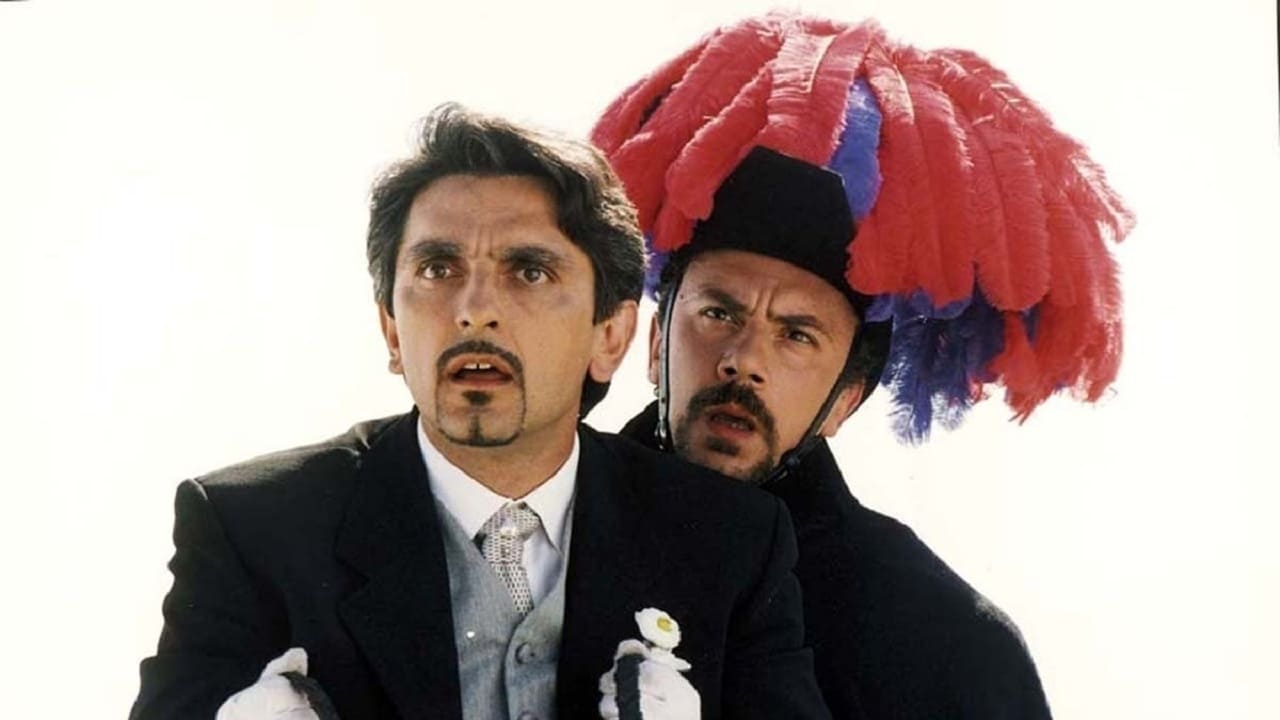
There’s a peculiar ache to the premise, isn't there? A man sees the woman of his dreams across a crowded space, feels that instant, undeniable connection... only to discover she's engaged to his best friend. It’s a classic setup, ripe for both comedy and heartache, and in Salemme's hands, it becomes a distinctly Neapolitan affair, blending farcical situations with genuine emotional undercurrents. What makes Amore a prima vista immediately intriguing is that Salemme doesn't just direct; he writes (adapting his own successful stage play, "...e fuori nevica!" with Ugo Chiti and Filippo Ottoni) and stars as the lovestruck protagonist, Bruno. This triple role gives the film a very personal, almost handcrafted feel.
A Heart Divided in Naples
The story follows Bruno (Vincenzo Salemme), a somewhat hapless but good-hearted guy whose life is turned upside down when he locks eyes with Nina (Mandala Tayde), a beautiful Indian woman visiting Naples. The spark is immediate, profound. But the cruel twist of fate? Nina is the fiancée of Bruno's childhood best friend, Natale (Carlo Buccirosso), a formerly renowned womanizer who, after a tragic accident, is now blind. This setup isn't just a comedic engine; it forces Bruno (and us) into a messy tangle of loyalty, desire, and guilt. How can you pursue the love of your life when it means betraying your closest friend, especially one enduring such hardship?
Salemme's Stage Roots Shine Through
Knowing the film originated as a play ("...e fuori nevica!") explains a lot about its structure and rhythm. There's a certain theatricality to the dialogue and the way scenes unfold, often relying on character interactions within confined spaces – apartments, hospital rooms. This isn't a criticism; it actually works in the film's favor, allowing the performances to take center stage. Salemme, a veteran of Neapolitan theatre, directs himself with a keen understanding of comedic timing, often physical, but also excels in conveying Bruno's internal turmoil. You see the gears turning, the conflict playing out across his face – the sheer panic mixed with burgeoning hope. It’s a performance that feels lived-in, relatable in its awkward desperation.
The Supporting Pillars
Mandala Tayde, as Nina, brings a necessary grace and quiet conflict to her role. She’s not just a prize to be won; she's caught between genuine affection for the dependable, if changed, Natale and the surprising, intense connection she feels with Bruno. Her performance navigates this tricky emotional space effectively, adding weight to Bruno's dilemma. But it's perhaps Carlo Buccirosso as Natale who has the most challenging role. Portraying blindness requires sensitivity, and Buccirosso handles it with dignity, avoiding caricature. He makes Natale's frustration, his reliance on Bruno, and his enduring affection for Nina feel authentic. The chemistry between Salemme and Buccirosso, honed through years of working together on stage and screen, provides the film's foundational relationship – their strained friendship is as central as the romance.
That Late 90s Italian Vibe
Watching Amore a prima vista now is like opening a time capsule to late 90s Italian popular cinema. The fashion, the specific cadence of the humor, the slightly melancholic romanticism – it feels distinct. The Neapolitan setting isn't just wallpaper; the dialect, the local references, the slightly chaotic energy infuse the film with a specific cultural flavor. It might not have been a massive international hit (though it performed very well domestically in Italy, cementing Salemme's transition from stage to screen success), but finding tapes like this felt like discovering a little secret, a different comedic sensibility than the Hollywood mainstream. There’s an earnestness here, a willingness to lean into sentimentality alongside the laughs, that feels quite characteristic of the time and place.
Weaving Laughter and Tears
The film walks a fine line between comedy and drama. Some sequences are pure farce, relying on misunderstandings and Bruno's increasingly elaborate attempts to hide his feelings. Other moments delve into the sadness of Natale's situation or the genuine pain of Bruno's impossible choice. Does it always perfectly balance these tones? Perhaps not. Some comedic elements might feel a touch broad or dated now, and the pacing occasionally reflects its stage origins. But the underlying sincerity carries it through. It asks questions about fate, friendship, and the sometimes cruel nature of love hitting you when you least expect it, or perhaps, when it's least convenient. What does loyalty truly demand? Is instant connection a sign, or just a complication?
Rating: 7/10
This score feels right for a film that achieves what it sets out to do with considerable charm and heart, even if it doesn't reinvent the romantic comedy wheel. It earns its points through Vincenzo Salemme's engaging central performance and direction, the strong support from Mandala Tayde and Carlo Buccirosso, its successful blend of Neapolitan humor and genuine pathos, and its authentic late-90s Italian feel. While some elements feel theatrical or slightly dated, the core emotional conflict remains effective and relatable.
Amore a prima vista is a warm, funny, and surprisingly touching film – a perfect example of the kind of heartfelt, character-driven comedy that often filled the shelves back in the VHS days. It might leave you smiling, perhaps with a little lump in your throat, pondering the messy, beautiful complexities of the human heart. A worthy find for anyone nostalgic for that specific era of European filmmaking.