Here we go, another pull from the dusty shelves of memory lane. This time, it's a film that likely didn't scream "blockbuster rental night" from its cover box, tucked perhaps in the ‘World Cinema’ or ‘Drama’ section of the video store, waiting for a curious eye. I’m talking about Denis Villeneuve’s debut feature, August 32nd on Earth (1998). Finding this tape often felt like unearthing something different, something quieter and more perplexing than the usual Friday night fare. It wasn't explosive, but it lingered, didn't it? Like the low hum of a refrigerator in a silent apartment.
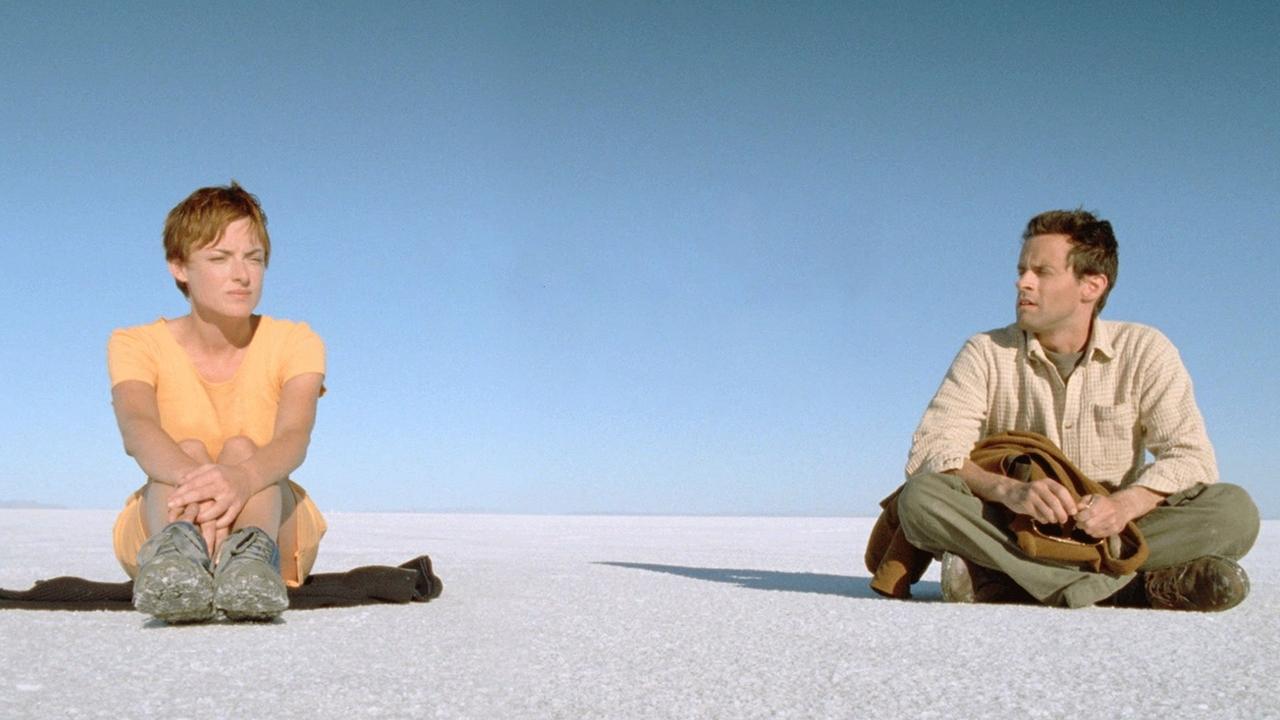
The film opens with an image that’s hard to shake: Simone (a captivating Pascale Bussières), a young model, walks away relatively unscathed from a violent car crash. This brush with mortality doesn't trigger tears or relief, but something far stranger – a sudden, stark existential clarity. Her decision? To have a baby. Immediately. And she wants her best friend, Philippe (Alexis Martin), to be the father. It’s a premise that feels both absurdly impulsive and chillingly deliberate, setting the stage for a journey that's less about plot mechanics and more about internal landscapes.
An Existential Road Trip to Nowhere
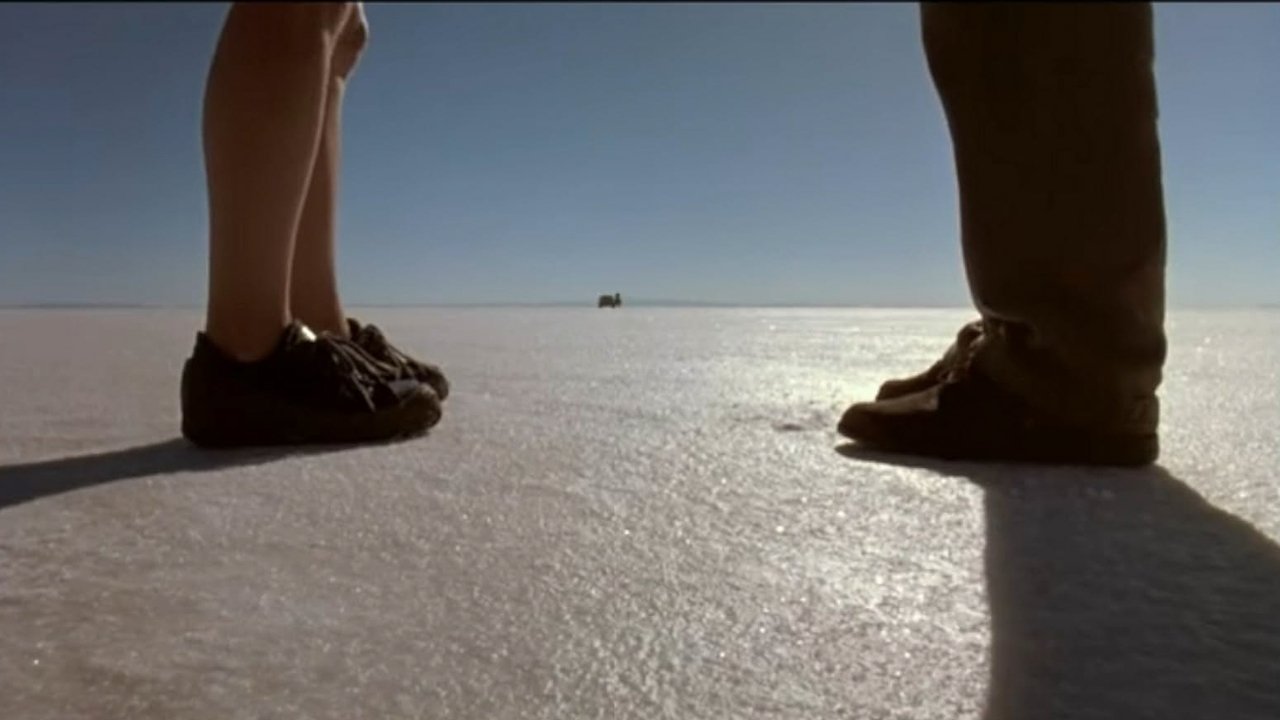
What follows isn't your typical romantic drama or quirky indie road trip. Philippe, initially bewildered, agrees under one bizarre condition: they conceive the baby in a desert. This arbitrary demand sends them spiraling from the cool blues and greys of Montreal to the stark, alien landscapes of the Bonneville Salt Flats near Salt Lake City, Utah. Villeneuve, even in this early work, shows a remarkable eye for contrasting environments and using landscapes to mirror the characters' inner states. The transition from the familiar urbanity to the vast, empty desert feels like shedding skin, moving from complex life to elemental simplicity – or perhaps, elemental emptiness.

It’s fascinating to look back at this film knowing it was the first feature from the Denis Villeneuve who would later give us the monumental sci-fi visions of Arrival (2016), Blade Runner 2049 (2017), and Dune (2021). The seeds of his atmospheric mastery are here, albeit on a much smaller, more intimate scale. He uses the expansive Utah desert not for spectacle, but for isolation, emphasizing the smallness and perhaps the absurdity of human desires against an indifferent backdrop. Reportedly, Villeneuve himself felt the desert location was crucial, wanting a place that felt like "the end of the world" to reflect the characters' profound disorientation.
Simone's Stillness, Philippe's Panic
The film hinges on the performances, particularly Pascale Bussières as Simone. She embodies a strange kind of post-traumatic calm, a detachment that borders on unsettling. Her decision isn't joyful or maternal; it's presented almost as a logical endpoint after surviving the illogical. Bussières conveys this complex state with minimalist precision – a flicker in the eyes, a stillness in her posture. It’s a performance that stays with you because it refuses easy emotional cues. Is she profoundly numb, or has she reached some level of existential enlightenment the rest of us can't grasp?
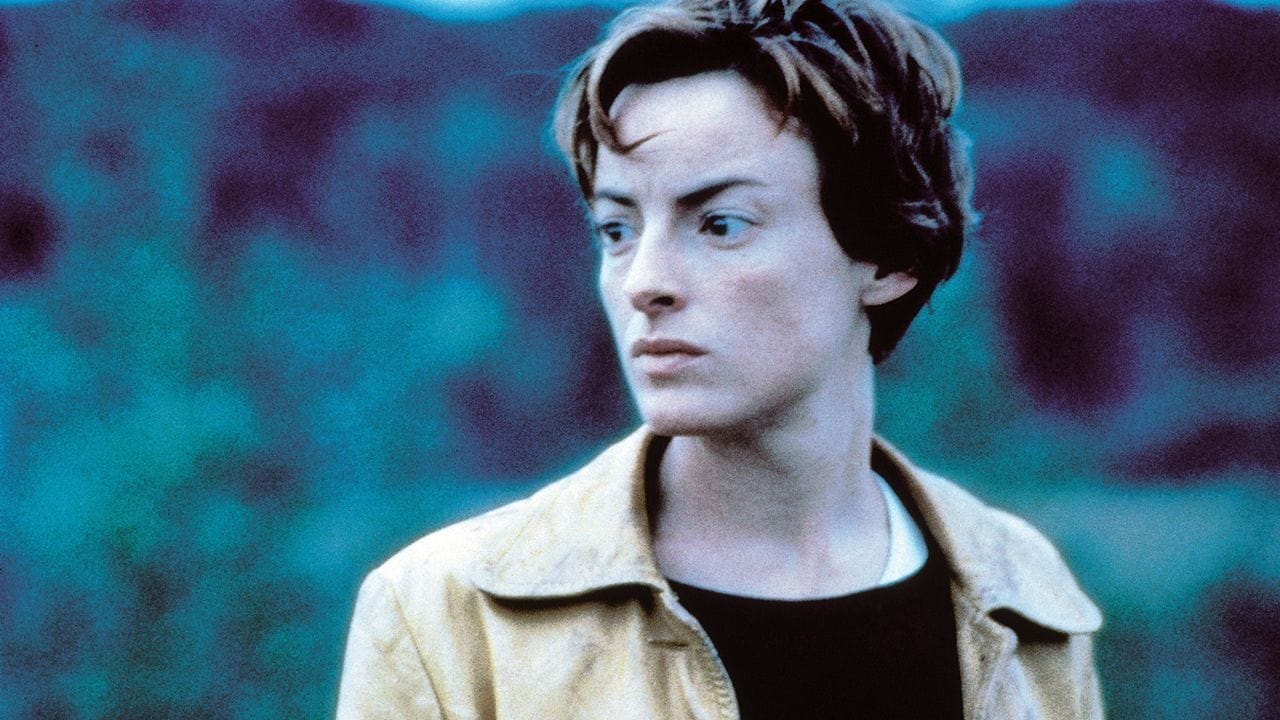
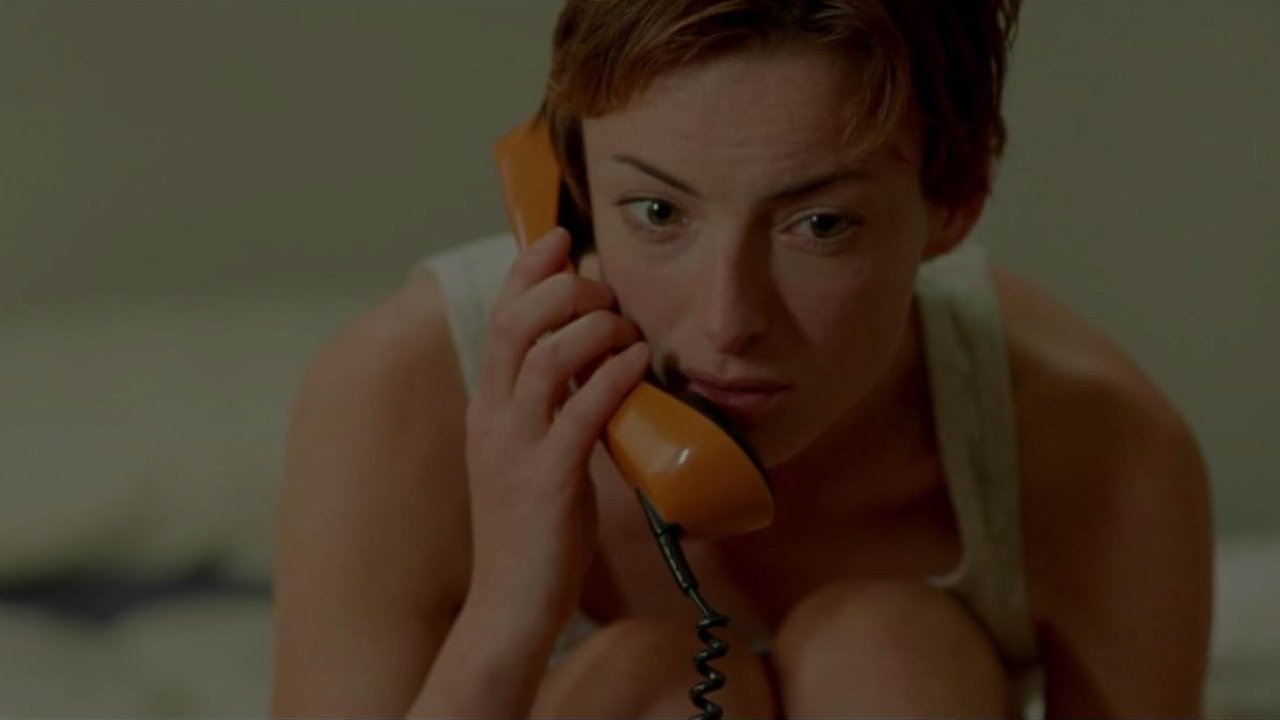
Alexis Martin as Philippe provides the necessary grounding, reacting with a more relatable mix of affection, confusion, and quiet desperation. His agreement feels less like desire and more like a surrender to the enigmatic pull of his friend's sudden life-altering demand. Their interactions are often awkward, filled with unspoken tensions and the weight of their shared history, making their journey across the salt flats feel less like a quest and more like a shared drift. Villeneuve himself wrote the screenplay, and there's a sparseness to the dialogue that forces us to read the silences, the glances, the sheer discomfort of their strange pact.
A Different Kind of VHS Discovery
This wasn't a movie you discussed breathlessly with friends the next day, comparing explosions or quoting one-liners. August 32nd on Earth was the kind of film that prompted a quieter, more internal reaction. You might have rented it because the cover looked intriguing, or maybe because Pascale Bussières was recognizable from other Canadian films. What you got was something more akin to European art cinema – meditative, ambiguous, visually striking, and resistant to easy answers. It premiered in the Un Certain Regard section at the 1998 Cannes Film Festival and was Canada's official submission for Best Foreign Language Film at the Oscars, signaling its artistic ambitions right from the start. Its modest budget, likely under CAD $2 million, feels evident not in cheapness, but in its focused intimacy and reliance on atmosphere over action.
Does it fully succeed? For some, the deliberate pace and emotional ambiguity might feel frustrating. Simone’s motivations remain opaque, and the narrative doesn't offer neat resolutions. It asks questions about fate, choice, and the search for meaning after trauma, but it seems more interested in the asking than in providing concrete answers. What makes it compelling, especially viewed through the lens of nostalgia, is its willingness to be different. In an era often dominated by high-concept blockbusters, finding a film like this on VHS felt like discovering a hidden frequency, a quiet signal amidst the noise. It’s a reminder that sometimes, the most profound journeys are the internal ones, even if they lead us to the middle of nowhere.
Rating: 7/10
The score reflects the film's undeniable artistic merit, striking visuals, and compelling central performances, particularly Bussières'. It's a confident and unique debut from a director who would become a major force. However, its deliberate pacing and emotional coolness might not resonate with everyone seeking conventional narrative satisfaction, keeping it from higher universal acclaim but cementing its place as a fascinating, early glimpse of Villeneuve's talent.
It leaves you wondering: what truly motivates our most life-altering decisions? Is it logic, emotion, or simply the jarring realization that the earth continues spinning, even after our own world has stopped? August 32nd on Earth doesn't tell you, but it makes you ponder the question long after the static fills the screen.