Okay, pull up a worn armchair, maybe pour yourself something strong. Some films lodge themselves in your memory not necessarily because they were easy viewing, but because they demanded something from you. They unsettled you, burrowed under your skin, and left you staring at the static snow of the VCR long after the tape ended, processing. Leos Carax's 1999 descent into obsession and chaos, Pola X, is absolutely one of those films. It wasn't the kind of tape you'd grab for a casual Friday night pizza party; finding this on the shelves felt more like discovering a forbidden text, whispering of darker, more complex truths than the usual blockbuster fare.
### A Shattered Idyll
The film initially presents an almost dreamlike vision. We meet Pierre (Guillaume Depardieu), a successful young novelist living an idyllic, almost fairytale existence in a Normandy château with his mother, Marie (Catherine Deneuve), with whom he shares an unusually close, almost unsettlingly intimate bond. He's engaged to the lovely Lucie (Delphine Chuillot) and seems poised for a life of effortless privilege and artistic acclaim. There's a luminous quality to these early scenes, a warmth that feels deliberately fragile, like a perfect glass sculpture waiting for the inevitable hammer blow. You almost hold your breath, knowing this cannot last. And it doesn't.
### The Intruder and the Abyss

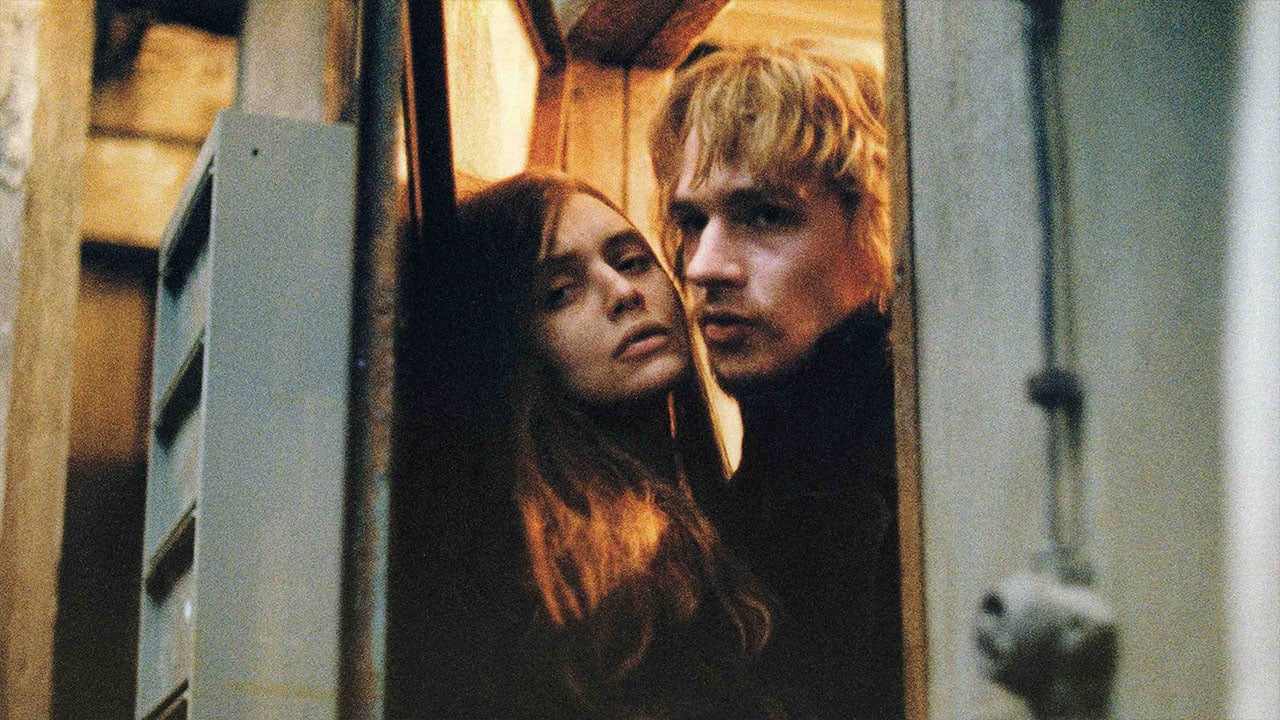
The hammer falls in the form of Isabelle (Yekaterina Golubeva), a mysterious, dark-haired woman speaking a fractured, foreign tongue, who confronts Pierre claiming to be his long-lost sister, born from a secret affair of their father. Her arrival isn't just an interruption; it's an implosion. She represents a hidden, darker reality that shatters Pierre's constructed world. Golubeva’s performance here is utterly magnetic, radiating a raw, almost feral desperation. There's an unnerving authenticity to her portrayal, a sense of carrying immense, unspoken trauma. It's a performance that feels less like acting and more like channeling something deeply primal and wounded. Tragically, Golubeva herself passed away young in 2011, adding a layer of profound melancholy when revisiting her work here.
Pierre, tormented by this revelation and perhaps by a subconscious yearning to escape the suffocating perfection of his life, makes a drastic choice. He abandons everything – his wealth, his fiancée, his mother, his name – to follow Isabelle into the shadows of Paris, embracing a life of squalor, danger, and a consuming, destructive passion.
### Carax's Uncompromising Vision
This is pure, uncut Leos Carax. Fans familiar with his earlier, equally intense Les Amants du Pont-Neuf (1991) will recognise the director's signature blend of poetic imagery and visceral grime. Pola X is visually arresting, shifting from the sun-drenched Norman countryside to the claustrophobic, industrial underworld of Paris. Carax uses jarring edits, intense close-ups, and a restless camera to mirror Pierre's psychological disintegration. The score by Scott Walker, another uncompromising artist, is crucial, oscillating between mournful beauty and abrasive noise, perfectly complementing the film's emotional turbulence.
The film is loosely based on Herman Melville's challenging, often overlooked novel Pierre: or, The Ambiguities. The title itself, Pola X, is a nod to the French title (Pierre ou les ambiguïtés) and the fact that this was reportedly the tenth draft ("X") of the screenplay. It’s fitting, as ambiguity is woven into the film's very fabric. Is Isabelle truly Pierre's sister? Is their connection love, madness, or something far more taboo? Carax refuses easy answers, forcing the viewer into the same disorienting uncertainty that plagues Pierre.
### Performances Forged in Fire
Guillaume Depardieu, son of the legendary Gérard Depardieu, carries the immense weight of the film. He portrays Pierre's transformation from privileged aesthete to tormented soul with a devastating conviction. You see the initial arrogance melt away, replaced by a desperate, almost childlike vulnerability, and finally, a terrifying emptiness. His chemistry with Golubeva is electric, bordering on dangerous. Their shared scenes possess a raw, almost unbearable intimacy. Like Golubeva, Guillaume also met a tragic end, passing away in 2008, making their shared screen presence here feel even more hauntingly potent. Even Catherine Deneuve, in a relatively smaller role, provides a crucial anchor, her regal composure a stark contrast to the chaos engulfing her son.
### Controversy and Commitment
You can't discuss Pola X without acknowledging its notorious explicitness. The film premiered at Cannes in 1999 to a deeply divided reception, praised by some for its artistic bravery and condemned by others for its graphic content, including a much-discussed scene of unsimulated sex. This wasn't shock value for its own sake, however; it felt like part of Carax's absolute commitment to portraying the destructive, all-consuming nature of Pierre and Isabelle's bond, pushing boundaries to reflect the extremity of their emotional and physical entanglement. It certainly cemented the film's reputation as difficult, challenging art-house fare, something you sought out rather than stumbled upon. I remember the buzz around it back then – whispers in the video store about this intense French film that went "all the way."
### Lingering Shadows
Pola X is not an easy film to recommend universally. It’s demanding, often unpleasant, and deliberately obscure. It requires patience and a willingness to be unsettled. Yet, there's a brutal beauty to its madness, a compelling power in its exploration of identity, obsession, and the destructive potential of seeking some perceived "authentic" self by burning down everything you once were. It asks uncomfortable questions: What are the limits of love and loyalty? Can we ever truly escape our past or the darker aspects of our nature? What is the price of confronting uncomfortable truths?
Watching it again now, decades removed from that initial VHS rental, the film hasn't lost its power to provoke. The performances remain searing, Carax's vision feels just as bold, and the sense of impending doom is palpable from the first frame. It’s a potent reminder of late-90s European art cinema at its most challenging and uncompromising.
Rating: 7/10
This score reflects the film's undeniable artistic merit, the powerhouse performances, and its sheer, unforgettable intensity. It's a challenging, sometimes grueling watch that prevents a higher score for general "enjoyment," but its commitment to its bleak vision is admirable. It's a film that doesn't fade easily.
Pola X isn't comfort food cinema; it's a jagged pill swallowed whole, leaving a bitter, lingering taste and a profound sense of unease that speaks volumes about the darkness it dares to explore.