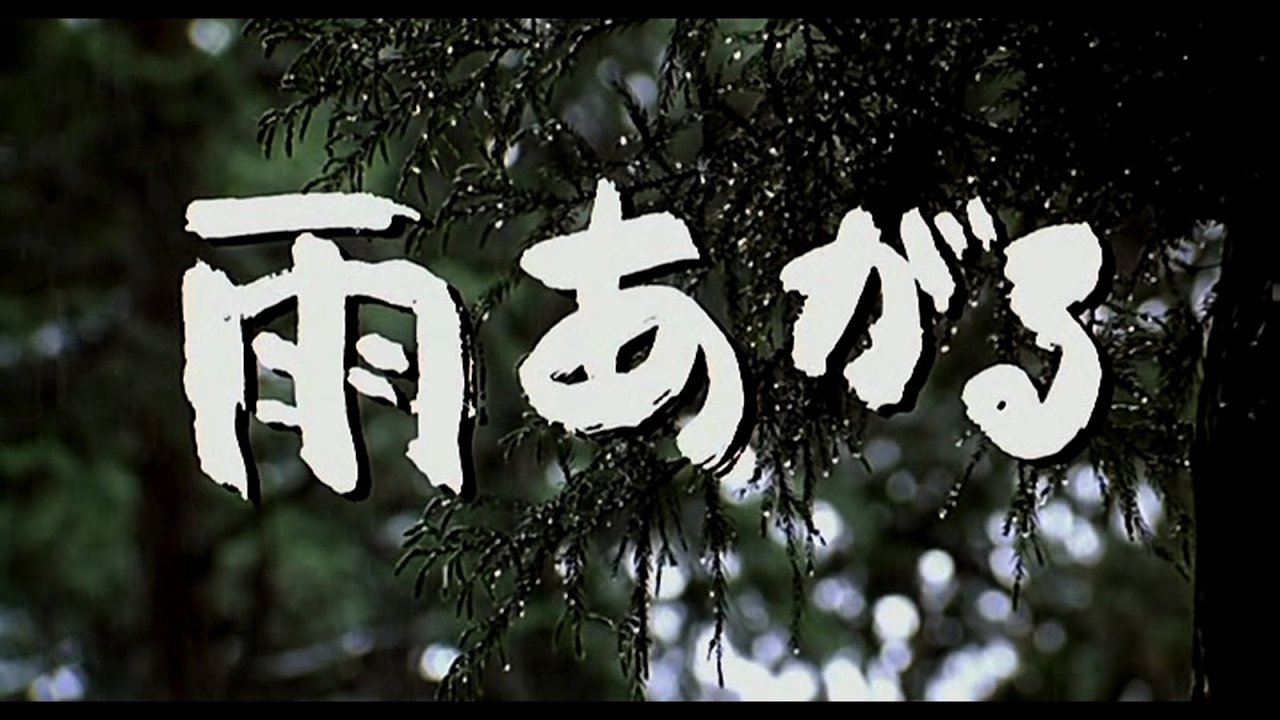
It feels like a whisper from the past, doesn't it? When a master filmmaker leaves behind one final story, it arrives carrying a unique weight, a blend of anticipation and melancholy. Such is the case with After the Rain (雨あがる, Ame Agaru), released in 2000 but feeling deeply rooted in the cinematic soil tilled throughout the 80s and 90s. While it might have graced DVD shelves more prominently than VHS racks upon its debut, its soul belongs to the era of classic storytelling we cherish here at VHS Heaven. This isn't just any samurai film; it's the final screenplay penned by the legendary Akira Kurosawa before his passing, brought to life by his long-time collaborator and assistant director, Takashi Koizumi. Watching it feels less like viewing a new movie and more like receiving a gentle, parting gift.
A Gentle Rain, A Gentle Soul
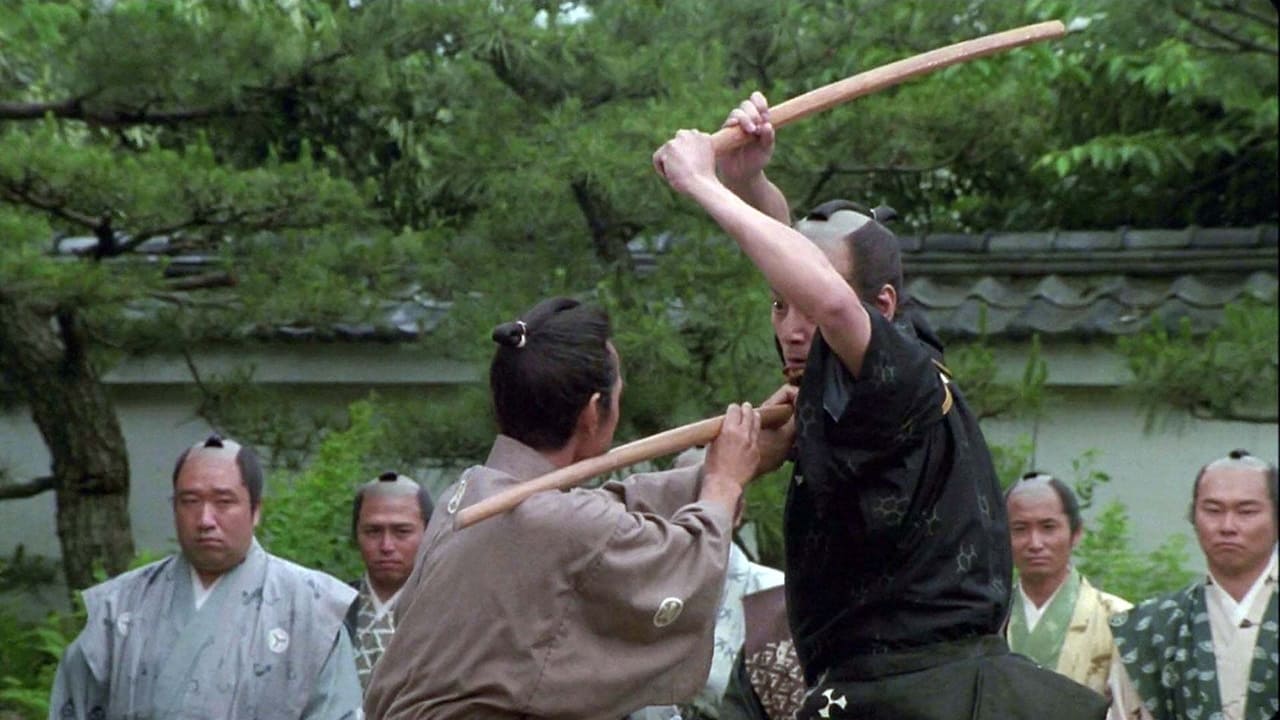
The premise is deceptively simple, drawn from a short story by Shūgorō Yamamoto (whose work also inspired Kurosawa's Sanjuro and Red Beard). A group of travelers, including the ronin Ihei Misawa (Akira Terao) and his devoted wife Tayo (Yoshiko Miyazaki), are stranded by relentless rains and flooding rivers at a modest country inn. Ihei possesses exceptional skill with a sword, enough to humble seasoned fighters in sparring contests he reluctantly enters to earn money for the less fortunate guests. Yet, his defining characteristic isn't his martial prowess, but his profound, almost problematic, kindness. He cannot stand injustice or conflict, often intervening in squabbles or offering help where none is expected. This innate goodness, while admirable, constantly undermines his prospects of securing a position as a fencing instructor for a clan lord – a position Tayo dearly hopes will bring them stability. The film unfolds not as a series of duels, but as a patient observation of character, circumstance, and the quiet struggle to maintain one's integrity in a world that often rewards calculation over compassion.
Echoes of the Master
One cannot watch After the Rain without feeling Kurosawa's spirit hovering near. Takashi Koizumi, stepping into the director's chair for the first time after decades learning at Kurosawa's side on monumental projects like Kagemusha (1980) and Ran (1985), approaches the material with palpable reverence. The compositions are painterly, the use of colour deliberate, and the pacing measured, allowing moments of quiet contemplation and natural beauty to breathe. It’s fascinating to know Koizumi felt such immense pressure honouring his mentor’s final work that he reportedly studied Kurosawa's storyboards meticulously. Yet, this isn't mere imitation. Koizumi brings a distinct gentleness, a softer focus that aligns perfectly with the story's humanistic core. He avoids the epic scale of Kurosawa's later works, opting instead for an intimacy that draws you close to Ihei and Tayo's plight. It feels less like a grand statement and more like a heartfelt conversation.
Heart of the Sword
The film rests squarely on the shoulders of its lead performers. Akira Terao is simply magnificent as Ihei. He embodies the ronin's quiet dignity, his effortless skill (Terao reportedly trained intensely for the role), and, most crucially, the gentle melancholy in his eyes that reveals a man fundamentally at odds with the harsh realities of the samurai code. His kindness isn't naive; it's a conscious choice, a burden almost, that defines him. Watching him mediate disputes at the inn or awkwardly accept praise for his swordsmanship feels utterly authentic. Equally vital is Yoshiko Miyazaki as Tayo. She is the anchor, the unwavering source of love and support for Ihei, even when his good nature leads them into difficulty. Her performance is full of grace and quiet strength, their relationship portrayed with a warmth and realism rarely seen in the genre. Their shared moments – a simple meal, a quiet walk after the rain finally ceases – are imbued with profound tenderness. And yes, seeing Shirô Mifune, son of the incomparable Toshiro Mifune who starred in so many Kurosawa classics, appear in a supporting role as the clan lord feels like a poignant nod, a subtle bridging of generations.
More Than Just Swordplay
What lingers long after the credits roll isn't the sword fights – though elegantly staged, they are brief and serve the narrative – but the pervasive sense of decency. After the Rain asks a question relevant far beyond feudal Japan: How does one navigate a world demanding compromise without losing one's essential goodness? Ihei's journey isn't about proving his skill, but about finding a way to live authentically. The film suggests, quietly but firmly, that true strength lies not in the ability to vanquish foes, but in the capacity for empathy and kindness. It celebrates the small victories of the human spirit – generosity shared among strangers, the unwavering loyalty between husband and wife, the simple pleasure of sunshine after a storm. It's a reminder that even amidst hardship, beauty and grace persist.
A Timeless Coda
Though released at the dawn of the new millennium, After the Rain feels like a film beamed directly from the heart of classic cinema. It captures that sense of craftsmanship, patience, and character-focused storytelling that defined so many films we pulled from the shelves of our local video stores. It was well-received critically upon release, winning several Japanese Academy Prizes, including Best Picture, a testament to Koizumi's successful translation of Kurosawa's vision. It’s a film that doesn’t shout; it speaks softly, inviting reflection. It might lack the explosive energy some associate with samurai epics, but its quiet power resonates deeply.
Rating: 9/10
This score reflects the film's masterful execution, its profound emotional core, and its significance as Kurosawa's final cinematic statement, beautifully realized by his dedicated protégé. The performances are pitch-perfect, the direction sensitive and visually rewarding, and the themes universal. It’s a film that rewards patience and contemplation, offering a deeply humane and ultimately hopeful perspective.
After the Rain is more than just a well-made period piece; it’s a meditation on virtue, a gentle elegy, and a fittingly quiet farewell from one of cinema's true giants. It leaves you not with adrenaline, but with a sense of peace and a renewed appreciation for simple kindness – a feeling as refreshing as the clear sky after a long downpour.