Some sounds burrow under the skin. Not the sudden jolt of a slammed door in the dead of night, but the persistent, insidious whispers that bleed through thin walls, the static hiss of intercepted conversations, the chilling rhythm of something wrong filtering through the ether. Alex Infascelli's 2000 thriller Almost Blue plugs directly into this auditory vein of unease, crafting a modern giallo-tinged nightmare built not just on what we see, but on the terror of what we hear. Released just as the new millennium dawned, it felt like a ghost transmission from a darker, more stylishly menacing cinematic past, perfectly suited for a late-night viewing that leaves you listening a little too closely to the silence afterwards.

Echoes in the Dark
Based on the novel by Carlo Lucarelli, Almost Blue immediately establishes a potent sensory hook. Simone (Claudio Santamaria, already carving out his niche in Italian cinema) is a young blind man whose world is navigated through sound, amplified by his obsessive hobby: scanning radio frequencies. He doesn't just hear; he experiences synesthesia, translating sounds into vibrant, swirling colors. It's through this intimate, invasive connection to the city's soundscape that he inadvertently becomes the sole witness to a brutal murder, deciphering the horror through the distorted voices and panicked noises captured by his equipment. This premise alone – the unseen witness who hears too much – is fertile ground for suspense, recalling Hitchcockian paranoia updated for the digital age (even if the tech feels distinctly late-90s now).
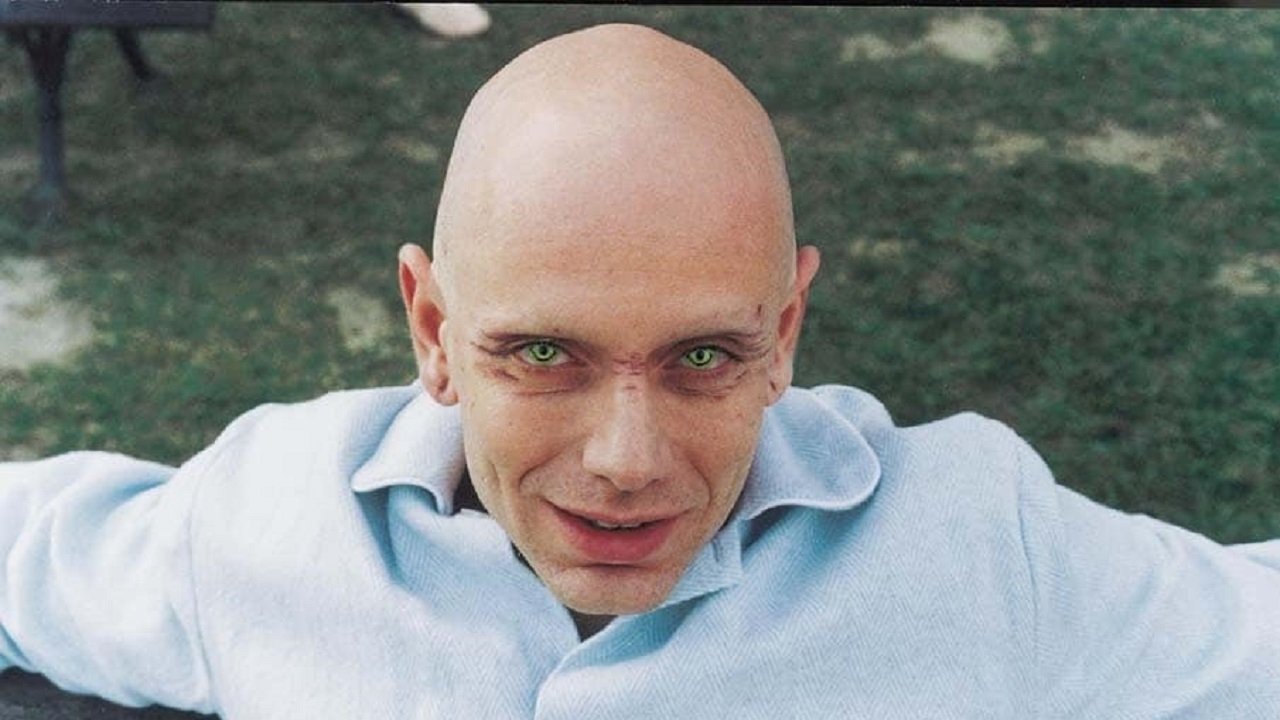
Meanwhile, Detective Grazia Negro (Lorenza Indovina, bringing a weary tenacity to the role) investigates a series of savage killings attributed to a predator dubbed "Iguana." The paths of the isolated listener and the determined hunter inevitably converge, drawn together by the chilling signature of a killer (Andrea Di Stefano) who seems to move through the city like a phantom. The script, co-penned by Infascelli, Lucarelli, and the legendary Sergio Donati (whose name alone evokes the grit and style of Leone's spaghetti westerns like Once Upon a Time in the West (1968) and Duck, You Sucker! (1971)), weaves these threads together with a palpable sense of dread.
A Symphony of Fear
What elevates Almost Blue beyond a standard procedural is Infascelli's direction and its commitment to atmosphere. This was his feature debut, and he arrived with a striking visual confidence. The film often plunges into near-darkness, punctuated by expressionistic splashes of color meant to represent Simone's synesthetic visions. These sequences, depicting sound as abstract, pulsing light shows, were ambitious attempts to visualize the invisible, lending the film a unique, almost psychedelic texture amidst the grim reality of the murders. It's a stylistic choice that feels both indebted to the heightened realities of classic giallo masters like Argento, but filtered through a cooler, late-90s electronic sensibility.
The sound design, naturally, is paramount. The crackle of the scanner, the distorted voices, the unsettling electronic score – they aren't just background noise; they are the texture of the threat. You feel Simone's vulnerability, trapped within his apartment, the outside world a terrifying symphony only he can fully decipher. This auditory focus creates a specific kind of tension, less reliant on jump scares and more on a slow-burn creepiness, the sense that the killer’s presence is encoded in the very airwaves. Filming in Bologna adds another layer, the city's historic architecture providing a beautifully melancholic backdrop to the modern menace.
Cracks in the Signal
While the atmosphere is thick enough to choke on, Almost Blue isn't without its moments of static. The pacing occasionally drifts, and some plot mechanics surrounding the investigation can feel a touch contrived, requiring leaps of faith typical of the genre. The visualization of synesthesia, while bold, might not land perfectly for every viewer, sometimes bordering on music video aesthetics rather than pure dread. Yet, these minor interferences hardly derail the transmission.
Santamaria delivers a compelling performance, capturing Simone's isolation and the burden of his unique perception without resorting to caricature. Indovina provides a solid anchor as the investigating officer, though her character arc sometimes feels secondary to the central sensory conceit and the killer's enigma. Andrea Di Stefano, often masked or obscured, projects menace effectively through posture and implication. It’s reported that Infascelli pushed his actors, wanting to capture genuine reactions to the unsettling material, adding another layer to the film's palpable tension.
Lasting Resonance
Almost Blue arrived perhaps a little late to be a pure VHS-era staple, landing right at the cusp of the DVD boom. Yet, its soul feels deeply connected to the thrillers discovered on worn-out tapes late at night. It captured a specific turn-of-the-millennium anxiety, blending technological intrusion with primal fear. Did it revitalize the giallo? Perhaps not single-handedly, but it stands as a stylish, genuinely unnerving entry in the lineage of Italian thrillers, proving the old formulas could still deliver potent chills when filtered through a fresh, atmospheric lens. It reminds us that sometimes, the most terrifying things aren't what jump out from the shadows, but the whispers you can't quite unhear.
Rating: 7.5/10
Justification: Almost Blue earns its score through its potent atmosphere, strong central concept focusing on sound and synesthesia, stylish direction by Alex Infascelli, and effective tension-building. The performances, particularly Claudio Santamaria's, are compelling. While minor pacing issues and some genre contrivances slightly hold it back, its unique sensory approach and successful evocation of dread make it a standout Italian thriller from its time. The giallo influence is clear, but Infascelli crafts something distinctly his own.
Final Thought: It’s a film that lingers, not just for its visuals, but for how it makes you listen differently, a chilling reminder that sometimes the most terrifying monsters are just static away.