Okay, pull up a comfy chair, maybe pour yourself something warm. Let's talk about a film that arrived just as the flickering glow of CRT screens was starting to give way to the sharper edges of DVDs, but still carries that distinct, heartfelt quality we often chased down the aisles of the video store. I’m thinking about Zhang Yimou's Happy Times (幸福时光, Xìngfú Shíguāng) from 2000. Its title hangs in the air, doesn't it? Almost like a gentle provocation, given the bittersweet journey it takes us on.
### A Promise Wrapped in Paper
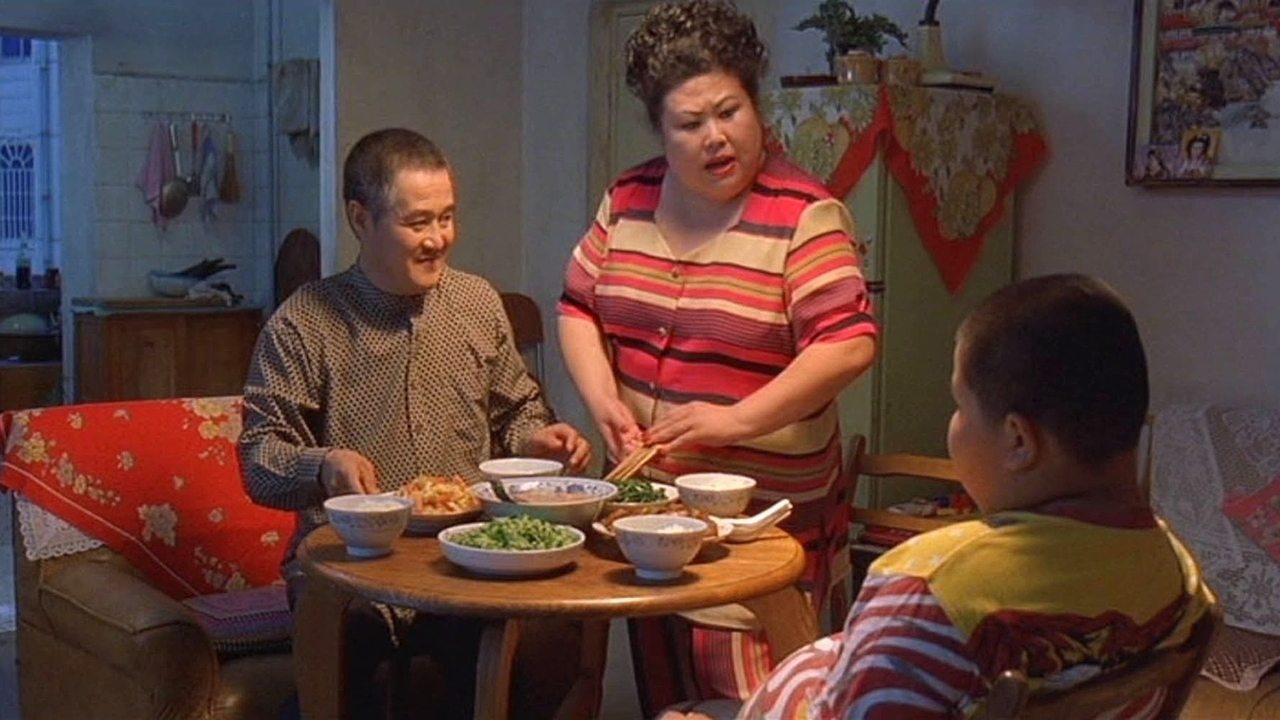
The premise feels almost like a classic setup, something akin to a Capra-esque fable, but viewed through a distinctly modern, perhaps more melancholic, lens. We meet Old Zhao (Zhao Benshan, a massive comedy star in China, here playing it beautifully understated), an aging, retired factory worker who's eager to marry a rather mercenary divorcée. The catch? He needs 50,000 yuan, and he needs his fiancée to believe he's a wealthy hotel manager. This initial deception snowballs, leading him and his equally down-on-their-luck friends to concoct an elaborate scheme: converting an abandoned bus into a makeshift "hotel" specifically designed for hourly rentals – they call it the "Happy Times Hut." It's a plan born of desperation, tinged with a kind of sad, comical absurdity.
### The Girl in the Makeshift World
But the heart of the film, the element that truly elevates it beyond a simple comedy of errors, arrives in the form of Wu Ying (Dong Jie in her stunning debut). She's the fiancée's neglected, blind stepdaughter, unwanted and seen merely as baggage. As part of his elaborate charade to appear prosperous and kind, Zhao reluctantly agrees to take her in, promising her a job as a masseuse in his non-existent hotel. What unfolds is a relationship built on layers of poignant untruths. Zhao and his friends strive to maintain the illusion for Wu Ying, crafting a fictional world within the dilapidated bus, even faking "customers" for her massages using taped recordings and makeshift props. It’s a kindness wrapped in deceit, a desperate attempt to shield her from a harsher reality, but is it sustainable? What happens when the carefully constructed walls of illusion inevitably begin to crumble?
Zhang Yimou, known then more for his visually stunning historical epics like Raise the Red Lantern (1991) or the raw realism of The Story of Qiu Ju (1992), takes a gentler, more intimate approach here. It feels like a deliberate shift, focusing not on grand spectacle but on the quiet dignity and resilience of ordinary people facing economic hardship in rapidly changing urban China. The film was adapted from the short story "Shifu: You'll Do Anything for a Laugh" by Mo Yan (who, fascinatingly, would go on to win the Nobel Prize in Literature in 2012). That literary pedigree perhaps explains the depth beneath the seemingly simple surface.
### Performances That Resonate
The film hinges entirely on the central performances, and they are truly something special. Zhao Benshan sheds his broad comedic persona to deliver a portrayal of Old Zhao that is deeply affecting. He’s flawed, certainly – his initial motivations are entirely self-serving – but his growing, unspoken affection and sense of responsibility for Wu Ying feel utterly genuine. You see the weight of his lies etched onto his face, the conflict between his desires and his developing conscience.
And then there's Dong Jie. Plucked from obscurity for this role (reportedly chosen from thousands during a casting call), she is luminous as Wu Ying. She avoids portraying blindness as a simple disability; instead, it shapes her perception of the world, heightening her other senses and perhaps making her more attuned to the emotional currents around her, even if she doesn't grasp the specifics of the deception. Her quiet hopefulness, her vulnerability, and the small moments of joy she finds within the fabricated "Happy Times Hut" are heartbreakingly authentic. Their chemistry forms the fragile, emotional core around which the entire narrative revolves.
### More Than Just a Story
Happy Times might have hit rental shelves just as VHS was beginning its slow fade, maybe nestled between the latest action blockbusters and fading 90s hits. Finding it might have felt like uncovering a hidden gem – quieter, more reflective, but packing an unexpected emotional punch. It wasn’t a massive international hit like Zhang Yimou’s later Wuxia films (Hero, House of Flying Daggers), making it feel even more like a personal discovery for those who stumbled upon it.
The production itself had its modest roots, filmed largely on location in Dalian, capturing the feel of a city undergoing transformation. There's a certain grit to the visuals that contrasts beautifully with the tenderness of the central relationship. It’s a film that asks quiet questions about the nature of kindness, the morality of white lies, and the human need for connection and purpose, even when built on fragile foundations. Does a lie told out of compassion become something else entirely? Can manufactured happiness ever touch the real thing?
Rating: 8/10
This score reflects the film's profound emotional impact, driven by exceptional lead performances and Zhang Yimou's sensitive direction. While the pacing is deliberate and it lacks the visual flair of his grander epics, its strength lies in its humanity and quiet observations. It earns its 8 for capturing a specific time and place with empathy and grace, crafting a story whose bittersweet resonance lingers long after the credits roll. It might not be the typical explosive fare we often reached for on a Friday night, but Happy Times offers a different kind of satisfaction – a thoughtful, moving experience that reminds you of cinema's power to illuminate the small, often overlooked corners of human experience.