Here we go, digging a little deeper into the stacks, past the familiar neon glow of the 80s action aisle, to pull out a sharp, strange gem from the very cusp of that decade. You might not have stumbled upon Eldar Ryazanov's The Garage (Гараж, 1979) next to the latest Stallone or Schwarzenegger back in the day, but this Soviet-era tragicomedy holds a peculiar power, a claustrophobic mirror to a system, and perhaps, to ourselves. What begins as a mundane meeting spirals into something far more revealing, all contained within the increasingly stifling walls of… a zoological museum?

A Meeting Most Foul
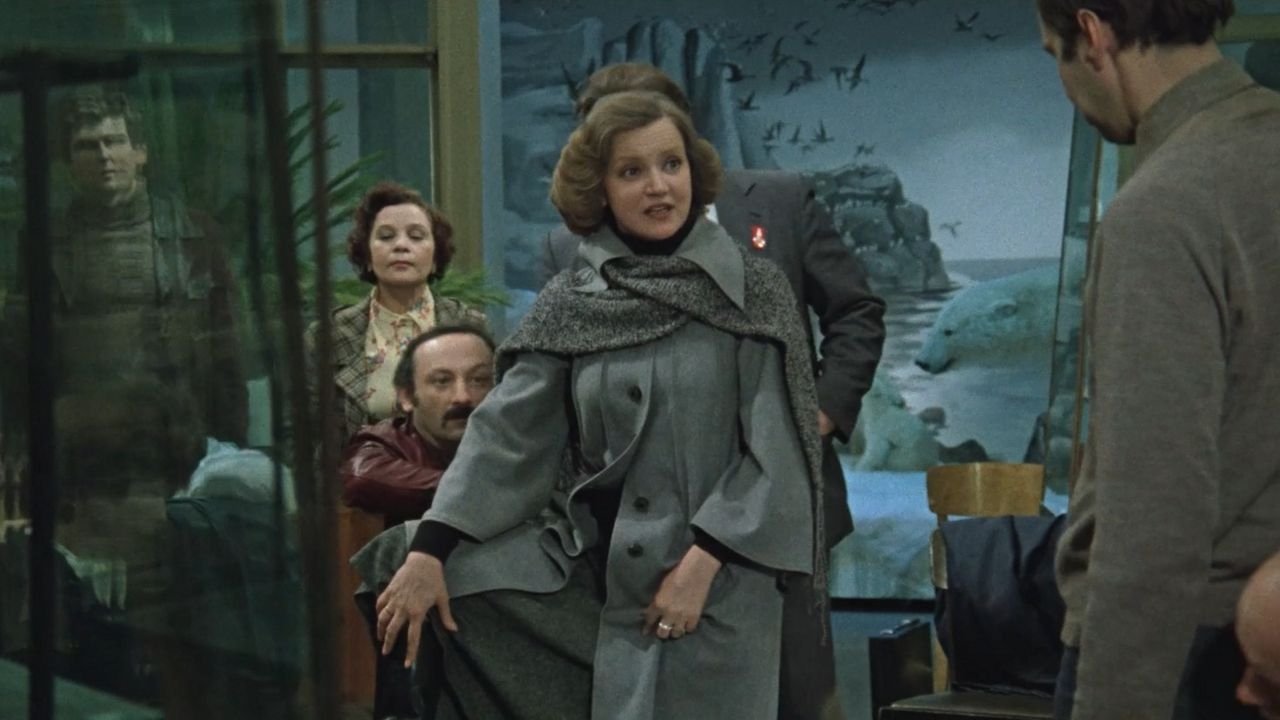
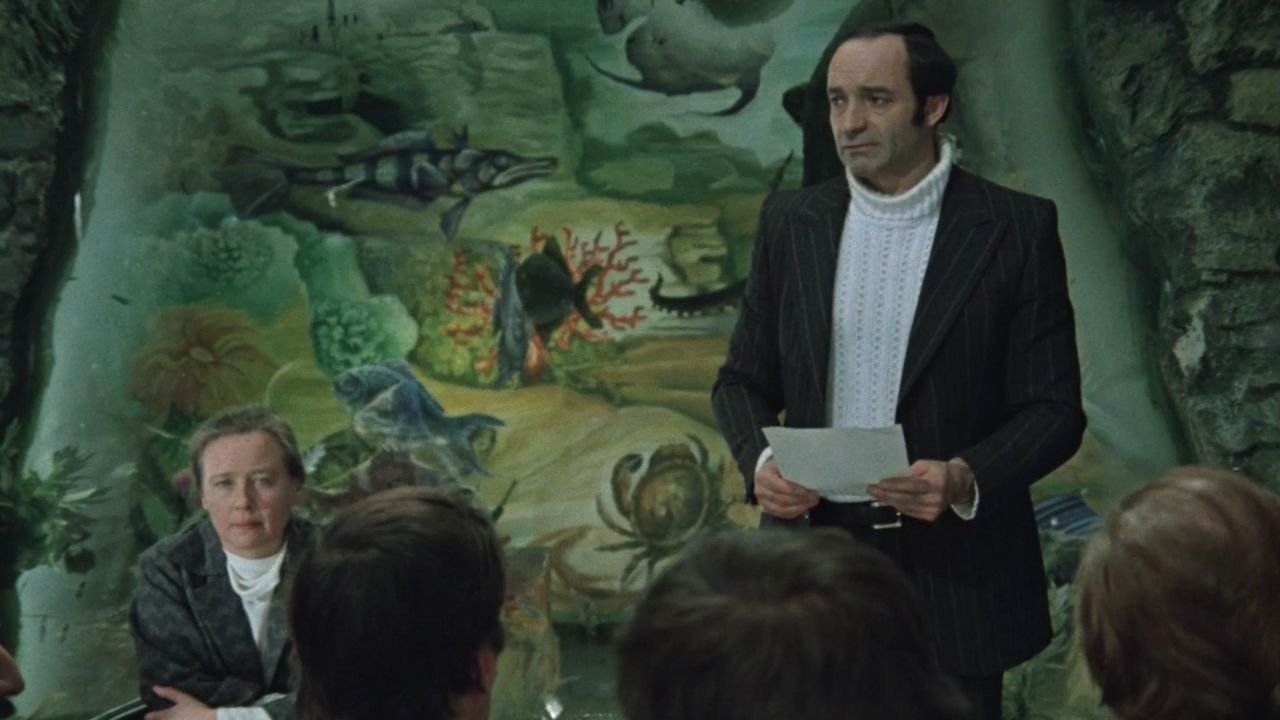
Forget sprawling car chases or intergalactic threats. The entire premise of The Garage unfolds in a single, increasingly tense location: the exhibit hall of a natural history museum, incongruously filled with stuffed animals silently observing the human drama. A cooperative society, dedicated to the seemingly simple goal of building private garages (a significant luxury in the late Soviet Union), holds a meeting. The agenda? Due to unforeseen circumstances involving a planned highway, four members must be voted out, losing their coveted spots. Simple, right? Except, nobody wants to be the one left out in the cold. What follows is a slow descent into bureaucratic absurdity, quiet desperation, and eventually, raw, exposed humanity. Ryazanov, already beloved for gentler satires like Irony of Fate and Office Romance, turns his sharp eye here to the crushing weight of the collective when individual fairness gets trampled.
The Walls Close In
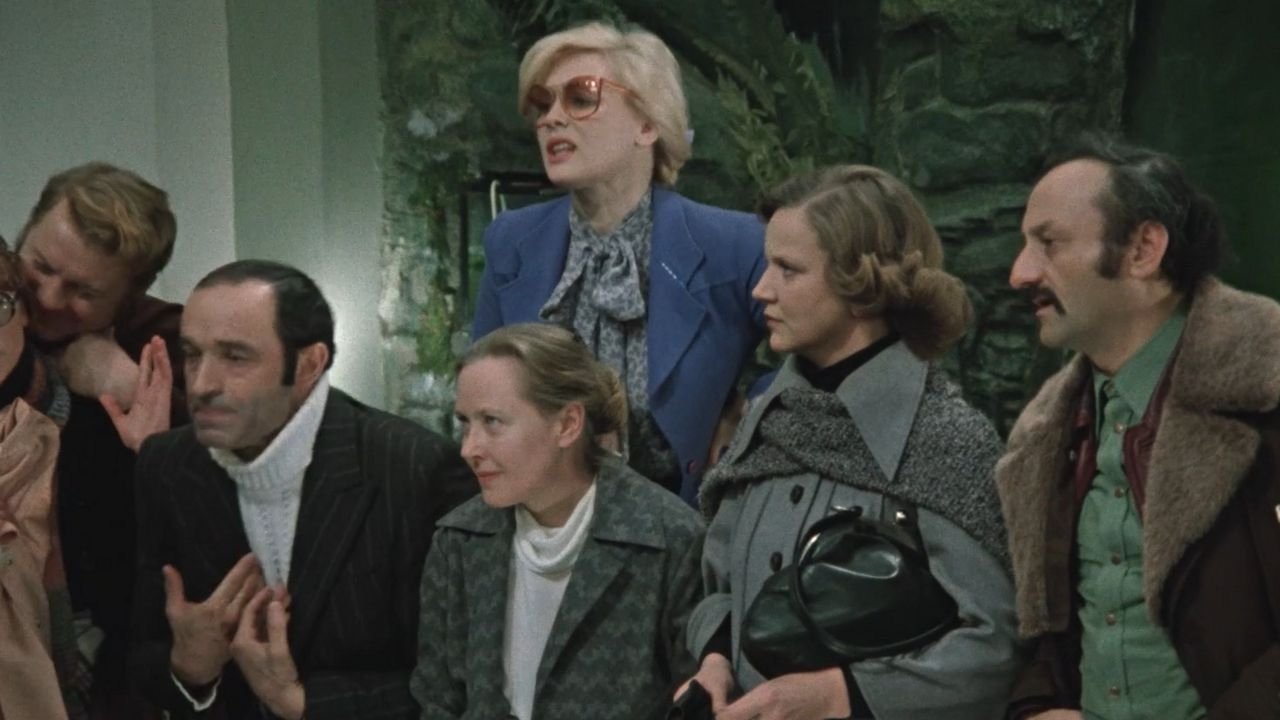
The genius of The Garage lies heavily in its confinement. Ryazanov masterfully uses the single setting not just as a cost-saving measure, but as a narrative crucible. As the hours wear on, the air grows thick with resentment, suspicion, and the stale scent of institutional maneuvering. The doors are eventually locked – literally – by one desperate member, trapping everyone until a "just" decision is reached. This forced proximity strips away politeness and pretense. We see alliances form and crumble, principles get compromised for personal gain, and the inherent unfairness of the situation bubble to the surface. The stuffed animals surrounding them – predators and prey frozen in time – become unsettling witnesses to the barely contained chaos of the human zoo unfolding before them. Does this forced confrontation, this stripping away of escape routes, reveal something fundamental about group dynamics when resources are scarce?
A Microcosm of Humanity (and Bureaucracy)
The film boasts a stunning ensemble cast, a gallery of recognizable types pushed to their limits. There's the outwardly stern but increasingly beleaguered cooperative chairman Sidorin, played with weary authority by Valentin Gaft. Andrei Myagkov (the romantic lead from Irony of Fate) offers a fascinating contrast as Khvostov, a quiet, unassuming scientist who seems almost invisible until his own principles are directly challenged. His journey from passive observer to quiet dissenter is subtly powerful. Perhaps most iconic is Liya Akhedzhakova as Malayeva, the junior researcher whose impassioned, almost hysterical defense of her rights becomes one of the film's most memorable moments – a raw cry against the Kafkaesque proceedings. Each performance contributes to a tapestry of late-Soviet life: the entitled, the sycophantic, the quietly principled, the utterly desperate. Their interactions feel unnervingly authentic, capturing the delicate dance of status, connection, and compromise that defined the era.
Behind the Museum Doors
The story goes that Ryazanov himself experienced a similarly maddening meeting of a real garage cooperative, providing the direct inspiration for the film. This grounding in reality likely contributes to its biting accuracy. Shot relatively quickly and reportedly in near-chronological order, the film retains an almost documentary-like feel of events spiraling out of control. It’s said that Ryazanov deliberately cast actors known for more positive roles in some of the less sympathetic parts, adding another layer to the social critique. While considered a comedy, The Garage pushed the boundaries of acceptable satire in the Brezhnev era. Its critique of collectivist hypocrisy, bureaucratic inertia, and the casual cruelty that can arise from systemic absurdity was remarkably bold for its time. It resonated deeply with Soviet audiences, who saw their own frustrations mirrored on screen, becoming a massive domestic hit despite its challenging themes. Imagine the catharsis of seeing such pointed commentary smuggled onto the big screen!
More Than Just Garages
Yes, on the surface, it’s about who gets a concrete box for their Lada. But The Garage digs much deeper. It's a film about fairness, dignity, and the courage it takes to speak up when the system tries to roll over you. It questions the very nature of collective decision-making and asks what happens to individual morality when faced with group pressure and personal loss. Watching it today, decades removed from its specific context, the film retains a startling relevance. The dynamics of committees, the passive acceptance of injustice, the sudden eruption of long-suppressed grievances – haven’t we all seen echoes of this in workplaces, community groups, or even online forums? The setting may be Soviet, but the human drama feels universal.
Rating: 9/10
The Garage earns a high score for its brilliant ensemble cast, masterful use of a single location to build tension and character, its sharp and courageous satire, and its surprisingly resonant exploration of human nature under pressure. Ryazanov crafts a near-perfect tragicomedy that is both specific to its time and place, yet speaks to universal flaws in how we organize ourselves and treat each other. It might lack the visual flair of 80s blockbusters, but its intellectual and emotional impact lingers.
It leaves you pondering the quiet compromises we make, and wondering: if the doors were locked on us, how would we truly behave? A chilling thought, served with a side of Soviet satire.