Okay, pull up a slightly uncomfortable armchair, maybe pour yourself something that isn't instant coffee, because we're digging into a corner of the video store shelves that might have seemed a bit... intimidating back in the day. We're talking about Nanni Moretti's Ecce Bombo from 1978. Now, I know, technically a 70s flick, but its spirit – that blend of droll observation, youthful ennui, and semi-autobiographical navel-gazing – feels like a direct ancestor to so much of the indie cinema that would populate those 'World Cinema' or 'Director Spotlight' sections on VHS through the 80s and 90s. Finding this tape felt like unearthing a secret handshake, a code to a different kind of movie experience.
### The Eloquence of Awkwardness
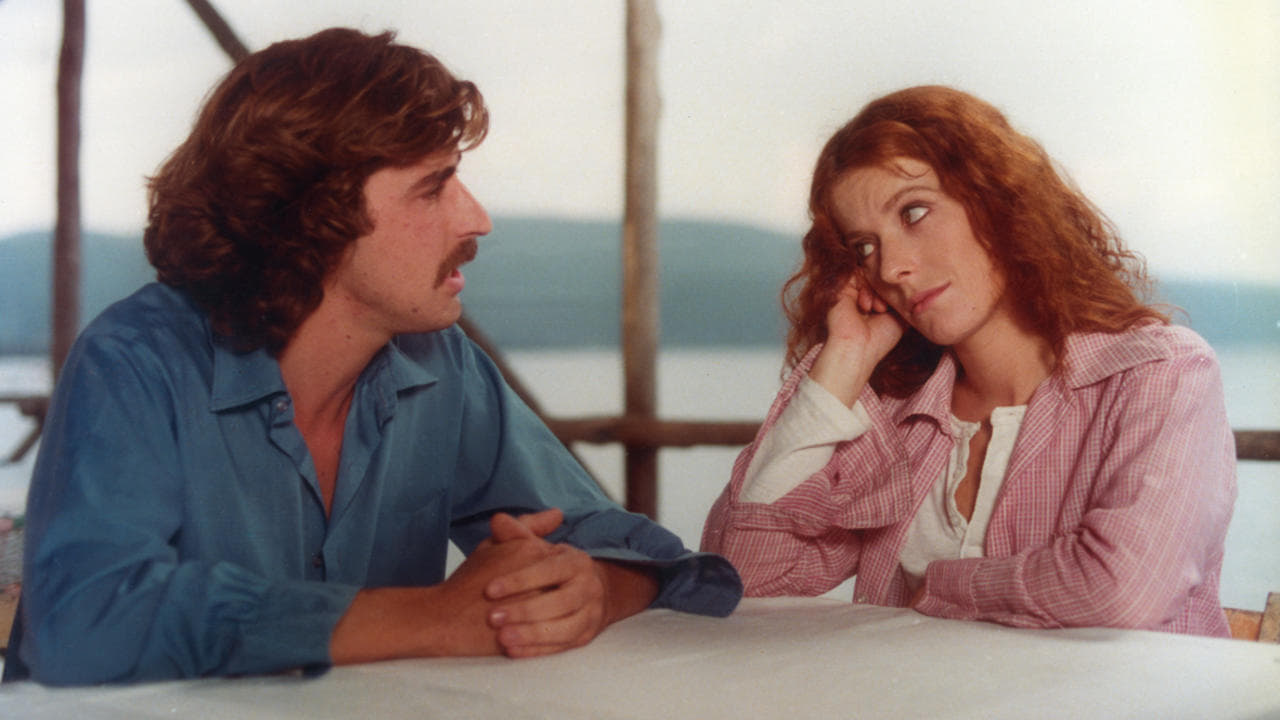
What immediately strikes you about Ecce Bombo isn't a high-concept plot or explosive action; it's the pervasive, almost palpable sense of awkwardness. We follow Michele Apicella (played by Moretti himself, establishing a character name he'd revisit) and his group of friends, former student activists now adrift in a post-ideological haze in Rome. They talk endlessly, analyze everything, attempt group therapy sessions that dissolve into squabbles, and generally fail to connect in any truly meaningful way. Does that sound familiar? There's a universality to their paralysis, their inability to translate thought into action or feeling into communication, that transcends its specific late-70s Italian context.
Moretti, who also wrote and directed, crafts a film that feels both deeply personal and sharply satirical. His Michele is a fascinating creation – intelligent, neurotic, often exasperatingly passive, yet possessed of a strange integrity. His deadpan delivery, which would become a hallmark, is already perfectly honed here. Watching him navigate disastrous parties, tedious political meetings, or uncomfortable silences with his long-suffering girlfriend (played with weary patience by Luisa Rossi) is a masterclass in observational comedy tinged with genuine melancholy.
### A Different Kind of Rewind
This wasn't the kind of tape you rented for escapism in the typical sense. You didn't get car chases or fantastical creatures. Instead, Ecce Bombo offered a mirror, albeit a sometimes uncomfortably funny one. It captured that feeling of being young, smart, and utterly unsure of what to do with it all. The film unfolds in a series of vignettes rather than a tight narrative arc, mirroring the characters' own lack of direction. Remember those endless summer days as a teenager or young adult where conversations looped, plans fizzled, and profound insights bumped up against utter absurdity? Moretti distills that feeling into cinematic form.
One scene that always stuck with me involves Michele trying desperately to articulate his feelings, only to get lost in qualifications and self-analysis. It's funny, yes, but also deeply poignant. How often do we find ourselves tangled in our own words, unable to bridge the gap between inner turmoil and outer expression?
### Behind the Roman Haze
For a film steeped in conversation and inaction, Ecce Bombo caused quite a stir. Made on a shoestring budget (reportedly equivalent to maybe $400k-$500k in today's money), it became a surprise sensation in Italy and even snagged a Palme d'Or nomination at the 1978 Cannes Film Festival. Imagine this quirky, dialogue-heavy, intensely personal film competing against giants! Its success announced Moretti as a major voice in Italian cinema, paving the way for later acclaimed works like Caro Diario (1993) and The Son's Room (2001).
The title itself, "Ecce Bombo," is famously nonsensical, reportedly stemming from a street vendor's cry Moretti overheard. It perfectly encapsulates the film's blend of the mundane, the absurd, and the vaguely philosophical – a shout into the void that signifies... well, who knows? That ambiguity is part of its charm. It wasn't trying to provide easy answers; it was content to explore the messy questions of living, loving, and trying (and often failing) to understand oneself and others in a world that felt increasingly fragmented. Watching it felt less like consuming a story and more like eavesdropping on a generation's soul-searching.
### Lasting Resonance
Is Ecce Bombo for everyone who browses the virtual aisles of VHS Heaven? Maybe not. Its pace is deliberate, its humor dry, its concerns intensely focused on intellectual and emotional paralysis. There are no explosions, only the quiet implosions of unresolved tension and unspoken feelings. Yet, its honesty is startling. Moretti's willingness to portray his characters – and, by extension, perhaps himself – with such unvarnished, often unflattering, clarity is refreshing. The film doesn't judge its characters' inertia; it observes it with a kind of empathetic exasperation.
It's a film that rewards patience and perhaps a certain disposition towards introspection. You watch it, and fragments linger: Michele’s blank stare, the circular arguments, the sudden bursts of surreal humour, the underlying sadness. It’s the kind of movie that might have sat on the shelf at the video store for ages, overlooked in favour of brighter covers, but offered a profoundly different, quieter kind of satisfaction if you took the chance.
Rating: 7.5/10
Justification: While perhaps not a broadly accessible crowd-pleaser in the traditional VHS blockbuster sense, Ecce Bombo is a remarkably assured and unique piece of filmmaking. Its strength lies in Nanni Moretti's singular voice, his uncomfortably funny and insightful portrayal of generational malaise, and its raw, semi-documentary feel. It’s a significant early work from a major director and captures a specific cultural moment with enduring relevance. It loses points only for its potentially alienating deliberate pace and niche appeal for a general audience seeking pure entertainment, but for those seeking something different, it's a vital watch.
Final Thought: Decades later, in our own hyper-connected yet often isolating world, doesn't Michele Apicella's struggle to simply connect still feel remarkably, sometimes painfully, familiar?