It wasn't always about explosions or high-speed chases down at the video store, was it? Sometimes, tucked away perhaps in a slightly dusty 'World Cinema' section, you'd find a cover that promised something entirely different. A film that didn't just want to entertain, but to prod, to question, maybe even to rewire how you saw the world for a couple of hours. Alain Resnais's 1980 offering, My American Uncle (Mon oncle d'Amérique), was precisely that kind of tape – a challenging, intricate, and utterly unique piece of filmmaking that likely sparked more post-viewing discussions than many of its blockbuster contemporaries.
Of Mazes and Men
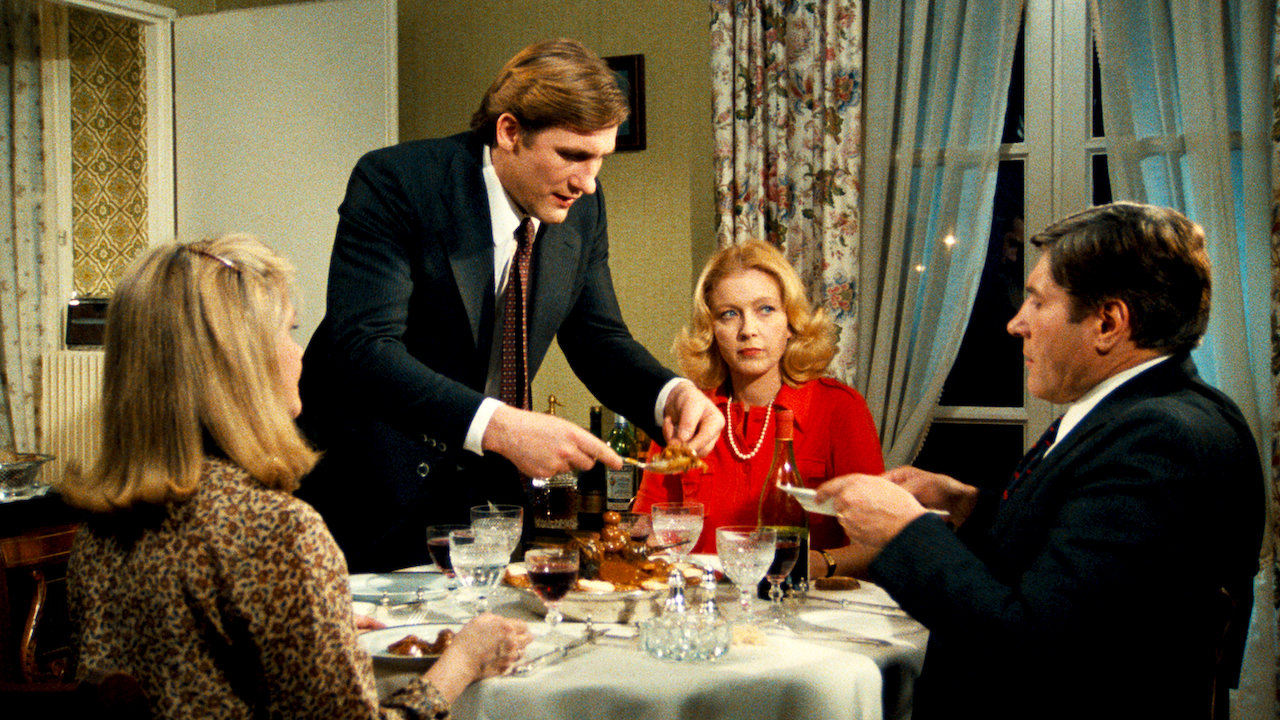
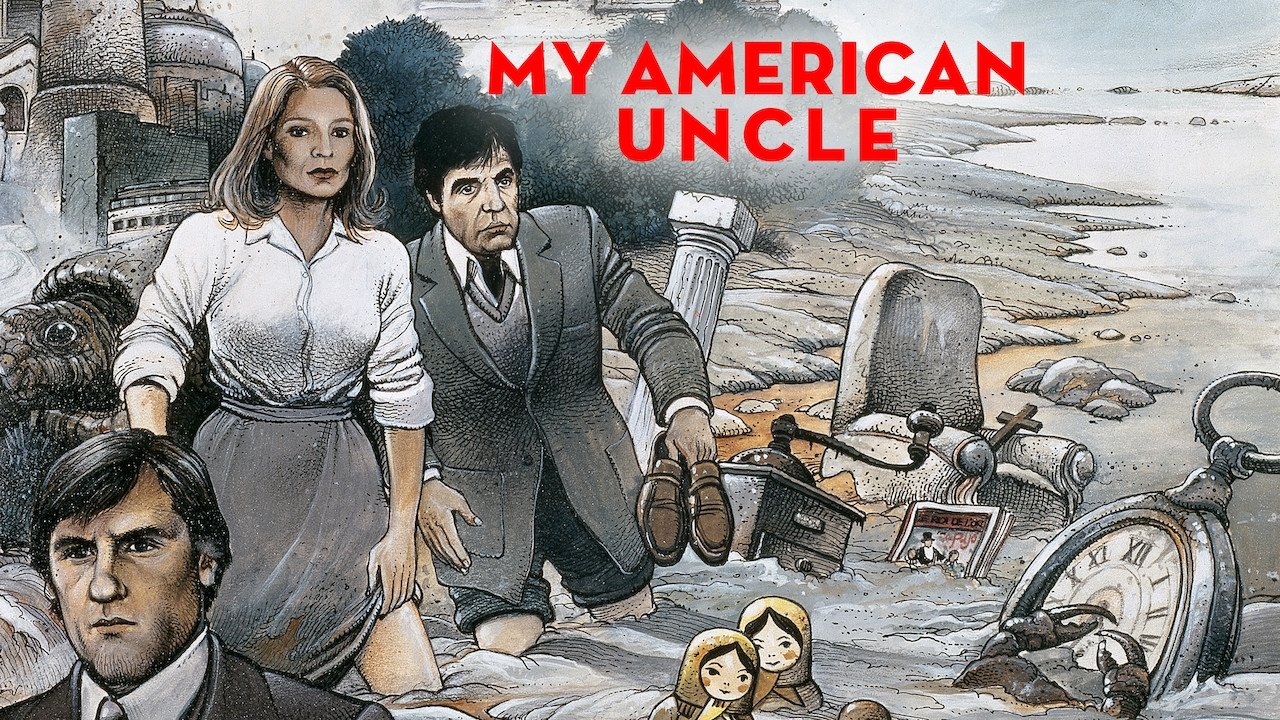
What immediately sets My American Uncle apart is its audacious structure. Forget straightforward narrative; Resnais, working from a brilliant script by Jean Gruault (who earned an Oscar nomination for his efforts), interweaves the lives of three distinct individuals – Janine (a driven actress played by Nicole Garcia), Jean (an ambitious media executive portrayed by Roger Pierre), and René (a pragmatic textile factory manager embodied by a forceful Gérard Depardieu) – with the behavioral theories, and indeed the actual presence, of French physician and scientist Henri Laborit. Laborit appears as himself, directly addressing the camera, using footage of lab rats to illustrate concepts like the fight-or-flight response, inhibition of action, and the biological underpinnings of human behavior under stress. It sounds academic, almost jarringly so, but the effect is strangely hypnotic.
The film posits that the anxieties, ambitions, betrayals, and desires driving Janine, Jean, and René are mirrored, even dictated, by these fundamental biological responses. As their paths cross and their carefully constructed lives begin to fray – careers threatened, relationships strained, societal pressures mounting – Resnais cuts to Laborit, coolly dissecting the territorial disputes, the search for gratification, the paralysis of inescapable stress, often visually linking the characters to their cinematic spirit animals (often famous French movie stars!). It’s a cinematic experiment that forces us to ask: how much free will do we truly possess when faced with the pressures of modern life?
The Director's Design, The Actor's Truth
Alain Resnais, a figure often associated with the French New Wave's more experimental wing (think Hiroshima mon amour or Last Year at Marienbad), directs with a clinical precision that perfectly complements Laborit’s commentary. Yet, the film never feels entirely cold or detached. This is largely thanks to the powerhouse performances at its core. Nicole Garcia brings a compelling blend of vulnerability and steely ambition to Janine, a woman navigating the treacherous landscapes of career politics and personal desire. Roger Pierre, perhaps better known for lighter roles, is surprisingly effective as the seemingly composed Jean, whose carefully ordered world gradually crumbles.
And then there's Gérard Depardieu. Already a major force in French cinema, his René is a fascinating study in contained frustration. He's a man of the provinces, rooted in his work and family, whose upward mobility clashes with systemic obstacles and personal limitations. Depardieu conveys René’s simmering resentments and eventual explosive reactions with a raw authenticity that makes his plight deeply felt, even as Laborit might categorize his actions through a biological lens. These actors prevent their characters from becoming mere case studies; they breathe messy, complicated life into the theoretical framework. It’s their humanity that grounds the film’s intellectual daring.
A Rewarding Rental Riddle
Finding My American Uncle on VHS might have felt like discovering a puzzle box. It wasn't the easy comfort food of a familiar action hero or a guaranteed laugh riot. It demanded attention, invited interpretation. I recall renting films like this precisely because they felt different, offering a glimpse into cinematic possibilities beyond the mainstream. Its success at the 1980 Cannes Film Festival, where it snagged the prestigious Grand Prix, signaled its artistic importance, even if it wasn't destined for multiplex ubiquity.
The integration of Laborit wasn't just a gimmick; it was foundational. His theories weren't merely overlaid but woven into the very fabric of the narrative. Learning that Laborit himself participated so directly adds another layer – it’s not just a filmmaker interpreting science, but science actively participating in the filmmaking. This bold move, this willingness to blend documentary-style lectures with intimate human drama, is what makes My American Uncle endure. Does it provide easy answers? Absolutely not. Does it make you think about why people act the way they do, especially under pressure? Undeniably.
Final Thoughts: The Human Experiment
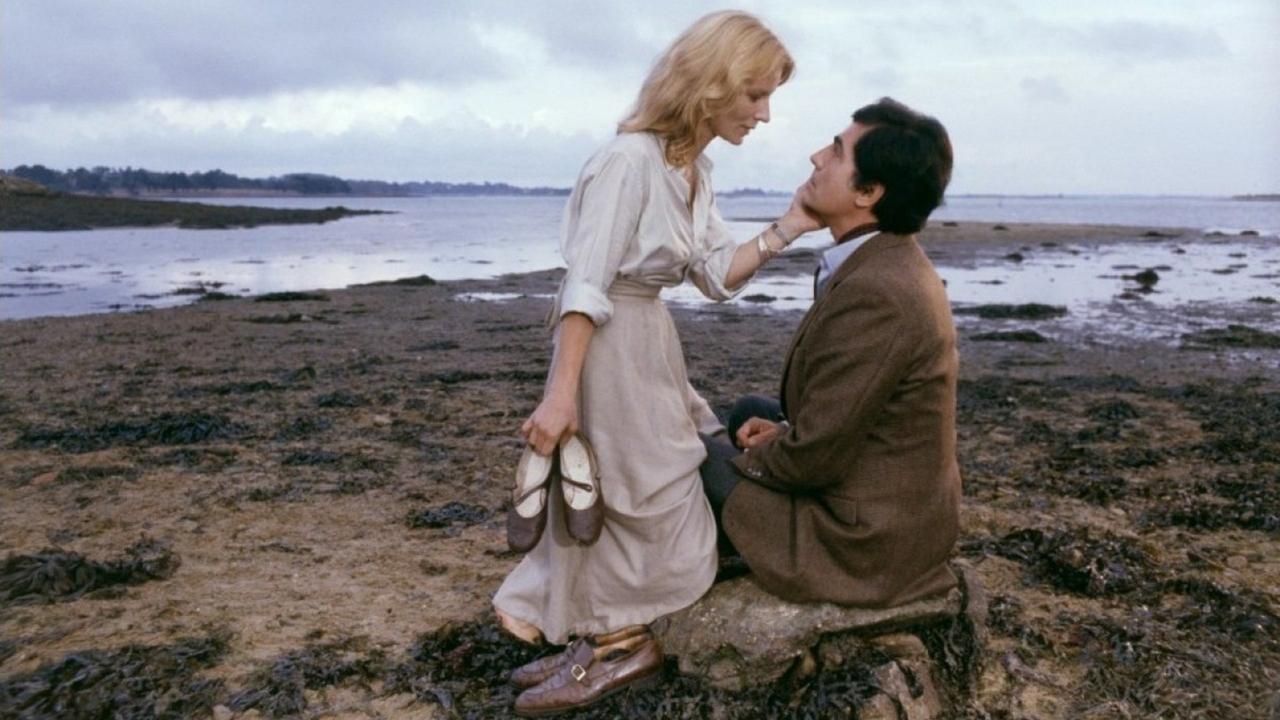
My American Uncle is a film that stays with you, not necessarily for its plot twists, but for the intellectual itch it creates. It’s a conversation starter, a cinematic essay wrapped in compelling human stories. Resnais masterfully balances the abstract and the personal, creating a work that feels both intellectually stimulating and emotionally resonant. It challenges our assumptions about motivation and choice, using the medium of film in a truly innovative way. While perhaps not a 'comfort watch' in the traditional sense, its intelligence and artistry offer a different kind of satisfaction.
Rating: 9/10
This high rating reflects the film's sheer audacity, its brilliant structural innovation, the strength of the central performances, and its lasting power to provoke thought. It's a landmark of late 20th-century French cinema that justifies its critical acclaim. It may not have been the tape you rented every weekend, but encountering My American Uncle was, and remains, a significant cinematic event – a reminder of how film can dissect the human condition in unexpected and illuminating ways. What does it ultimately say about our struggles within the societal 'maze'? That's a question Resnais and Laborit leave, compellingly, for us to unravel.