Here we are, back in the glow of the cathode ray tube, pulling another tape from the shelves of memory. This time, it’s not a slick blockbuster, but something altogether different: Jim Jarmusch's 1980 debut, Permanent Vacation. Watching it again feels less like revisiting a movie and more like uncovering a faded photograph of a New York City that barely exists anymore, captured through the eyes of someone who feels like he barely exists within it. It’s a film that arrives not with a bang, but with a kind of weary, poetic sigh.
A City of Ghosts and Drifters
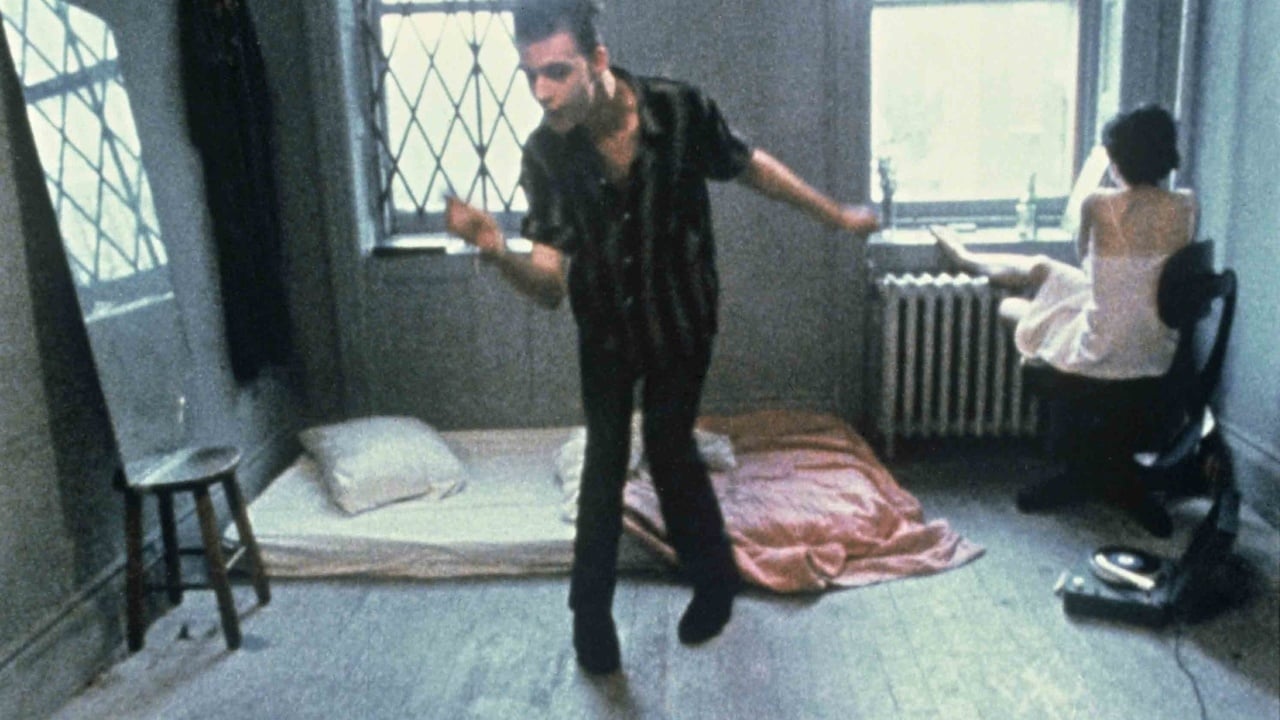
Forget plot in the conventional sense. Permanent Vacation is a mood piece, an episodic wander through the decaying, pre-gentrified landscapes of downtown Manhattan alongside Aloysius "Allie" Parker (Chris Parker). Allie is a young man adrift, a devotee of Charlie Parker (no relation, he clarifies), who seems to view the world through a detached, almost alien lens. He doesn’t walk through the city; he haunts it, observing its strange inhabitants and derelict beauty with a kind of passive curiosity. The film itself, shot on gritty 16mm, mirrors this aesthetic – raw, unpolished, and utterly hypnotic in its strangeness.
This wasn't just some random indie effort; Permanent Vacation was famously Jarmusch's final thesis project at NYU's film school. Legend has it that he partially funded its shoestring budget (estimated around $12,000-$15,000 – imagine that today!) with leftover scholarship money. That raw, almost bootleg feel isn't just an aesthetic choice; it’s born of necessity, yet it perfectly complements the film's themes of alienation and urban decay. You can practically smell the damp concrete and feel the grit under your fingernails.
The Birth of Jarmusch Cool
Watching Permanent Vacation now is fascinating as an embryonic glimpse of the director Jarmusch would become. The seeds are all here: the deadpan humour (though sparser and darker than in later works), the fascination with outsiders and drifters, the episodic structure built around strange encounters rather than driving narrative, the crucial role of music. The score, an early, evocative sax-driven piece by John Lurie (who also appears in a memorable cameo and would become a key collaborator on films like Stranger Than Paradise and Down by Law), isn't just background noise; it’s Allie’s internal landscape made audible, melancholic and searching.
Chris Parker's performance as Allie is central to the film's unique energy. It's a portrayal of profound disconnection. He delivers his Beat-inflected philosophical musings with a flat affect that could be mistaken for boredom, but feels more like a deliberate shield against a world he can't quite connect with. Is he deep, or just deeply lost? The film leaves that question hanging, reflecting a certain kind of youthful existentialism that feels both specific to its time and strangely timeless. His interactions – with his institutionalized mother, a paranoid veteran, a saxophone player, a fleeting love interest – are less conversations than brief collisions of separate orbits.
An Artifact of a Different Time
Let's be honest: grabbing this off the video store shelf back in the day, nestled perhaps between more conventional fare, would have been jarring for many. Permanent Vacation demands patience. Its pace is deliberately slow, its narrative virtually non-existent, its characters often opaque. It’s the antithesis of the high-concept, easily digestible entertainment that dominated the era. There’s no catharsis, no neat resolution – just Allie, finally deciding to leave, taking a boat to Paris, trading one form of potential alienation for another.
But isn't that precisely its power? It captures a specific feeling – the aimlessness, the search for meaning in the mundane, the beauty found in decay – that few other films from the period even attempted. It feels like a transmission from the underground, a piece of the No Wave scene committed to celluloid. You watch it less for story and more for the atmosphere, for the glimpses of a forgotten New York, and for the birth of a truly unique cinematic voice. I remember finding a worn VHS copy in a dusty corner of a second-hand shop years ago, feeling like I’d discovered some lost secret.
Final Thoughts & Rating
Permanent Vacation isn't a film for casual viewing. It’s challenging, sometimes frustratingly so, but it’s also deeply atmospheric and undeniably authentic. It’s a vital piece of American independent film history, showcasing the emergence of Jim Jarmusch's singular vision in its rawest form. It feels less like a movie and more like a found object, imbued with the spirit of its time and place.
Rating: 7/10 – The score reflects its significance as a debut and its powerful mood, acknowledging its deliberately rough edges and limited accessibility. It succeeds entirely on its own uncompromising terms.
What lingers most isn't a specific scene, but the overall feeling – the loneliness of the city night, the sound of distant saxophone, and the haunting image of a young man searching for connection in a world that seems determined to keep him at arm's length. It’s a quiet film, but its echoes resonate long after the tape stops rolling.