The midday sun beats down on the grimy canyons of early 80s New York City, reflecting off glass and steel. Somewhere high above, amidst the architectural marvels, something ancient stirs. Not in the shadows, but brazenly, under the indifferent sky. A window washer plummets. A rooftop sunbather vanishes. This isn't your typical urban decay; it's something primal, plucked from forgotten myths and nested atop one of the city's most iconic Art Deco crowns. This is the utterly unique, often baffling, but strangely captivating world of Larry Cohen's Q: The Winged Serpent (1982).
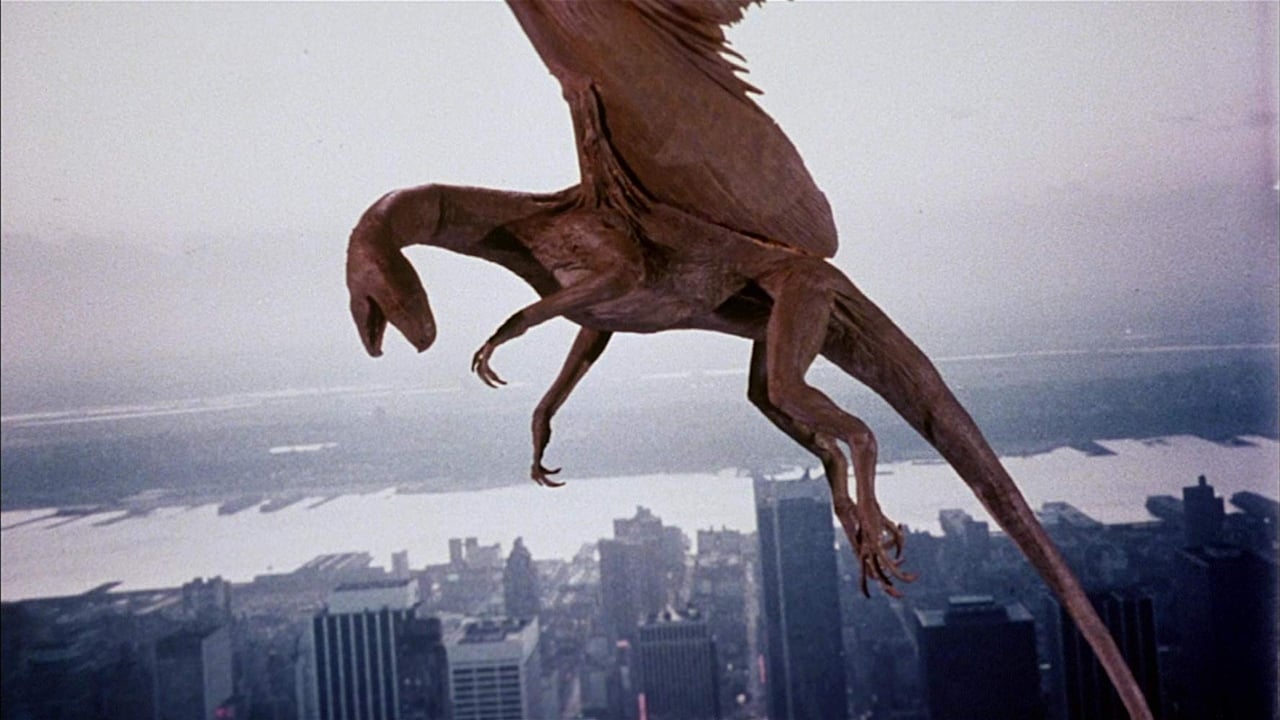
Aztec Gods Over Manhattan
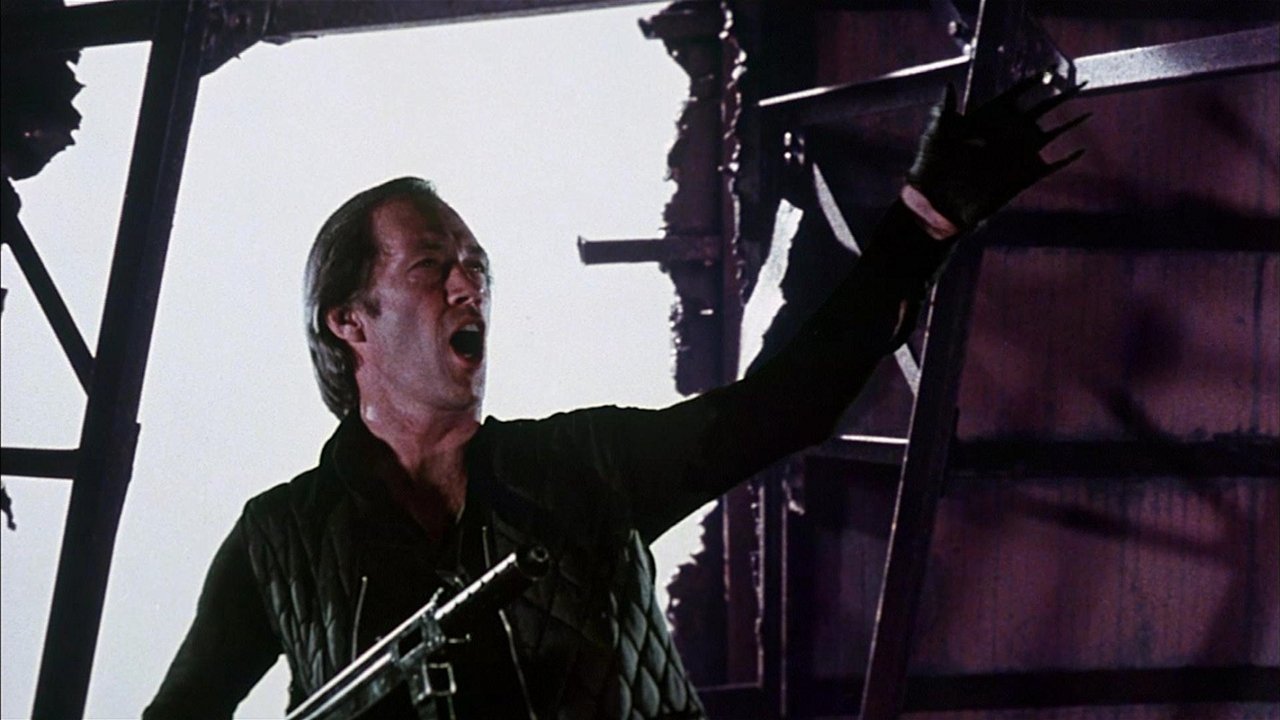
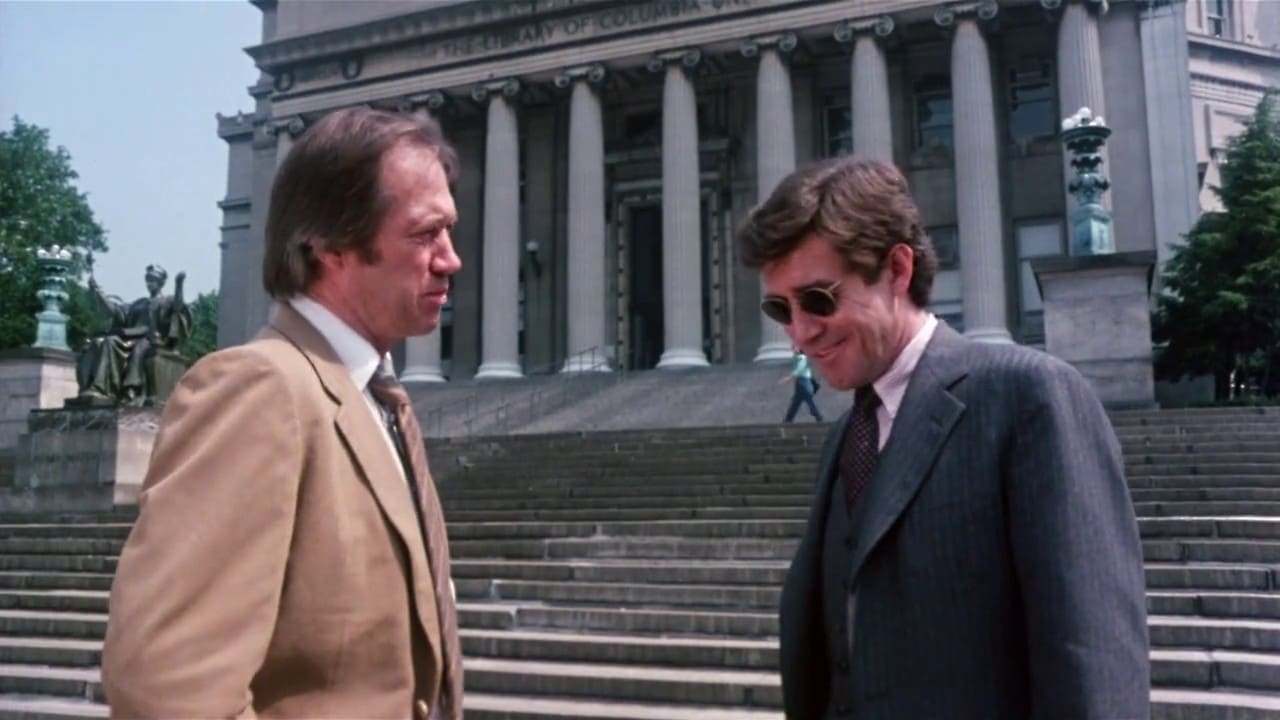
Forget subtle build-up. Cohen, ever the cinematic rogue known for lean, mean genre pictures like It's Alive (1974) and The Stuff (1985), throws us headfirst into the chaos. His New York isn't the romanticized postcard; it's a character in itself – loud, dirty, indifferent, and now, inexplicably, feeding a feathered deity. The plot unfolds with a jarring duality: Detectives Shep (David Carradine, bringing his stoic Kung Fu presence) and Powell (Richard Roundtree, forever cool thanks to Shaft) are investigating a series of bizarre ritualistic murders and rooftop disappearances that defy logical explanation. Simultaneously, we follow Jimmy Quinn (Michael Moriarty), a twitchy, small-time loser and getaway driver trying to ditch his criminal past, who accidentally discovers the creature's lair during a botched jewel heist.
Cohen's genius, or perhaps his madness, lies in this juxtaposition. He grounds the fantastical arrival of Quetzalcoatl, the Aztec winged serpent god, in the utterly mundane struggles of street-level crime and police procedure. It’s a clash that shouldn’t work, yet somehow, under Cohen’s guerilla-style direction – famously rumoured to involve shooting crucial scenes without permits, adding a layer of genuine risk to the production – it coalesces into something gritty and unpredictable. This 80s monster movie feels less like a slick Hollywood production and more like a bizarre news report captured on grainy film stock.
A Creature of Its Time
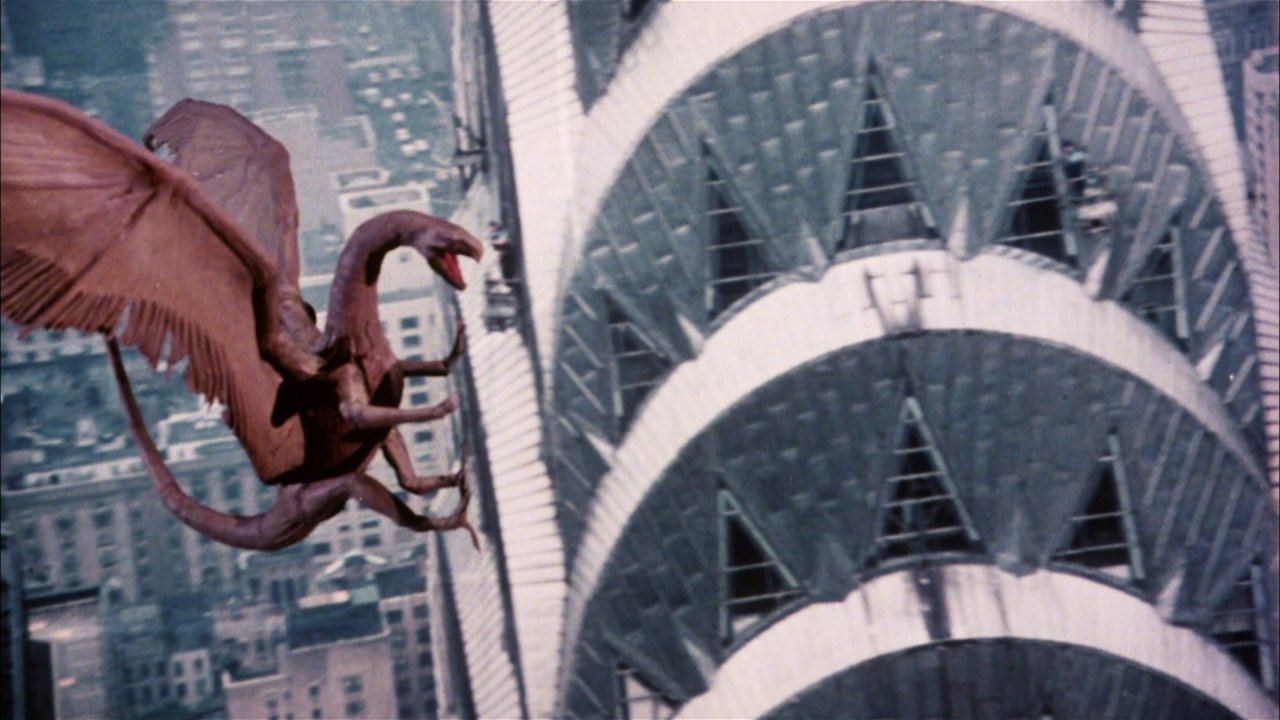
Let's talk about the star: Q itself. Brought to life primarily through stop-motion animation by David Allen and Randy Cook, pupils of the legendary Ray Harryhausen, the creature design is striking – a serpentine body with vast, feathered wings. Does the animation hold up perfectly today? Perhaps not to modern eyes accustomed to seamless CGI. There's an undeniable jerkiness, a tangible sense of the painstaking frame-by-frame process. But viewed through the lens of the VHS era, these effects had a certain charm, a physical presence that felt made, not just rendered. I distinctly remember rewinding the tape, trying to catch the details of Q swooping between skyscrapers. Doesn't that monster design still feel unnerving in its sheer impossibility against the NYC skyline? The stop-motion sequences are punctuated by moments of surprisingly graphic practical gore – severed limbs, bloody crime scenes – reminding you that Cohen wasn't afraid to get nasty.
The Jazz Riff Performance

While Q provides the spectacle, the film's frantic, beating heart belongs to Michael Moriarty as Jimmy Quinn. His performance is less acting, more a sustained, improvisational jazz solo of nervous tics, desperate pleas, and unexpected bursts of clarity. Quinn isn't a hero; he's an opportunistic screw-up who sees the monster not as a terror, but as his lottery ticket out of the gutter. He wants amnesty, cash, and headlines for revealing Q's nesting place – the spire of the Chrysler Building. Moriarty, reportedly encouraged by Cohen to riff freely, delivers lines with a cadence that's baffling one moment and brilliant the next. It's a performance that polarized critics but earned him Best Actor at the Sitges Film Festival, and it remains utterly unforgettable. He is the strange energy of this film made flesh. Can you imagine anyone else demanding a million dollars tax-free for the location of a god nesting atop a landmark?
Legends of the Spire
The choice of the Chrysler Building as Q's roost is inspired, lending the film an instant visual iconography. The stories surrounding the filming only add to the Q movie mystique. Whispers persist that Cohen and his crew really did film scenes near the actual spire, perhaps bending rules or simply relying on audacity to get their shots. Whether entirely true or embellished over time, this "dark legend" perfectly matches the film's renegade spirit. The logistical nightmare of staging shootouts and monster attacks around such a famous, functioning building, likely on a tight budget (reportedly around $1.2 million), speaks volumes about Cohen's resourcefulness and willingness to capture the city's raw energy.
Why It Still Bites
Q is messy, eccentric, and tonally all over the place. The crime plot sometimes feels like a different movie awkwardly stitched to the creature feature. The stop-motion, while ambitious, shows its age. Yet, the film endures as a beloved cult classic. Why? It's Larry Cohen's sheer B-movie audacity, the unforgettable Michael Moriarty performance, the gritty NYC atmosphere, and the central, wonderfully bizarre concept. It feels like a film that shouldn't exist, made against the odds, fueled by hustle and weird inspiration. Watching it on a worn VHS tape back in the day felt like discovering a secret – a grimy, feathered, screeching secret nesting high above the city that never sleeps. It’s a prime example of a certain kind of 80s monster movie VHS gem – rough around the edges, but pulsating with raw energy and a truly unique vision.
VHS Heaven Rating: 7/10
The rating reflects the film's undeniable cult appeal, Moriarty's electrifying performance, Cohen's distinctive directorial stamp, and the sheer audacity of the concept. Points are docked for the sometimes jarring tonal shifts and the inevitably dated effects, but these almost add to its peculiar charm.
Q: The Winged Serpent remains a gloriously odd standout in the creature feature genre, a testament to low-budget ingenuity and the singular vision of its creators. It’s a film that nests in your memory, much like its titular beast atop that famous spire, refusing to be easily categorized or forgotten.