Remember that distinct feeling, somewhere between a Saturday morning cartoon and a slightly forgotten fairy tale, that certain animated films from the early 80s possessed? There was often a touch of melancholy, a willingness to embrace darkness alongside wonder, and visuals that felt handcrafted, sometimes charmingly imperfect. If any film embodies that specific, almost dreamlike quality, it’s the Rankin/Bass animated feature from 1982 (though many of us in the States wouldn’t catch it until its 1986 TV premiere), The Flight of Dragons. This wasn't your typical Disney fare; it felt denser, stranger, and possessed a unique internal logic that burrowed its way into your young imagination.
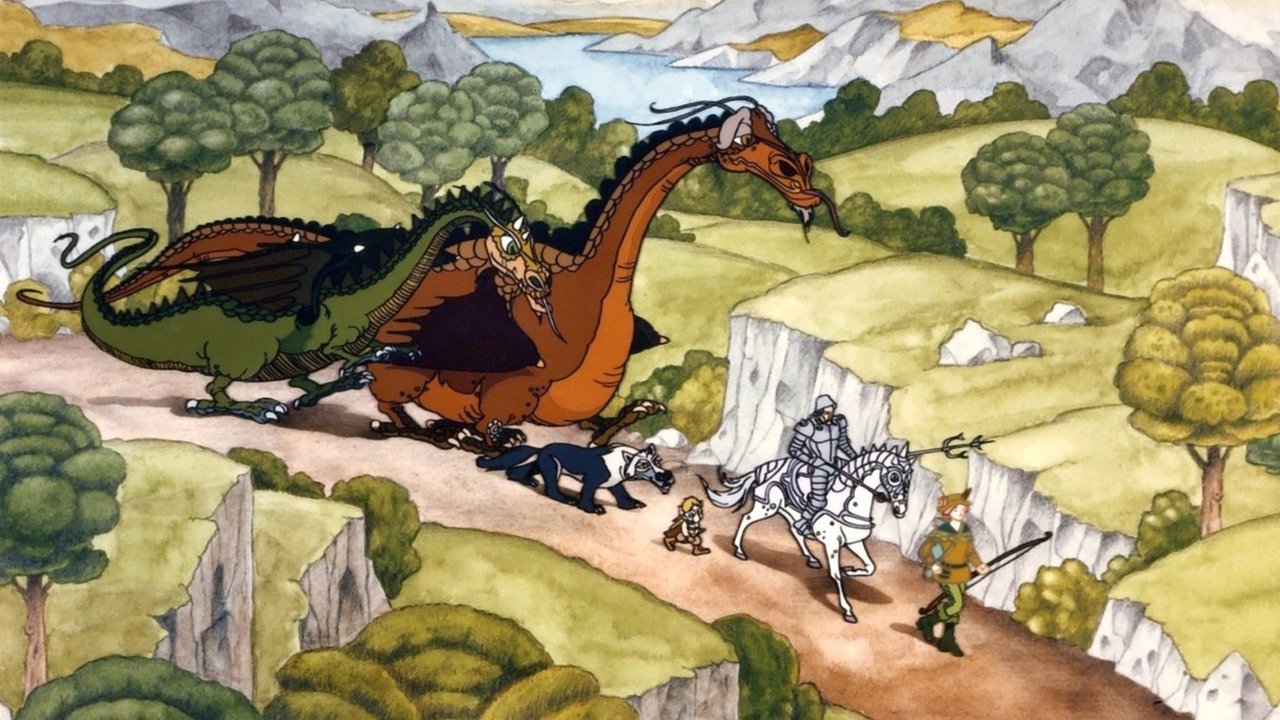
A World Where Logic Meets Legend
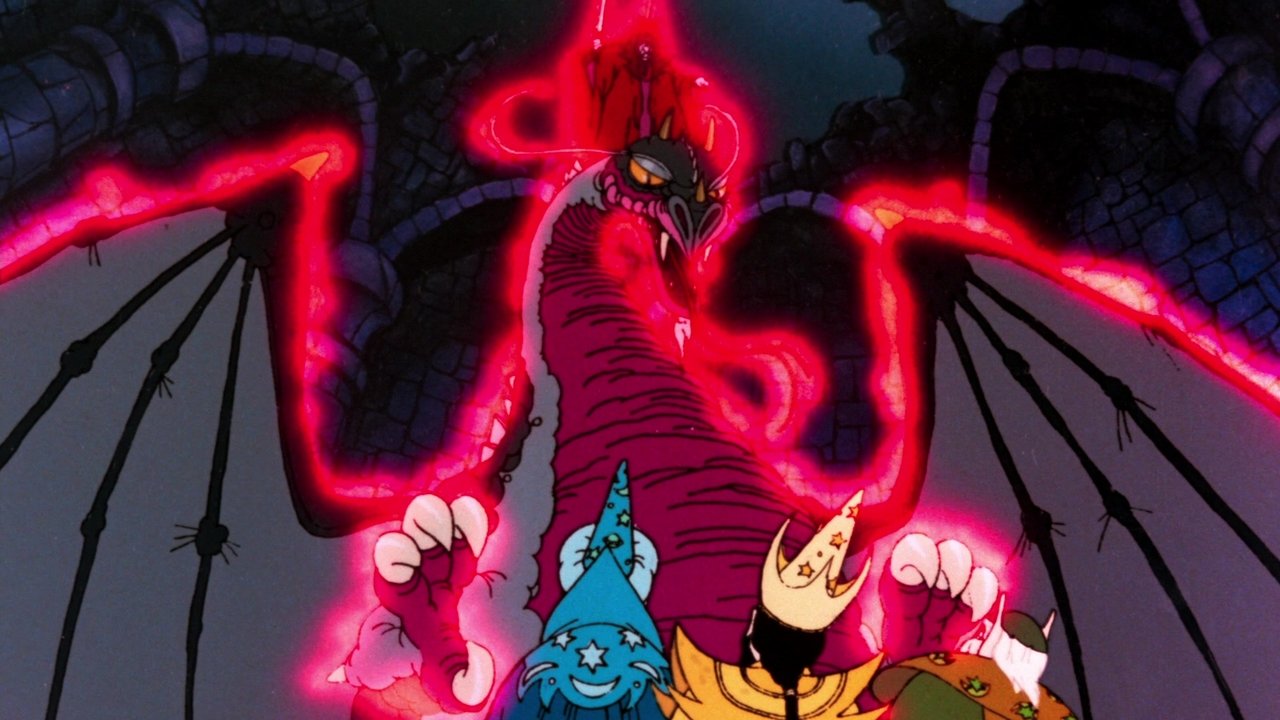
What immediately sets The Flight of Dragons apart is its curious central conceit, pulled directly from Peter Dickinson’s speculative biology book of the same name (cleverly merged by writer Romeo Muller with Gordon R. Dickson's fantasy novel The Dragon and the George). The film posits a world where magic is fading as humanity embraces logic and science. The Green Wizard Carolinus (voiced with gentle authority by Harry Morgan) proposes a last refuge for magical creatures, but his plan is opposed by the terrifying Red Wizard Ommadon (James Earl Jones, bringing that unmistakable voice of cosmic dread). To retrieve Ommadon’s crown, the source of his power, Carolinus summons a champion from the future – Peter Dickinson (John Ritter), a 20th-century board game designer obsessed with dragons and, crucially, a man of science. It’s this collision of worlds, the attempt to explain dragon flight and fire-breathing through pseudo-scientific principles (hydrogen generation, airborne sacs!), that gives the film its wonderfully quirky identity. It’s fantasy viewed through an almost proto-steampunk lens, an idea so delightfully nerdy it’s impossible not to appreciate.
The Accidental Dragon and His Quest
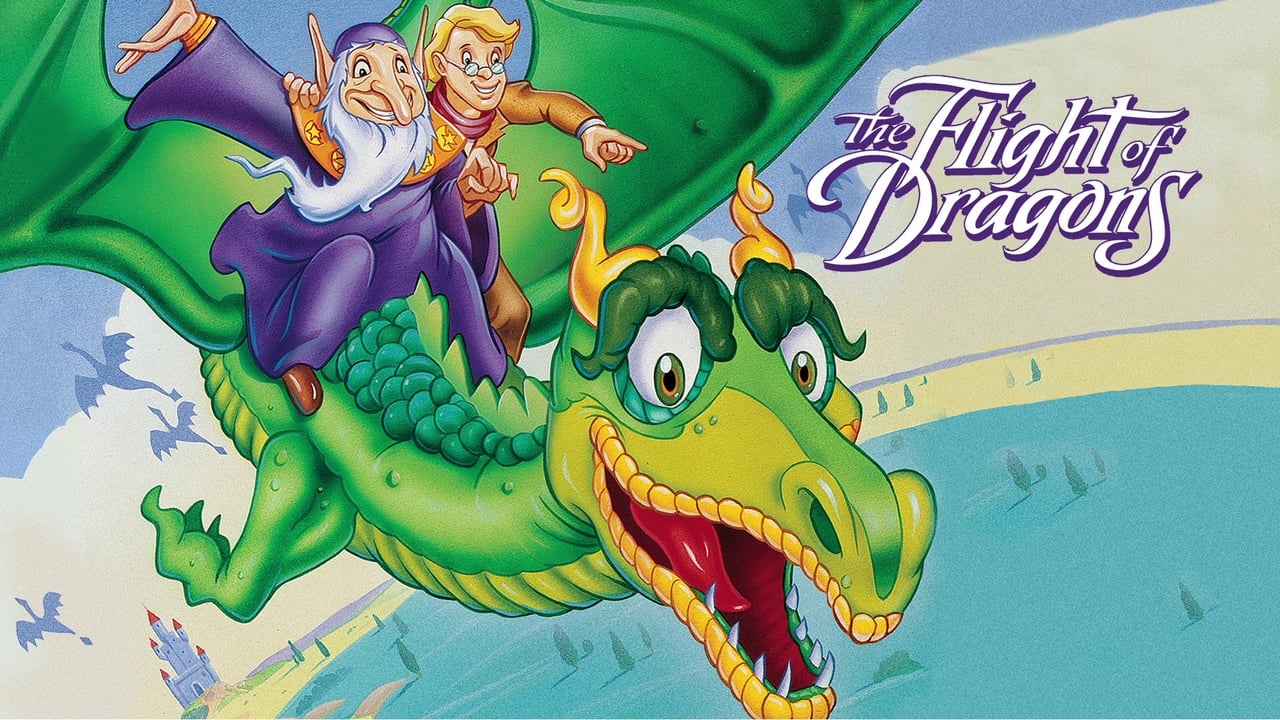
Of course, things go awry. An accident merges Peter’s consciousness with that of the young dragon Gorbash, leaving Peter trapped in a dragon’s body while his human form lies enchanted. This sets up our core adventure: Peter, guided by the aging dragon Smrgol (James Gregory, gruffly endearing) and joined by the valiant knight Sir Orrin Neville-Smythe and the archer Danielle, must undertake the perilous quest to defeat Ommadon. The journey itself is filled with classic fantasy encounters – treacherous landscapes, fearsome beasts like the Sand Murks and the monstrous Ogre of Gormley Keep – that felt genuinely threatening. There was a weight to the danger; characters could, and did, face real peril. Remember the chilling sequence with the Ogre? It didn't shy away from being unsettling, a hallmark of much Rankin/Bass fantasy work, including their collaboration with Topcraft studio on this and The Last Unicorn – a studio whose artists would later form the legendary Studio Ghibli. That pedigree shines through in the distinctive character designs and evocative backgrounds, even on a modest budget.
Voices That Breathed Fire (and Heart)
The voice cast truly elevates the material. John Ritter brings his signature likeability and earnest confusion to Peter, making his transformation and struggle relatable. James Earl Jones as Ommadon is pure, terrifying menace – a voice that could curdle milk across dimensions. But perhaps the most memorable and poignant performance belongs to the great Victor Buono as the immense, scholarly, and ultimately brave dragon Aragh. Buono delivers lines like "Antiquity! Antiquity! Have you no soul?" with such theatrical flair and warmth. Tragically, Buono passed away shortly after recording his lines in 1982, making Aragh one of his final performances and lending his character’s fate an extra layer of melancholy for those who know the backstory. His contribution is a huge part of the film’s heart.
Retro Fun Facts That Still Sparkle
Digging into the history of The Flight of Dragons uncovers some fascinating nuggets that add to its charm.
- The Blended Source: As mentioned, screenwriter Romeo Muller, a Rankin/Bass stalwart known for scripting many of their beloved holiday specials, faced the unusual task of merging Peter Dickinson's scientific exploration of dragons with Gordon R. Dickson's traditional fantasy quest narrative. The way he balanced these seemingly disparate elements is a testament to his skill in crafting unique fantasy worlds.
- Delayed US Debut: While completed and released internationally in 1982, the film didn't actually air in the United States until November 1986, premiering as an ABC Weekend Special. This four-year gap meant that for many American kids, discovering it felt like uncovering a slightly hidden treasure, separate from the usual theatrical runs. It likely contributed to its enduring cult status – something you caught by chance and never forgot.
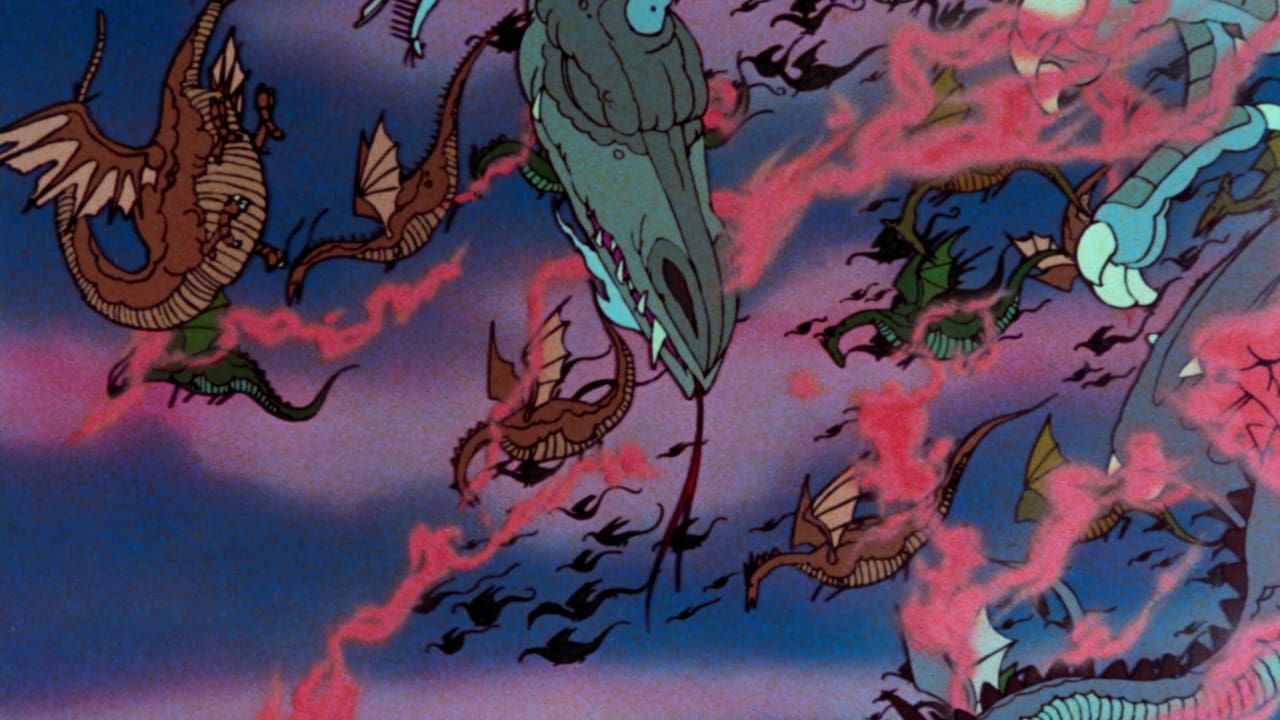
- The Science Aspect: Peter Dickinson’s original book wasn't a story, but a detailed speculative treatise trying to imagine how dragons could biologically function according to the laws of physics (or at least, a creative interpretation of them). Incorporating diagrams and explanations of hydrogen lift, asbestos scales, and internal fire-starting mechanisms directly into the animated film was a bold and wonderfully nerdy choice that makes it stand out even today.
Why It Still Soars (Mostly)
Does The Flight of Dragons hold up perfectly? The animation, while distinctive and atmospheric, certainly shows its age compared to modern standards. Some of the pacing might feel a little leisurely for contemporary viewers accustomed to faster cuts. But what endures is its unique blend of thoughtful fantasy, genuine heart, memorable characters (both human and dragon), and that delightful touch of pseudo-scientific explanation. It treats its audience, even young ones, with intelligence, unafraid to mix wonder with moments of genuine sadness and fear. It’s a film that respects the power of myth while daring to peek under the hood. For those of us who caught it on a fuzzy TV screen years ago, perhaps taping it off that ABC broadcast, it remains a cherished piece of 80s animation history.
VHS Heaven Rating: 8/10
Justification: The film earns a strong 8 for its sheer originality, memorable voice cast (especially Buono and Jones), unique blend of science and magic, and its enduring nostalgic charm. The Rankin/Bass/Topcraft animation style, while dated in places, possesses a distinct artistry. It loses a couple of points for pacing that sometimes drags and animation that occasionally feels limited by its budget and era, but its ambition and heart more than compensate.
Final Thought: The Flight of Dragons is like finding a dusty, leather-bound book in an old attic – perhaps slightly worn, but filled with unexpected wonders, forgotten lore, and a magic that feels both ancient and strangely logical. A true gem from the age of imaginative, sometimes wonderfully weird, fantasy animation.