### The Ache of Elsewhere: Reflecting on Tarkovsky's Nostalghia
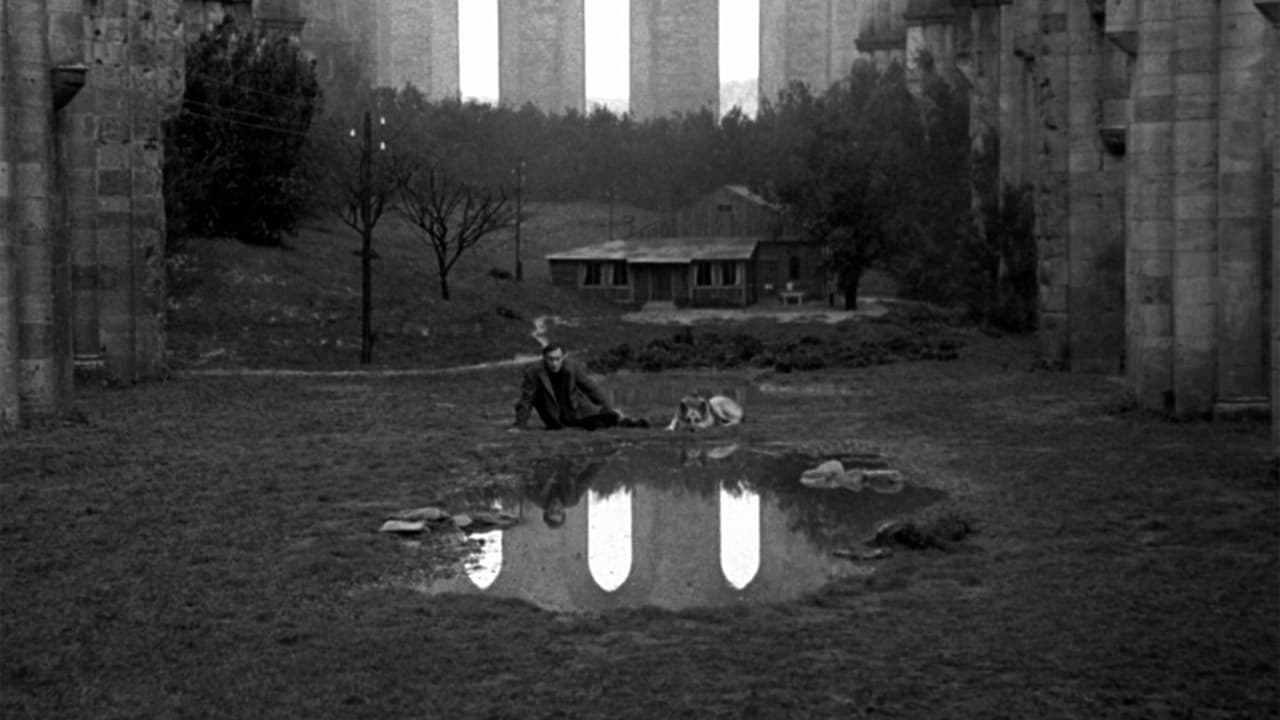
There's a certain kind of rain that feels different in a foreign country, isn't there? It's just water falling from the sky, same as anywhere, yet it lands with an alien weight. That profound sense of displacement, of being untethered from the familiar, permeates every frame of Andrei Tarkovsky's haunting 1983 film, Nostalghia. Watching it again recently, decades after first encountering its enigmatic presence likely tucked away in the 'World Cinema' section of a more adventurous video store, that feeling rushed back – the damp chill of melancholy, the ache for a home that exists more vividly in memory than reality. This isn't your typical Friday night VHS rental, granted, but for those willing to surrender to its deliberate pace and deep currents, it offers a cinematic experience that lingers long after the static fades.
A Poet Adrift
The film follows Andrei Gorchakov (Oleg Yankovsky), a Russian poet visiting Italy to research the life of an 18th-century Russian composer who lived and died there. Guided by his translator, the beautiful but increasingly frustrated Eugenia (Domiziana Giordano), Andrei drifts through misty, ancient landscapes – decaying spas, flooded churches, echoing ruins. He’s physically present in Italy, but his soul seems perpetually elsewhere, caught in dreamlike, sepia-toned flashbacks of his life, his family, and the Russian countryside he desperately misses. Yankovsky delivers a masterful performance of profound interiority; his weary eyes and quiet presence convey a universe of unspoken longing and spiritual exhaustion. We feel his alienation not just from Italy, but perhaps from life itself.
Tarkovsky's Imprint
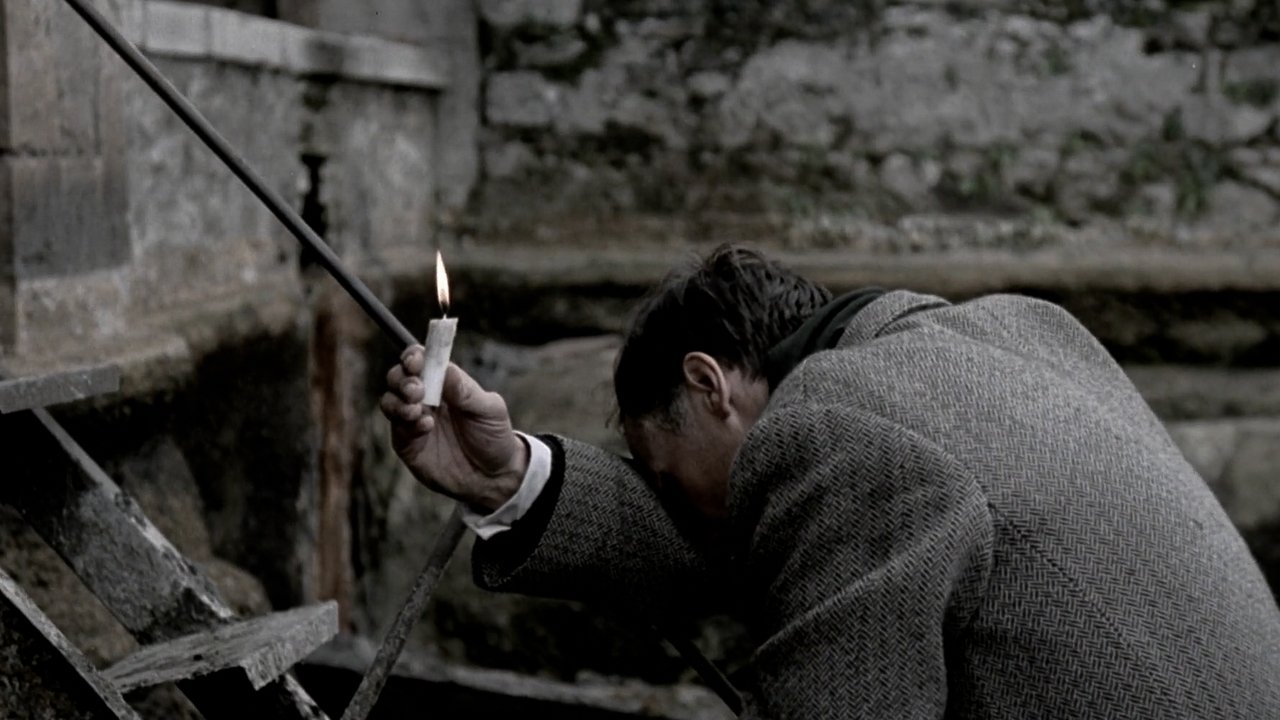
This film is pure, unadulterated Andrei Tarkovsky. If you know his work – perhaps Solaris (1972) or Stalker (1979) – you'll recognize the signature immediately: the meticulously composed long takes that demand patience, the painterly use of light and shadow, the recurring motifs of water, fire, and dilapidated spaces pregnant with meaning. The pacing is meditative, forcing the viewer to inhabit Andrei's state of mind, to feel the slow passage of time and the weight of his internal struggle. It's cinema as visual poetry, less concerned with plot mechanics than with evoking a powerful mood and exploring complex philosophical questions. It’s crucial to remember that Nostalghia was Tarkovsky's first feature made outside the Soviet Union, following his increasingly difficult relationship with state authorities. He was, in essence, living the very exile his protagonist embodies, lending the film an almost unbearable layer of personal resonance. This wasn't just filmmaking; it felt like a transmission directly from his own displaced soul. Co-written with the great Italian screenwriter Tonino Guerra, known for his collaborations with giants like Antonioni and Fellini, the script beautifully marries Russian spiritual depth with a distinctly Italian landscape of history and decay.
The Madman and the Candle
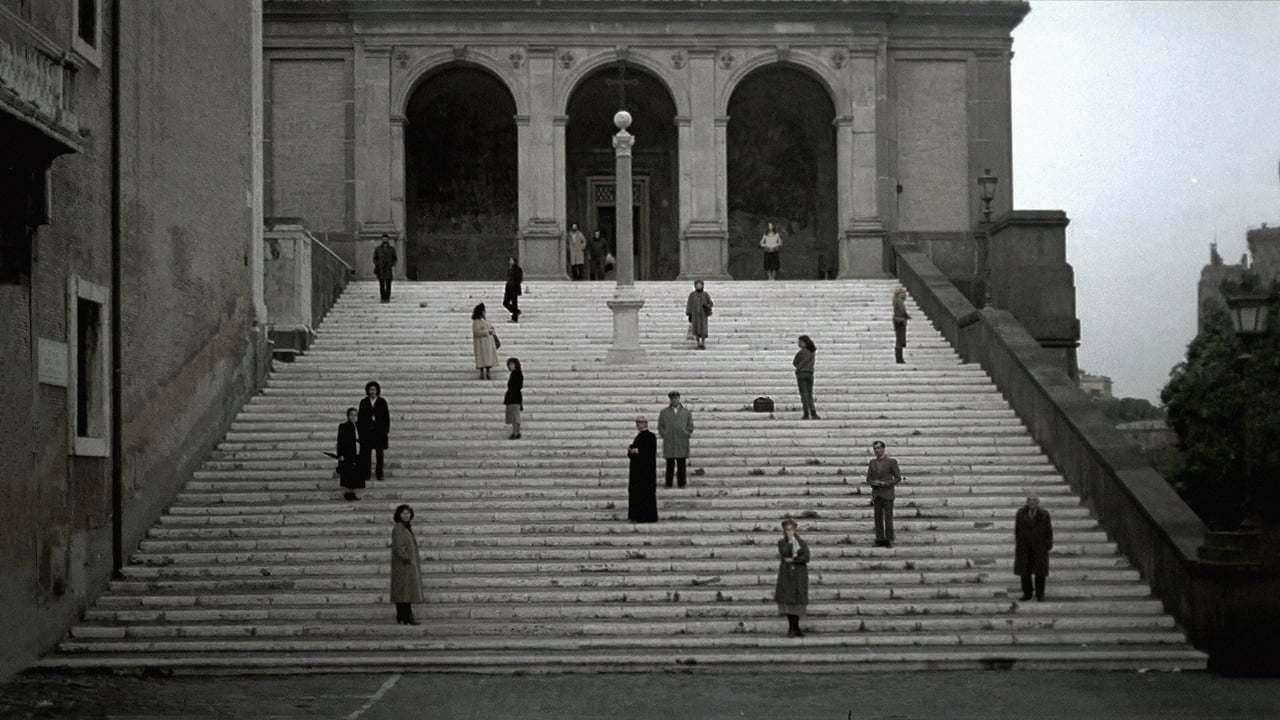

Andrei's journey leads him to Domenico (Erland Josephson, a frequent collaborator with Ingmar Bergman), a local eccentric who once locked his family away for seven years awaiting the apocalypse. Domenico is dismissed as a madman, yet he becomes a strange mirror for Andrei, embodying a radical, albeit disturbed, faith and commitment that the poet seems to lack. Josephson is magnetic, radiating both fragility and terrifying conviction. Their connection culminates in Andrei agreeing to fulfill a peculiar promise for Domenico: to carry a lit candle across the mineral pool of Bagno Vignoni without letting it extinguish, an act Domenico believes might save the world. This sequence is one of cinema's most unforgettable testaments to faith and perseverance. Retro Fun Fact: The filming of this single, incredibly long take was notoriously difficult. Tarkovsky insisted on capturing the entire crossing in one unbroken shot. Actor Oleg Yankovsky had to perform the arduous walk multiple times, battling wind and the precarious flame, pushing himself physically and mentally to embody the sheer effort of this symbolic act. You feel every hesitant step, every flicker of the flame mirroring Andrei's own fragile hope.
More Than Just Homesickness
While the title translates directly, the Russian concept of "nostalghia" carries a deeper, more painful weight than simple homesickness. It's a spiritual sickness, a yearning for something lost that transcends physical place – perhaps a lost connection to faith, to meaning, to oneself. The film doesn't offer easy answers. Can one truly bridge the gap between cultures, between the past and present, between the spiritual and the mundane? Tarkovsky seems uncertain, leaving the viewer immersed in the ambiguity. Another Tidbit: The film’s premiere at the 1983 Cannes Film Festival was fraught with tension. While it won the Prize of the Ecumenical Jury and the FIPRESCI Prize, Soviet authorities actively campaigned against it winning the top prize, the Palme d'Or (reportedly pressuring the jury), deepening Tarkovsky's rift with his homeland – a situation mirroring the film's themes in a painfully ironic way. He would never return to Russia, passing away in exile in Paris just three years later.
Enduring Echoes
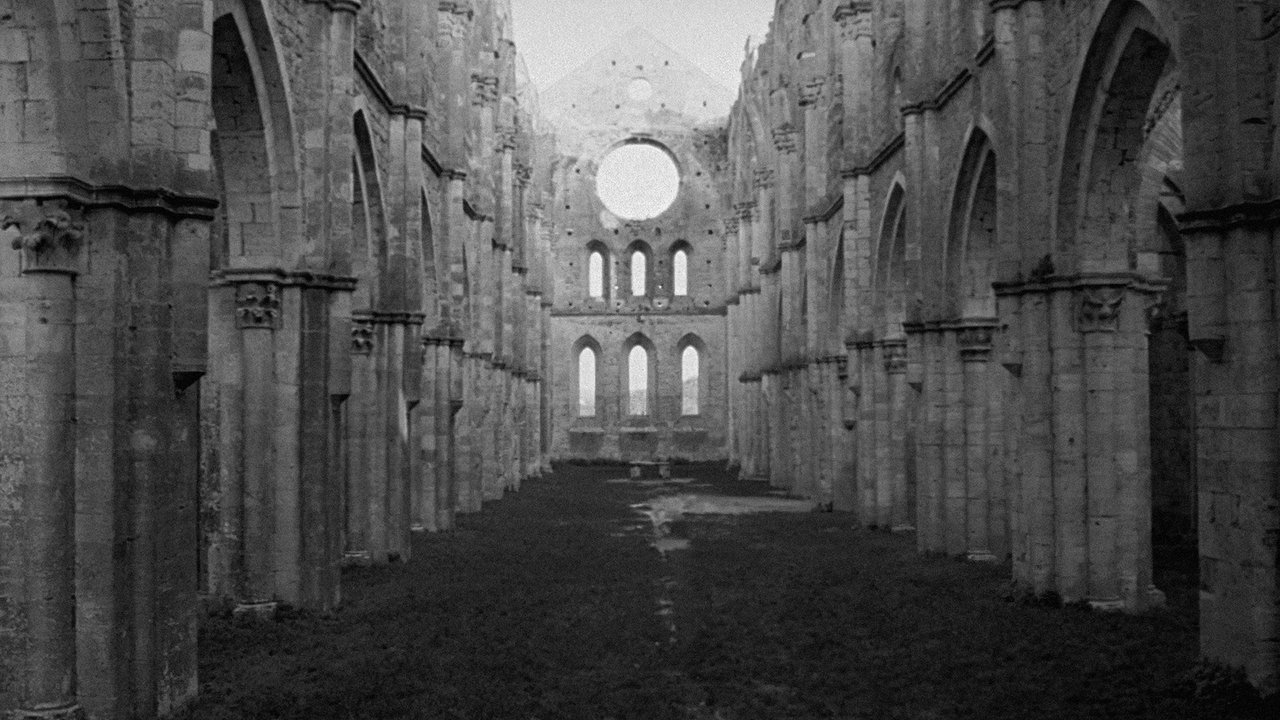
Nostalghia isn't an easy film. It demands your full attention and offers little in the way of conventional entertainment. Yet, its power is undeniable. The stunning visuals lodge themselves in your memory: the submerged statue of the Madonna, the dreamlike fusion of Italian architecture and Russian dachas in the final, breathtaking shot. It explores the pain of exile – artistic, spiritual, physical – with profound empathy and visual grace. Watching it on VHS back in the day, perhaps on a rainy afternoon, felt like discovering a secret language of cinema, one that spoke of deeper, quieter truths often lost in the noise of blockbuster entertainment.
Rating: 9/10
This near-masterpiece earns its high score through sheer artistic vision, unforgettable imagery, and profound emotional depth. It's Tarkovsky operating at the peak of his powers, crafting a deeply personal statement on exile and spiritual yearning. The deduction of one point acknowledges its demanding nature – its slow pace and oblique narrative won't connect with everyone, requiring a certain meditative patience many viewers, even seasoned cinephiles, might struggle with.
Nostalghia remains a challenging, deeply rewarding experience, a testament to the power of cinema to articulate the most complex and painful nuances of the human soul. It asks us: where is home, truly, and what price do we pay for leaving it behind?