It's a rare thing, scrolling through the mental catalogue of worn VHS spines, to land on one that doesn't just evoke nostalgia, but a profound, chilling silence. Some films from the era were pure escapism, others cautionary tales wrapped in genre thrills. But Héctor Olivera's La Noche de los Lápices (1986), known to many English-speaking viewers simply as Night of the Pencils, occupies a different space entirely. It’s a film that arrived not with the neon glow of the multiplex, but with the stark weight of recent, terrible history. Watching it again now doesn't feel like revisiting a comfortable memory; it feels like bearing witness.
Before the Darkness Fell
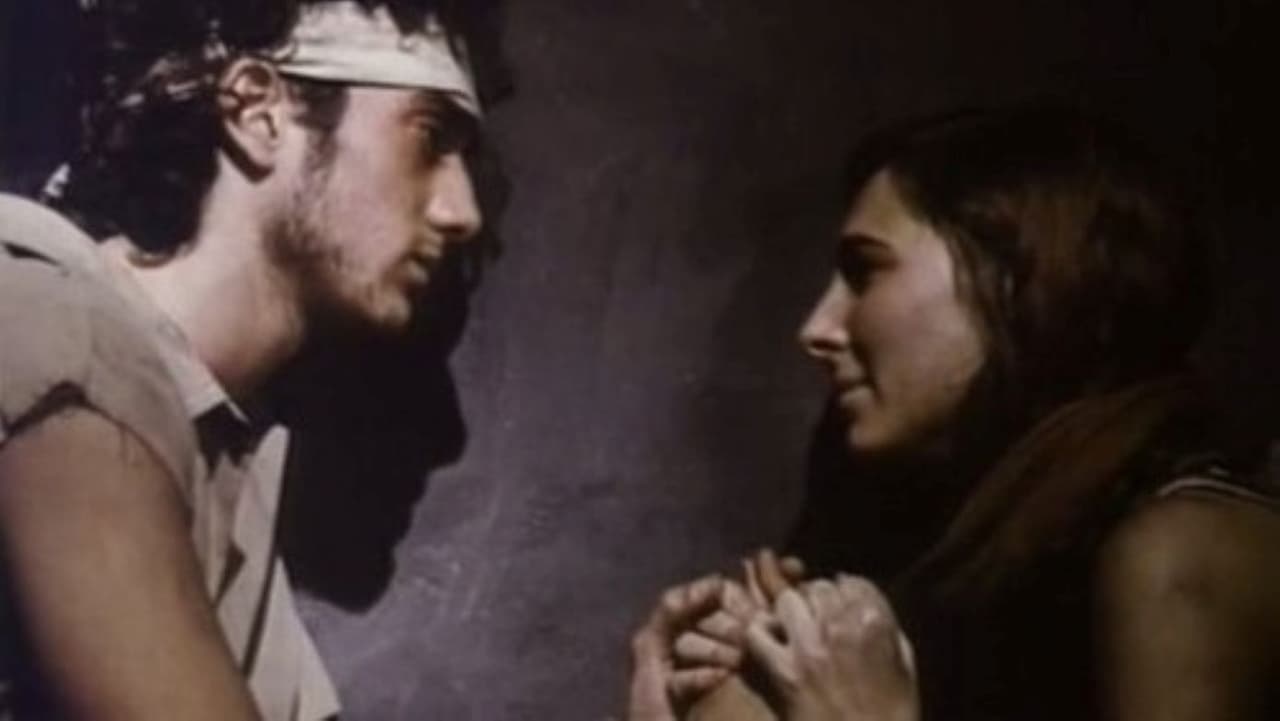
The film opens not with immediate dread, but with the vibrant, messy energy of youth. We meet a group of high school students in La Plata, Argentina, in 1975. They’re arguing about politics, flirting awkwardly, planning protests for reduced student bus fares – the seemingly small concerns that loom large in teenage lives. There's an authenticity here, a capturing of youthful idealism and camaraderie that feels universally recognizable. Director Héctor Olivera, who also co-wrote the screenplay adapting the non-fiction book by María Seoane and Héctor Ruiz Núñez, masterfully establishes this normalcy. It’s crucial, because the contrast makes the inevitable horror infinitely more potent. We see faces full of hope and conviction, unaware they are standing on the precipice of the abyss known as Argentina's Dirty War.
The Unflinching Gaze
The film's title refers to a specific, horrifying event in September 1976, shortly after the military junta seized power. Ten students, involved in the previous year's protests for bus fare subsidies, were abducted by security forces. Night of the Pencils follows their harrowing journey into the clandestine detention centers of the regime. What sets Olivera’s film apart, particularly for its time, is its refusal to look away or soften the blow. The depiction of torture – physical and psychological – is brutal and direct, yet crucially, it avoids gratuitous sensationalism. The horror isn't in elaborate special effects, but in the stark reality, the cold bureaucracy of evil, and the utter vulnerability of the victims.
It's a testament to the film's power that it was made just a few years after the fall of the dictatorship in 1983. There's a palpable sense of urgency, a need to document and confront the recent past that was still raw and bleeding. Filming this story then, in Argentina, was an act of considerable courage, a cinematic contribution to the nation's painful process of truth and reconciliation. The film became a significant cultural event in Argentina, a way for many to begin processing the trauma of the era.
Faces of Resilience and Terror
The young cast delivers performances of astonishing bravery and vulnerability. Alejo García Pintos anchors the film as Pablo Díaz, one of the few survivors whose testimony forms the backbone of the narrative. His portrayal captures the dizzying shift from idealistic student leader to broken, terrified captive, clinging desperately to shreds of humanity. Vita Escardó as Claudia Falcone, one of the students who did not survive, is heartbreakingly radiant in the early scenes, making her subsequent fate even more devastating. The entire ensemble conveys the spectrum of fear, defiance, solidarity, and despair with a rawness that feels less like acting and more like channeling lived experience. There's no Hollywood gloss here, just the unvarnished terror etched onto young faces.
The film’s visual style complements its grim subject matter. The cinematography often employs stark lighting and claustrophobic framing, emphasizing the oppressive atmosphere of the detention centers. There are no stylistic flourishes to distract or beautify; the camera serves as an unblinking eye, forcing us to confront the reality of what occurred. It understands that the true horror lies not just in the acts of violence, but in the systematic dehumanization.
Why It Still Matters
Watching Night of the Pencils today, far removed from the immediate context of 1980s Argentina, its power hasn't diminished. If anything, its themes feel chillingly relevant. It’s a stark reminder of how quickly political dissent can be crushed, how fragile democratic norms can be, and the horrific extremes authoritarian regimes will go to maintain power. It forces us to ask uncomfortable questions: What is the cost of speaking out? What reserves of strength allow survival in the face of unimaginable cruelty? And what is our responsibility to remember and bear witness to such atrocities?
This isn't a film you "enjoy" in the conventional sense. It's not Saturday night popcorn fare scavenged from the bottom shelf of the video store. I remember encountering it, perhaps on a copied tape passed between friends interested in world cinema or political history, and feeling fundamentally altered by it. It was a necessary shock, a counter-narrative to the often-sanitized version of the world presented elsewhere. It’s a film that demands reflection, engagement, and empathy.
Rating: 9/10
This near-perfect score isn't for entertainment value, but for its historical importance, its unflinching honesty, the devastating power of its performances, and its courageous direction. Night of the Pencils is a harrowing but essential piece of political cinema. It earns its rating through its sheer, gut-wrenching impact and its vital role as a testament against forgetting.
It leaves you not with a sense of closure, but with a lingering disquiet – a crucial reminder etched onto celluloid, echoing from a dark night nearly fifty years ago, urging vigilance against the shadows.