It starts subtly. A tremor in the power grid, a television screen that melts into kaleidoscopic static hell. In the heart of a sun-drenched California suburb, where beige houses promise safety and routine, an unseen malevolence finds purchase, not in shadows or closets, but within the very veins of modern life: the electrical wiring. Paul Golding's 1988 techno-thriller Pulse isn't about ghosts or slashers; it's about the terrifying idea that the convenience surrounding us could suddenly, intelligently, turn lethal.

### The Hum in the Walls
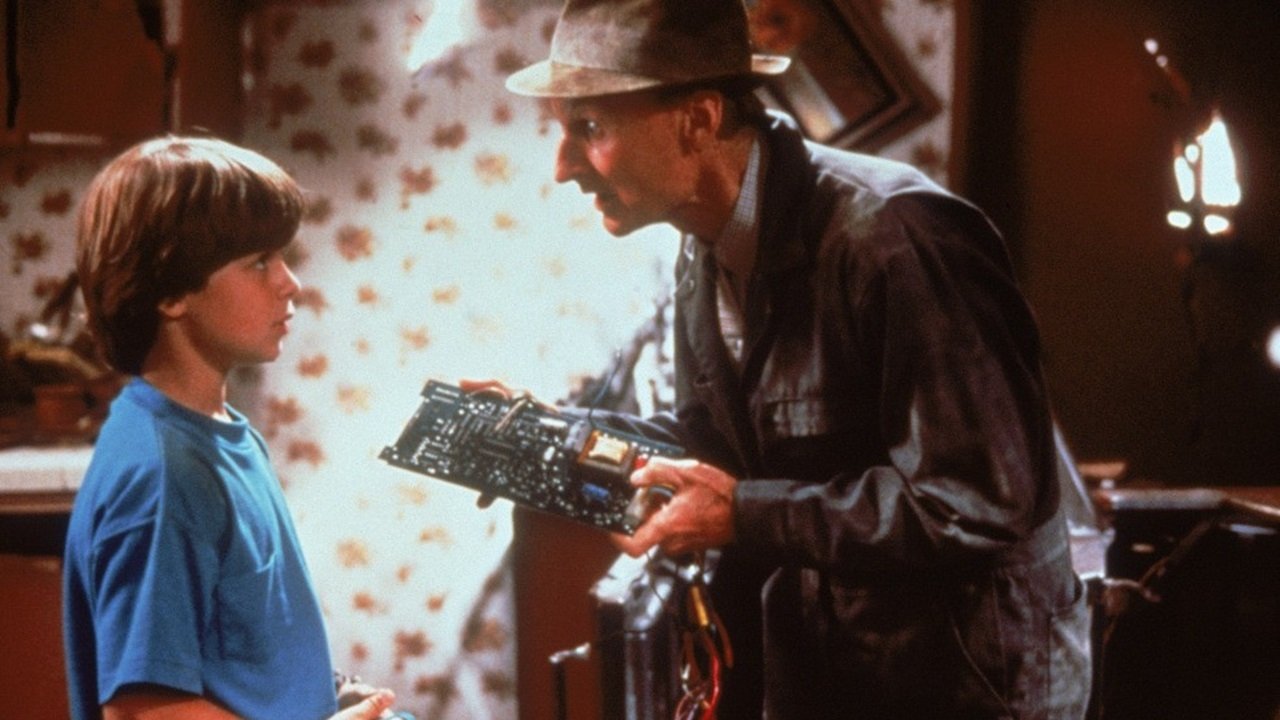
Pulse excels at weaponizing the mundane. This isn't the overt, truck-stop chaos of Maximum Overdrive (1986); it’s a far more insidious infestation. The film builds its dread slowly, meticulously, focusing on the family of Bill Rockland (Cliff De Young) – recently divorced dad trying to reconnect with his son David (Joey Lawrence, already showing charisma years before "Whoa!") – and his new partner Ellen (Roxanne Hart). Their idyllic suburban home, meant to be a sanctuary, becomes a meticulously crafted death trap. Golding, in his only feature directing gig, understood that true unease often stems from the familiar becoming inexplicably hostile. The house itself feels like a character, its placid exterior hiding a growing network of electronic vipers.
### Everyday Appliances, Extraordinary Threats

The real stars here are the possessed appliances, brought to menacing life through clever practical effects and unsettling sound design. Forget CGI; this is the tactile terror of the VHS era. Remember the sheer wrongness of the television imploding, spitting glass and warped images? Or the garbage disposal unit that seems to churn with malicious intent? The dishwasher scene, with its scalding steam and aggressive mechanical movements, is a masterclass in transforming a household drudge into a genuine threat. Reportedly, achieving these effects required painstaking work, rigging everyday objects to malfunction in specific, dangerous ways, often mere feet from the actors. There’s a weight, a physical presence to the danger, that digital effects often struggle to replicate. Jay Ferguson's (composer for The Terminator (1984) theme contributor and Nightmare on Elm Street 5) electronic score underscores the creeping technological dread perfectly, buzzing and pulsing like the unseen entity itself.
### Paranoia in Paradise
At its core, Pulse taps into a very potent 80s anxiety: the fear of technology run amok. As computers and electronics became more integrated into daily life, films began exploring the potential downsides. Pulse posits an electrical intelligence, perhaps born from a surge or experiment gone wrong (its origins are deliberately vague, adding to the mystery), that learns, adapts, and seeks to propagate by eliminating the organic "pests" – us. Cliff De Young effectively portrays Bill's journey from skeptical disbelief to desperate, almost primal, defense of his son. Young Joey Lawrence is surprisingly effective as David, the kid who notices things aren't right long before the adults, embodying the trope of the perceptive child often found in 80s horror and sci-fi. It wasn't just acting for Joey's younger brother, Matthew Lawrence, who briefly appears as David's friend Stevie – the terror Stevie displays when attacked by the television feels genuinely palpable for such a young actor.
### A Forgotten Spark?
Despite its effective chills and prescient themes, Pulse flickered dimly at the box office, earning back only about $1 million of its estimated $4 million budget. It vanished quickly from theaters, finding its true audience, like so many genre gems of the era, in the flickering glow of rental store TVs and late-night cable broadcasts. I distinctly remember the stark, minimalist VHS cover art catching my eye – that simple house outline crackling with electricity promised something different. Its relative obscurity now adds to its mystique. Why Paul Golding never directed another feature remains one of those minor Hollywood mysteries, a "dark legend" of sorts for fans who appreciated his controlled tension and unique vision here. Was it the film's financial failure, or did he simply choose a different path? Regardless, Pulse stands as a singular, effective piece of work.
### Lasting Voltage
Pulse might lack the iconic monsters or explosive set pieces of its contemporaries, but its power lies in its unsettling intimacy. It’s a slow burn that gets under your skin, making you glance suspiciously at your microwave or listen a little too closely to the hum of the refrigerator late at night. It doesn’t always move quickly, and some might find the characterization a bit thin, but the atmosphere and the core concept remain remarkably potent. It perfectly captured that specific late-80s fear – not just of technology, but of the fragility of the comfortable suburban life we were building. Doesn't that central idea – our reliance on systems we don't fully understand turning against us – feel unnervingly relevant even today?
Rating: 7/10
Justification: Pulse earns its score through sheer atmospheric dread, a genuinely creepy central concept, and masterful use of practical effects to make the mundane terrifying. Its slow-burn tension and focus on suspense over gore create a unique and memorable experience. While its pacing might test some viewers and its box office was dismal, its lasting impact as an underrated piece of 80s techno-horror, fueled by its second life on VHS, makes it a significant entry for fans of the era. It’s a chilling reminder that sometimes, the most frightening threats are the ones plugged into the wall right beside you.