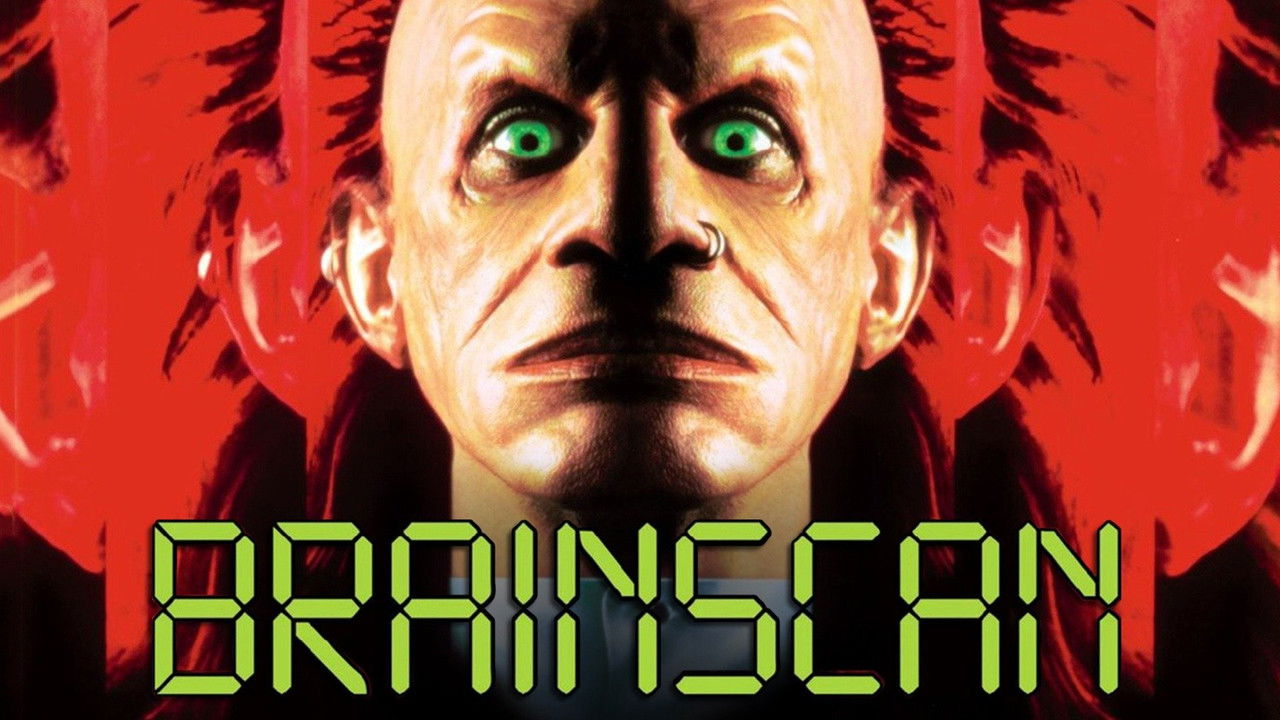
That eerie, pixelated glow spilling from a doorway late at night... Remember that? Brainscan (1994) captures that feeling, the illicit thrill of forbidden digital fruit promising experiences just beyond the pale. This wasn't just another movie on the rental shelf; it felt like a dispatch from a slightly skewed near-future, tapping into the nascent anxieties surrounding virtual reality and interactive entertainment that were bubbling up in the mid-90s. Forget jump scares; the chill here comes from the creeping dread of participation, the question of where the game ends and reality bleeds through.
Digital Descent
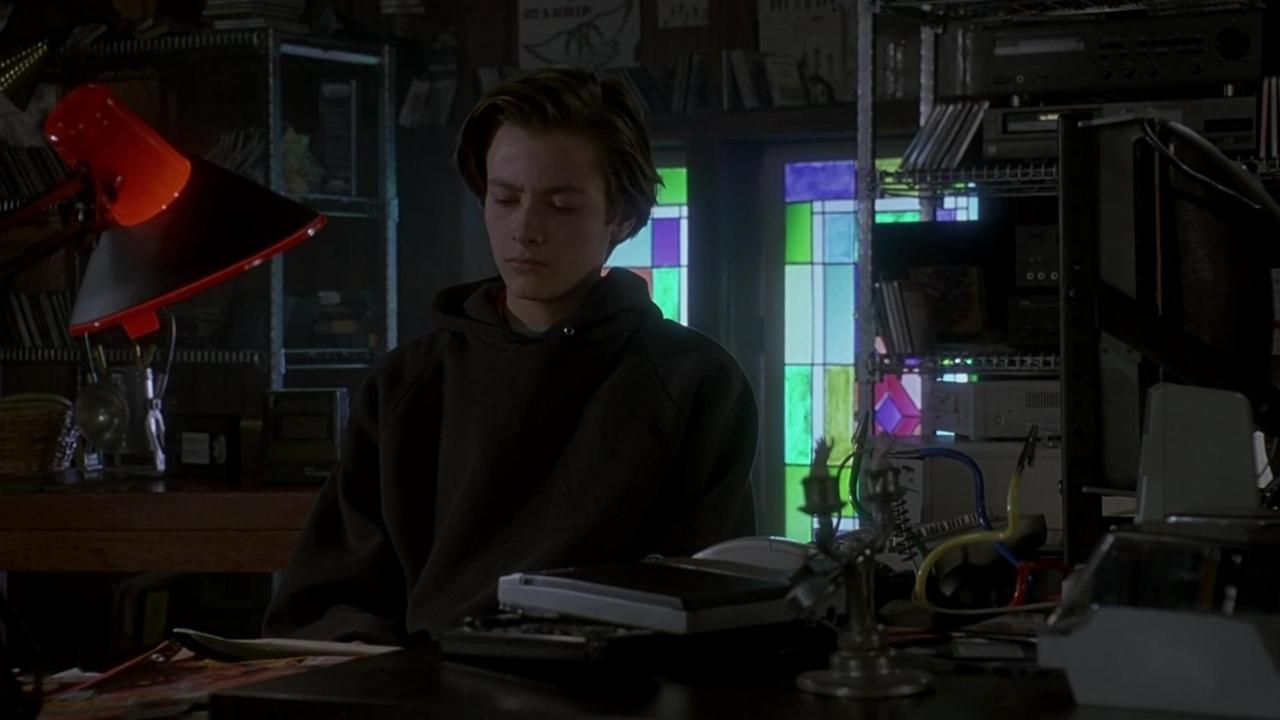
We're immediately plunged into the isolated world of Michael Brower (Edward Furlong), a lonely horror fanatic living in affluent suburban misery. Still reeling from the car accident that killed his mother and left him with a permanent leg injury, Michael seeks refuge in technology and horror films, his attic bedroom a fortress against the world. Furlong, fresh off his iconic role as John Connor in Terminator 2: Judgment Day (1991), perfectly embodies the alienated, intelligent, yet deeply troubled teen archetype of the era. His performance anchors the film, making Michael's vulnerability and gradual descent genuinely unsettling. He wasn't just playing a type; you felt the weight of his isolation, making his susceptibility to the film's central temptation all the more believable. I distinctly remember renting this partly because Furlong was in it, curious to see where his post-T2 career was heading.
The catalyst arrives via CD-ROM: "Brainscan," an interactive game promising the ultimate psychological horror experience. It connects directly to the user's subconscious, blurring the lines between observer and participant. The first simulation is terrifyingly immersive – a simulated murder where Michael feels everything, sees everything through the killer's eyes. The rush is intense, the fear palpable. But then, the news reports start. The simulated murder... wasn't simulated. And the game isn't over.
Enter the Trickster
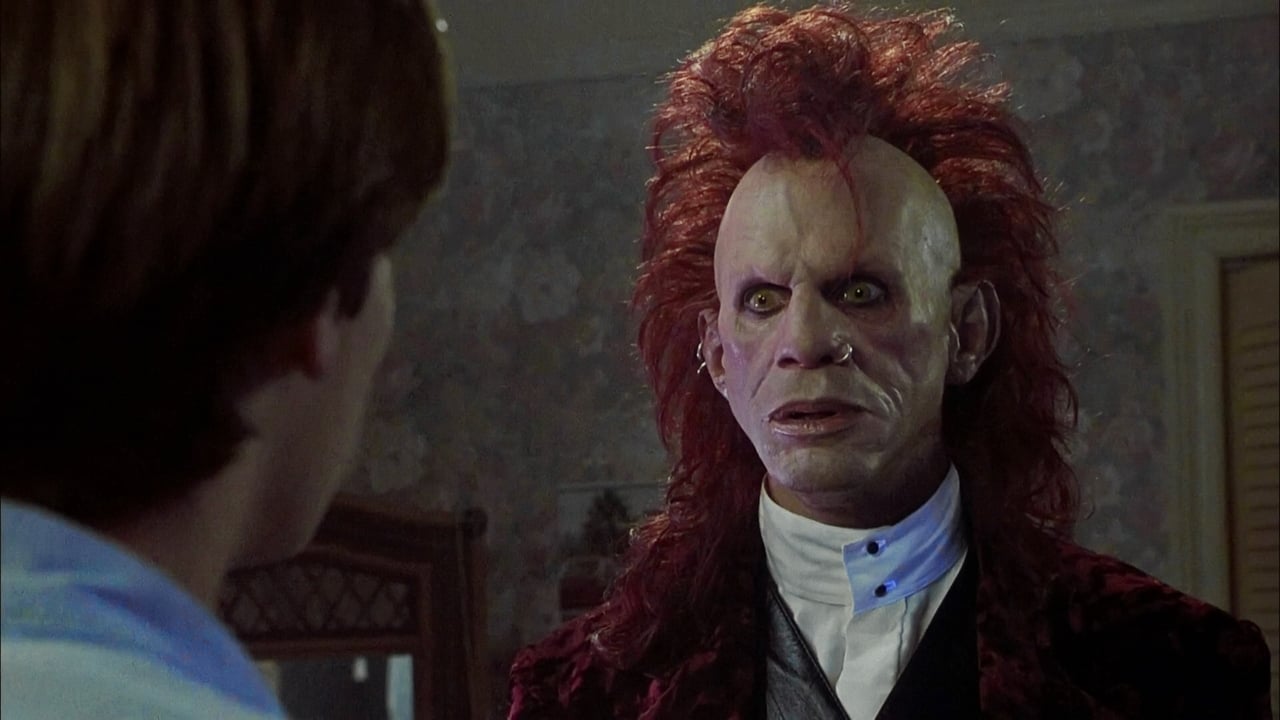
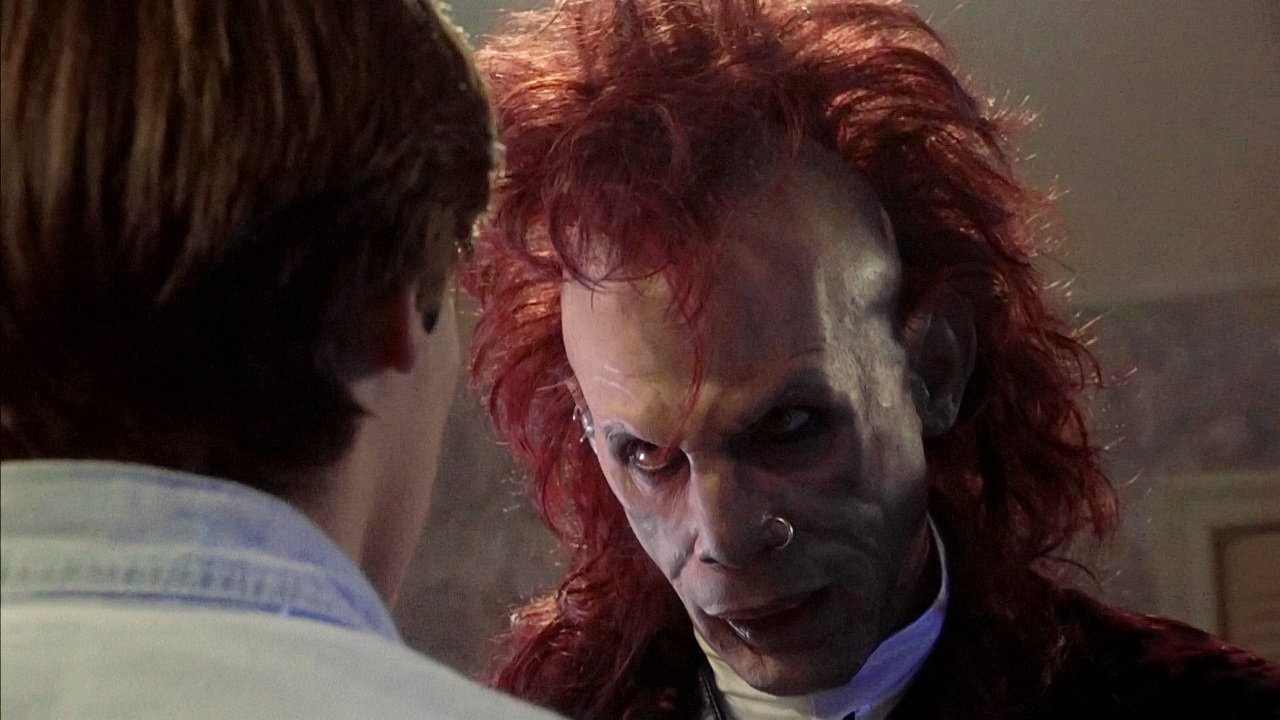
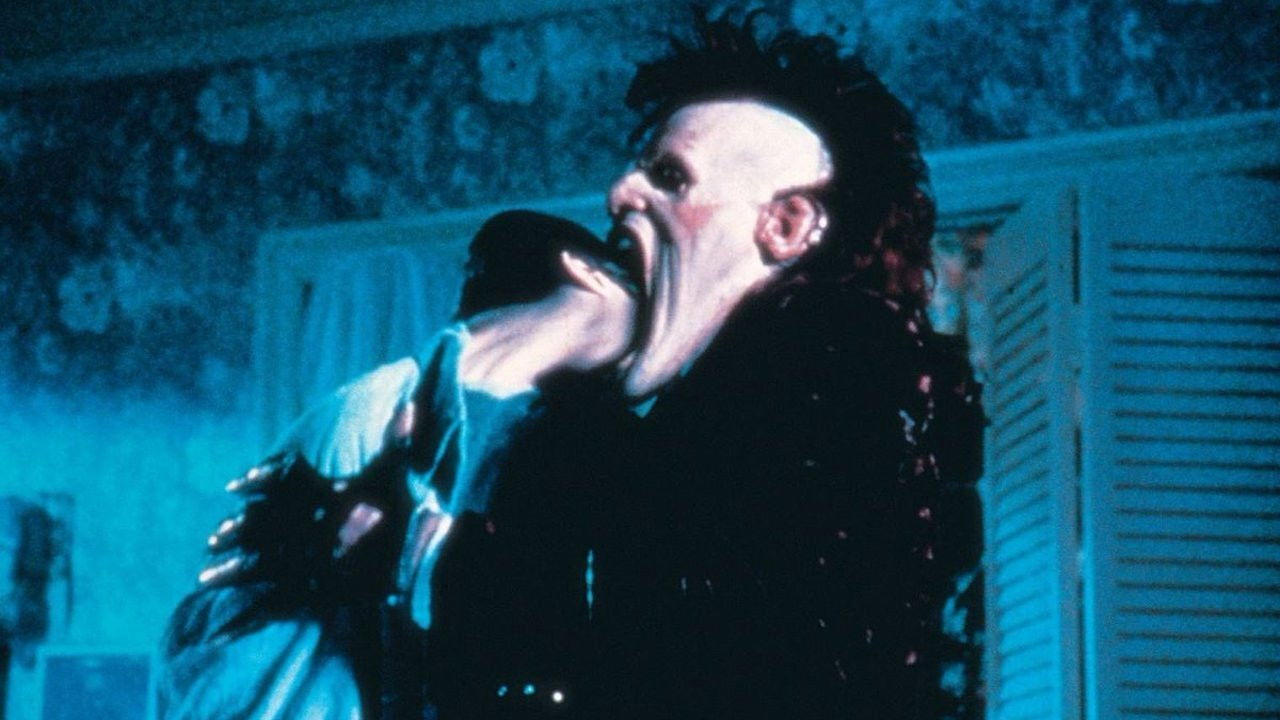
This is where Brainscan truly sinks its claws in, with the emergence of The Trickster (T. Ryder Smith). Crawling out of Michael's television screen like some demonic fusion of punk rock and techno-organic nightmare, the Trickster is the game's charismatic, malevolent host. Smith, primarily a theatre actor, delivers a performance that's both physically striking and vocally hypnotic. He's Puck by way of Clive Barker, goading Michael, manipulating him, forcing him to confront the consequences of his virtual actions bleeding into the real world. The design of the Trickster – the leather, the mohawk, the unsettlingly fluid movements – felt genuinely unnerving back then, a far cry from the usual slasher villains. Reportedly inspired by Iggy Pop and other rock icons, the character remains one of the most memorable elements of 90s techno-horror. He’s the devil on Michael’s shoulder, whispering temptations that exploit his deepest fears and desires.
Dial 'M' for Murder Simulation
While Michael wrestles with his conscience and the escalating demands of the game, veteran detective Hayden (Frank Langella) starts investigating the string of bizarre murders. Langella, always a commanding presence (think his chilling turn in Dracula (1979) or later work in Frost/Nixon (2008)), brings a necessary gravitas to the proceedings. His methodical approach contrasts sharply with Michael's frantic paranoia, creating a classic cat-and-mouse dynamic. The scenes between Hayden and Michael crackle with tension, the detective slowly piecing together the impossible truth.
The film's exploration of voyeurism and the consequences of simulated violence feels remarkably prescient. It arrived just as debates about video game violence were heating up, asking uncomfortable questions about immersion and desensitization. Does witnessing something horrific in a simulation lessen the impact, or does it merely whet the appetite? Brainscan doesn't offer easy answers, preferring to steep the viewer in Michael's mounting terror. This thematic weight perhaps owes something to its screenwriter, Andrew Kevin Walker, who penned this early in his career before delivering the gut-punch script for Se7en (1995). You can see faint echoes of Se7en's grim exploration of sin and consequence here, albeit filtered through a more sci-fi/horror lens.
Analog Fears in a Digital Nightmare
Director John Flynn, primarily known for tougher crime thrillers like Rolling Thunder (1977), might seem an odd choice, but he effectively grounds the fantastical elements in Michael's grim reality. The claustrophobia of the attic, the stark suburban landscapes (actually Montreal standing in for generic American suburbia), and the moody score by George S. Clinton all contribute to a pervasive sense of unease. The practical effects, particularly the Trickster's manifestation, hold a certain charm today – they felt tangible and threatening on those CRT screens in a way CGI often struggles to replicate. There's a tactile quality to the horror.
It's worth noting the film faced its own demons with the MPAA, requiring cuts to the initial murder sequence to avoid the dreaded NC-17 rating – a common battle for horror films of the era seeking wider release. Made for around $5 million, Brainscan sadly didn't set the box office alight, grossing just over $4 million, cementing its destiny as a cult favorite discovered later on video store shelves rather than a mainstream hit. Doesn't that low-key arrival somehow fit its unsettling, under-the-radar vibe?
Legacy on Rewind
Brainscan isn't perfect. The pacing occasionally drags, and some supporting characters feel underdeveloped. The ending, without giving too much away, might divide viewers – did that twist genuinely shock you back then, or did it feel like a bit of a cop-out? Yet, its core concept remains potent, and its atmosphere genuinely chilling. It captures a specific moment in time – the dawn of immersive digital worlds – and spins a cautionary tale that still resonates. The blend of psychological horror, sci-fi concepts, and Furlong's intense performance makes it a fascinating artifact of 90s cinema.
---
VHS Heaven Rating: 7/10
Justification: Brainscan earns its score through its chilling atmosphere, Furlong's strong central performance, the unforgettable presence of The Trickster, and its prescient themes about virtual reality and consequence. While hampered slightly by pacing issues and a potentially divisive ending, its core concept is compelling and its execution often genuinely unnerving. It effectively leverages 90s tech anxieties into a dark, memorable slice of techno-horror that stands out from the pack, even with its modest budget and cult status.
Final Thought: A truly intriguing slice of 90s cyber-dread, Brainscan remains a potent reminder that sometimes the most terrifying monsters aren't on the screen, but invited directly into our minds. It’s a tape worth rewinding.