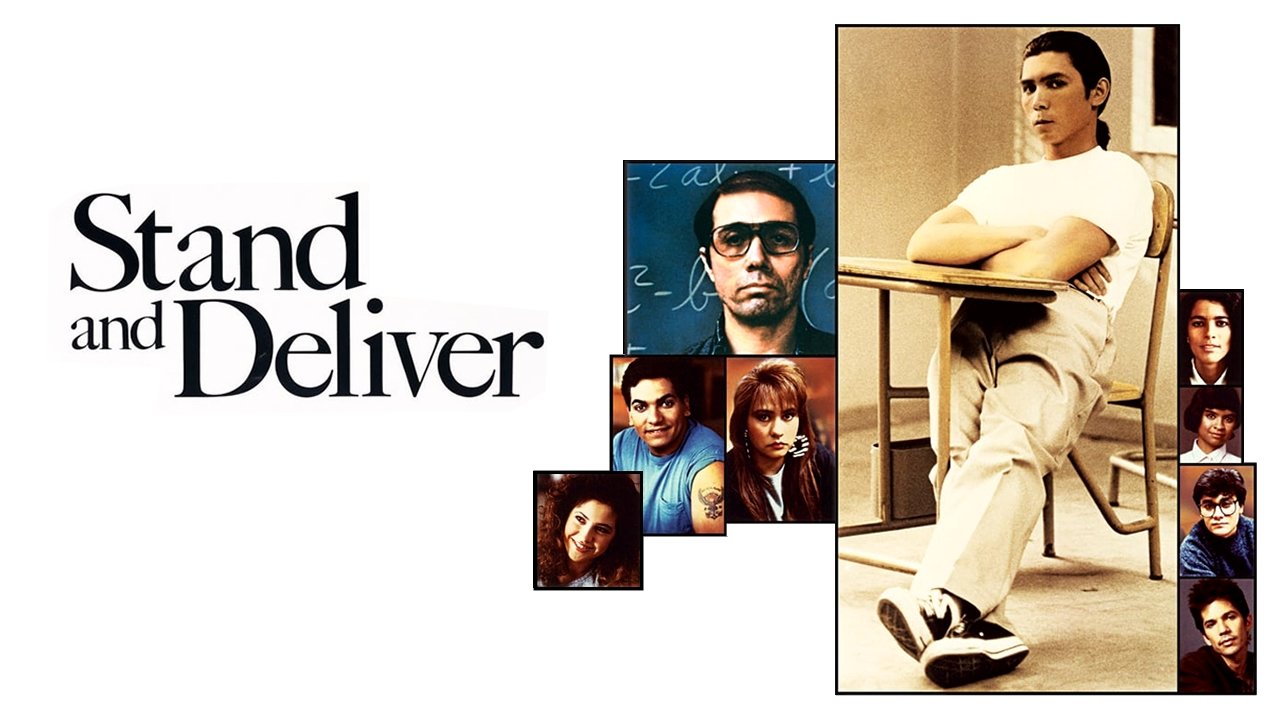
Okay, let's dim the lights, maybe crack open a can of something cold, and settle in. Remember those sturdy, slightly worn VHS boxes promising stories that felt bigger than the flickering CRT screen they played on? Some held explosions, others screams, but a select few contained something quieter, yet arguably more powerful: inspiration drawn straight from life. Stand and Deliver (1988) sits firmly in that last category, a film whose title became shorthand for defying expectations, a story so unlikely it had to be true. It wasn’t about aliens or cyborgs; its battlefield was a classroom in East Los Angeles, its weapon was calculus, and its hero was a teacher who simply refused to give up.
Beyond the Chalkboard
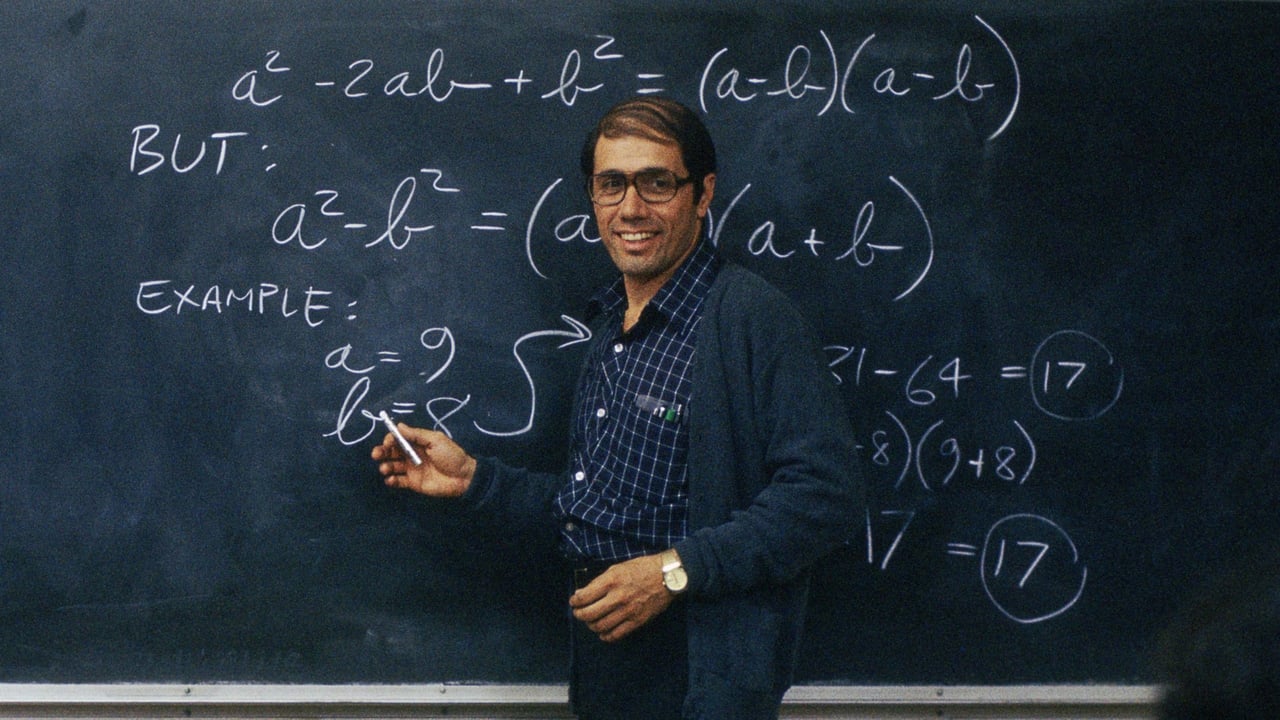
What strikes you immediately, watching it again after all these years, isn't just the potent underdog narrative, but the film's grounded reality. Director Ramón Menéndez, who also co-wrote the screenplay with Tom Musca based on the real-life experiences of teacher Jaime Escalante, doesn't shy away from the challenges facing Garfield High School. This isn't a sanitized Hollywood version of inner-city education. The classrooms are overcrowded, resources are scarce, and the initial atmosphere crackles with cynicism – from students and faculty. When Jaime Escalante arrives, armed with his unconventional methods and a determination bordering on stubbornness, the initial clash feels utterly authentic. You can almost smell the chalk dust and feel the stifling heat of those pre-air-conditioned rooms.
An Unforgettable Equation: Olmos as Escalante

At the absolute core of Stand and Deliver is the towering performance by Edward James Olmos as Jaime Escalante. This wasn't just acting; it felt like channeling. Olmos, already a familiar face from his intense portrayal of Lieutenant Castillo in Miami Vice, completely transformed himself. He gained weight, adopted Escalante's distinct gait and vocal patterns, and inhabited the role with a fierce conviction that earned him a well-deserved Academy Award nomination for Best Actor. It's a performance built on subtle details: the way he uses humor as both shield and prod, the quiet intensity in his eyes when challenging a student, the palpable exhaustion mixed with unwavering belief. Olmos spent considerable time with the real Escalante, absorbing his mannerisms and philosophy, and it shows in every frame. He makes Escalante charismatic, infuriating, and ultimately, profoundly inspiring. You believe he believes in these kids, and that makes all the difference.
The Class of '82
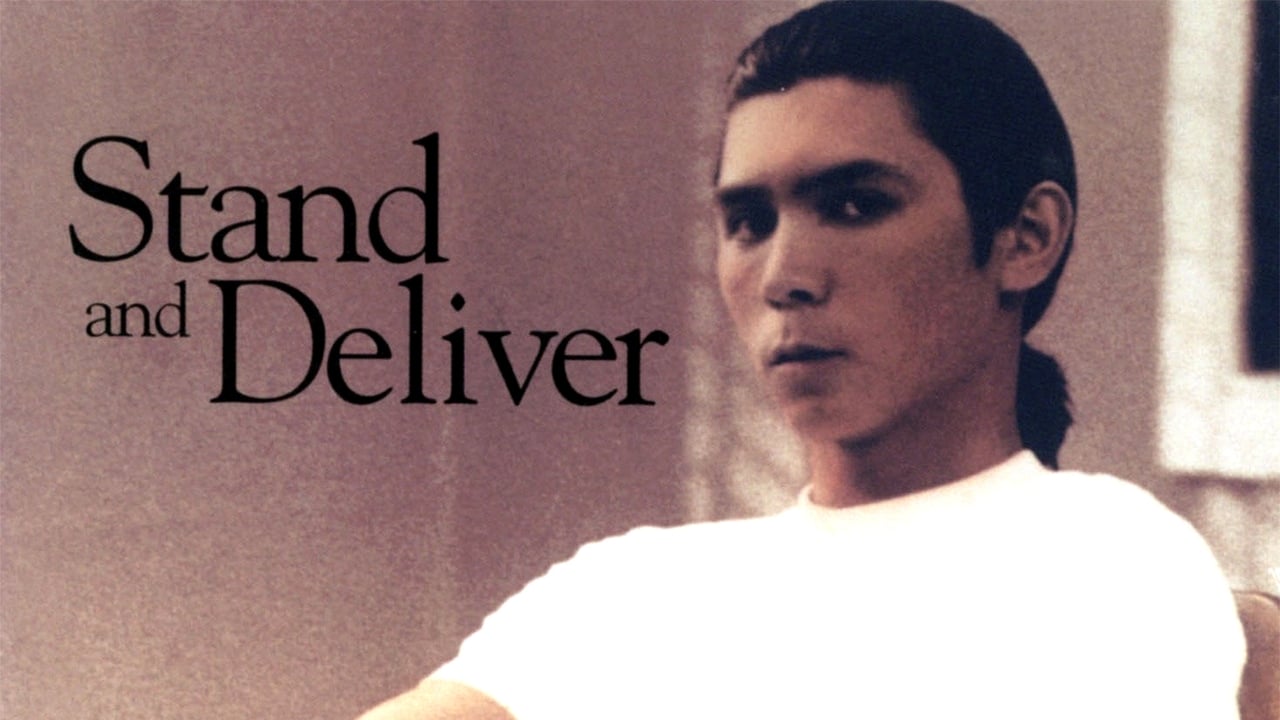
Crucially, the film gives agency and depth to the students, too. They aren't just props for Escalante's journey. Lou Diamond Phillips, fresh off his star-making turn in La Bamba (1987), brings a compelling blend of street toughness and hidden vulnerability to Angel Guzman, the cholo who becomes one of Escalante's most dedicated, if initially reluctant, pupils. The ensemble cast, including Rosanna DeSoto as Escalante’s supportive but concerned wife Fabiola, feels like a genuine community. We see their struggles outside the classroom – family pressures, economic hardship, the pull of the streets – which makes their eventual commitment to mastering advanced mathematics even more resonant. Remember the scene where they confront the doubts of the Educational Testing Service? Their indignation feels earned, their collective strength palpable. It’s a testament to the script and direction that these young characters feel like real teenagers grappling with extraordinary circumstances.

Making the Grade Under Pressure
Shot on a remarkably tight budget of approximately $1.4 million (a fraction of typical Hollywood fare even then), Menéndez makes a virtue of necessity. The film has an unfussy, almost documentary-like feel at times, enhanced by the fact that some scenes were actually filmed at Garfield High School during the summer break, adding another layer of authenticity. Some actual former students of Escalante even pop up in the background, a subtle nod to the real story unfolding just years before. The score by Craig Safan is pure late-80s synth, which could feel dated, but somehow it works, providing an undercurrent of propulsive energy that mirrors the students' race against time and doubt. The film went on to gross over $13 million domestically, proving that audiences were hungry for stories with substance and heart, even without massive spectacle.
Ganas and Grit: The Lasting Lesson
Stand and Deliver isn't just about math; it's about "ganas" – that untranslatable Spanish word Escalante uses, meaning desire, determination, guts. It’s a powerful statement against prejudice and the soft bigotry of low expectations. When the students' remarkable AP Calculus scores are questioned, the film confronts systemic bias head-on. Doesn't that challenge still echo today – the way potential is often judged by zip code rather than ability? The film argues passionately that with belief, hard work, and a teacher who refuses to accept failure, incredible things are possible. It became an educational touchstone, shown in countless classrooms, a VHS tape passed around schools like essential viewing. I distinctly remember renting this one, maybe even seeing it on a school trip, and feeling that surge of possibility it depicts so effectively.
VHS Heaven Rating: 9/10
This film earns its high marks through sheer heart, authenticity, and that unforgettable central performance. Edward James Olmos is Jaime Escalante, embodying the spirit of a teacher who saw potential where others saw none. While the narrative arc follows some familiar inspirational beats, the grounded setting, nuanced student portrayals, and the raw power of the true story elevate it far above standard feel-good fare. It avoids easy sentimentality, showing the hard work and sacrifice involved. It’s a film that reminds you of the impact one dedicated individual can have, a message delivered with grit and undeniable sincerity that hasn't faded one bit since its release.
What lingers most after the credits roll isn't just the triumph over calculus, but the quiet power of belief – a teacher's belief in his students, and ultimately, their belief in themselves. That's a lesson that never gets old.