What happens when life itself – messy, unpredictable, profoundly personal – gatecrashes the movies? Not just as inspiration, but as the very fabric of the film being made right before our eyes? That's the strange, disarming territory Nanni Moretti navigates in Aprile (1998), a film that feels less like a story watched and more like a diary accidentally left open on the coffee table. It arrived towards the tail end of the VHS era, a time when you could still stumble upon something this idiosyncratically personal tucked between the mainstream hits at the local video store.
A Filmmaker Adrift
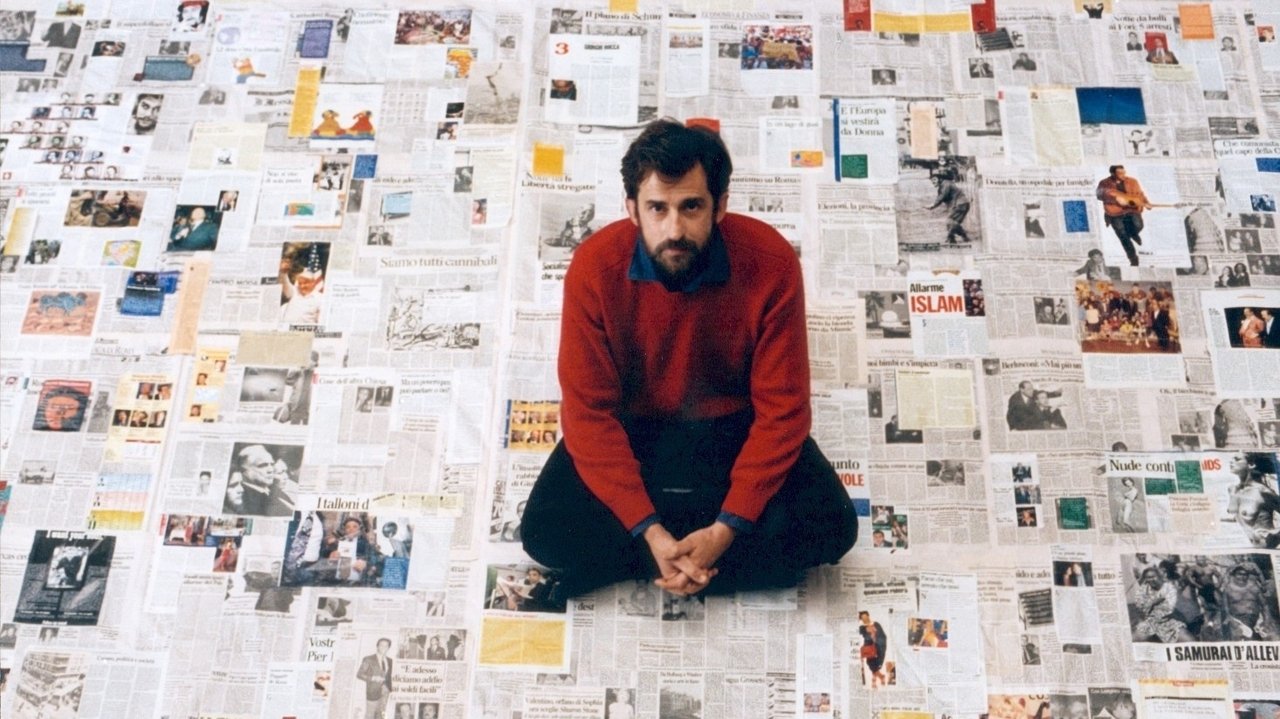
Picking up threads from his earlier, equally autobiographical Caro Diario (1993) (Dear Diary), Aprile finds Moretti, playing a version of himself named "Nanni Moretti," in a state of perpetual distraction. He wants to make a frothy, escapist musical set in the 1950s, a delightful counterpoint to the anxieties of the day. But Italy in the mid-90s is politically charged, with Silvio Berlusconi's media empire and political ascent casting a long shadow. Moretti, the concerned citizen, finds himself glued to the news, obsessively tracking poll numbers, ranting at the television, even trying (and failing) to pivot towards making a serious political documentary instead. His creative energies are scattered, his focus fractured. Does this paralysis sound familiar? The struggle to create amidst overwhelming external noise feels remarkably contemporary.
This internal conflict is the film. It's a meta-narrative where the subject is the director's own inability to commit to a subject. Moretti films himself filming, or rather, not filming, his intended projects. We see snippets of his planned musical – awkward auditions, hesitant choreography – contrasted sharply with raw news footage and Moretti's own impassioned, often humorous, political commentary delivered straight to the camera, or sometimes just muttered under his breath. It's a style that could easily feel self-indulgent, yet Moretti’s anxious sincerity somehow keeps it grounded. It helps that he’s often accompanied by the wonderful Silvio Orlando, a frequent collaborator who serves as a kind of bewildered sounding board for Moretti’s neuroses.
Life Intervenes: The Arrival of Pietro
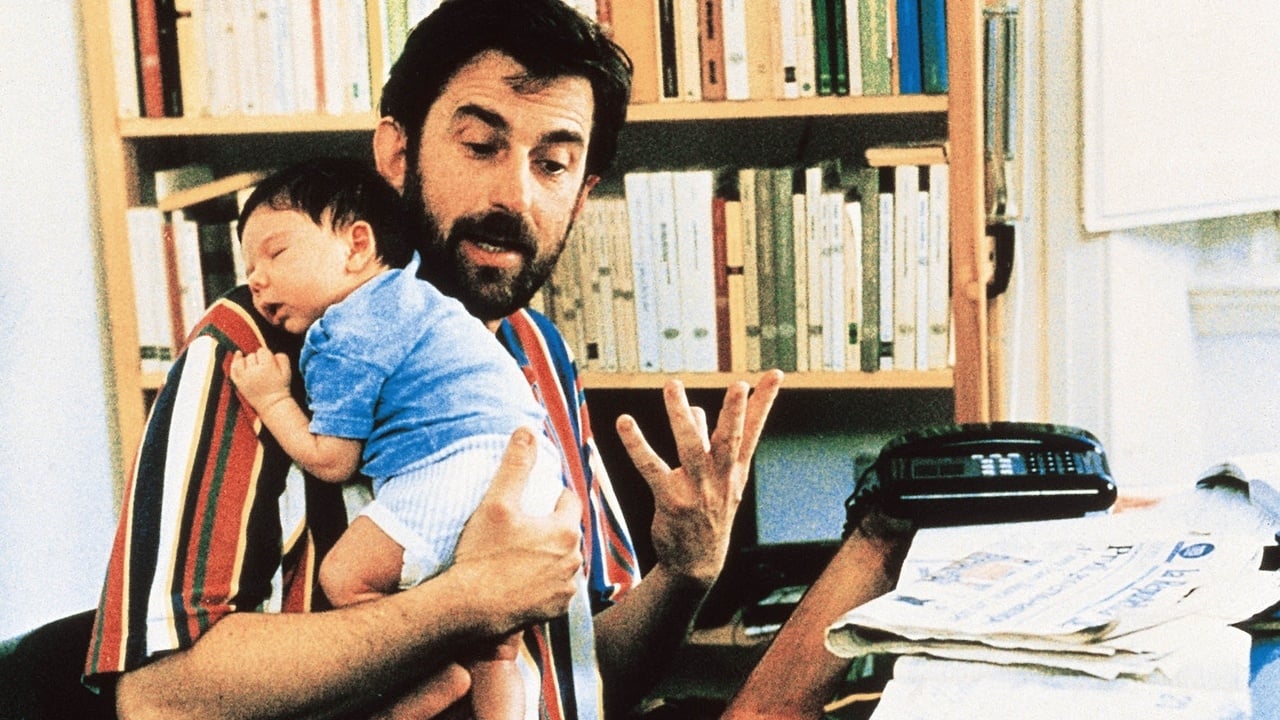
But there's another, far more seismic event disrupting Moretti's plans: impending fatherhood. His partner, Silvia Nono (playing herself with a remarkable, unvarnished naturalism), is pregnant with their first child. Suddenly, the political anxieties and filmmaking frustrations are interwoven with the universal, deeply personal journey of awaiting a baby. Moretti documents doctor's appointments, preparations, and his own mounting trepidation with the same obsessive detail he applies to election results.
This is where Aprile finds its emotional core. The film doesn't shy away from the raw, unglamorous reality of pregnancy and birth. In fact, Moretti includes actual footage of the birth of his son, Pietro – a moment of startling intimacy that transcends the film's meta-conceits. It's a choice that feels less exploitative and more like a continuation of the film's radical honesty. Seeing Moretti, the famously neurotic filmmaker, cradle his newborn son offers a moment of pure, unadulterated warmth that cuts through all the self-aware irony. It’s the anchor that stops the film from drifting entirely into navel-gazing.
A Diary on Tape
Watching Aprile today, perhaps on a format far removed from the chunky VHS tapes of '98, it retains its peculiar charm. It feels like a time capsule, not just of Italian politics, but of a certain kind of personal European filmmaking that felt both alien and intriguing when discovered on those video store shelves. Moretti’s willingness to put his own life, warts and all, onto the screen was part of what made his work stand out. This wasn't slick Hollywood storytelling; it was messy, digressive, and profoundly human.
The film itself mirrors Moretti's confessed artistic struggles. It was born out of his real-life difficulty in choosing between projects amidst political upheaval and the life-altering event of becoming a father. Knowing this adds another layer to the viewing experience – the film isn't just about creative block and personal change, it is the result of it. Even its Cannes Film Festival recognition (winning the 50th Anniversary Prize in 1998) feels like an acknowledgment of its unique, life-imitating-art-imitating-life structure.
Moretti’s performance as "himself" is key. He leans into his established persona – obsessive, critical, prone to sudden bursts of childlike enthusiasm or despair – but the vulnerability, especially concerning his son, feels undeniably authentic. It’s this blend of self-aware performance and genuine emotion that makes Aprile more than just an exercise in autobiography.
Final Thoughts
Aprile isn't a film of grand pronouncements or edge-of-your-seat plotting. It’s a quiet, contemplative, often funny, and surprisingly moving glimpse into a specific moment in one man's life – a moment where personal, political, and creative anxieties collide. It asks us, implicitly, how we navigate the big and small disruptions in our own lives, and how we find focus amidst the chaos. It’s the kind of film that might have been overlooked in the video store, but finding it felt like uncovering a small, personal treasure.
Rating: 7.5/10
The score reflects the film's success as a deeply personal and honest cinematic diary. It's charming, insightful, and often quite funny in its portrayal of neurotic obsession and the profound impact of parenthood. However, its deliberately meandering pace and intensely personal focus might test the patience of viewers seeking conventional narrative drive. It fully earns its place as a unique artifact of late 90s auteur cinema, best appreciated for its vulnerability and warmth.
What lingers most is the feeling of having shared something intimate, a reminder that sometimes the most compelling stories are the ones unfolding right in front of us, if only we pay attention.