It arrives quietly, doesn't it? That ache of recognition when a film touches something profoundly human. Some movies explode onto the screen, all sound and fury, demanding attention. Others, like Jack Gold’s Goodnight Mister Tom from 1998, seep into your consciousness with the gentle persistence of a thawing landscape, leaving an impression far deeper than spectacle ever could. Watching it again, perhaps originally on a treasured VHS taped off the telly late one night, feels less like revisiting a movie and more like checking in on old friends whose struggles and triumphs still resonate with startling clarity.
An Unlikely Haven in a World at War
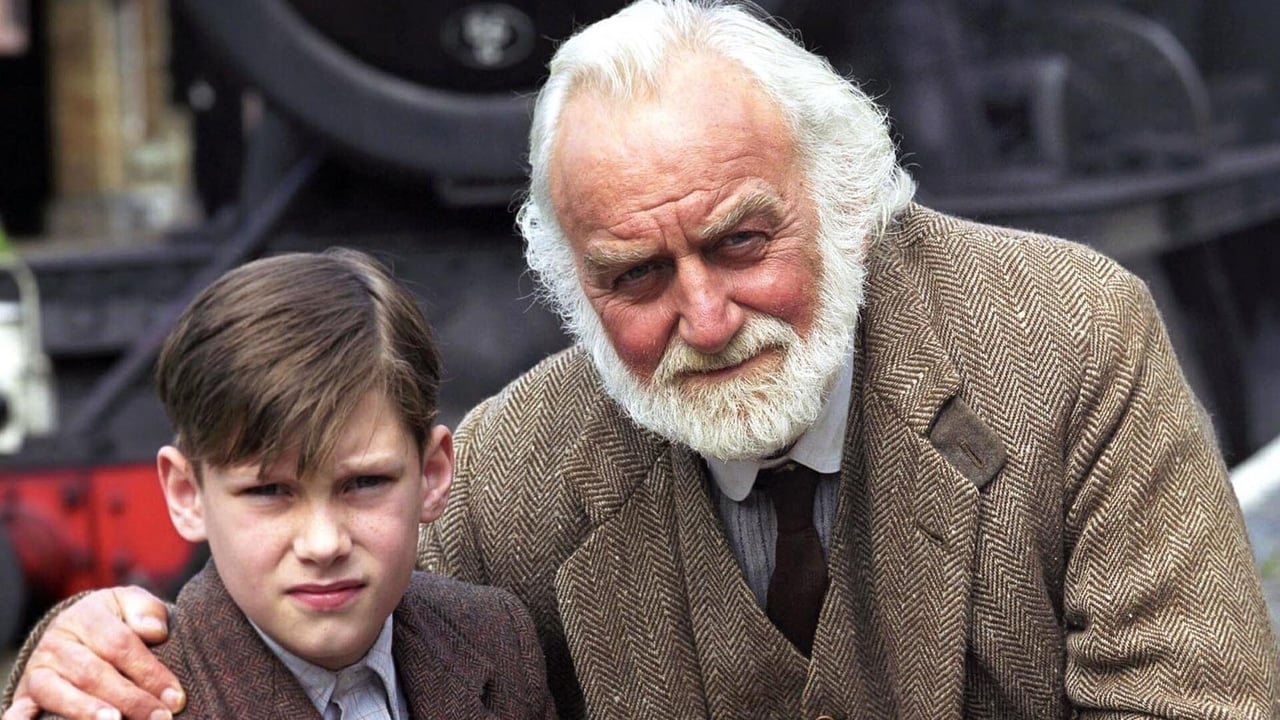
The premise is deceptively simple, drawn from Michelle Magorian's beloved 1981 novel. As London faces the Blitz, young William Beech (Nick Robinson), a bruised and terrified evacuee, is billeted with Tom Oakley (John Thaw), a solitary, grieving widower living a hermetic existence in the seemingly idyllic Dorset village of Little Weirwold. The initial setup is stark: the frightened, emotionally scarred boy and the gruff, emotionally closed-off old man. You brace yourself, perhaps, for a predictable tale, but Goodnight Mister Tom delicately sidesteps cliché, grounding its narrative in authentic character development and the quiet rhythms of rural life overshadowed by distant conflict.
The film masterfully captures the atmosphere of wartime Britain – the anxieties, the rationing, the underlying fear – but its true focus is the microcosm of Tom's cottage and the fragile relationship blooming within its walls. There's a palpable sense of place, the kind of textured world-building that high-quality British television drama excelled at in the 90s. It’s easy to forget this wasn't a major cinematic release; it carried the weight and care of one, largely thanks to the talent involved. Director Jack Gold, a veteran of thoughtful screen work, allows the story space to breathe, trusting his actors and the inherent power of the narrative.
The Quiet Power of Connection
At the heart of it all is John Thaw. Already a national treasure in the UK for his long-running role as the melancholic detective in Inspector Morse, Thaw brings a profound depth and stillness to Tom Oakley. It’s a performance devoid of showiness, built on subtle shifts in expression, the gradual softening of his eyes, the gruff tenderness that emerges as William begins to trust him. Watching Tom patiently teach William to read, or defending him against prejudice, is deeply moving because Thaw makes Tom’s transformation utterly believable. He doesn’t become a different man; rather, the layers of grief and isolation peel back to reveal the warmth that was always there, buried deep. I remember hearing that Thaw himself considered it one of his finest performances, and it's not hard to see why.
Opposite him, young Nick Robinson delivers a performance of astonishing maturity and vulnerability. He embodies William’s trauma not through histrionics, but through a visceral physical tension, a flinching reluctance to be touched, and eyes that hold unimaginable fear. His journey towards healing, towards finding his voice and experiencing simple childhood joys for the first time, is the film's emotional core. The tentative smiles, the growing confidence – it’s a portrayal that feels heartbreakingly real. Their chemistry is the bedrock upon which the entire film rests.
Facing the Darkness
The film doesn't shy away from the grim reality of William's background. His mother, played with chilling conviction by Annabelle Apsion, represents the suffocating horror of abuse masked by religious fanaticism. The sequences (Spoiler Alert!) where Tom must retrieve William from his mother’s neglectful and cruel grasp in London are genuinely harrowing. It's a testament to the film's delicate balance that these darker moments feel necessary and impactful, highlighting the stakes of William's rescue and the profound nature of the safety he finds with Tom, rather than feeling exploitative. It confronts the difficult truth that sometimes the most dangerous battles are fought far from the front lines, within the supposed sanctuary of home. Doesn't this exploration of hidden suffering, even amidst broader national crises, still hold a powerful mirror to our times?
A Legacy Taped and Treasured
Goodnight Mister Tom wasn't a summer blockbuster filling multiplexes. It was an event television movie, premiering on ITV in the UK and winning the BAFTA TV Award for Most Popular Programme in 1999 – a clear sign of how deeply it connected with viewers. For many, myself included, seeing it likely involved the ritual of setting the VCR, ensuring a blank tape was ready. These tapes became cherished objects, capturing a story that felt important, personal. Its production budget was modest compared to feature films, yet the quality of the acting, writing (adapted by Brian Finch), and period detail speaks volumes about the commitment to telling this story right. The village of Little Weirwold, incidentally, was primarily filmed in Turville, Buckinghamshire – the same picturesque village used for The Vicar of Dibley, though imbued here with a very different emotional weight.
It’s a film that explores profound themes – the nature of trauma and healing, the definition of family beyond blood ties, the resilience of the human spirit, and the quiet heroism found in simple acts of kindness. What lingers most powerfully, perhaps, is the depiction of how love and patience can unlock a person frozen by fear. It reminds us that providing safety and understanding can be a truly life-altering act.
Rating: 9/10
This score reflects the film's exceptional heart, anchored by powerhouse performances from John Thaw and Nick Robinson. Its sensitive handling of difficult themes, combined with a palpable sense of time and place, elevates it far beyond a typical TV movie. While its pacing is deliberately measured, reflecting the slow process of healing, its emotional impact is undeniable and earns its place as a deeply affecting classic of late 90s British drama.
It’s more than just a wartime story; it’s a timeless testament to the enduring power of compassion, leaving you with a quiet sense of hope and a profound appreciation for the unexpected bonds that can save us.