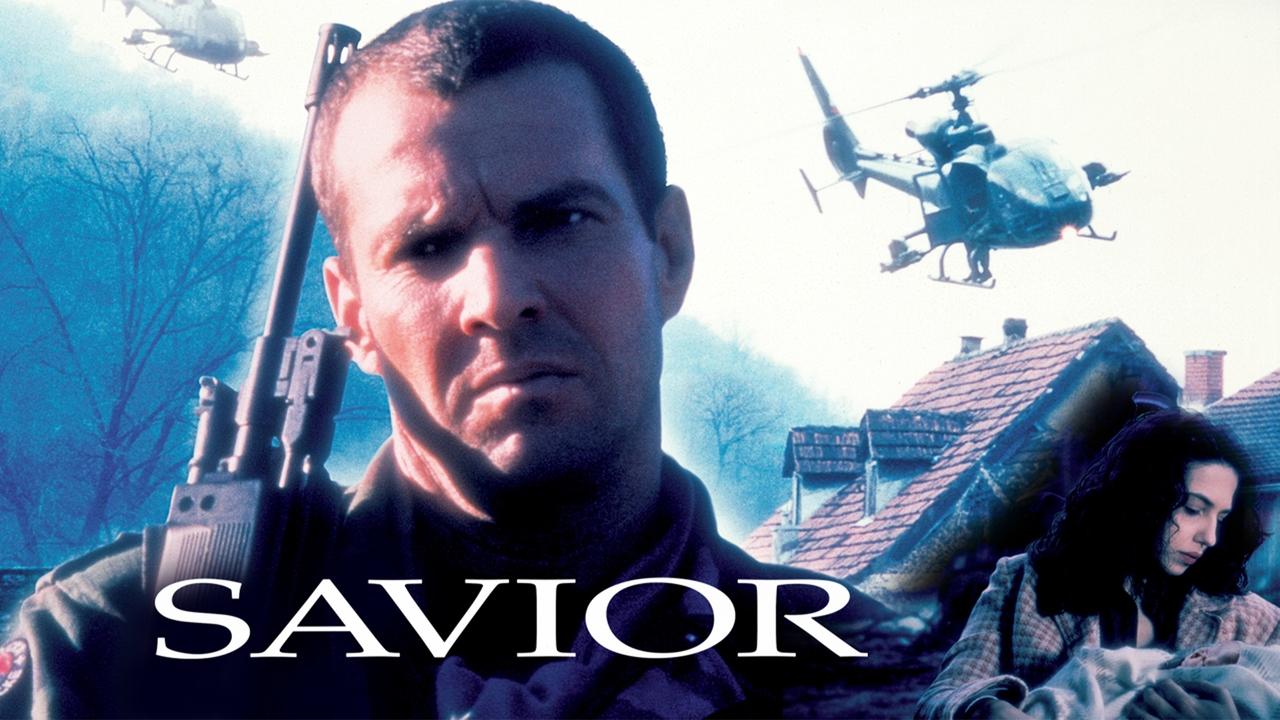
It begins with a single, shattering moment. Not the thunder of battlefields to come, but the intimate devastation of personal loss, echoing in a Parisian café. That’s the immediate gut punch Predrag Antonijević’s 1998 film Savior delivers, signaling from the outset that this isn't going to be an easy watch. For many of us encountering it on a Blockbuster shelf back in the day, perhaps drawn by the familiar, usually charming face of Dennis Quaid, Savior was a stark departure. It felt like finding a live grenade nestled amongst the action comedies. This wasn't escapism; it was a harrowing descent into the Balkan conflict, a film that lingered long after the tape rewound.
From Vengeance to Reluctant Guardian
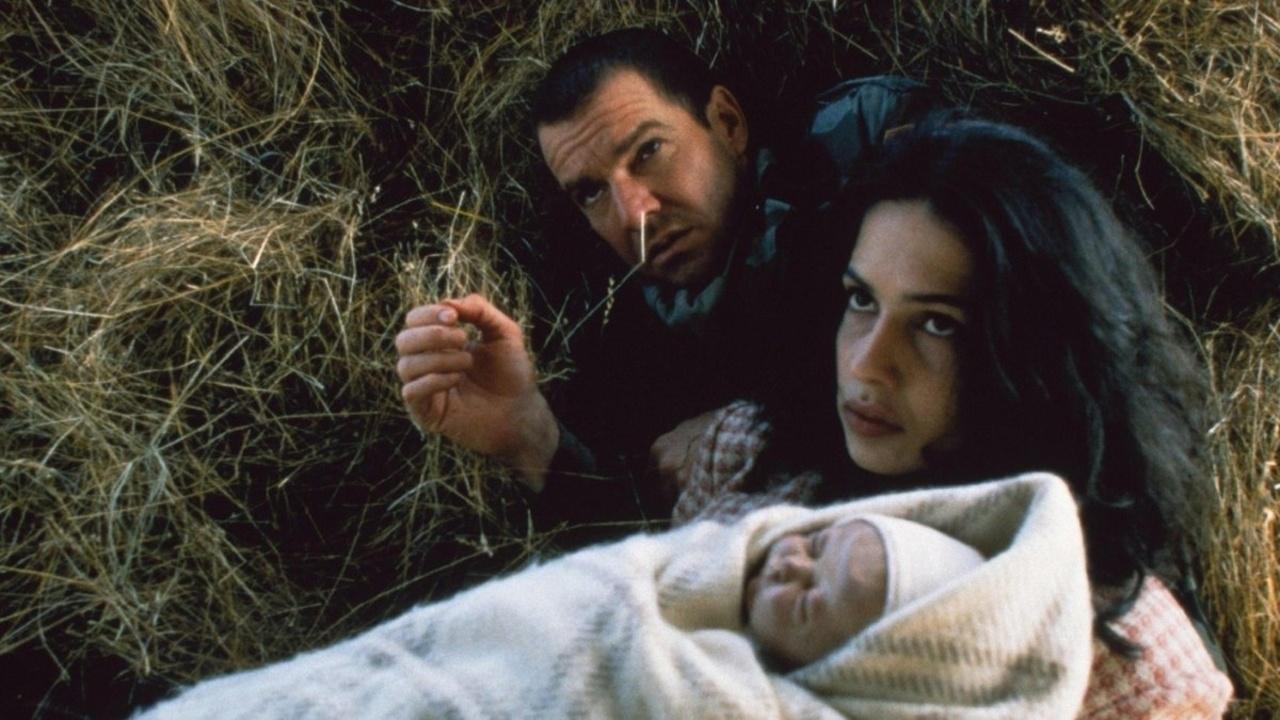
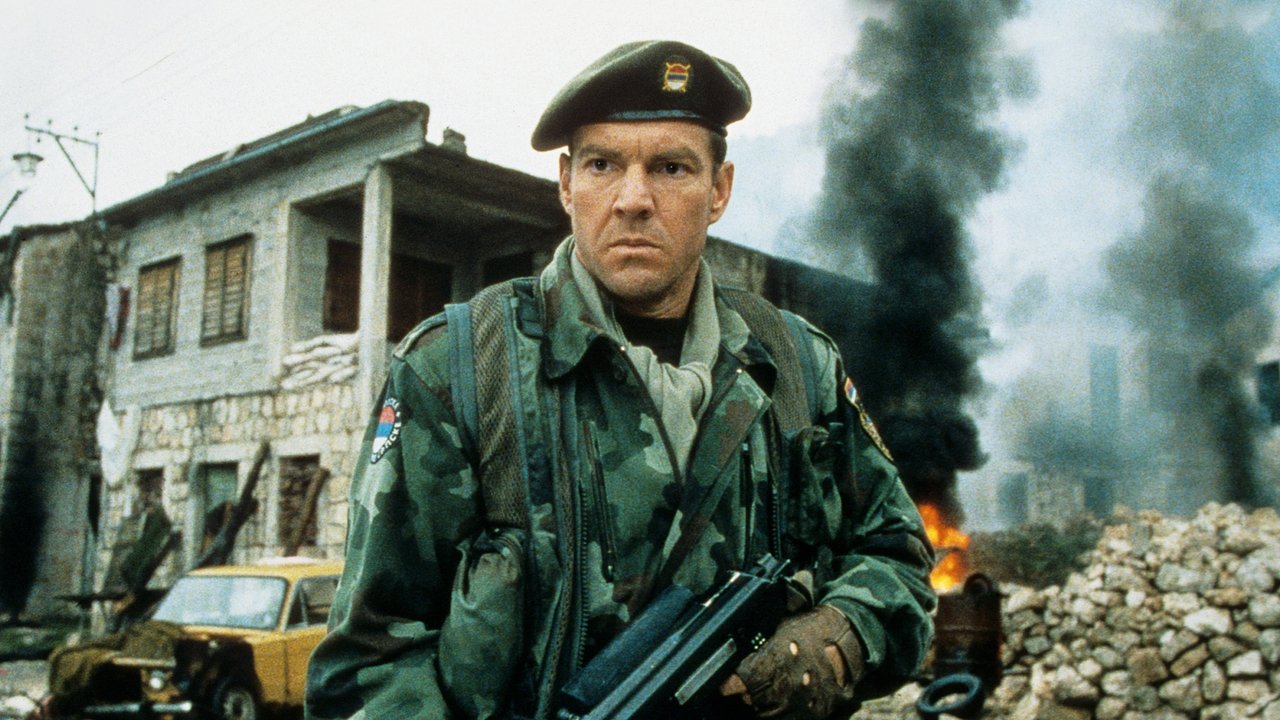
The premise is brutal in its simplicity. Joshua Rose (Quaid) is an American diplomat whose life implodes after his wife and child are killed in a terrorist bombing apparently perpetrated by Islamic extremists. Consumed by grief and rage, he walks into a nearby mosque and commits a horrific act of retaliatory violence. Fleeing justice, he adopts the name "Guy" and joins the French Foreign Legion, eventually finding himself fighting as a mercenary alongside Serbian forces in the Bosnian War. He’s a hollowed-out man, motivated by cold fury and a paycheck, participating in the grim calculus of ethnic cleansing.
But war has a way of forcing unforeseen connections. During a prisoner exchange gone violently wrong, Guy becomes the unwilling protector of Vera (Nastassja Kinski), a young Serbian woman pregnant as a result of rape by Bosnian Muslim soldiers, and Goran (Stellan Skarsgård), a fellow mercenary whose cruelty chills Guy even in his hardened state. When Vera gives birth and her own family rejects her and the child – viewing the baby as an enemy taint – Guy finds himself on the run, shielding mother and newborn from all sides in a landscape saturated with hatred. It’s a journey through hell, forcing a man who thought he’d lost all humanity to confront what little might remain.
A Different Kind of Dennis Quaid
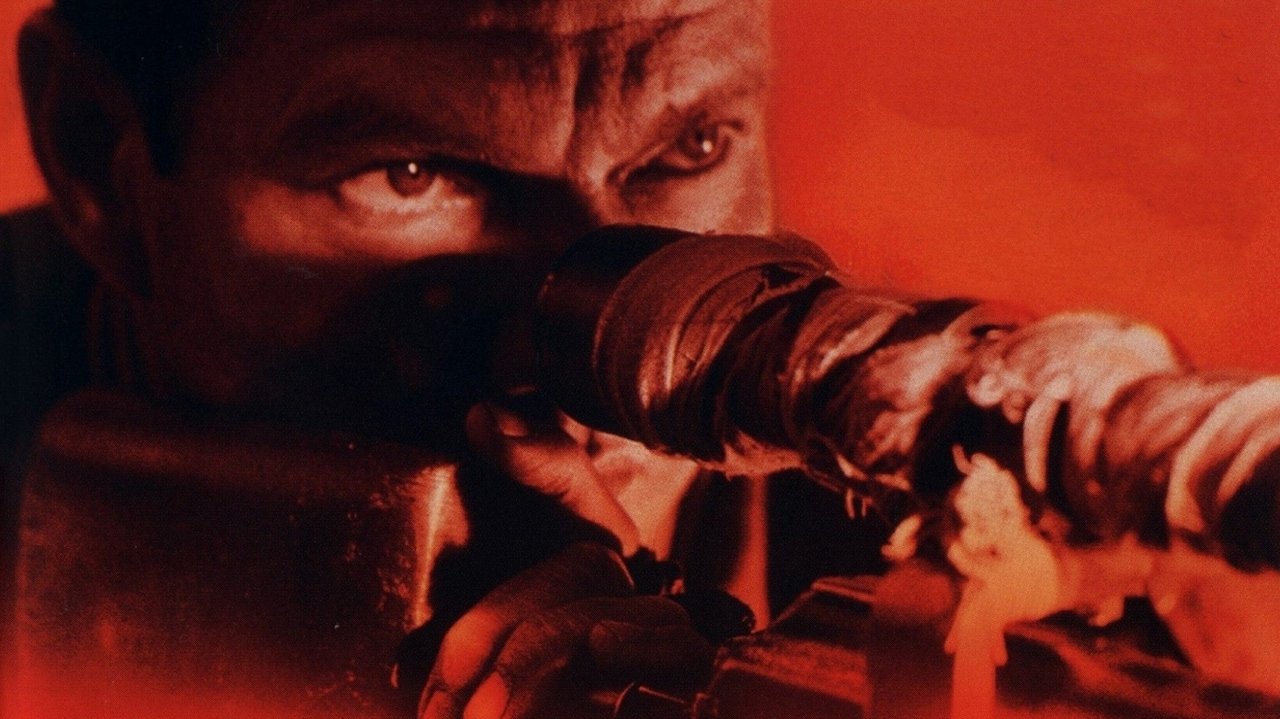
Let's be honest, seeing Dennis Quaid in this role in 1998 was jarring. We knew him as the charismatic astronaut in The Right Stuff (1983), the charming rogue in The Big Easy (1987), or the miniaturized hero of Innerspace (1987). Here, that easy grin is gone, replaced by a mask of trauma and simmering violence. It’s a raw, physically demanding, and emotionally draining performance. Quaid fully commits to the darkness of Guy’s initial state, making his slow, agonizing crawl towards redemption feel earned, not manufactured. His interactions with the infant – initially transactional, then fiercely protective – form the bruised heart of the film. It’s a performance that deserved more attention than it received, showcasing a depth many might not have expected.
Nastassja Kinski, too, brings a quiet dignity and profound sorrow to Vera. Her character endures unimaginable horrors, yet Kinski imbues her with resilience, not just victimhood. And Stellan Skarsgård, an actor always capable of finding menace beneath civility (or overt brutality, as needed), is terrifying as Goran, embodying the casual dehumanization that flourishes in conflict zones. He’s less a mustache-twirling villain and more a frighteningly plausible product of his environment.
Into the Fire: Production Realities
Directed by Serbian filmmaker Predrag Antonijević, making his major English-language debut, Savior possesses an authenticity that’s hard to shake. There’s a distinct lack of Hollywood gloss. The violence is abrupt, ugly, and deeply unsettling – particularly the infamous scene involving Vera's family – reflecting the grim realities of the Bosnian War without flinching. You can almost feel the mud and the cold. It’s telling that Oliver Stone, never one to shy away from difficult subjects (Platoon, Born on the Fourth of July), served as a producer. His influence perhaps lent weight to the film's unflinching political edge and its willingness to depict atrocities often sanitized elsewhere.
Filmed primarily in Montenegro not long after the actual conflict had ravaged the region, the production itself carried inherent weight and, no doubt, considerable challenges. This proximity to the real events likely contributed to the film's raw, documentary-like feel at times. Interestingly, despite its pedigree and Quaid's star power, Savior barely registered at the box office. Made for around $10 million, it grossed a mere $45,000 in a very limited theatrical run. For most of us, it became a discovery on VHS or late-night cable, a potent piece of filmmaking passed around through word-of-mouth, its power undiminished by its commercial obscurity. It felt like contraband, a film smuggled out of the conflict zone itself.
The Unshakeable Weight of War
Savior doesn't offer easy answers. It dives headfirst into the complex, tragic cycle of violence and retribution that characterized the Yugoslav Wars. Guy’s initial motivation is revenge, born of personal loss, mirroring the larger ethnic hatreds tearing the region apart. His journey isn’t about suddenly becoming a hero; it’s about rediscovering a shred of humanity in the face of absolute inhumanity, spurred by the primal need to protect an innocent life. Can one act of salvation truly counterbalance a past filled with violence? The film leaves that question hanging, heavy in the air.
Its unflinching depiction of war crimes, including sexual violence and the murder of non-combatants, makes it a demanding viewing experience. It's not gratuitous in the way of a slasher film; it feels sickeningly purposeful, forcing the audience to confront the brutal consequences of hatred. Does it succeed in illuminating the conflict? Perhaps its greatest strength lies in personalizing the horror, focusing on the impossible choices individuals face when civilization collapses.
Rating and Final Reflection

Savior is a tough, uncompromising film that refuses to look away from the abyss. Anchored by a career-best dramatic performance from Dennis Quaid and imbued with a chilling authenticity by its director and setting, it’s a powerful exploration of loss, vengeance, and the faintest glimmers of redemption in the darkest of times. Its graphic nature and unrelenting grimness make it difficult to recommend universally, but its impact is undeniable. The limited release meant it became one of those potent VHS discoveries that hit harder precisely because it felt unexpected and unvarnished by mainstream compromise.
Rating: 8/10
Savior stands as a testament to the power of film to confront us with uncomfortable truths. It’s the kind of movie that settles in your gut, a stark reminder from the video store era that not all tapes were meant for easy Saturday nights – some were meant to make you think, to make you feel, long after the screen went dark. What stays with you most after watching something this raw? Is it the horror, or the small, almost defiant act of hope represented by Guy's final choice?