It starts with a hole in a wall. Not just any hole, but a small aperture in the shattered brickwork of a bombed-out building, a makeshift window onto a world both terrifyingly immediate and achingly distant. Through this gap, young Alex peers out, his existence shrunk to the confines of this ruin, his "island" amidst the desolation of the Warsaw Ghetto during its liquidation. The Island on Bird Street (1997), directed by Danish filmmaker Søren Kragh-Jacobsen (who would later be associated with the Dogme 95 movement), doesn't flinch from the horror of its setting, yet it filters the unimaginable through the surprisingly resilient lens of childhood.
A Child's Fortress Against the Storm
Based on the semi-autobiographical novel by Uri Orlev, who himself survived the Warsaw Ghetto as a boy, the film finds its quiet power in this specific perspective. Alex (played with remarkable naturalism by newcomer Jordan Kiziuk) isn't just hiding; he's waiting. His father promised to return, and so Alex transforms his precarious shelter into a fortress of routine and resourcefulness, a space governed by the logic of survival and the comfort of imagination. His only companion is Snow, a small white mouse, a tiny spark of life in the surrounding decay. This relationship, devoid of sentimentality, speaks volumes about the human need for connection, even in the most stripped-down circumstances. It's a detail drawn straight from Orlev's own experiences, lending the film an unshakeable authenticity.
We see the ghetto not as a historical tableau, but as Alex experiences it: a landscape of sudden dangers, whispered warnings, fleeting glimpses of brutality, and unexpected pockets of silence. Kragh-Jacobsen masterfully controls the tension, keeping the threat omnipresent but often just outside Alex’s immediate view, mirroring the limited understanding and heightened senses of a child navigating chaos. The world beyond the ghetto wall, glimpsed through that hole or during perilous scavenging trips, represents an almost mythical realm of normalcy – kids playing, families together – highlighting the profound injustice of Alex's isolation.
Fleeting Connections, Enduring Hope
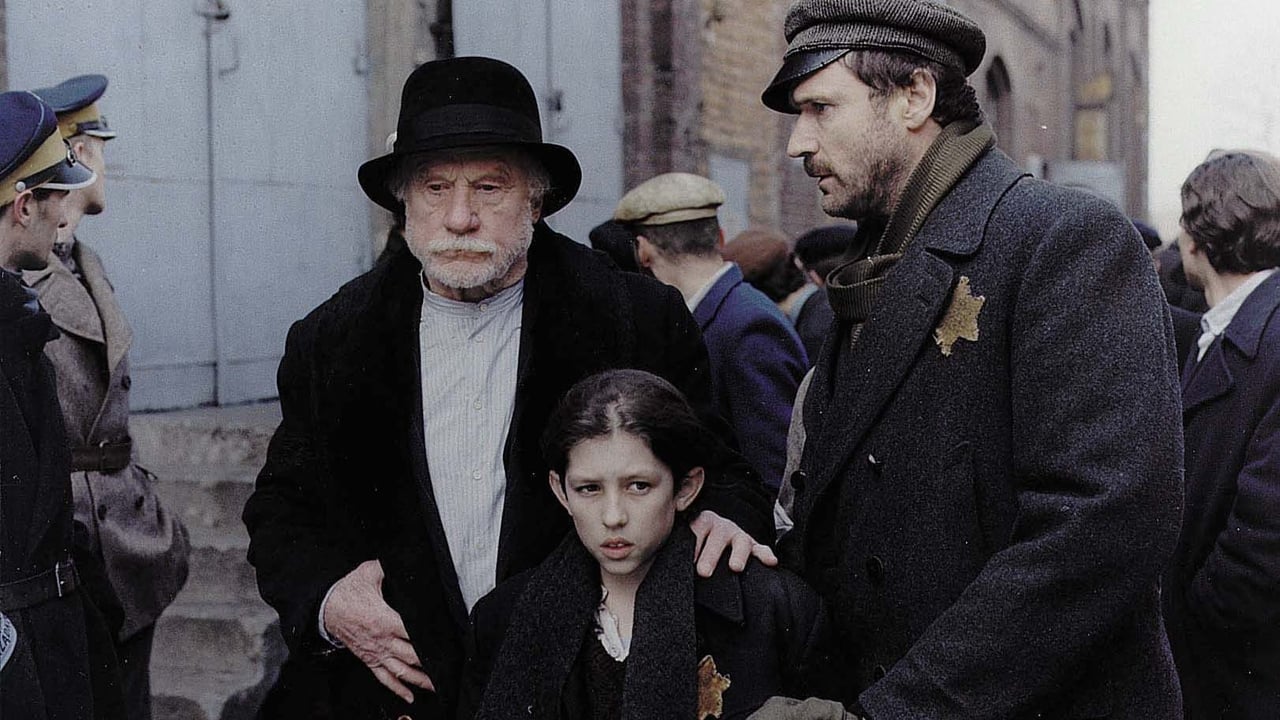
Alex isn't entirely alone forever. His solitude is punctuated by encounters that offer brief, vital sparks of humanity. There’s the resistance fighter (a typically solid Patrick Bergin, perhaps best remembered from Sleeping with the Enemy (1991)) who offers practical help, and more significantly, Boruch (Jack Warden, that wonderfully grizzled veteran presence we loved in everything from All the President's Men (1976) to Problem Child (1990)), who provides a moment of grandfatherly warmth and wisdom. These interactions are lifelines, reminding Alex (and us) that even in the darkest times, kindness and connection can persist. Warden, in particular, brings a comforting gravitas to his scenes, a brief respite from the surrounding tension.
The performance from Jordan Kiziuk is the film's anchor. Discovered after a wide search, Kiziuk, a Polish-Canadian boy with no prior acting experience, embodies Alex with a quiet determination that feels utterly real. He doesn't resort to histrionics; instead, he conveys fear, loneliness, ingenuity, and flickering hope through subtle expressions and actions. Watching him meticulously rig a rope ladder or carefully share his meager rations with Snow is more moving than any overt display of emotion could be. It's a performance that stays with you long after the credits roll.
Behind the Bricks and Mortar
Finding The Island on Bird Street back in the late 90s, perhaps tucked away in the 'World Cinema' or 'Drama' section of the video store, felt like uncovering a hidden gem. It wasn't a loud film, lacking the pyrotechnics or star power of blockbusters, but its impact was undeniable. Filmed primarily in Wrocław, Poland, the production effectively recreated the specific, chilling atmosphere of the ghetto ruins. While based on Orlev's novel, the screenplay (co-written by Tony Grisoni, who later worked with Terry Gilliam) smartly focuses on Alex's internal world and his direct experiences. It’s worth noting that Søren Kragh-Jacobsen won the Silver Bear for directing at the Berlin International Film Festival for his work here, a testament to his sensitive and skillful handling of the material. This wasn't just another WWII story; it was a deeply personal tale of survival seen through a unique and compelling lens.
The film manages a delicate balancing act. It acknowledges the horrors without dwelling on graphic depictions, focusing instead on the psychological toll and the small acts of defiance that constitute survival. It’s a story about the incredible adaptability of the human spirit, particularly that of a child forced to confront adult realities far too soon. How does one maintain hope when surrounded by despair? How does imagination become a shield? These are the questions the film gently probes.
The Verdict
The Island on Bird Street is a poignant, beautifully crafted film that deserves to be remembered. It avoids mawkishness, finding its emotional resonance in quiet observation and the powerhouse performance of its young lead. It's a testament to resilience, the importance of hope, and the power of storytelling rooted in lived experience. While the subject matter is undeniably heavy, the film's focus on Alex’s ingenuity and unwavering spirit leaves a lasting impression of strength rather than just sorrow. It’s a film that earns its emotional weight through understatement and authenticity.
Rating: 9/10
This rating reflects the film's exceptional central performance, its sensitive and artful direction, and its powerful, authentic portrayal of childhood resilience amidst historical tragedy. It’s a near-perfect execution of a difficult story.
It leaves you contemplating the small, essential things that keep us human, even when the world seems determined to strip everything away – a promise, a memory, a shared crust of bread, or even the company of a tiny white mouse.