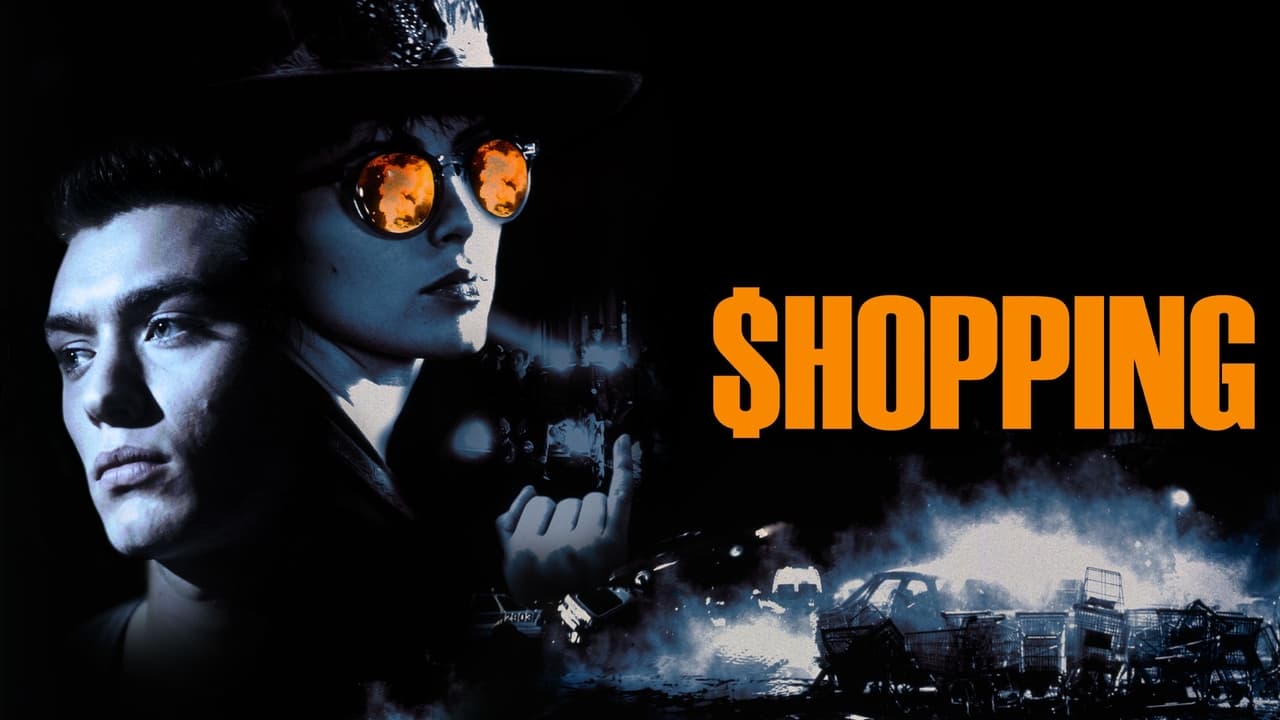
Alright fellow tapeheads, slide that worn cassette into the VCR, maybe give the tracking a little nudge, and let’s journey back to the neon-drenched, rain-slicked streets of 1994 Britain with a film that practically screams early-90s disillusionment: Paul W. S. Anderson's debut feature, Shopping. If you remember picking this one up from the 'New Releases' wall, perhaps drawn in by its edgy cover art promising automotive anarchy, you know it was a far cry from the polished blockbusters piling up nearby. This was something rawer, angrier, and undeniably stylish.
### Crashing Into the Scene
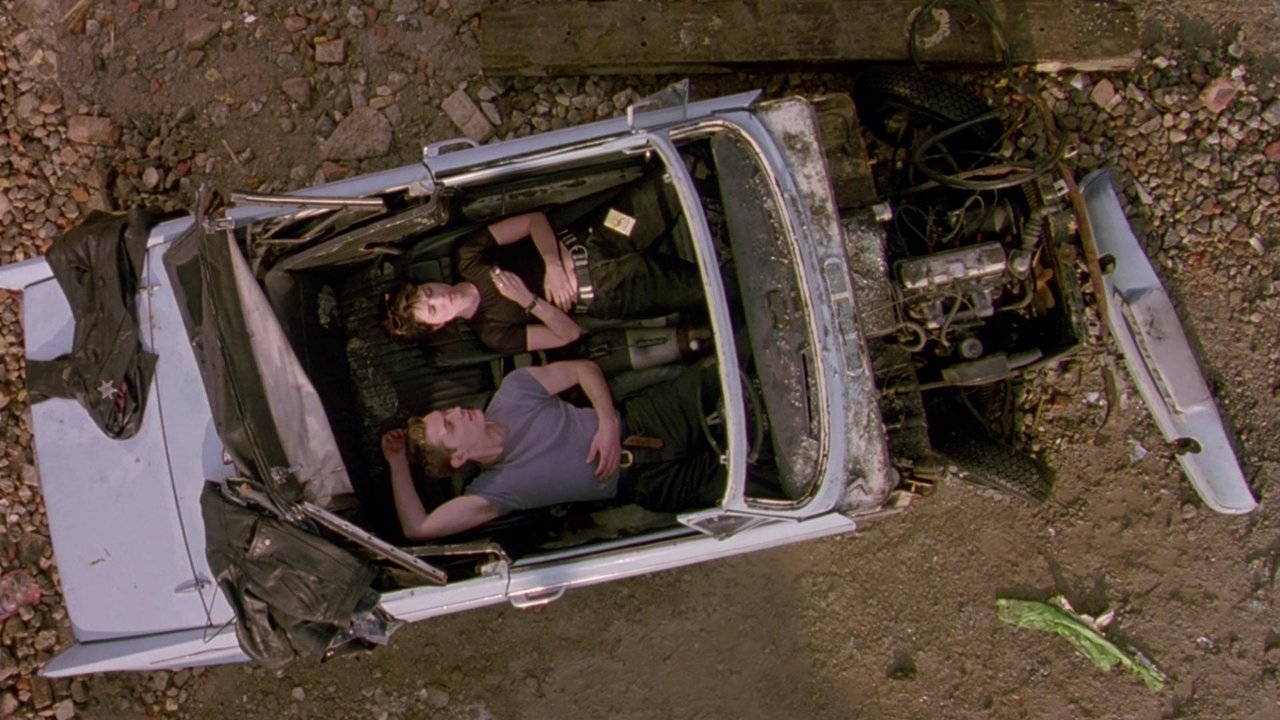
Before he whisked us away to Outworld in Mortal Kombat or the terrifying depths of space in Event Horizon, Paul W. S. Anderson announced his arrival with this surprisingly gritty slice of urban nihilism. Shopping isn’t subtle; it grabs you by the collar with its premise of disenfranchised youth finding solace – and adrenaline – in joyriding stolen high-end cars and ram-raiding storefronts. It’s a premise that tapped directly into a genuine UK news phenomenon of the time, lending the film an immediate, if uncomfortable, relevance that probably had certain tabloids frothing at the mouth.
At the center of the chaos is Billy, played by a ridiculously young and magnetic Jude Law in his first major film role. Fresh out of prison, Billy is charisma mixed with volatile energy, itching to get back behind the wheel and reclaim his status as the top dog of destructive retail therapy. Opposite him is Jo, portrayed by Sadie Frost, who brings a compelling mix of vulnerability and recklessness to the role. Their chemistry is palpable, sparking with a dangerous energy that feels authentic. Retro Fun Fact: This on-screen connection wasn't just acting; Law and Frost famously met on the set of Shopping and began a relationship that would lead to marriage. Watching it now, knowing that real spark ignited amidst the fictional mayhem, adds another layer to their shared scenes.
### Style Over Substance? Maybe, But What Style!
Let's be honest, the plot isn't exactly Shakespeare. Billy wants to prove he's the best ram-raider, locking horns with the menacing Tommy (a reliably intense Sean Pertwee). It’s a fairly straightforward rivalry narrative fuelled by testosterone and twisted notions of respect earned through destruction. Character depth isn't the film's primary concern; it’s more interested in capturing a mood, a feeling of youthful rebellion simmering in a landscape of urban decay and consumerist temptation.
Where Shopping truly shines, especially viewed through a nostalgic lens, is its aesthetic. Anderson, even this early in his career, demonstrates a keen visual eye. Working with a modest budget (reportedly around £1.5 million), he crafts a world that feels distinctly bleak yet visually arresting. Filmed in locations like the pre-redevelopment Canary Wharf and the atmospheric, derelict Beckton Gas Works (famously seen in Stanley Kubrick’s Full Metal Jacket), the film uses London’s less glamorous corners to create a fittingly grimy playground for its anti-heroes. The cinematography leans into the rain, the neon reflections on wet pavement, and the harsh artificial lights of late-night retail parks. It feels very now for 1994.
And the soundtrack! Oh man, the soundtrack is pure early-90s gold. Pulsating with tracks from Orbital, Utah Saints, Stereo MCs, and The Disposable Heroes of Hiphoprisy, the music isn't just background noise; it's the film's heartbeat, driving the kinetic energy of the driving sequences and amplifying the sense of edgy counter-culture cool. Didn't it just make you want to crank up the volume on your Hi-Fi system back then?
### Ram-Raiding Reality Bites
While there aren't massive Michael Bay-esque explosions here, the car action, particularly the ram-raiding sequences, has a grounded, brutal feel. These aren't slick, CGI-enhanced Fast & Furious maneuvers; they’re about the crunch of metal, the shattering of glass, the blunt force trauma of a vehicle smashing through a shop window. It feels messy and dangerous, reflecting the relatively low-fi, practical nature of the stunts. Retro Fun Fact: The film’s focus on ram-raiding caused considerable controversy upon release, mirroring societal anxieties about this specific type of crime wave sweeping the UK. Some reports suggested cuts were made to tone down the perceived glorification, highlighting how directly the film plugged into contemporary fears.
The performances, particularly from the young leads, carry the film. Law’s raw star power is already evident; he commands the screen even when Billy’s motivations seem paper-thin. Frost ensures Jo isn't just a passive girlfriend, giving her agency and her own rebellious streak. And Sean Pertwee, always great value, provides the necessary intimidating foil.
### Legacy on a Budget
Shopping wasn't a box office smash, and critical reception was mixed, with some dismissing it as style over substance or morally questionable. Yet, like so many tapes swapped between friends or discovered late at night, it cultivated a dedicated cult following. It remains a fascinating time capsule – a snapshot of early Paul W. S. Anderson, the burgeoning stardom of Jude Law, a specific British subculture, and that distinct early-to-mid-90s blend of grunge aesthetics and burgeoning electronic music. It’s a film that feels born of its era, capturing a restless energy that still resonates, even if the fashions (so much leather!) and dialogue occasionally provoke an affectionate chuckle. It’s undeniably a 90s cult classic UK artefact.
Rating: 7/10
Justification: Shopping earns a solid 7 for its undeniable style, pulsating energy, and historical significance as a launchpad for Anderson and Law. The raw charisma of the leads, the killer soundtrack, and the gritty atmosphere effectively capture a specific moment in time. It loses points for a somewhat thin plot and underdeveloped characters, but its cult status and snapshot quality make it a compelling watch for anyone nostalgic for the edgier side of 90s cinema.
Final Thought: While maybe not the deepest film on the shelf, Shopping is a blast of pure, uncut 90s attitude delivered with visual flair – a reminder that sometimes, raw energy and a killer soundtrack were all you needed for a memorable night in with the VCR.