71 Fragments of a Chronology of Chance
It often starts not with a bang, but with a flicker. A television screen, news reports droning on about distant conflicts or celebrity scandals, punctuating the silence between disparate lives. This is the unnerving rhythm of Michael Haneke’s 71 Fragments of a Chronology of Chance (1994), a film that feels less like a story unfolding and more like shards of reality pieced together just before they shatter completely. Watching it again, decades after first encountering its stark gaze likely on a worn rental tape, the film’s cold precision feels just as potent, just as unsettlingly familiar. It’s a different kind of VHS memory – not the warm glow of a blockbuster, but the chilling echo of something that burrowed under the skin.
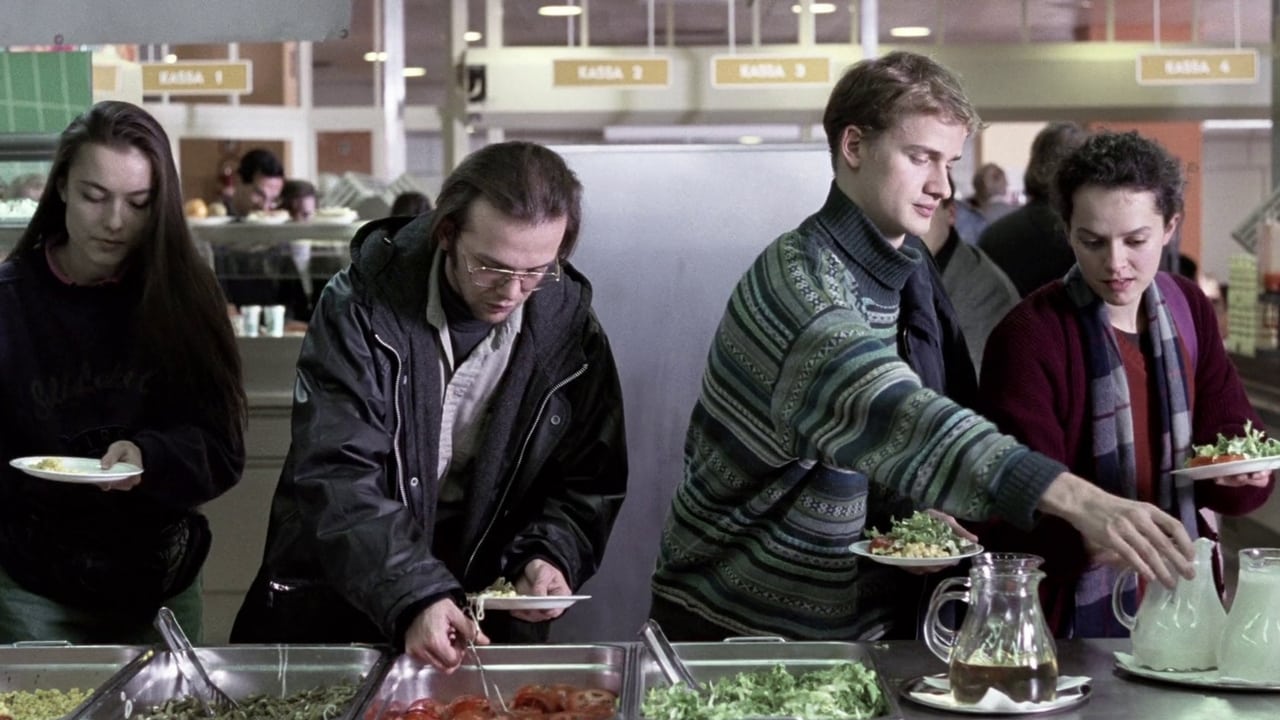
Shards of Ordinary Life
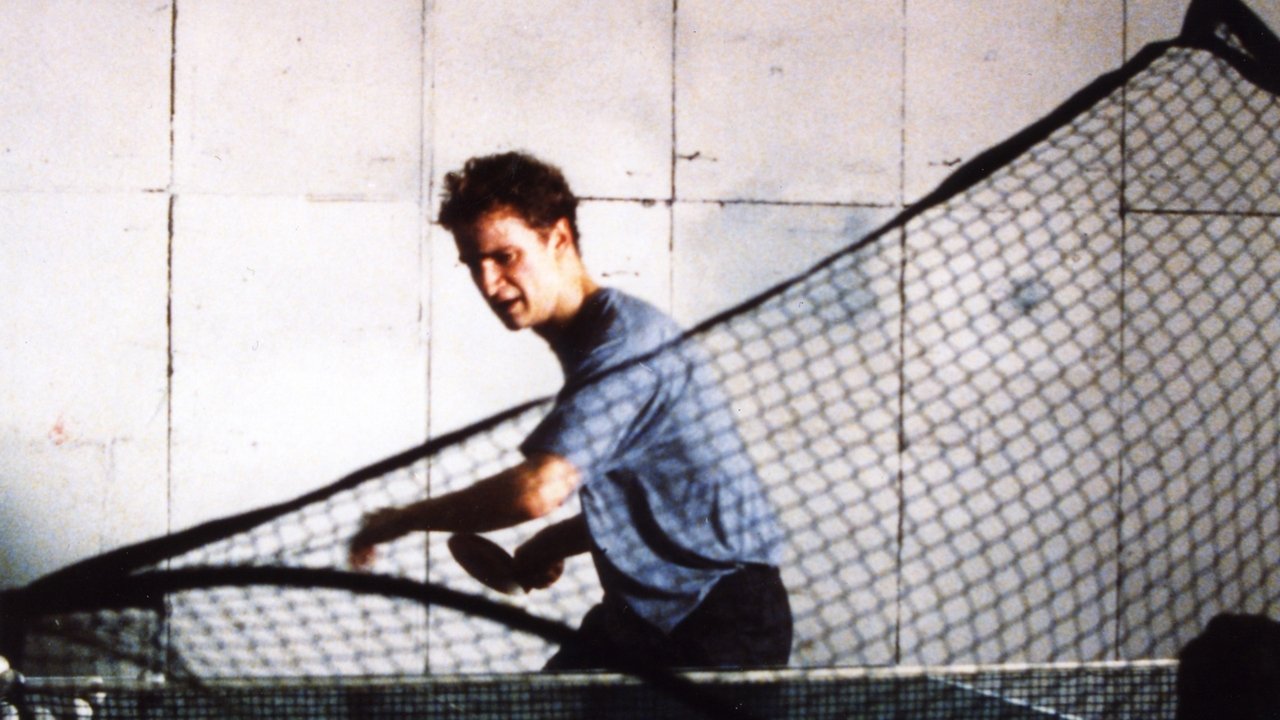
Haneke, already known for his unflinching explorations of modern malaise with The Seventh Continent (1989) and Benny's Video (1992), concluded his "Glaciation Trilogy" with this challenging piece. There’s no conventional plot here. Instead, we drift between vignettes: a young Romanian boy (Gabriel Cosmin Urdes) immigrating illegally to Vienna, hiding in plain sight; a lonely bank security guard (Otto Grünmandl); a struggling student (Lukas Miko) involved in petty theft; a couple seeking to adopt a child; fragments of lives lived in parallel, seemingly unconnected. These moments are separated by abrupt cuts to black, stark voids that emphasize the isolation and lack of meaningful connection between these individuals, even as their paths unknowingly converge.
The film’s power lies precisely in this fragmented approach. Haneke refuses easy narrative bridges or psychological explanations. We are simply observers, watching mundane routines – eating, watching TV, waiting. It mirrors a feeling perhaps amplified in our hyper-connected yet paradoxically isolating modern world: the awareness of countless other lives running parallel to our own, rarely intersecting in any meaningful way until, sometimes, chance forces a collision. Remember seeking out challenging foreign films at the video store, hoping for something that broke the Hollywood mold? 71 Fragments was precisely that kind of discovery – demanding, perhaps alienating, but undeniably thought-provoking.
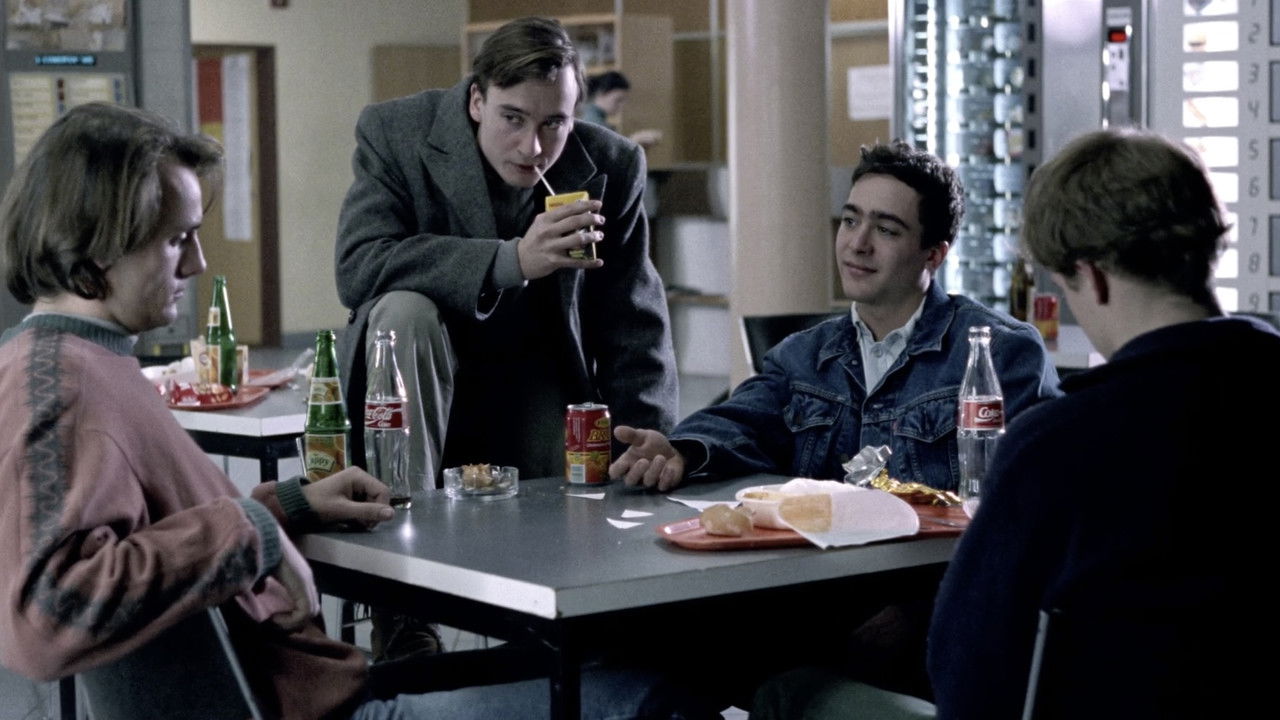
The Cold Gaze of the Camera
Haneke’s direction is deliberately detached, almost clinical. Long takes, static camera positions, and a distinct lack of non-diegetic music create an atmosphere of profound unease. The ambient sounds of the city, the constant hum of television news – these become the film’s score. It’s a style designed not to elicit empathy in the traditional sense, but to force contemplation. We aren't invited into these characters' inner lives; we are presented with their external actions, their surfaces, leaving us to ponder the unseen pressures or emptiness beneath.
The performances reflect this perfectly. The actors, a mix of professionals and non-professionals, deliver understated portrayals. There are no grand emotional outbursts until the very end. Instead, we see the quiet desperation of the security guard, the survival instinct of the young boy, the aimless frustration of the student. Their authenticity lies in their reserved nature, making the eventual eruption of violence feel both shocking and terrifyingly arbitrary. It’s a stark reminder that horrific events often stem not from melodramatic build-ups, but from the quiet implosion of ordinary pressures.
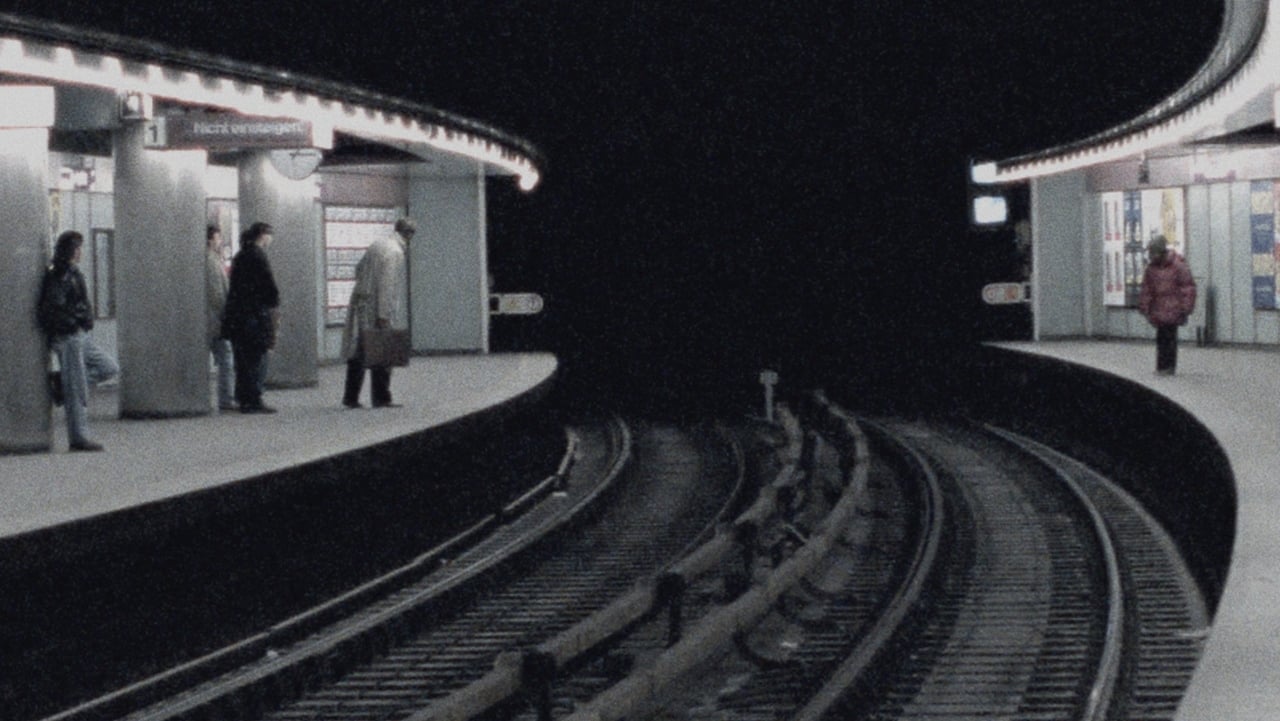
Trivia Track: Haneke's Methods
It’s known that Haneke meticulously storyboards his films, and the precision here feels absolute. The recurring news reports on television weren't just background noise; they were integral. Featuring real footage of the Bosnian War, the political climate in Austria, and even the Michael Jackson allegations of the time, these snippets ground the film in a specific, media-saturated reality. They serve as a constant, often ignored, backdrop of wider societal anxieties and global crises, contrasting sharply with the personal, mundane struggles of the characters. Haneke seems to ask: in a world overflowing with information and mediated images of suffering, how does genuine human connection survive? Does the constant barrage desensitize us, making real-world violence seem just another fragment on the screen? This technique powerfully echoes themes explored in Benny's Video, where mediated violence takes center stage.
The Inevitable Collision
Spoiler Alert! The fragments eventually converge in a sudden, senseless act of violence at a bank – a seemingly random shooting by the student character. Haneke presents this not as a dramatic climax, but as another fragment, abrupt and horrifyingly mundane in its execution. There's no attempt to explain the killer's motives in psychological terms; the act simply happens, a catastrophic result of accumulated, unspoken pressures meeting pure chance. It’s this refusal to provide easy answers, this insistence on the chilling randomness of it all, that makes the film so difficult and so enduringly disturbing. It forces us to confront the uncomfortable possibility that such events don't always have neat explanations.
Lingering Questions in the Static
71 Fragments of a Chronology of Chance isn't an easy watch, nor was it likely a frequent rental back in the day unless you were specifically seeking out challenging European art cinema. It offers few comforts and leaves the viewer with a profound sense of unease. Yet, its power is undeniable. Haneke masterfully uses the fragmented structure and observational style to paint a chilling portrait of alienation, the unsettling randomness of fate, and the thin veneer separating routine from chaos in modern life. What does it say about the societies we build, where individuals can exist so close yet remain utterly disconnected? Doesn't the film's portrayal of media saturation and the potential for sudden, inexplicable violence feel eerily prescient decades later?
Rating: 8/10
This score reflects the film's artistic brilliance, its thematic depth, and Haneke’s unflinching directorial control. It's a challenging, demanding piece of cinema that achieves its unsettling aims with chilling precision. The rating is tempered only by the fact that its coldness and fragmented nature will inevitably alienate some viewers expecting a more conventional narrative experience. It succeeds powerfully on its own bleak terms.
71 Fragments remains a stark, unforgettable piece of 90s art-house cinema, a film that uses its challenging structure not as a gimmick, but as the very core of its unsettling message about chance, isolation, and the fragile connections of our modern world. It’s the kind of film that leaves you staring at the static long after the tape ends.