It often feels like the films that stick with you the longest aren't necessarily the flawless ones, but those that attempt something profound, even if they stumble along the way. Watching Michael Cimino's The Sunchaser again recently, that feeling washed over me with renewed force. Knowing this 1996 drama was the final film from the maverick director behind monumental works like The Deer Hunter (1978) and the infamous Heaven's Gate (1980) lends it an inescapable air of poignant finality, a feeling strangely mirrored in the film's own grappling with mortality and meaning.
Collision Course: Science Meets Spirit
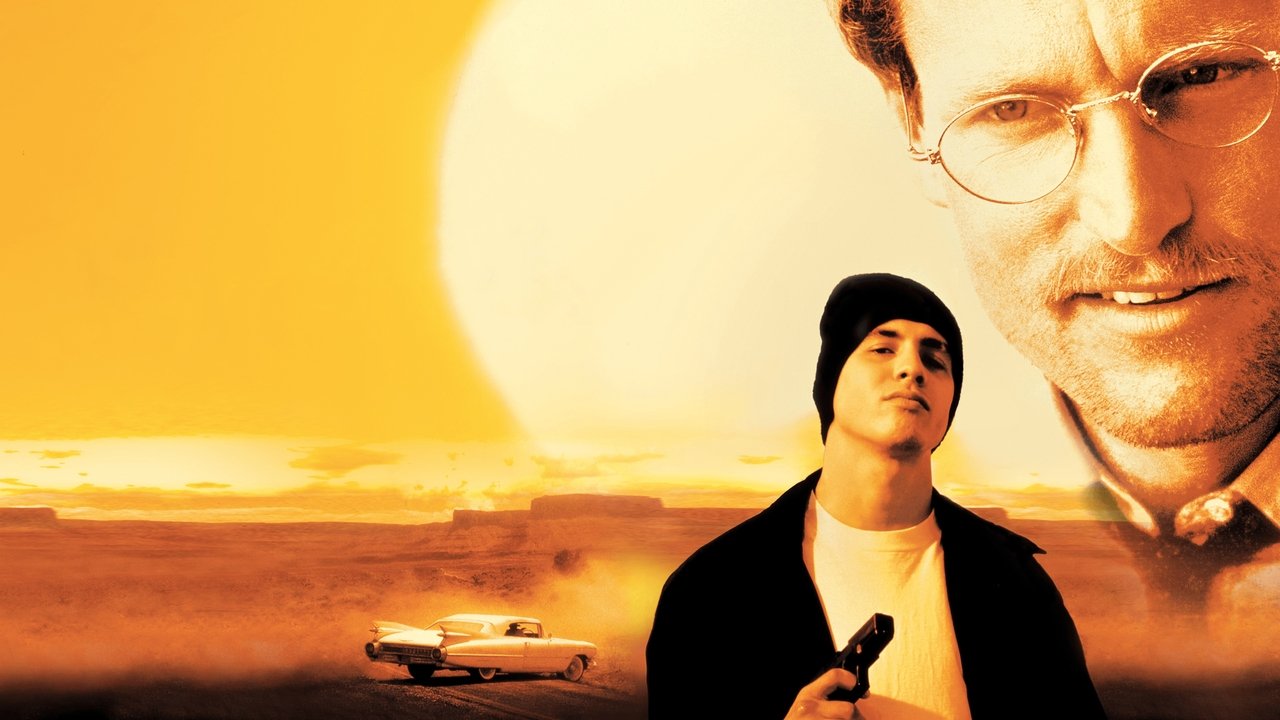
The setup is stark, almost archetypal. Dr. Michael Reynolds, played with tightly wound precision by Woody Harrelson, is a successful Los Angeles oncologist. He’s got the fancy car, the prestigious job, the seemingly perfect life, but it’s all built on a foundation of emotional detachment. He treats disease, not people. That carefully constructed world shatters when he encounters Brandon "Blue" Monroe (Jon Seda), a 16-year-old Navajo gang member diagnosed with terminal abdominal cancer and given weeks, maybe a month, to live. Blue, hardened by life and facing his end, rejects Reynolds’ sterile prognosis. Instead, he clings to a tribal legend: a sacred lake nestled high in the mountains of Arizona, possessing mystical healing powers. In a desperate act, Blue kidnaps Reynolds, forcing the materialistic doctor on a spiritual odyssey across the vast, unforgiving landscapes of the American Southwest.
An Uneasy Alliance
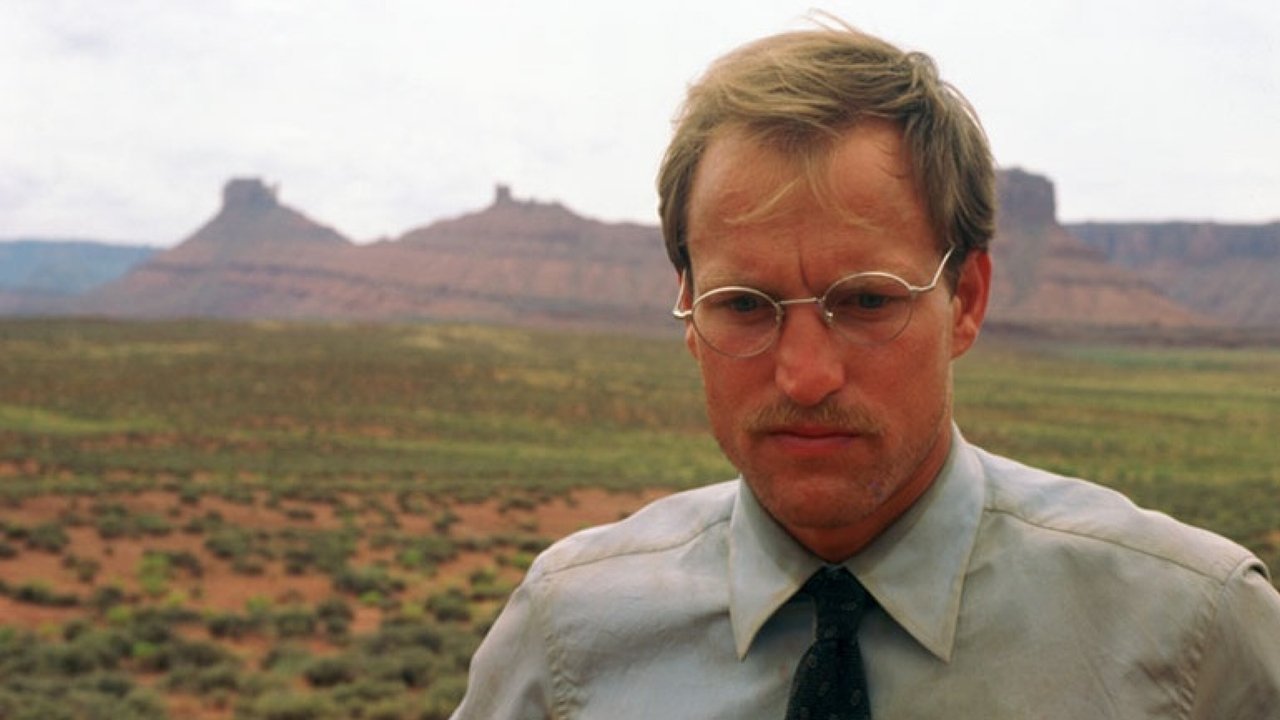
What follows is essentially a two-hander road movie, driven by the volatile dynamic between captor and captive. Harrelson, then perhaps better known for comedic roles or more straightforward action, really digs into the transformation of Reynolds. He starts as arrogant and dismissive, embodying the rational, skeptical modern man utterly bewildered by Blue's unwavering faith. But as the journey progresses, stripped of his societal armor, cracks appear. Harrelson subtly conveys the dawning realization that his scientific certainty offers little comfort in the face of existential questions.
Opposite him, Jon Seda delivers a performance brimming with raw, desperate energy. Blue isn't presented as a noble savage; he's angry, scared, and often reckless, clinging to hope with fierce tenacity. Seda, relatively unknown at the time, holds his own against Harrelson, making Blue's conviction believable, even if the premise itself strains credulity. There’s an authenticity to his portrayal of a young man confronting his own death sentence, refusing to go quietly. Their forced proximity, the slow erosion of hostility into a grudging, fragile understanding, forms the film’s emotional core. A brief but significant appearance by the legendary Anne Bancroft as Reynolds’s pragmatic, world-weary colleague adds another layer, representing the established medical world Reynolds is forced to leave behind.
Cimino's Final Vista
You can feel Cimino's directorial presence throughout. While not possessing the sheer epic scale of his earlier works, The Sunchaser still benefits from his eye for landscape and atmosphere. The contrast between the cold, clinical blues and greys of the hospital and the warm, expansive earth tones of the desert is visually striking. He uses the sweeping vistas not just as backdrops, but as active participants in the narrative, dwarfing the characters and emphasizing the magnitude of Blue's spiritual quest against the indifference of nature and the skepticism of modern society.
It's fascinating, isn't it, how a director known for his grand, often controversial epics chose such a fundamentally intimate story for his swan song? Perhaps Cimino, like Reynolds, was on his own kind of journey towards the end. The production itself wasn't plagued by the legendary troubles of Heaven's Gate, but The Sunchaser faced its own uphill battle. Despite being selected to compete for the Palme d'Or at the 1996 Cannes Film Festival – a significant nod of respect – the film was a catastrophic failure at the box office, reportedly grossing a mere $21,508 against its $31 million budget. Finding it tucked away on a video store shelf felt like uncovering a secret, something the mainstream had utterly overlooked.
Flawed Journey, Lingering Questions
The Sunchaser isn't without its flaws. The script, penned by Charles Leavitt (who would later find success with Blood Diamond), occasionally leans into melodrama, and some plot developments feel contrived to push the characters towards their predetermined arcs. The pacing can sometimes lag, dwelling perhaps a little too long on certain beats. Yet, despite these imperfections, the film possesses a sincerity and ambition that's hard to dismiss.
It forces us to ask uncomfortable questions. Where does hope reside when science offers none? Can ancient wisdom hold answers that modern knowledge ignores? The film doesn't offer easy answers, wisely leaving much ambiguous. It’s less about whether the mythical lake truly possesses healing powers and more about the transformative power of the journey itself – the stripping away of cynicism, the forging of an unlikely human connection, and the confrontation with life's ultimate mysteries.
Rating: 6/10
This score reflects a film that reaches for something profound but doesn't quite grasp it firmly. The central performances from Harrelson and Seda are compelling, Cimino's visual sense remains potent, and the core themes resonate deeply. However, narrative weaknesses and occasional heavy-handedness prevent it from achieving true greatness. It feels like a deeply personal film for Cimino, tackling themes of life, death, and the search for meaning with earnestness, even if the execution is uneven.
The Sunchaser may be one of the more obscure titles on the VHS shelf, a near-forgotten entry in a famed director’s filmography overshadowed by both his triumphs and disasters. Yet, it lingers – a flawed, soulful road trip into the mystic heart of the American landscape, leaving you pondering the boundaries between faith and reason long after the credits roll. What journey, after all, truly changes us more: the one we plan, or the one that kidnaps us?