Here’s a review crafted for "VHS Heaven":
***
Sometimes a film doesn't announce itself with explosions or grand pronouncements, but with a silence so heavy it feels like a physical presence. Adolfo Aristarain's 1997 drama Martin (Hache) begins steeped in such a quiet devastation, forcing us into the fractured world of a father and son separated by geography, grief, and years of unspoken resentments. Finding this title nestled amongst the louder fare on the video store shelves back in the day often meant stumbling upon something unexpectedly profound, a potent dose of human complexity that lingered long after the VCR clicked off.
An Ocean Between Them
The premise is stark: after a near-fatal overdose in Buenos Aires, young Martín (a raw and compelling Juan Diego Botto) – pointedly called Hache (Spanish for the letter 'H') to distinguish him from his father – is sent to live with his estranged parent in Madrid. His father, also Martín (Federico Luppi, in a performance radiating world-weary authority), is a successful Argentine film director living in self-imposed exile, surrounded by a curated life that includes his much younger actress girlfriend, Alicia (Cecilia Roth), and his flamboyant, fiercely loyal best friend, Dante (Eusebio Poncela), a gay actor whose hedonism masks a deep well of loneliness.
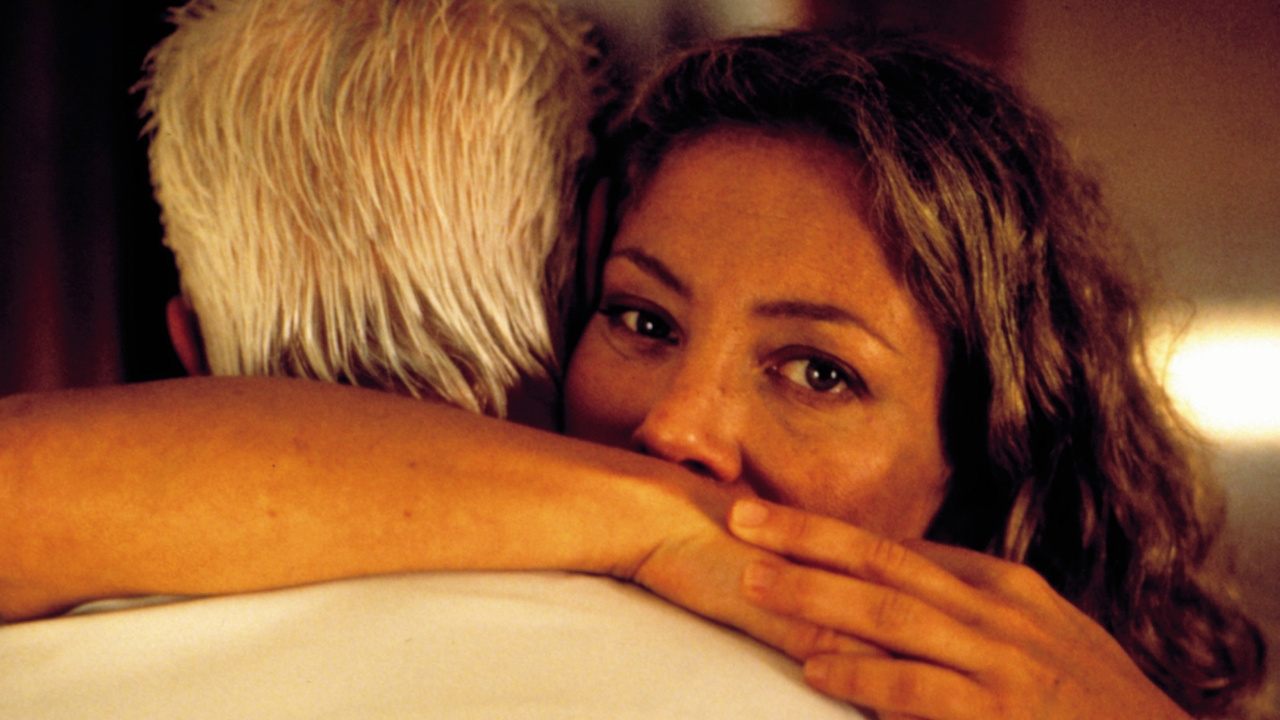
The film isn't driven by intricate plot twists but by the volatile chemistry between these four individuals. It's a chamber piece, largely unfolding in Martin Sr.'s apartment, where conversations become battlegrounds and shared meals simmer with unspoken tensions. Aristarain, who also co-wrote the screenplay with Kathy Saavedra, crafts dialogue that feels painfully authentic – sharp, witty, cruel, and occasionally, devastatingly honest. It’s a script fascinated by the ways we use words both to connect and to wound, often simultaneously. Remember how certain foreign language films discovered on VHS felt like windows into entirely different, more adult sensibilities? Martin (Hache) was definitely one of those.
Portraits in Pain
What truly elevates Martin (Hache) is the powerhouse cast. Federico Luppi, already a giant of Argentine and Spanish cinema (audiences might recall him from Guillermo del Toro's Cronos or Aristarain's own acclaimed Un lugar en el mundo), embodies Martin Sr.'s intellectual arrogance and emotional cowardice perfectly. He's a man who directs lives on screen but has utterly failed to navigate his own. His inability to connect with his son, hiding behind cynicism and pronouncements about art, is heartbreakingly real. Luppi actually won the Goya Award (Spain's equivalent of the Oscar) for Best Actor for this role, and it's easy to see why – it's a masterclass in contained suffering.
Matching him is Juan Diego Botto as Hache. He brings a wounded, simmering intensity to the role. Hache is adrift, searching for identity and connection but armed with the defensive sarcasm of youth. His vulnerability, especially in scenes where the façade cracks, is deeply affecting. Eusebio Poncela almost steals the show as Dante; flamboyant and cynical, yet fiercely protective and ultimately tragic. His monologues are theatrical, yes, but they cut to the core of the film's themes about performance, authenticity, and the fear of being alone. And Cecilia Roth, a frequent collaborator with Pedro Almodóvar, provides a crucial counterpoint as Alicia, navigating the emotional minefield created by the two Martíns, her own desires and vulnerabilities adding another layer of complexity.
Echoes of Exile and Art
Aristarain isn't just telling a family story; he's exploring themes of displacement and cultural identity. Martin Sr.'s exile in Madrid mirrors a deeper emotional exile from his past, his son, and perhaps himself. The film subtly contrasts the perceived sophistication and cynicism of Madrid's artistic circles with the raw, unresolved pain originating from Buenos Aires. It asks profound questions: What is home when you feel alien everywhere? Can art truly compensate for a life unlived or relationships unraveled? Doesn't the struggle to communicate across generations, across profound personal differences, feel perpetually relevant?
Interestingly, Aristarain had explored similar themes of identity and belonging in his Oscar-nominated Un lugar en el mundo (A Place in the World) a few years earlier, also starring Luppi. Martin (Hache) feels like a continuation of those ideas, but sharpened, more cynical, perhaps reflecting the specific anxieties of Argentines living abroad during that period. The film was Argentina's official submission for the Best Foreign Language Film at the Academy Awards, though it wasn't nominated – a testament to its perceived quality and thematic weight. It unflinchingly tackles difficult subjects like drug addiction, suicide, and the often-brutal honesty (or lack thereof) within families, which might have been challenging for some audiences at the time.
A Film That Stays With You
Martin (Hache) isn't an "easy" watch. It demands attention and rewards it with psychological depth and emotional resonance. It’s the kind of film that might have been overlooked in a multiplex but found its audience among those browsing the drama section of the video store, looking for something more substantial. The deliberate pacing allows the characters and their conflicts to breathe, making the eventual emotional outbursts feel earned and impactful. There are no neat resolutions here, no easy answers, much like life itself.
It’s a film that reminds us how powerful dialogue-driven drama can be, especially when anchored by exceptional performances. It captures a specific mood – late-night conversations fueled by wine and regret, the painful silences between people who should be close, the desperate search for meaning in art and relationships.
Rating: 8.5/10
Justification: Martin (Hache) earns its high rating through its searingly honest script, masterful performances (especially from Luppi and Botto), and Adolfo Aristarain's assured, insightful direction. It tackles complex themes with unflinching depth and offers a powerful, emotionally resonant character study. While its deliberate pacing and intense emotional landscape might not appeal to everyone, its craft and authenticity are undeniable. It loses a slight edge perhaps for a certain theatricality in moments, but its core strengths are immense.
Final Thought: This is one of those VHS-era discoveries that reminds you of the power of cinema to dissect the human condition, leaving you contemplating the intricate, often painful, ways we try (and fail) to connect. It’s a conversation starter, a heartbreaker, and a film that truly understands the weight of words left unspoken.