There's a certain kind of fragility that lingers long after watching Gillian Armstrong's Oscar and Lucinda (1997). It's not just in the shimmering, precarious beauty of glass, a motif central to the film, but in the very souls of its protagonists. Watching it again recently, pulling that well-worn tape from its sleeve – a somewhat more highbrow choice back in the day, perhaps rented alongside the latest thriller for balance – I was struck by how this film remains a singular, almost delicate creation amidst the brasher landscape of late 90s cinema. It doesn't shout; it whispers, observes, and ultimately, devastates with quiet power.
A Wager on Souls
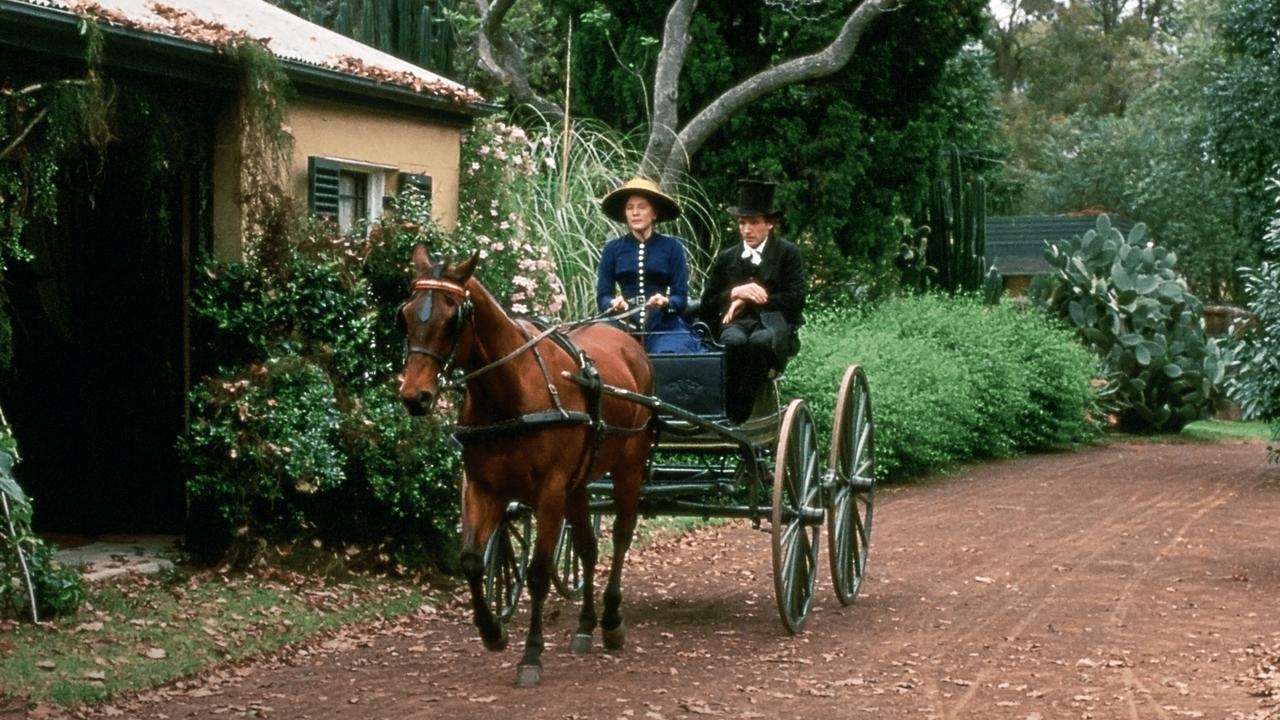
Based on Peter Carey's Booker Prize-winning novel, the film charts the intersecting paths of two remarkable misfits in 19th-century Australia. Oscar Hopkins, portrayed by Ralph Fiennes with a nervous, bird-like energy just beneath his Anglican priest's collar, is a man consumed by faith yet hopelessly addicted to gambling. He finds an unlikely kindred spirit in Lucinda Leplastrier, a wealthy Australian heiress played with breathtaking luminosity by a young Cate Blanchett. Lucinda, defying the stifling conventions of her time, has parlayed her inheritance into a glass works and shares Oscar's illicit passion for games of chance. Their meeting feels like fate, two odd pieces clicking together in a world not quite built for either of them. Armstrong, who so brilliantly captured female resilience in My Brilliant Career (1979), guides this unconventional romance with a patient, observant hand, letting the vast, wild landscapes of Australia mirror the untamed territories of her characters' hearts.
Kindred Spirits, Flawed Saints
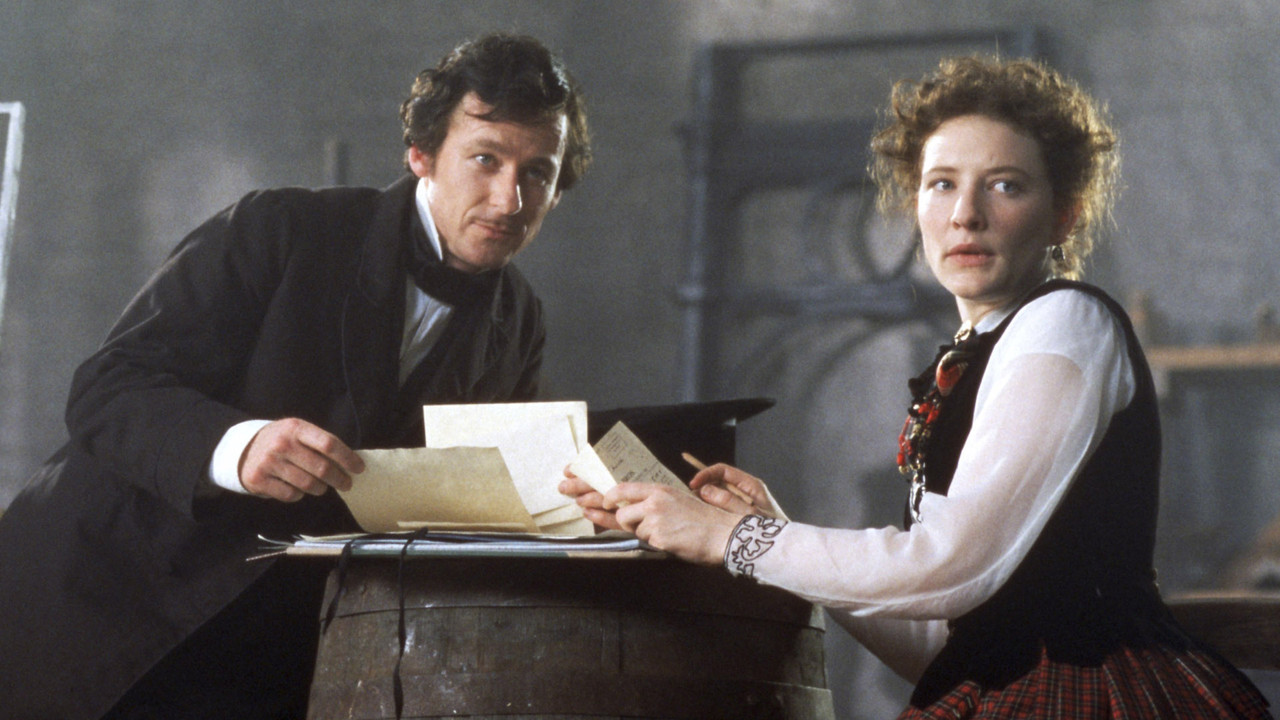
The performances are, quite simply, extraordinary. Ralph Fiennes, then riding high from Schindler's List (1993) and The English Patient (1996), completely embodies Oscar's internal torment – the constant battle between spiritual aspiration and earthly compulsion. His tics, his sudden bursts of conviction followed by crippling doubt, his crippling phobia of water – it's a portrayal that feels achingly real, complex, and deeply sympathetic despite his flaws. And then there's Cate Blanchett. While she'd done notable work in Australia, this was the role that truly announced her arrival on the international stage. Armstrong reportedly championed her casting, a decision that feels utterly inspired. Blanchett is Lucinda – intelligent, impulsive, vulnerable beneath her fierce independence, radiating a restless energy that chafes against societal expectations. Their scenes together crackle with an unusual, compelling chemistry, a connection built not on conventional romance but on shared obsession and mutual understanding of being outsiders. Supporting players, like the ever-reliable Ciarán Hinds as the pragmatic Reverend Dennis Hasset, provide sturdy anchors around these two orbiting, sometimes colliding, stars.
The Glass Church Gamble
At its heart, Oscar and Lucinda explores profound themes: the terrifying similarities between faith and gambling (both requiring a leap into the unknown), the destructive nature of obsession, the weight of colonial baggage, and the sheer, terrifying fragility of human ambition. This culminates in the film's central, audacious wager: Oscar agrees to transport a glass church, commissioned by Lucinda, upriver into the remote Australian wilderness. It's a mission born of misplaced faith, reckless love, and profound misunderstanding. The journey itself, depicted with stunning, often brutal beauty by cinematographer Geoffrey Simpson, becomes a metaphor for Oscar's own precarious spiritual journey and the impossible weight of expectations. The glass church, designed by the brilliant Luciana Arrighi (who deservedly earned an Oscar nomination for Best Costume Design, alongside her production design work here), is a breathtaking, tangible symbol of this delicate, perhaps doomed, enterprise. It’s hard not to marvel at the sheer logistical challenge of realizing this sequence on film, a testament to practical filmmaking artistry.
A Different Kind of 90s Artifact
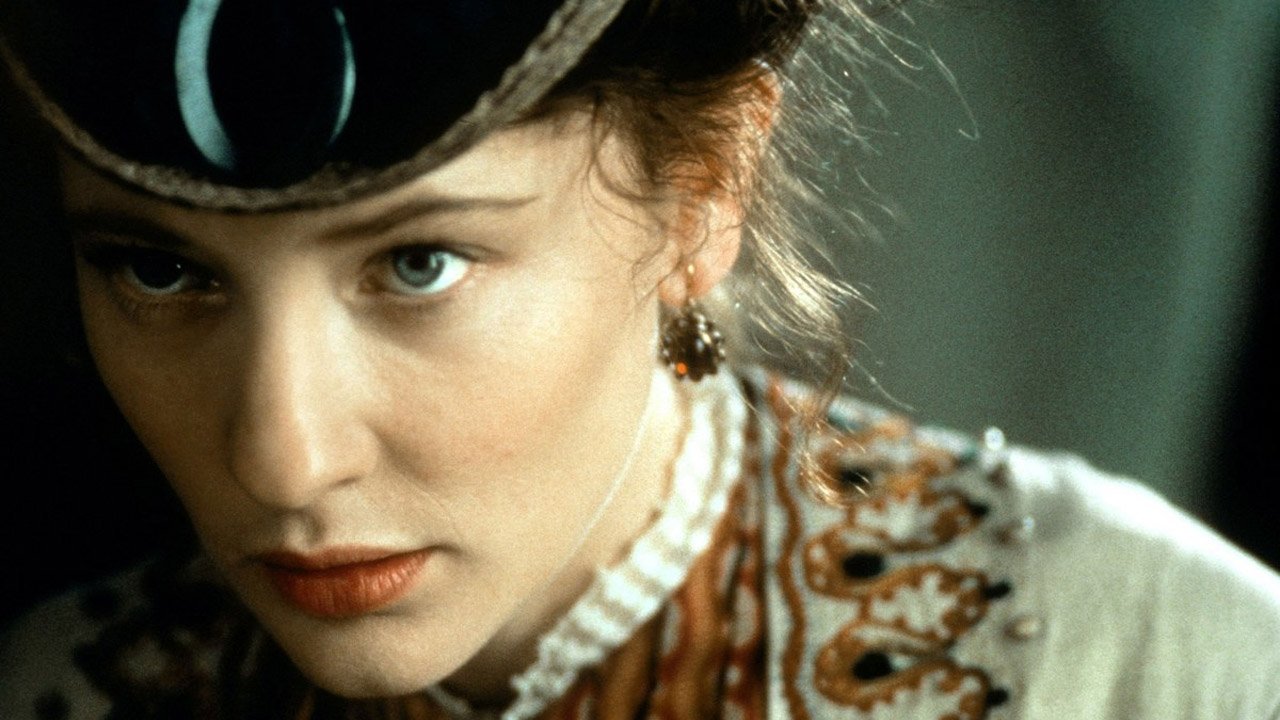
Finding Oscar and Lucinda on the video store shelf in 1997 might have felt like discovering a hidden passage. Amidst the burgeoning CGI spectacles and action blockbusters, here was something quieter, more literary, demanding patience and rewarding it with emotional depth and visual poetry. It wasn't aiming for broad appeal; its reported $16 million AUD budget yielded modest box office returns, but critical acclaim was widespread. Adapting Carey's dense, sprawling novel was no easy feat, and screenwriter Laura Jones skillfully pares it down to its emotional core while retaining its strange, haunting atmosphere. Does it perfectly capture every nuance of the book? Perhaps not, but as a cinematic experience, it stands powerfully on its own. It didn't spawn sequels or become a pop culture phenomenon, but its impact is more subtle, lingering in the mind like the unforgettable image of that impossible glass structure floating down a wild river.
Final Reflection & Rating
Oscar and Lucinda is a film of exquisite craft, anchored by two towering performances and guided by Armstrong's sensitive direction. It’s a challenging, sometimes uncomfortable watch, unflinching in its portrayal of human fallibility and the often tragic consequences of our deepest passions. It requires investment, but the payoff is a rich, thought-provoking cinematic experience that stays with you. It might not have been the typical Friday night VHS grab-and-go, but for those seeking substance and artistry, it was a treasure.
Rating: 9/10
Justified by its masterful performances, particularly Blanchett's star-making turn, its stunning visual language, thematic depth, and Gillian Armstrong's assured direction in adapting a complex novel. It’s a high-quality piece of filmmaking that might require a certain mood but delivers profoundly.
What endures most is the film's heartbreaking beauty, as fragile and captivating as glass itself, asking unsettling questions about where faith ends and folly begins.