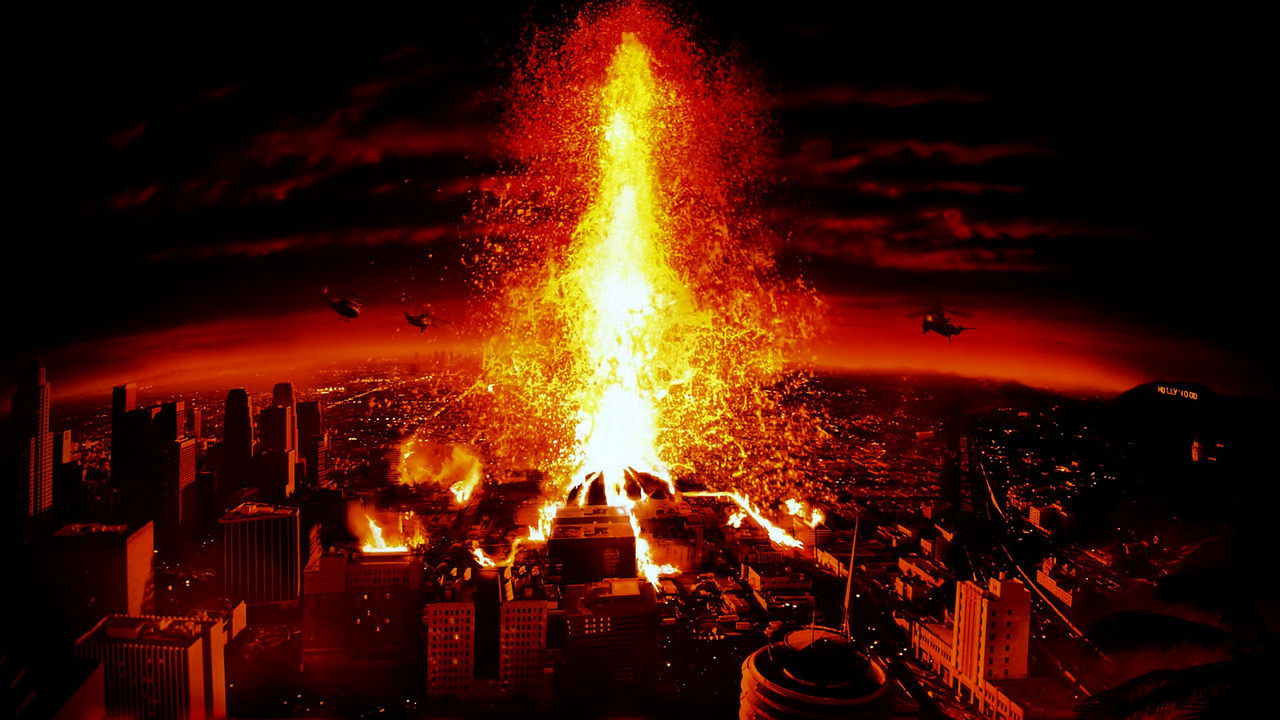
Alright, settle in, grab your Jolt Cola (or maybe something more age-appropriate now), and let's rewind the tape to 1997. Remember that glorious period when Hollywood seemed determined to throw every conceivable natural disaster at us? Twisters, asteroids, and yes, even molten rock bubbling up where it absolutely should not be. I’m talking about Mick Jackson’s Volcano, a film whose very premise – a volcano erupting in the heart of Los Angeles – felt wonderfully, preposterously ambitious, the kind of high-concept craziness you couldn't wait to grab from the ‘New Releases’ wall at Blockbuster.
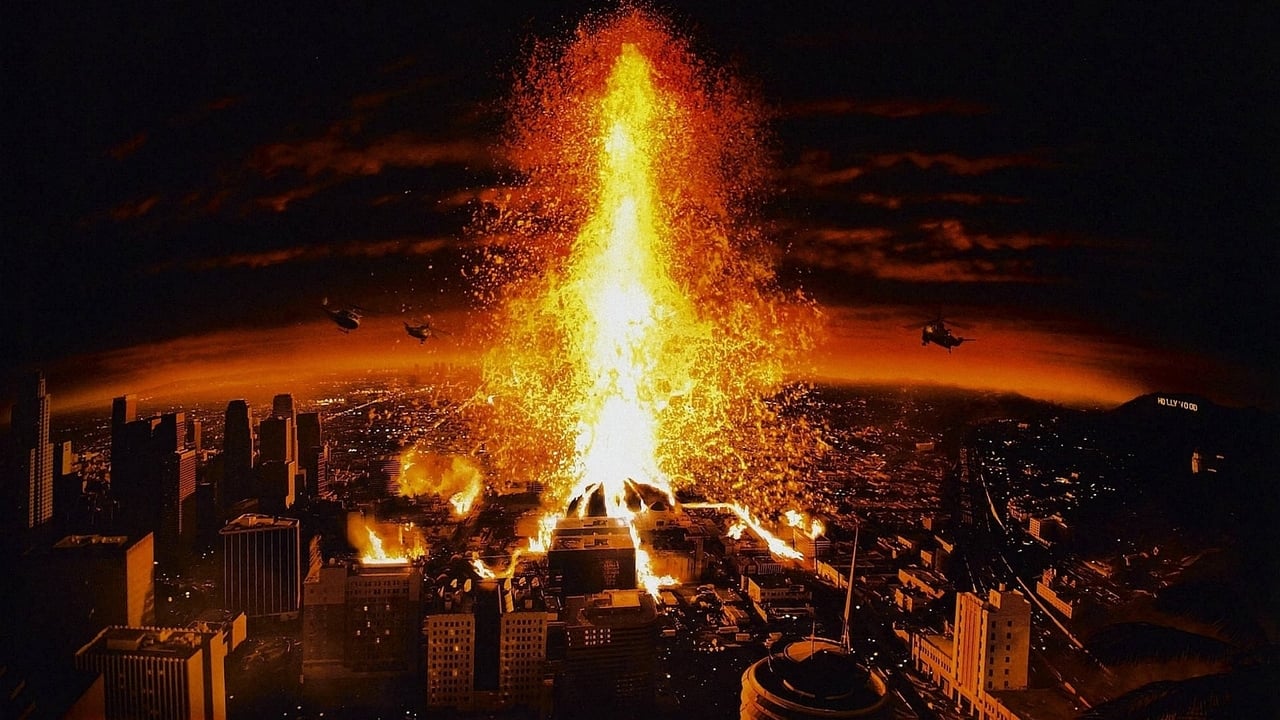
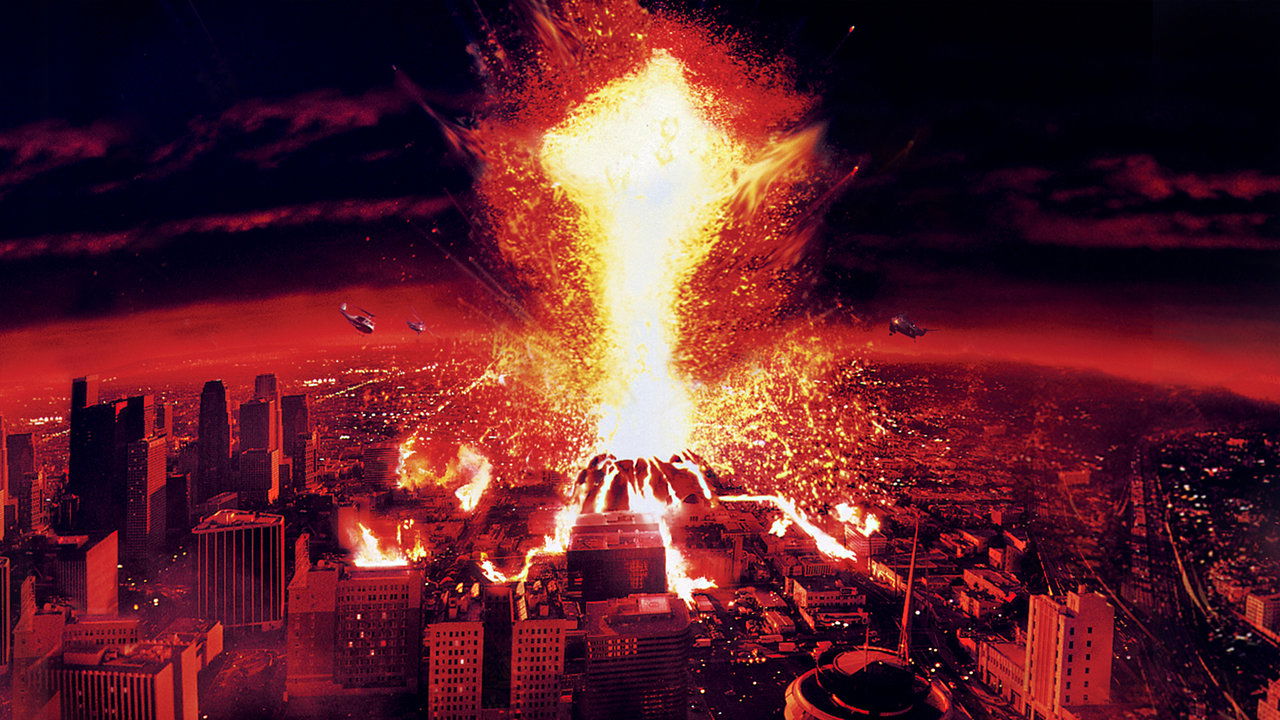
That image of lava, incandescent and terrifyingly real, flowing down Wilshire Boulevard, turning city buses into slag heaps… that's the stuff VHS dreams were made of. It wasn't just a concept; it was a spectacle delivered with a certain gritty tangibility that feels almost quaint today. This wasn't sleek, seamless CGI (though there's some digital work, mostly for smoke and ash); this was the era of stuff, of physical effects making you feel the heat through your flickering CRT screen.
### LA Story, With Magma
Our anchor in this urban inferno is Tommy Lee Jones as Mike Roark, the head of the city's Office of Emergency Management. Jones brings his signature gruff, no-nonsense authority, barking orders and looking perpetually stressed, which, frankly, seems entirely appropriate given the circumstances. He’s divorced, slightly estranged from his teenage daughter Kelly (Gaby Hoffmann, nailing the requisite worried-but-resourceful teen role), and about to have the worst day of his career. Paired with him is the geologist who saw it coming (sort of), Dr. Amy Barnes, played with earnest intensity by the late, great Anne Heche. Their dynamic is classic disaster movie fare: the skeptical official forced to trust the frantic scientist. It works, largely because both actors commit fully to the escalating absurdity.
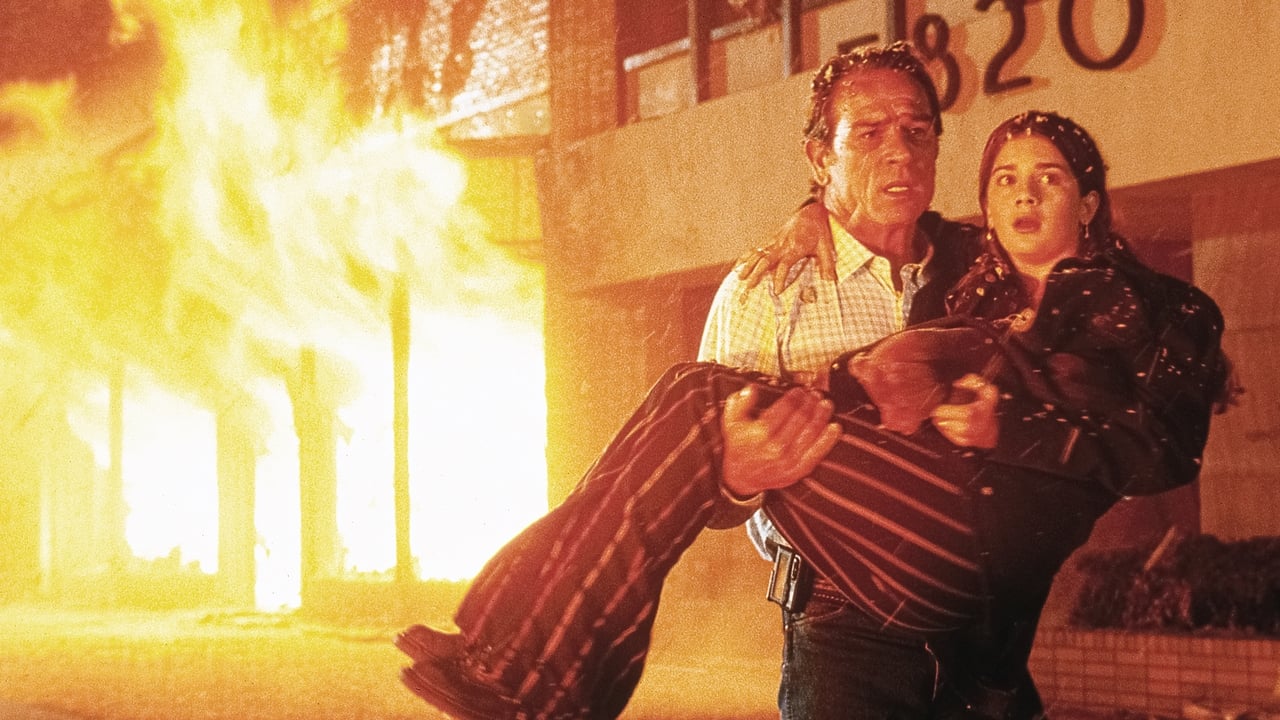
The film wastes little time getting to the good stuff. Strange occurrences at the La Brea Tar Pits quickly escalate into manhole covers launching like missiles and, eventually, the ground cracking open to unleash fiery hell. And this is where Volcano truly shines for retro fans. Director Mick Jackson, who previously gave us the very different kind of drama in The Bodyguard (1992), orchestrates scenes of urban chaos with a focus on practical mayhem.
### Feeling the Heat (Literally)
Let’s talk about that lava. Forget perfectly rendered digital flows; this was often achieved using a substance called Methyl-tert-butyl-ether (MTBE), thickened with additives, backlit intensely, and augmented with real propane flames. You felt the weight of it. Remember those concrete barriers they frantically erected to divert the flow? They looked heavy because they were heavy! A staggering 8/10 scale replica of a section of Wilshire Boulevard, complete with functional buildings, was constructed just for filming the destruction. The sheer amount of planning and physical effort involved is mind-boggling.
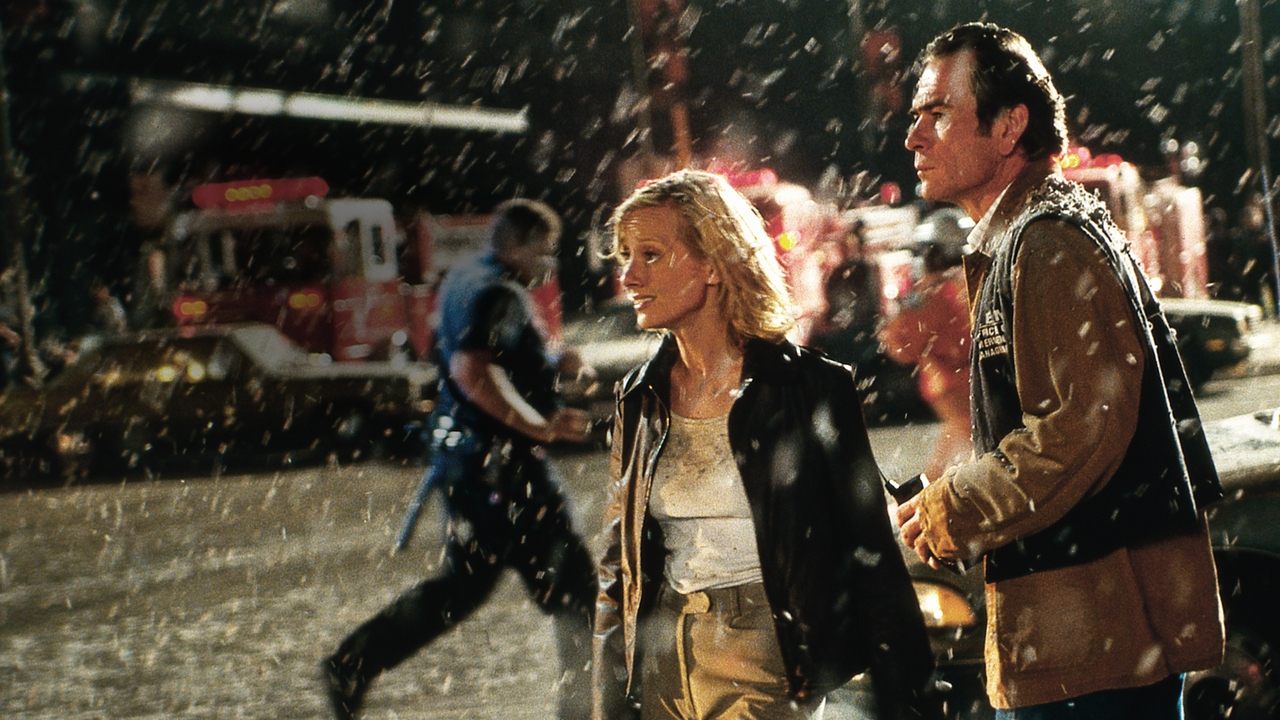
And the stunts! People dodging explosions, leaping from burning buildings, that gut-wrenching moment with the trapped firefighter... these were real performers putting themselves in harm's way (safely, of course, but still!). There’s a raw, visceral quality to the action that modern, physics-defying CGI often lacks. You believed those stakes because you could almost feel the radiated heat and smell the plumes of artificial smoke and ash – tons of which were apparently made from shredded newspaper pulp and limestone dust, reportedly causing respiratory issues for the crew. Now that's commitment to the craft!
### When Disaster Movies Collided
Of course, Volcano wasn't the only mountain blowing its top in '97. It famously went head-to-head with Universal's Dante's Peak, starring Pierce Brosnan and Linda Hamilton, which beat it to theaters by a couple of months. Dante's Peak aimed for slightly more scientific realism (a relative term, naturally) and arguably had the better critical reception and box office haul (around $178 million worldwide vs Volcano's $122 million on a $90 million budget – not a flop, but not a world-beater either). Yet, there’s an undeniable B-movie charm and relentless forward momentum to Volcano that makes it incredibly rewatchable. It knows exactly what it is: a big, loud, effects-driven thrill ride set against an impossible backdrop.
The supporting cast, including Don Cheadle as Roark's pragmatic second-in-command, adds solidity. While the script, credited to Jerome Armstrong and Billy Ray (who would later write Captain Phillips), leans heavily on disaster movie tropes – the ticking clock, the personal sacrifices, the moments of unexpected heroism – it keeps things moving at a brisk pace. There's even a somewhat unsubtle, but well-intentioned, message about unity as the falling ash covers everyone, erasing racial lines in a shared crisis. Clunky? Maybe a little. But hey, it was the 90s.
### The Verdict on This LA Eruption
Watching Volcano today is like unearthing a time capsule. The pacing feels slightly different, the dialogue occasionally clunks, and the scientific accuracy requires, shall we say, generous suspension of disbelief. But the practical effects hold up remarkably well, offering a tangible sense of destruction that’s immensely satisfying. Tommy Lee Jones is the perfect grumpy hero for the occasion, and Anne Heche provides the necessary scientific exposition with conviction. It captures that specific 90s disaster movie energy – earnest, slightly over-the-top, and packed with physical spectacle. It wasn't trying to be high art; it was trying to show you lava melting a fire truck on a city street, and by God, it succeeded.
Rating: 7/10
Justification: Volcano earns its points for sheer audacity, impressive practical effects work that still pops, Tommy Lee Jones's commanding presence, and its status as a quintessential piece of 90s disaster cinema. It loses a few points for some clunky dialogue, scientific liberties that stretch credulity even for the genre, and falling slightly short of its direct competitor, Dante's Peak. However, its relentless pace and focus on tangible destruction make it immensely entertaining.
Final Thought: Forget geological surveys; Volcano is pure, unadulterated Hollywood disaster spectacle, served hot and fast with a side of glorious, pre-millennium practical effects – a truly explosive artifact from the VHS shelves.