Alright cinephiles, dust off that VCR head cleaner and settle in. Tonight on VHS Heaven, we’re diving headfirst into the colourful, chaotic, and utterly charming world of 1997’s Yes Boss. Remember finding this gem tucked away on the New Releases shelf at the video store? Maybe you rented it based purely on the cover featuring a grinning Shah Rukh Khan and the radiant Juhi Chawla. If you did, you were in for a treat – a film that perfectly captured the aspirational buzz, the catchy tunes, and the slightly morally grey areas of 90s Bollywood romance.
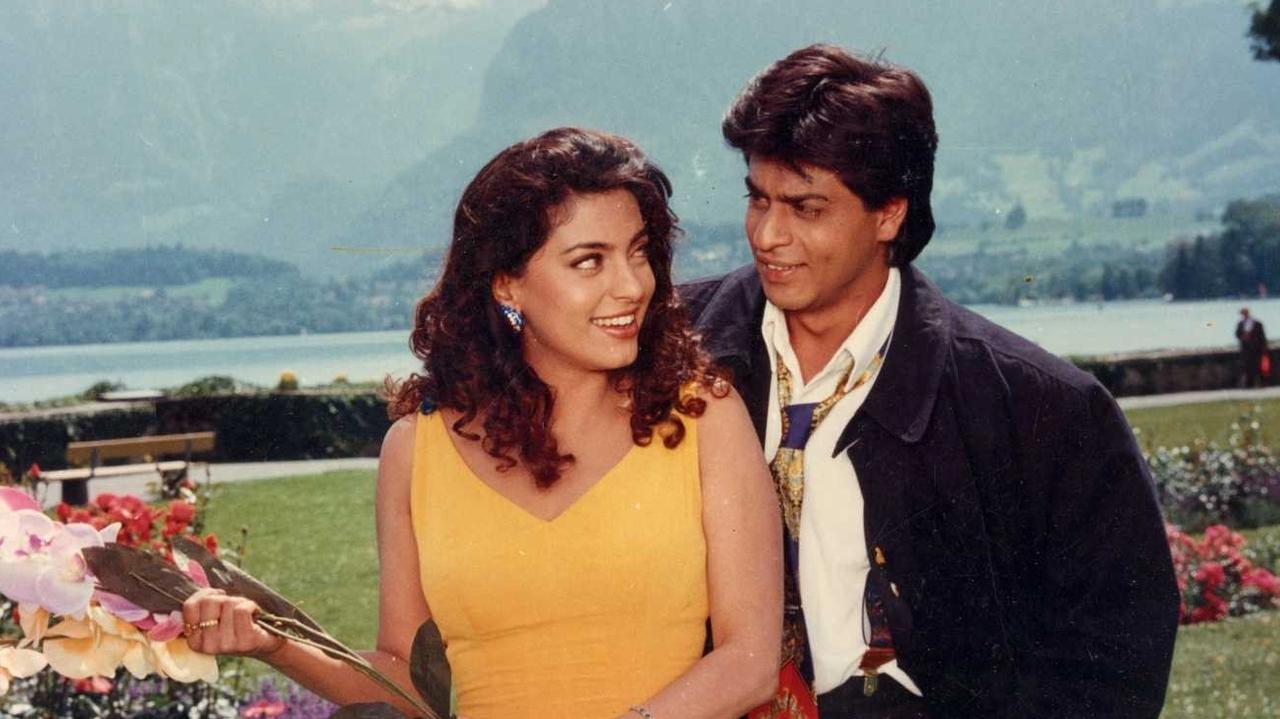
This wasn't just another love story; it felt plugged into the vibe of the time. It’s the story of Rahul (Shah Rukh Khan), a guy with big dreams of starting his own advertising agency but currently stuck playing errand boy, fixer, and all-around lackey for his charmingly corrupt boss, Siddharth (Aditya Pancholi). Siddharth is wealthy, womanizing, and married, using Rahul to cover up his affairs. Things get complicated (don't they always?) when the ambitious and beautiful Seema (Juhi Chawla), fresh from small-town India with modelling dreams, catches Siddharth's eye. Rahul, initially tasked with helping Siddharth woo Seema, finds himself falling for her too, leading to a tangled web of lies, mistaken identities, and hilarious near-misses. The premise itself, about a subordinate facilitating his boss's infidelity to climb the ladder, might sound familiar to fans of the Michael J. Fox flick For Love or Money (1993), but director Aziz Mirza infused Yes Boss with a uniquely Indian sensibility, grounding the fantasy in relatable middle-class yearning.
### The Chemistry That Sparkled Off the Screen
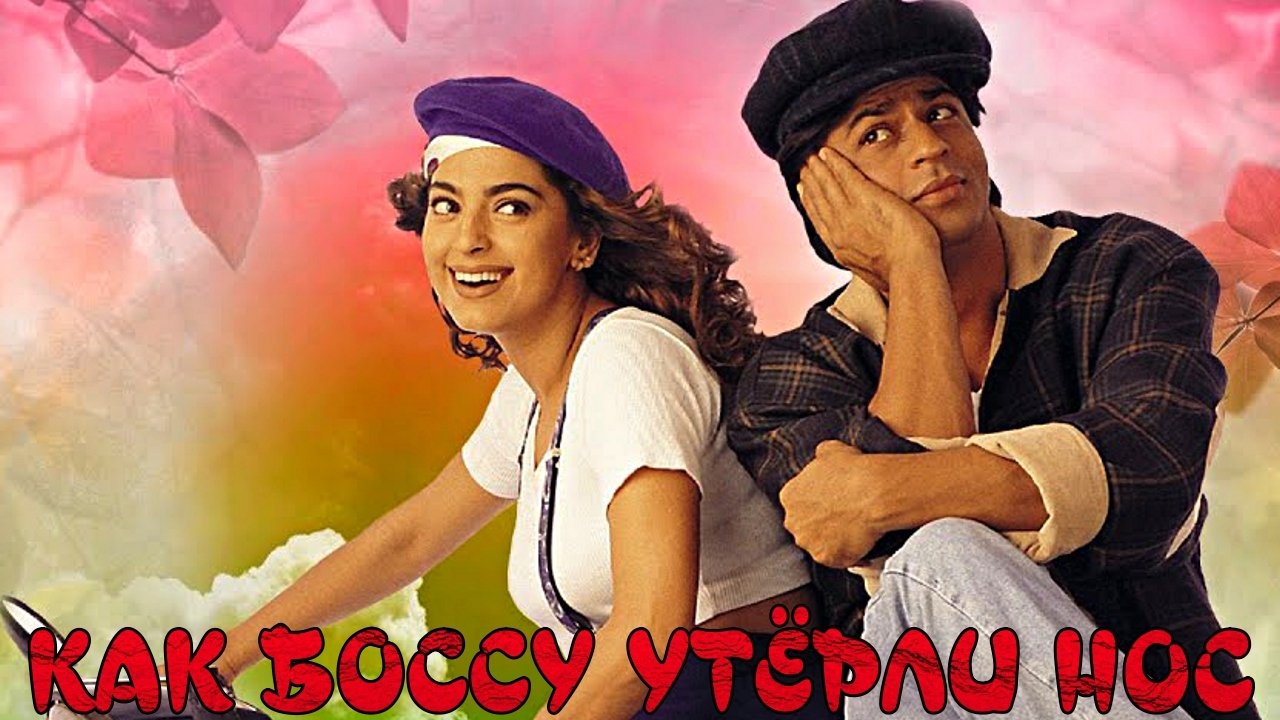
Let's be honest, the absolute nuclear core of Yes Boss is the legendary pairing of Shah Rukh Khan and Juhi Chawla. By 1997, they were already established as one of Bollywood’s most beloved on-screen couples, thanks to hits like Raju Ban Gaya Gentleman (also directed by Aziz Mirza) and Darr. Here, their chemistry is electric. SRK delivers that signature blend of boundless energy, vulnerability, and sharp comedic timing that defined his rise to superstardom. You root for Rahul, even when he’s being a bit of a doormat or bending the truth past breaking point, because Khan makes his ambition and eventual romantic dilemma feel genuine. Juhi Chawla, as Seema, is simply luminous. She matches Khan beat for beat, portraying Seema's ambition, her initial naivete, and her growing affection for Rahul with effortless charm and grace. Watching them spar, flirt, and fall in love feels less like acting and more like catching up with old friends – friends who just happen to break into song and dance routines in Switzerland. Their partnership was so bankable and beloved, it’s no wonder they eventually formed their own production company, Dreamz Unlimited, a few years later alongside Aziz Mirza.
Playing the suave obstacle is Aditya Pancholi as Siddharth. He leans into the role of the smooth-talking, wealthy cad with gusto, providing the perfect foil for Rahul's earnest striving. Pancholi had carved a niche playing characters with shades of grey in the 90s, and here he embodies the entitled boss figure effectively, making you genuinely dislike his manipulative ways while still understanding his surface charm.
### Dreams Woven with Music and Mountains
Aziz Mirza had a knack for telling stories about ordinary people chasing extraordinary dreams, often set against the backdrop of urban ambition (Raju Ban Gaya Gentleman, Phir Bhi Dil Hai Hindustani). Yes Boss fits perfectly within this theme. It captures that specific 90s desire for upward mobility – the fancy car, the big house, the successful career – that felt newly attainable in post-liberalization India. The film doesn't shy away from showing the compromises Rahul initially believes are necessary to achieve this dream, encapsulated in that endlessly repeated phrase, "Yes Boss."
And you can't talk about Yes Boss without mentioning the music. Oh, that Jatin-Lalit soundtrack! It was everywhere back then. Pop the tape in, endure the tracking adjustment fuzz, and suddenly you’re hit with classics like the impossibly romantic "Main Koi Aisa Geet Gaoon" or the aspirational anthem "Chaand Taare." These weren't just songs; they were mini-movies within the movie, often whisking Rahul and Seema away to the pristine landscapes of Switzerland. This became peak 90s Bollywood – using those snowy peaks and lush valleys as the ultimate visual fantasy, a shorthand for success and romance far removed from the Mumbai hustle. Forget green screens; they actually went there, braving the cold to capture those dreamy sequences that looked so magical, even on a slightly fuzzy CRT screen. It was pure escapism, perfectly packaged.
### Still Saying "Yes" After All These Years?
Watching Yes Boss today is like opening a time capsule. Yes, some elements feel distinctly dated – the workplace dynamics, certain comedic bits, maybe even some of the fashion choices (though Juhi's wardrobe holds up remarkably well!). It operates on a level of charming naivete and accepts plot contrivances that modern films might scrutinize more heavily. But you know what? It doesn't really matter.
The film's core strengths – the effervescent chemistry between its leads, the incredibly catchy music, the relatable dream of making something of yourself, and its overall good-natured spirit – remain potent. It’s a reminder of a time when Bollywood romance was often lighter, brighter, and didn't feel the need to apologize for its earnestness or its escapist fantasies. It was a solid hit back in '97, further cementing SRK's reign as the king of romance, and audiences loved its blend of humour and heart.
Rating: 8/10
This score reflects the sheer nostalgic joy and entertainment value packed into this VHS favourite. The undeniable star power, killer soundtrack, and genuinely funny moments easily outweigh the dated aspects. It perfectly delivered on the promise of a 90s Bollywood rom-com.
Final Thought: Yes Boss is pure, unadulterated 90s Bollywood comfort food – a film brimming with charm, catchy tunes, and the kind of on-screen magic between SRK and Juhi that makes you forgive its endearing imperfections. Press play and let the nostalgia wash over you; it still works.