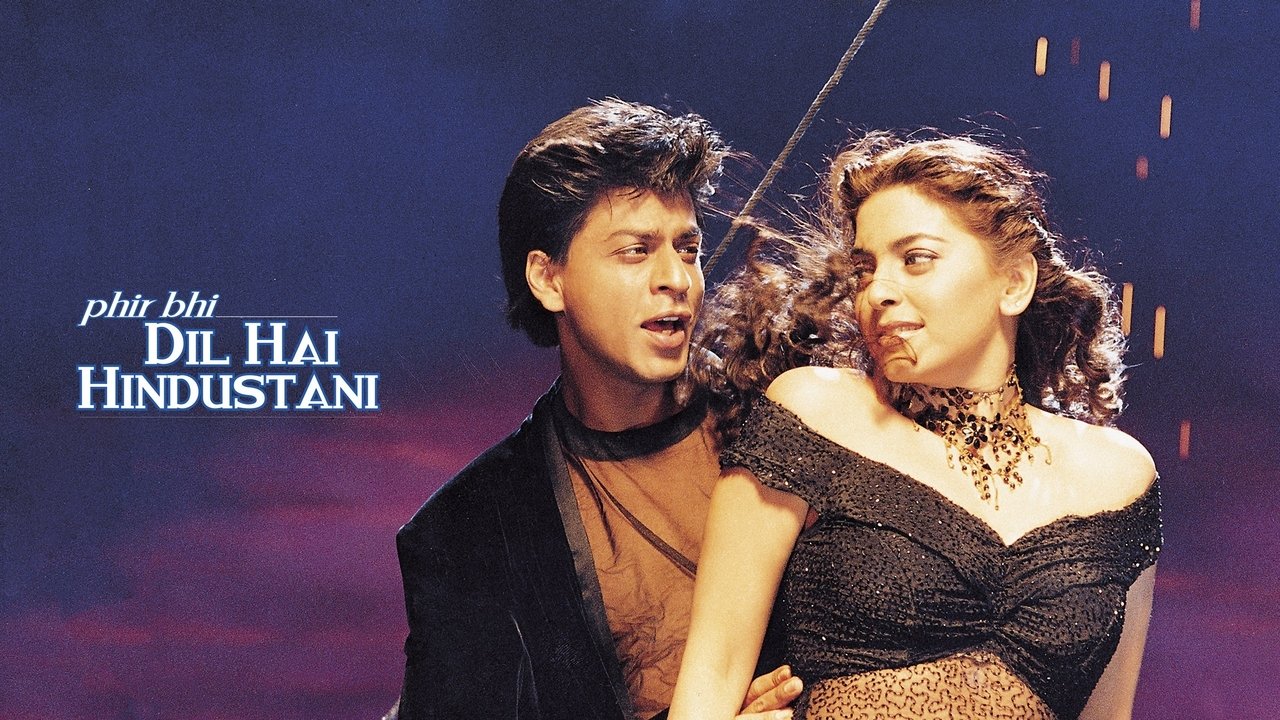
Okay, settle back into that worn spot on the couch, maybe imagine the faint hum of a CRT nearby. Let's rewind to the cusp of the new millennium, a time when Bollywood was grappling with change, and talk about a film that arrived with fanfare, ambition, and a title that wore its heart quite literally on its sleeve: Phir Bhi Dil Hai Hindustani (2000). This wasn't just another Friday release; it marked the birth of Dreamz Unlimited, the production house formed by megastars Shah Rukh Khan, Juhi Chawla, and director Aziz Mirza. It felt like a statement, didn't it? A promise of something fresh, perhaps bolder, from artists we already loved.
Ambition Meets Reality
The premise itself crackles with potential: Ajay Bakshi (Shah Rukh Khan) and Ria Banerjee (Juhi Chawla) are star reporters for rival news channels, locked in a hilariously cutthroat battle for scoops and ratings. They're slick, modern, maybe a little cynical – embodying the burgeoning satellite TV news culture that felt so novel back then. Remember those competing news anchors, the flashy graphics, the race to break stories, sometimes at the expense of the story itself? PBDHH aimed to capture that energy, wrapping it in the familiar, beloved chemistry of its leads, who had already charmed us in films like Raju Ban Gaya Gentleman (1992) and Yes Boss (1997), both helmed by Mirza. But this time, the ambition extended beyond romance; it wanted to be a satire, a commentary on media ethics, political corruption, and the enduring spirit of the common Indian.
More Than Just Laughs and Love
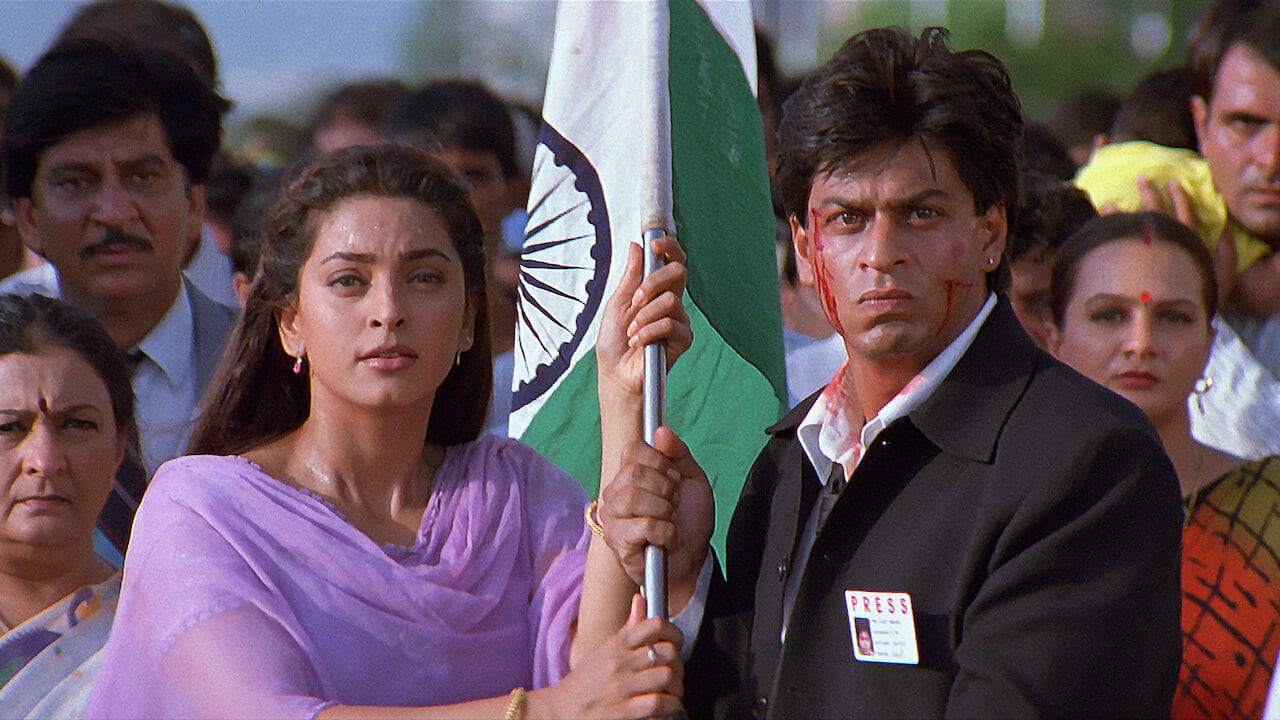
While the initial banter between Ajay and Ria delivers the expected sparks and witty exchanges – their dynamic always a joy to watch – the film takes a sharp turn into more serious territory. This shift hinges on the plight of Mohan Joshi (Paresh Rawal), an ordinary man wrongly accused of terrorism, whose fight for justice becomes the story everyone wants to exploit. It’s here that Paresh Rawal truly anchors the film. Known often for his impeccable comic timing, Rawal brings a profound gravitas and vulnerability to Mohan Joshi. His quiet dignity and simmering desperation feel painfully real, cutting through the film’s glossier, sometimes uneven, comedic and romantic elements. Doesn't his performance linger long after the credits roll, a stark reminder of the human cost behind the headlines?
The film tries to juggle these disparate tones – sharp media satire, earnest patriotism, high-stakes thriller elements, and the signature SRK-Juhi romance. Does it always succeed? Perhaps not seamlessly. There are moments where the gear shifts feel abrupt, where the comedy (featuring the ever-reliable Johnny Lever) sits slightly awkwardly alongside the life-and-death stakes. Yet, there's something undeniably heartfelt about the attempt. Aziz Mirza, known for his gentler, slice-of-life storytelling, stretches himself here, tackling a larger canvas with a message he clearly feels passionate about. It's a film that wants to say something important, even if it occasionally stumbles over its own narrative threads.
A Glimpse Behind the Screen
Understanding the context of its creation adds another layer. As the maiden venture for Dreamz Unlimited, the pressure must have been immense. Made on a reported budget of around ₹13 crore (a significant sum back then, maybe ₹50-60 crore or roughly $6-7 million USD today), its commercial underperformance at the box office (grossing only about ₹10.7 crore domestically) was a major disappointment. Perhaps audiences weren't quite ready for this blend of satire and melodrama from this particular team, expecting a more straightforward entertainer. Yet, watching it now, haven't some of its themes about media sensationalism and political manipulation become startlingly relevant? It feels almost prescient in its depiction of manufactured outrage and the fight for truth in a noisy, competitive media landscape. It's fascinating how a film initially deemed a flop has found a more appreciative audience over time, becoming something of a cult favourite, especially for its message and memorable music by Jatin-Lalit – that title track still gets stuck in your head, doesn't it?
The Verdict: Heart Over Head?
Phir Bhi Dil Hai Hindustani isn't a perfect film. Its tonal shifts can be jarring, and its narrative sometimes feels overstuffed. It carries the bright colours and heightened emotions typical of its era, which might feel dated to some. But its core message, the plea for journalistic integrity and the celebration of an unwavering "Hindustani" spirit in the face of adversity, remains potent. The central performances, particularly Paresh Rawal's soulful turn and the undeniable chemistry between Shah Rukh Khan and Juhi Chawla, give it enduring appeal. It was an ambitious swing, maybe connecting more with the heart than the head, but its earnestness is hard to dismiss. I distinctly remember the buzz around its release, the excitement of seeing these stars take a risk behind the camera as well as in front of it. Even if it didn't quite hit the bullseye back then, there's a warmth and sincerity to it that resonates.
Rating: 6.5/10
The rating reflects the film's undeniable heart, strong central performances (especially Rawal), timely themes, and memorable music, balanced against its uneven tone and narrative inconsistencies. It tried to do something different within the commercial framework, and while it didn't fully succeed commercially or perhaps even artistically for some, its ambition and core message deserve recognition.
It leaves you pondering, doesn't it? How much has the media landscape changed, and how much has stayed the same? PBDHH might feel like a colourful time capsule, but the questions it raises about truth, responsibility, and national identity still echo today.