### The Weight of Truth, The Cost of the Fight
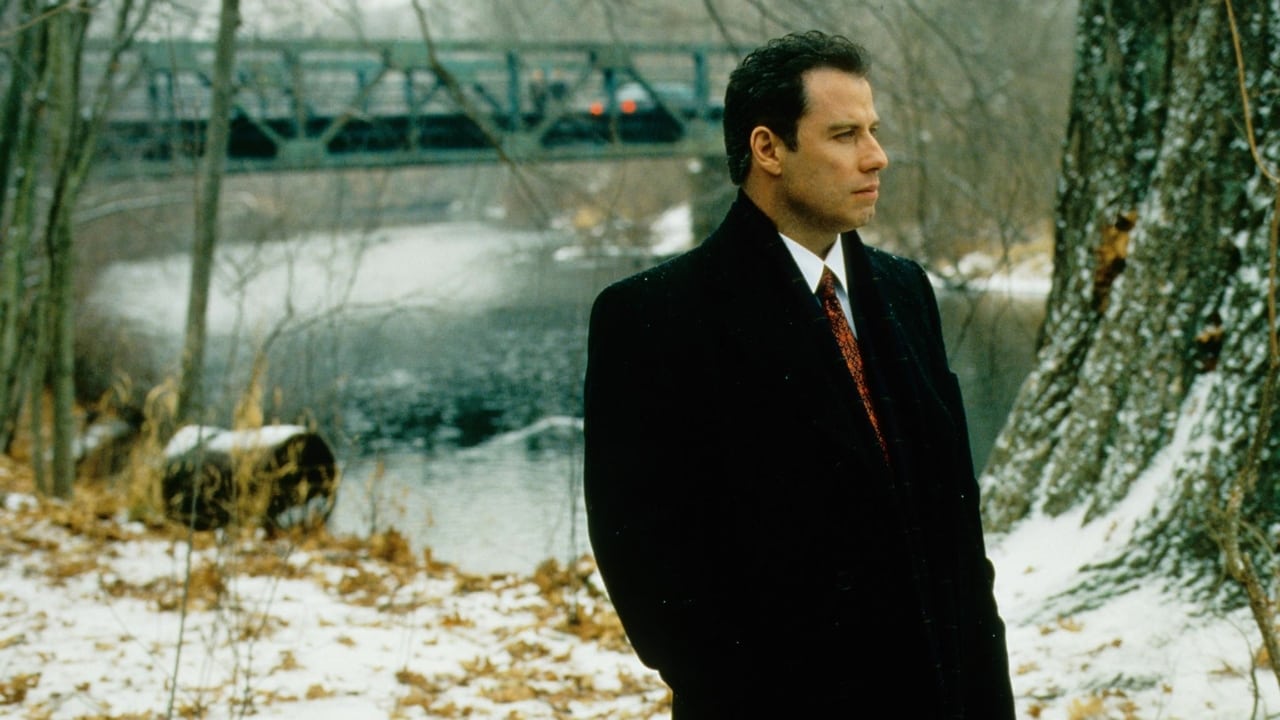
There’s a certain kind of quiet chill that settles in during Steven Zaillian’s A Civil Action (1998), a feeling distinct from the snowy Massachusetts landscapes captured so beautifully, yet bleakly, by cinematographer Conrad L. Hall. It's the chilling realization that sometimes, the pursuit of justice isn't a clear path of right versus wrong, but a slow, grinding erosion of resources, ideals, and even the self. Watching it again recently, slipping that familiar tape into the VCR felt less like revisiting a typical 90s drama and more like unearthing a stark, complex document about the gears of the legal machine and the human cost of jamming them.
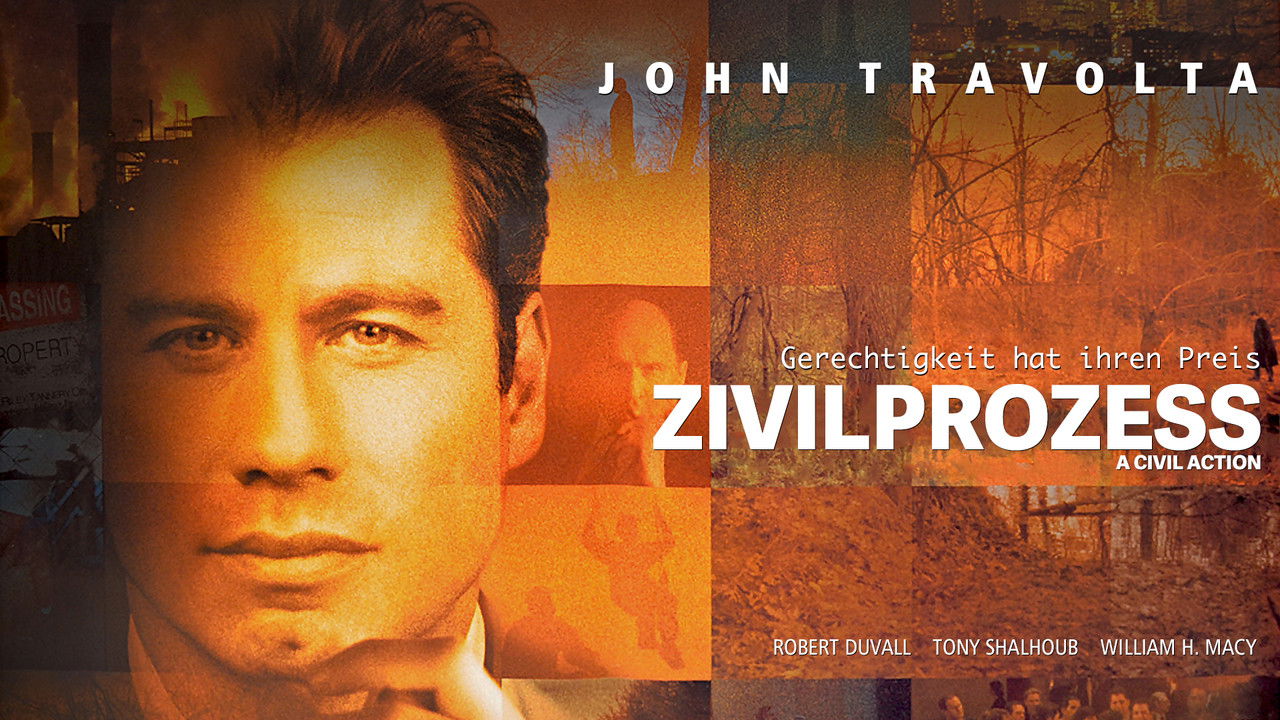
Based on Jonathan Harr's meticulously researched 1995 non-fiction book, the film drops us into the true story of the Woburn, Massachusetts water contamination case. At its center is Jan Schlichtmann, played by John Travolta in a performance that leverages his star power but subverts it. We first meet Jan as a high-flying, Beemer-driving personal injury lawyer, calculating case value with cynical precision. He's the kind of guy who sees tragedy purely in terms of potential payout. When the families of leukemia-stricken children in Woburn approach his small Boston firm, initially, it looks like another potential windfall – deep-pocketed corporations (Beatrice Foods and W.R. Grace) potentially responsible for polluting the town's water supply. What unfolds, however, is anything but simple.
### The Unflinching Gaze of the Law
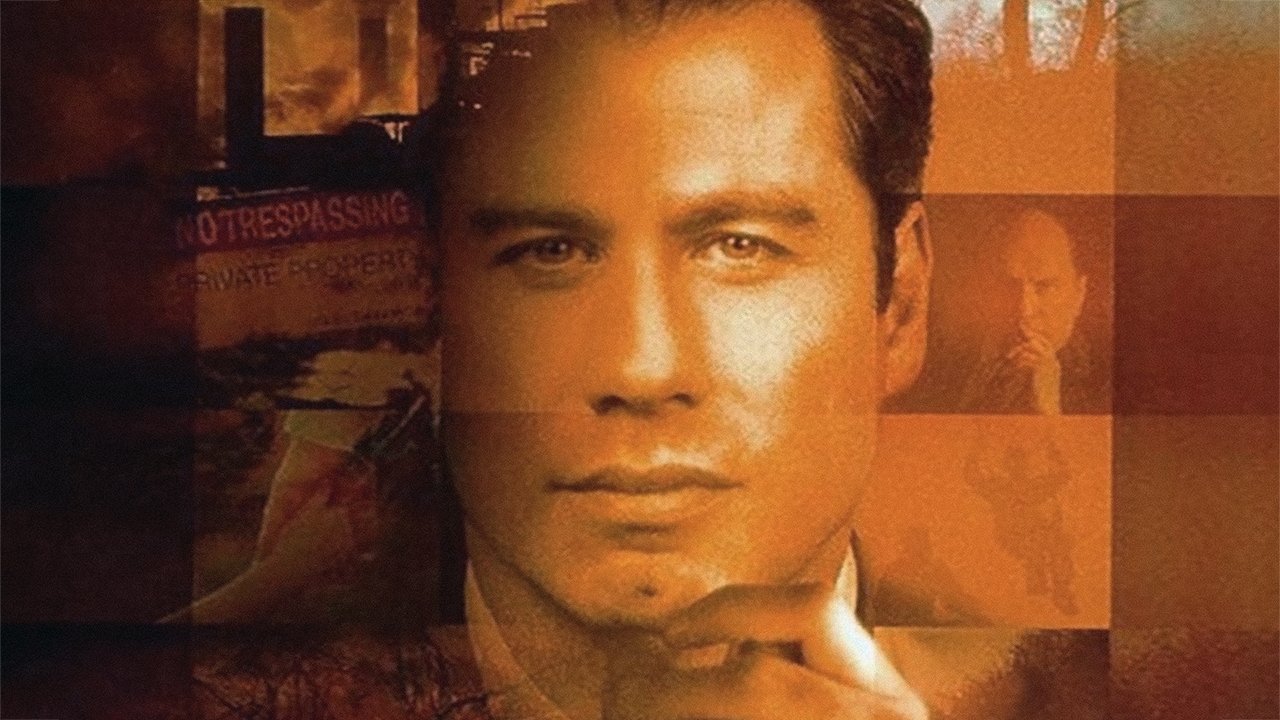
What makes A Civil Action resonate, even decades later, isn't courtroom theatrics or rousing speeches – though there are intense legal confrontations. It's the film's unwavering focus on the process, the grueling, soul-crushing minutiae of discovery, depositions, motions, and the astronomical financial burden of taking on corporate giants. Zaillian, who honed his skill for dense, compelling narratives adapting works like Schindler's List (1993), refuses to offer easy answers or sentimentalize the struggle. He shows us how the sheer scale and resources of the defendants can weaponize the legal system itself, turning the quest for truth into a war of attrition.
Travolta truly anchors the film, charting Schlichtmann's transformation from arrogant opportunist to a man consumed, almost broken, by the case. It's a less flashy role than some of his other 90s hits, but the internal shift feels authentic. You see the confidence drain from his eyes, replaced by a desperate, almost obsessive conviction. He becomes the case, sacrificing his firm, his finances, and nearly his sanity. It’s a compelling portrayal of how principle, pushed to its extreme, can become a destructive force in itself. I remember seeing this back in '98, perhaps rented alongside something lighter, and being struck by how Travolta carried the film's considerable weight.
### A Masterclass in Opposition
Opposite Travolta stands Robert Duvall as Jerome Facher, lead counsel for Beatrice Foods. In a career filled with iconic roles, Facher remains one of Duvall's most fascinating creations – earning him a well-deserved Oscar nomination for Best Supporting Actor. Facher is brilliant, eccentric, seemingly folksy (he packs his own lunch, lectures at Harvard Law about the practicalities of lawyering), yet utterly ruthless in his defense strategy. He embodies the detached pragmatism of corporate law, understanding that procedure, obfuscation, and simply outspending the opponent are often more effective than arguing facts. The scenes between Travolta and Duvall are masterclasses in contained tension, a clash not just of lawyers, but of worldviews. Reportedly, Duvall spent time with the real Facher, absorbing his mannerisms, which surely contributed to the performance's uncanny authenticity.
The supporting cast is equally strong, featuring familiar faces like Tony Shalhoub, William H. Macy, and John Lithgow as the judge, each bringing a grounded reality to their roles. Even James Gandolfini, pre-Sopranos, makes an impression as a key witness, a disillusioned tannery employee. They form the ecosystem around Schlichtmann, reacting with varying degrees of loyalty, frustration, and pragmatism as the case devours everything.
### The Price Tag on Principle
One of the most intriguing, and perhaps sobering, aspects woven into the film's fabric is its own production story mirroring its themes. Made for a hefty $75 million (around $140 million today!), A Civil Action struggled at the box office, bringing in only about $56 million domestically. This financial disappointment ironically echoes Schlichtmann's own journey – pouring immense resources into a righteous cause with uncertain, even damaging, returns. It's a fascinating piece of trivia that adds another layer to the film's exploration of cost versus value. Zaillian's commitment to accuracy extended to filming in many of the actual Massachusetts locations involved in the case, adding a layer of verisimilitude that grounds the drama.
While praised by many critics upon release, particularly for Duvall's performance, the film's deliberately measured pace and somewhat chilly emotional tone didn't connect universally with audiences perhaps expecting a more conventional, triumphant legal thriller. It wasn't a feel-good movie; it was, and remains, a feel-sober movie.
A Civil Action doesn't offer catharsis in the traditional sense. There are no fist-pumping victories, only hard-won concessions and the lingering question: Was it worth it? What is the actual price of corporate accountability, and who ultimately pays it? It forces us to confront the uncomfortable truth that our legal system, designed to find truth, can sometimes become an obstacle course designed to obscure it.
Rating: 8/10
This score reflects the film's exceptional craft, Zaillian's intelligent direction, Hall's evocative cinematography, and powerhouse performances, especially from Travolta and the unforgettable Duvall. It's a demanding film, less about emotional highs and more about the stark, complex realities of a protracted legal fight. Its refusal to simplify its central conflict and its thoughtful exploration of the true cost of justice make it a standout legal drama from the 90s, one whose questions feel more relevant than ever.
It leaves you not with easy answers, but with a profound sense of the messy, often unsatisfying weight of fighting for what's right in a system stacked against the little guy. A challenging, but deeply rewarding, watch.