The salt spray almost feels like it clings to you long after the credits roll on Swept from the Sea. Released in 1998, this isn't a film that shouts its presence from the rooftops; it settles into your bones, a quiet ache of a story set against the rugged, unforgiving beauty of the late 19th-century Cornish coast. Watching it again recently, pulling that worn tape from its sleeve – yes, I still have a copy! – felt less like revisiting a movie and more like unearthing a half-buried memory, poignant and challenging in equal measure. It prompts a certain stillness, a contemplation of how fiercely, and sometimes tragically, love can bloom in the stoniest ground.
Where Land Meets Sea, Outsiders Meet
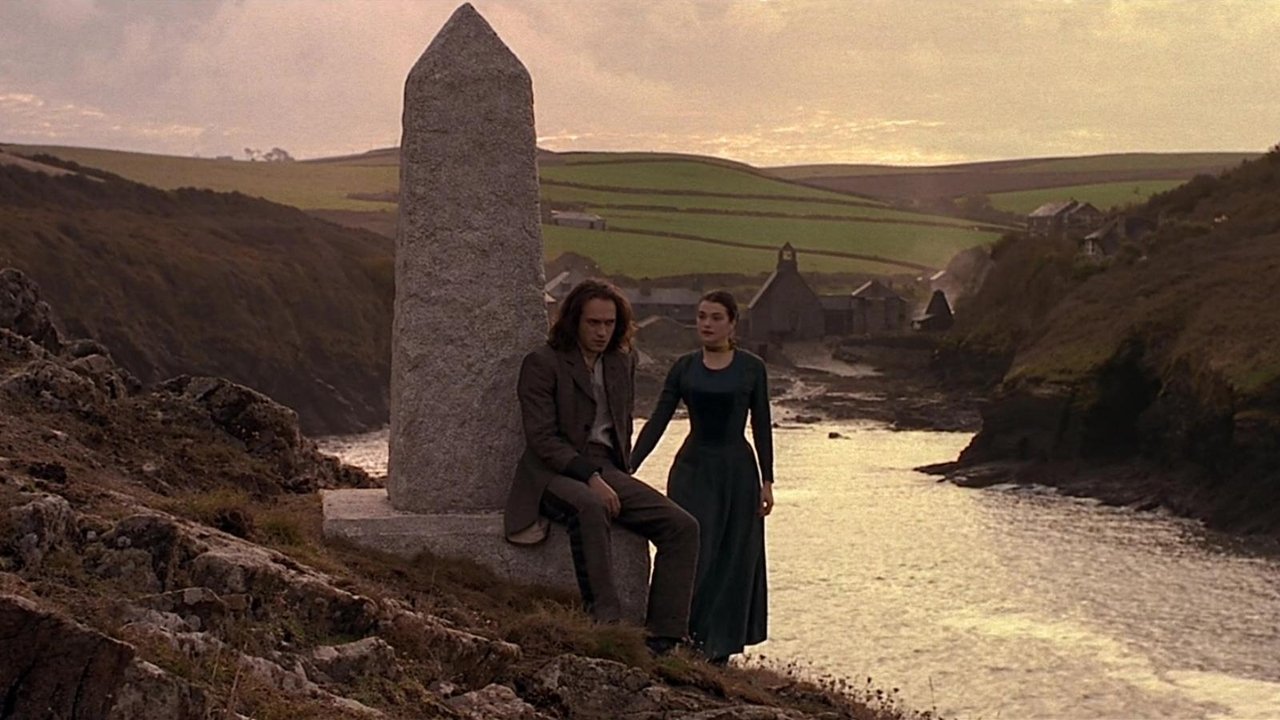
Based on Joseph Conrad's short story "Amy Foster," the film introduces us to Amy (Rachel Weisz) herself, a young woman treated as little more than a strange, silent fixture in her small, gossiping community. She collects treasures washed ashore – remnants of lives lived elsewhere – finding more kinship with the sea's cast-offs than with the people around her. Her world is irrevocably altered when Yanko Gooral (Vincent Perez), the sole survivor of a shipwreck carrying emigrants from Ukraine to America, washes up on her patch of coast. He speaks no English, carries the trauma of his ordeal, and is immediately viewed with suspicion and hostility by the locals. Who else but Amy, the fellow outcast, would offer him refuge?
The core of this 90s period drama lies in the fragile, tentative connection forged between these two souls adrift. Weisz, in a performance that foreshadowed the depth she'd bring to later roles (think The Constant Gardener), is captivating as Amy. So much is conveyed in silence – a flicker of understanding in her eyes, the gentle tending of Yanko’s wounds, a fierce protectiveness that isolates her further. She makes Amy’s almost feral connection to the natural world utterly believable. Perez, too, brings a compelling mix of vulnerability and resilience to Yanko. His struggle to communicate, his gratitude, his growing affection for Amy – it all feels achingly real, a stark contrast to the coldness surrounding them.
Whispers and Walls
Director Beeban Kidron, perhaps better known for lighter fare like To Wong Foo, Thanks for Everything! Julie Newmar (1995), leans into the story's inherent darkness here. The film doesn't shy away from the xenophobia and petty cruelties of the isolated community. Figures like Mrs. Swaffer (Kathy Bates) and Mr. Swaffer (Joss Ackland) represent the rigid social structure, their initial kindnesses quickly curdling into suspicion and judgment when Yanko doesn't conform. Their world has hard edges and deep-seated prejudices, and Yanko's very existence challenges their narrow view.
Observing it all, and serving as our narrator, is Dr. Kennedy, played with understated wisdom and weary empathy by the magnificent Ian McKellen. His character acts as a crucial bridge – the educated man who can communicate with Yanko (initially through chess, a lovely touch) and who recognizes the profound connection between the two lovers, even as he remains largely powerless against the tide of local opinion. McKellen’s presence lends the film a gravitas, a sense of bearing witness to a quiet tragedy unfolding.
Echoes of Conrad, Whispers of the Coast
It’s interesting to note the film was originally released in the UK under Conrad’s title, "Amy Foster." The change to Swept from the Sea for the US market arguably aims for a more conventionally romantic sweep, yet the film retains much of Conrad's bleaker, more complex exploration of alienation and the fundamental difficulties of human connection. Filmed on location in Cornwall, the landscape is practically a character itself. The crashing waves, the wind-lashed cliffs, the perpetually grey skies – they perfectly mirror the emotional turbulence and isolation of the central characters. You can almost feel the damp chill seep into the frame.
This wasn't a film that set the box office alight back in '98; its quiet intensity and refusal to offer easy resolutions perhaps made it a tougher sell. On a budget of around $10 million, it barely made a ripple commercially. Yet, for those of us who caught it on VHS, perhaps drawn in by the cast or the moody cover art down at the local Blockbuster, it often stuck. It was the kind of discovery that felt personal, a hidden gem amidst the louder blockbusters of the era. It's a film that asks uncomfortable questions: How do we treat those who are different? Can love truly conquer ingrained prejudice? What happens when the language of the heart is the only one two people share, but the world refuses to listen?
A Lingering Resonance
Swept from the Sea is undeniably heavy. It offers moments of profound tenderness but doesn't flinch from depicting the harsh realities faced by its protagonists. The pacing is deliberate, reflecting the slow rhythms of life in that isolated corner of the world, which might test some viewers. Yet, the performances, particularly Weisz's haunting portrayal of Amy, and the evocative atmosphere make it a deeply affecting watch. It’s a film that sits with you, prompting reflection on the enduring power of empathy and the devastating consequences when it’s absent. Doesn't that isolation and suspicion towards 'the other' still echo uncomfortably loudly today?
Rating: 7.5/10
This score reflects the film's powerful performances, its potent atmosphere, and its thoughtful engagement with difficult themes. It's held back slightly by a pervasive bleakness and deliberate pace that might not resonate with everyone, but its emotional core is undeniably strong. It's a prime example of the kind of substantive, character-driven drama that could often be found tucked away on video store shelves in the late 90s, waiting to be discovered.
Final Thought: A beautifully rendered, melancholic tale that reminds us how easily fear and misunderstanding can drown out the rarest connections, leaving behind only the sigh of the waves and the echo of what might have been.