Alright, settle in and adjust the tracking on your mental VCR, because we're diving into a curious corner of the late-90s action aisle today. Remember that feeling? Scanning the shelves, maybe at a slightly less-than-pristine independent video store, and suddenly spotting a familiar title with an unfamiliar number next to it? That’s exactly the vibe surrounding 1998’s Universal Soldier II: Brothers in Arms. Not the Jean-Claude Van Damme theatrical follow-up that arrived a year later, mind you, but its scrappier, made-for-Showtime cousin that tried to spin the UniSol concept into television gold.

### Wait, There Were Two Sequels?
Yes, indeed! And this is where things get wonderfully convoluted, just like untangling the ribbon from a chewed-up VHS tape. Brothers in Arms and its immediate follow-up, Universal Soldier III: Unfinished Business (also '98), were filmed back-to-back. They effectively ignore the ending of the original 1992 film, resetting the stage with Luc Deveraux (now played by Matt Battaglia) and Veronica Roberts (a recast Chandra West) on the run. The goal? To launch a Universal Soldier TV series. It’s a fascinating "what if?" scenario, a glimpse into an alternate timeline for the franchise, penned by Peter M. Lenkov, a writer who would later find significant success developing network hits like the Hawaii Five-0 and MacGyver reboots. Seeing his name here feels like finding an early demo tape from a rock star.
### New Faces, Familiar Conflicts
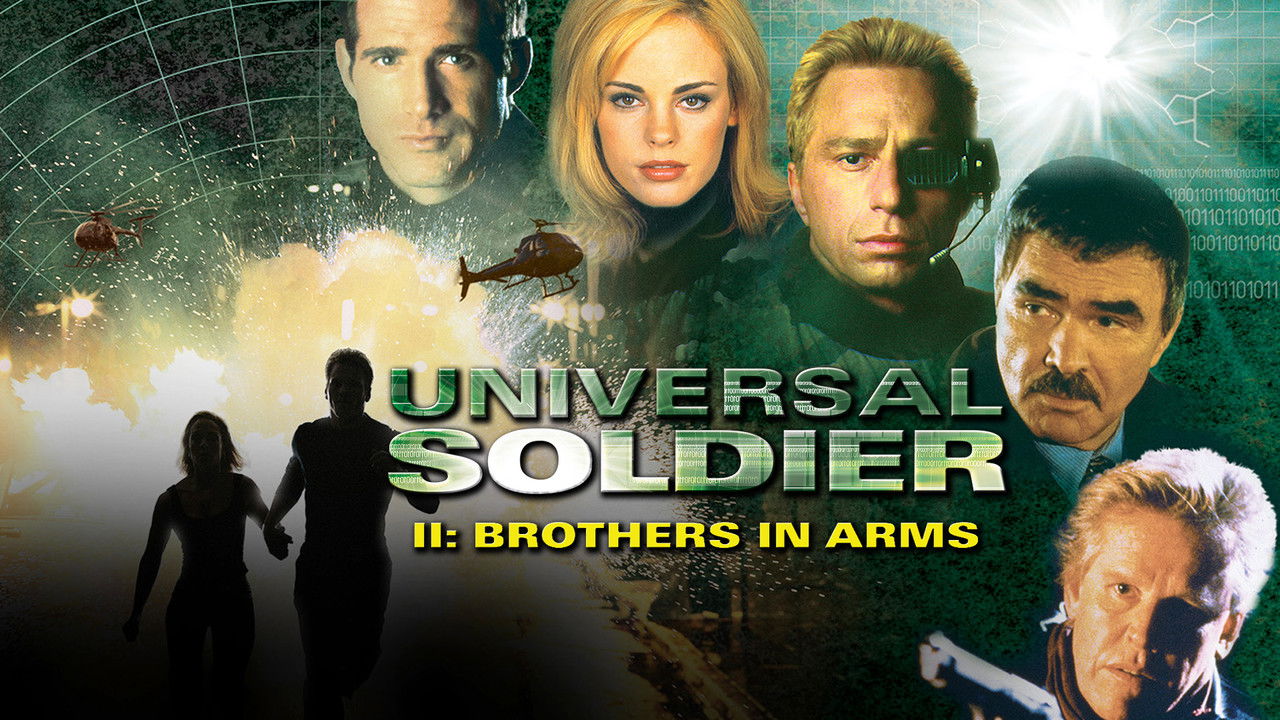
Stepping into the sizeable combat boots of JCVD is no small task, and Matt Battaglia gives it his all. He doesn’t try to mimic Van Damme, instead offering a more conventionally American, slightly less stoic take on the regenerated soldier trying to reclaim his humanity. Chandra West, taking over from Ally Walker, brings a capable energy to Veronica, the reporter still caught up in Luc’s dangerous world. But let’s be honest, in the realm of 90s direct-to-video/TV action, the villain often steals the show, and here we get the always reliable Jeff Wincott as CIA Deputy Director Mentor/UniSol prototype GR13. Wincott, a familiar face to anyone who haunted the action section back then (Martial Law II: Undercover, Mission of Justice), brings that necessary simmering intensity, even if the script doesn't give him quite the iconic menace of Dolph Lundgren's Andrew Scott.
The plot essentially remixes elements from the first film: Luc is trying to live a normal life (or as normal as one can when you’re a reanimated super-soldier), the government wants their asset back, and there’s a new, more sinister UniSol program brewing, controlled by Wincott’s character and featuring Luc's supposedly long-lost (and now cybernetically enhanced) brother, Eric. It’s a classic DTV setup – familiar premise, lower budget, and a focus on getting straight to the action.
### Cable-Ready Carnage
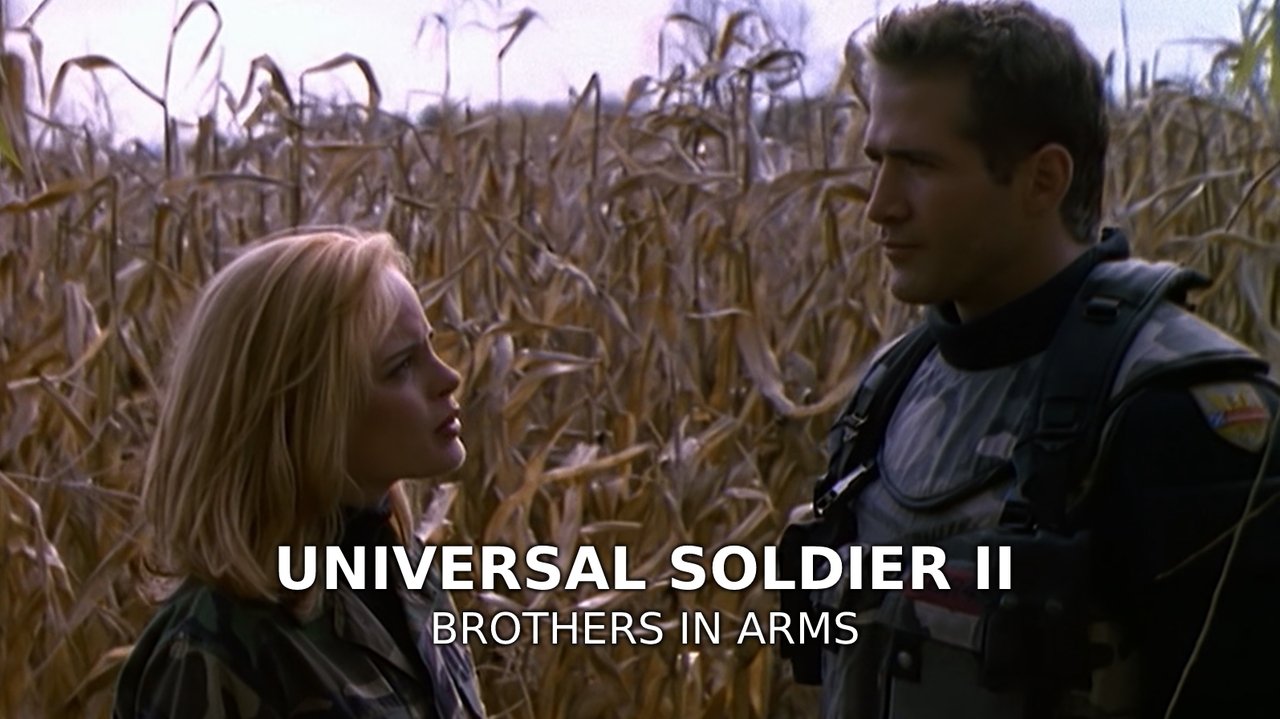
Directed by Jeff Woolnough, a veteran of episodic television (Sliders, The Outer Limits), the film has that distinct late-90s cable movie feel. The production values are certainly leaner than Roland Emmerich's original blockbuster. Don't expect sprawling desert chases or dams exploding in quite the same spectacular fashion. However, that doesn't mean the action is entirely forgettable. What Brothers in Arms offers is a more grounded, often brutal kind of fight choreography typical of the era's video store staples.
Remember how satisfying those squib hits looked on a fuzzy CRT? This film delivers plenty of that. The shootouts feel visceral in that pre-CG blood spray way, and the hand-to-hand combat, while not as stylised as the original, has a certain workmanlike intensity. There are practical stunts here – guys getting thrown through windows, cars taking hits – that possess that tangible weight we often miss today. It might not have the budget for massive pyrotechnics, but the effort from the stunt team is palpable. They’re clearly working hard within the constraints, delivering action that feels like it hurts. Was it groundbreaking? No. But did it deliver the kind of straightforward action beatdown you expected after seeing the box art? Absolutely.
One interesting tidbit: the production actually took place in Ontario, Canada, likely a cost-saving measure common for TV movies and DTV features of the time. It gives the film a slightly different visual texture than the American Southwest settings of the original.
### The Verdict on This Alternate Timeline
Universal Soldier II: Brothers in Arms is undeniably a product of its time and medium. It’s a TV movie pilot straining to capture the magic of a theatrical hit on a fraction of the resources. The recasting will inevitably feel jarring to fans of the original, and the plot sometimes feels like it's checking off boxes required for a potential series launch rather than telling a wholly satisfying standalone story. The ambition was there, even if the execution couldn't quite match the original's scale or impact.
Yet, there's a certain charm to it, especially viewed through the lens of VHS nostalgia. It represents that era of exploring franchises beyond the multiplex, finding these hidden chapters on video store shelves. Matt Battaglia and Chandra West are likable leads, and Jeff Wincott delivers as the requisite scenery-chewing baddie. The action, while scaled down, provides enough practical grit to satisfy fans of the genre's DTV output.
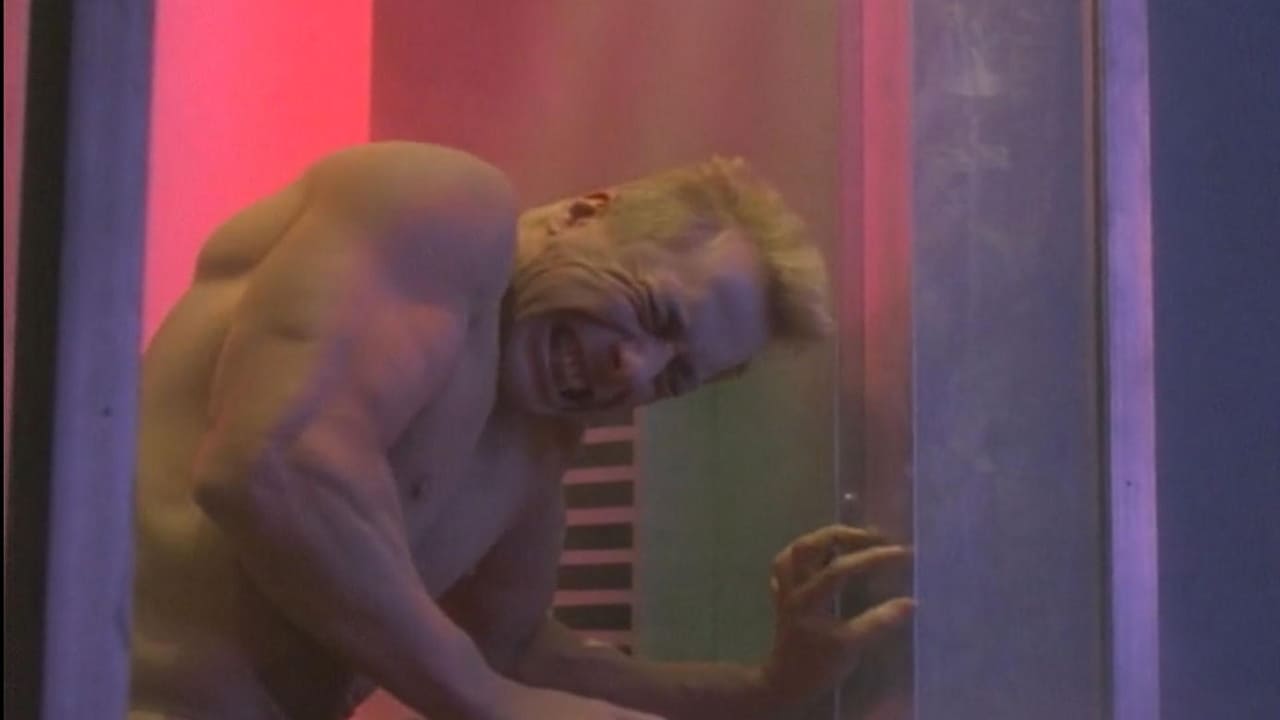
Rating: 5/10
Justification: It earns points for ambition, Jeff Wincott's presence, and delivering competent late-90s DTV action beats with some decent practical work. However, it loses points for the unavoidable comparisons to the original, the limitations of its budget impacting scale, and ultimately feeling like an interesting but flawed pilot rather than a truly essential sequel.
Final Thought: A fascinating curio for UniSol completists and lovers of 90s cable action – less a true successor, more like finding a surprisingly decent cover band playing your favorite hits down at the local bar. Worth a watch if you manage your expectations and appreciate the hustle of DTV filmmaking.