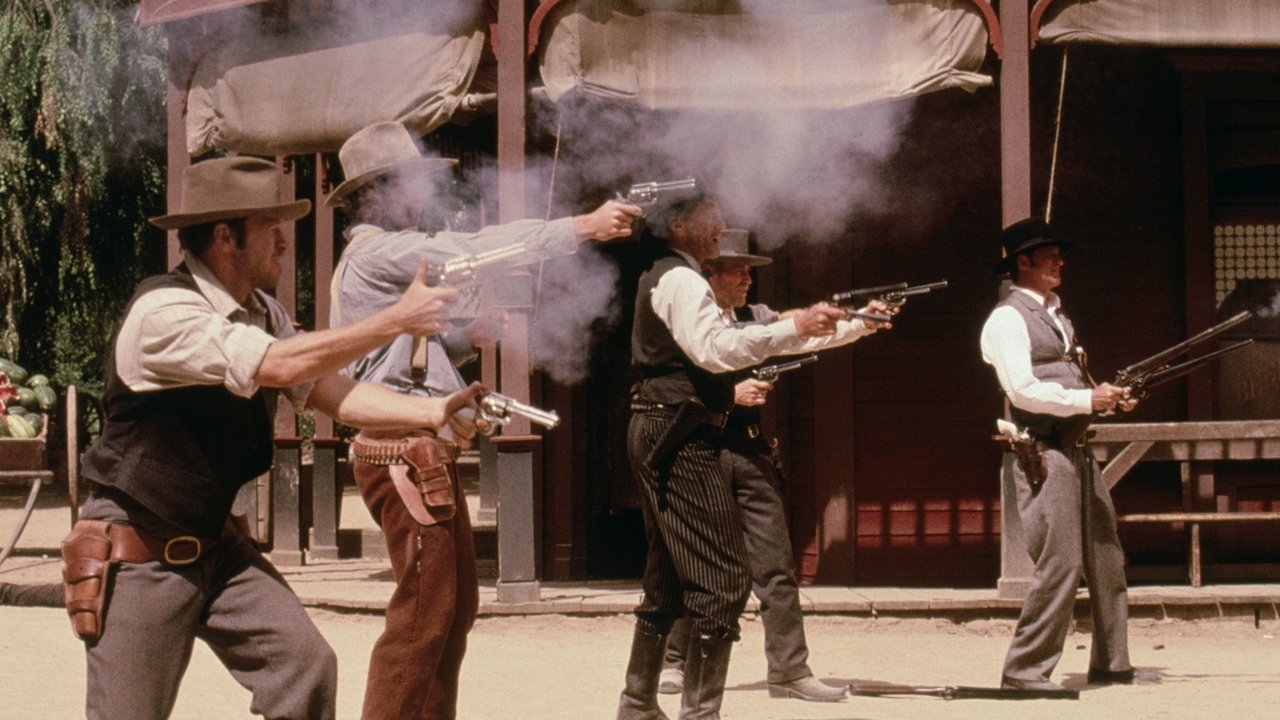
Okay, let’s dim the lights, maybe grab a lukewarm soda that’s been sitting out too long, and settle in. Remember those late nights channel surfing, hoping for something interesting after the primetime shows ended? Sometimes, scrolling past the endless infomercials, you’d stumble onto something unexpected on TNT or HBO, something that felt… different. That’s exactly the feeling Uli Edel’s 1999 TV movie Purgatory evokes – a film that arrived just as the VHS era was starting its slow fade, yet feels perfectly suited for that worn tape discovered on a dusty rental shelf. It begins like countless Westerns: a desperate band of outlaws, led by the ruthless Blackjack Britton (Eric Roberts), flees a botched bank robbery, seeking refuge in the nearest town. But the town they find, named, fittingly, Refuge, is anything but ordinary.
Where Legends Rest... Uneasily
There’s an unnerving tranquility to Refuge. The streets are clean, the townsfolk polite, almost serene. There’s no saloon rowdiness, no gunfights erupting at noon. The sheriff, Forrest (Sam Shepard), carries an aura of quiet authority mixed with profound weariness. The doctor, Doc Woods (Randy Quaid), seems haunted by more than just the ailments of his patients. As the outlaws, including the slightly more conscientious Sonny (Brad Rowe) and the trigger-happy Leo (Donnie Wahlberg, pre-Blue Bloods), try to blend in, they start noticing inconsistencies. The townsfolk are strangely familiar, resembling legendary figures from the Wild West. And why does Sheriff Forrest seem so reluctant to use his gun, despite his obvious skill?
The gradual reveal of Refuge’s true nature – a literal Purgatory where deceased gunslingers and figures of the Old West must live peacefully, awaiting final judgment – is handled with surprising subtlety for a made-for-TV movie. Written by Gordon T. Dawson, a veteran of the Western genre, the script cleverly uses the familiar tropes of the West as a backdrop for exploring themes of sin, consequence, and the agonizing possibility of redemption. It poses a fascinating question: what happens when unrepentant evil walks into a place designed for quiet atonement?
Shepard's Weight, Roberts' Menace
The casting is central to Purgatory's success. Sam Shepard, an actor who always seemed to carry the dust of the American West in his soul, is perfect as Sheriff Forrest, revealed to be none other than Wild Bill Hickok. He embodies the burden of a violent past and the desperate hope for peace. His performance isn't flashy; it's grounded in stillness and quiet intensity, making his eventual decisions carry immense weight. You feel the history etched onto his face, the unspoken regrets simmering beneath the calm exterior. It’s a performance that anchors the film’s more fantastical elements in a believable human struggle.
Opposite him, Eric Roberts dives headfirst into the role of Blackjack Britton. Roberts, who could always dial up the intensity like few others (think Runaway Train or The Pope of Greenwich Village), portrays Britton not just as a bad man, but as evil incarnate, utterly incapable of understanding, let alone seeking, redemption. His arrival shatters the fragile peace of Refuge, forcing the spectral residents to confront the violence they thought they’d left behind. Randy Quaid also offers a compelling turn as Doc Holliday, wrestling with his own violent legacy and the temptation to revert to his old ways when threatened. The ensemble works well, creating a believable community caught between two worlds.
Made-for-TV Gem
Let's be honest, you could feel the TV movie constraints sometimes. The budget wasn't massive – this wasn't a sprawling John Ford epic. Yet, director Uli Edel, who navigated gritty realism in films like Christiane F. (1981) and Last Exit to Brooklyn (1989), uses these limitations effectively. He focuses on atmosphere and character, letting the tension build through dialogue and performance rather than elaborate set pieces (though the final confrontation delivers). Filmed on location in Alberta, Canada, the landscape provides an appropriately stark and beautiful backdrop, feeling both familiar as a Western setting and subtly otherworldly. The film doesn’t overdo the supernatural; it’s presented matter-of-factly, making the core dilemma more resonant. For a late 90s cable premiere, Purgatory felt ambitious, a high-concept Western that treated its audience with intelligence. I remember catching it back then, probably recording it onto a T-120 tape, and being genuinely surprised by its quality and thematic depth. It wasn’t just another shoot-‘em-up; it had something to say.
The film asks us to consider the nature of judgment and the possibility of change, even after death. Can legendary figures known for violence truly find peace? Can someone like Sonny, caught up with a bad crowd but possessing a conscience, find a different path? Doesn't Blackjack's absolute refusal to change highlight the very essence of damnation – the inability to even desire redemption? These aren't questions typically tackled in a standard oater.
Final Judgment
Purgatory isn't perfect. The pacing occasionally flags, and some character arcs feel a little underdeveloped due to the format's time constraints. But its unique premise, strong central performances (especially from Shepard and Roberts), and thoughtful exploration of intriguing themes make it a standout TV movie from the era and a fascinating curio for Western and fantasy fans alike. It punches well above its weight class, delivering a story that lingers long after the credits roll.
Rating: 7.5/10
Why this rating? Purgatory earns a solid score for its ambitious concept, excellent casting that elevates the material (Shepard is magnificent), and its surprisingly effective blend of Western grit and supernatural pondering. It overcomes its TV movie limitations through strong direction and a script that prioritizes theme and character. While not flawless, it’s a memorable and unique film that deserves to be rediscovered by fans of the era.
It leaves you pondering: if such a place exists, who might be waiting there now, polishing their spurs and contemplating eternity? A truly unique find from the twilight of the VHS age.