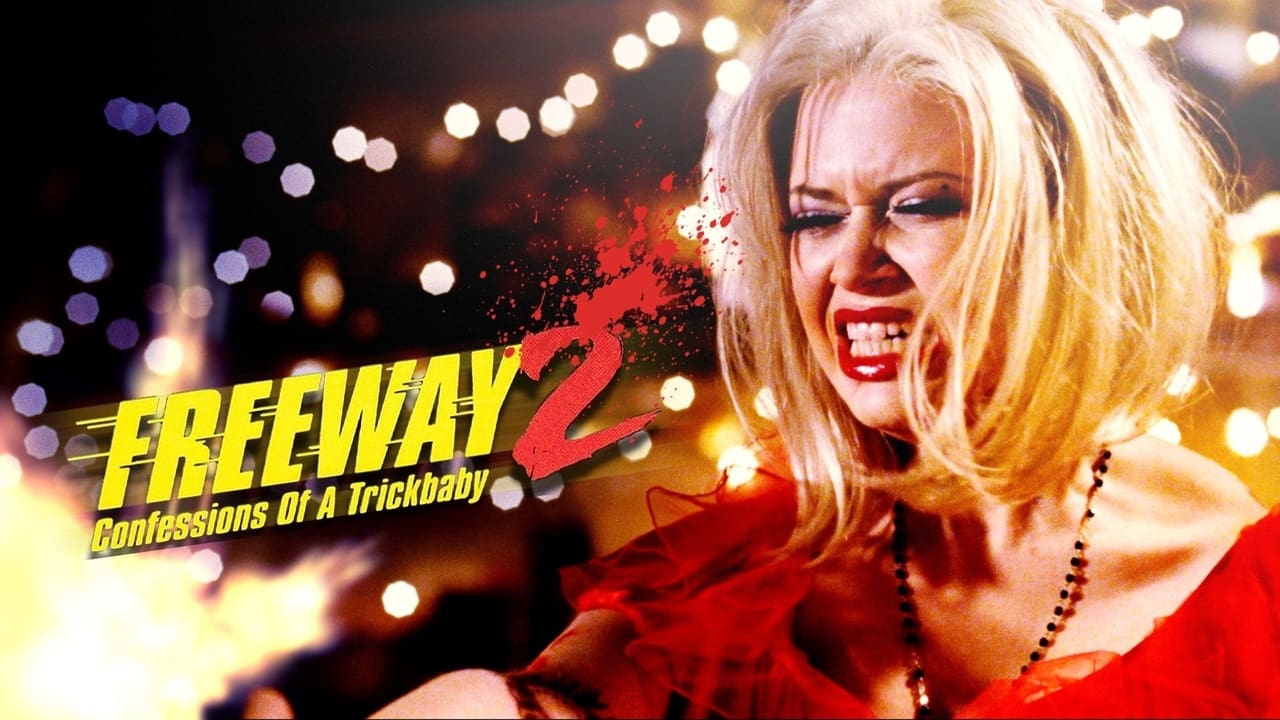
Alright, buckle up, buttercups. Sometimes, digging through those dusty stacks at the back of the video store—or, let's be honest, scrolling through some obscure streaming service late at night trying to recapture that feeling—unearthed something truly… unexpected. Something that wasn't playing at the multiplex, something raw, maybe even something a little dangerous. Enter Matthew Bright's Freeway II: Confessions of a Trickbaby (1999), a film that arrived just as the VHS era was sputtering to a close, feeling less like a sequel and more like a hand grenade rolled into the sanitized landscape of late-90s cinema. If you rented this expecting another Reese Witherspoon-esque dark fairy tale romp like the original Freeway (1996), you were in for a rude awakening roughly five minutes in.
### Not Your Average Road Trip
This ain't Little Red Riding Hood anymore, folks. Freeway II takes the "twisted fairy tale" concept and slams the accelerator through the floorboards of decency, plunging headfirst into a grimy, shocking, and perversely funny take on Hansel and Gretel. Our guide through this particular circle of hell is Crystal (Natasha Lyonne), a juvenile delinquent whose bulimia is just the tip of the iceberg of her troubles. After a violent escape from custody, she hooks up with Cyclona (María Celedonio), a pint-sized, homicidal lesbian Satanist fresh out of juvie herself. Together, they embark on a chaotic journey toward a supposed safe haven known as "Sister Gomez's Mobile Home," leaving a trail of chaos, bodily fluids, and bewildered corpses in their wake.
Natasha Lyonne, already carving out her niche as a queen of indie quirk and defiance after films like Slums of Beverly Hills (1998), absolutely commits to the role of Crystal. There's no vanity here, just a raw, often uncomfortable portrayal of a deeply damaged young woman navigating an impossibly bleak world. Her chemistry with María Celedonio's terrifyingly unpredictable Cyclona is electric, a bizarre Bonnie and Clyde fueled by junk food, desperation, and shared trauma. Celedonio is a force of nature, embodying pure chaotic energy in a way that’s both hilarious and genuinely unnerving. It’s a performance that sticks with you, long after the static hiss of the imagined tape fades out.
### Matthew Bright's Uncompromising Filth
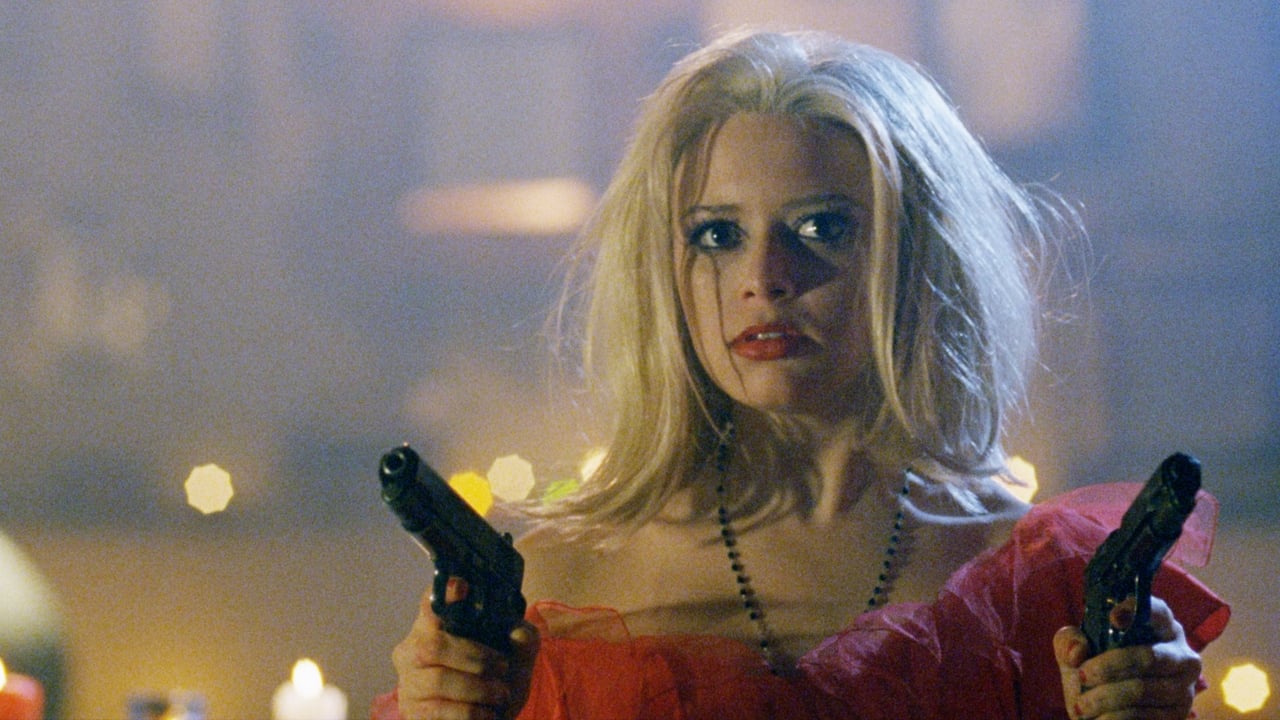
Writer-director Matthew Bright, who also helmed the first Freeway, doubles down on the transgressive elements here. This film makes the original look like a Disney movie by comparison. Forget subtlety; Freeway II revels in its own sordidness. It tackles bulimia, abuse, murder, necrophilia (yes, really), and religious hypocrisy with a bluntness that’s almost breathtaking. This wasn't just pushing boundaries; it was napalming them. Reportedly shot on a shoestring budget, you can almost feel the grit and grime clinging to the celluloid. There’s no Hollywood gloss here, just cheap motels, roadside diners, and the oppressive heat of desperation. This low-budget aesthetic, born partly from necessity, actually enhances the film's unsettling realism, making the outrageous events feel disturbingly plausible within its own twisted logic.
The journey culminates at the trailer of Sister Gomez, played with unforgettable, skin-crawling creepiness by none other than Vincent Gallo. His Sister Gomez isn't just a creepy old lady figure from the fairy tale; she's a deeply disturbed individual running a bizarre confectionery-based operation with truly horrifying ingredients. It's a sequence that pushes the film into outright exploitation territory, designed to shock and provoke, and it absolutely succeeds. Remember how certain movies just felt dangerous to watch back then, like you were getting away with something? Freeway II bottled that sensation.

### Cult Status Earned, Not Given
Unsurprisingly, Freeway II didn't exactly light up the box office. It bypassed theaters in many places, heading straight to the welcoming, non-judgmental arms of home video. Critics were largely appalled or bewildered, and mainstream audiences likely wouldn't have known what to make of its confrontational tone and pitch-black humor. Yet, like so many disreputable gems discovered on fuzzy VHS tapes rented under the cover of darkness, it slowly but surely found its audience. It became a cult classic, whispered about among fans of extreme cinema and dark comedy, appreciated for its sheer audacity and Lyonne's fearless performance. It’s a film that doesn't ask for your approval; it dares you to keep watching.
It stands as a testament to a specific kind of late-90s, pre-digital rawness – films made outside the system, willing to go to truly uncomfortable places. While the first Freeway cleverly subverted expectations with a known star (Kiefer Sutherland as the Wolf!), this follow-up felt even more underground, more defiant. It's the kind of movie you'd discover accidentally, maybe on a copied tape passed between friends, and it would leave a mark.
---
Rating: 7/10
Justification: This score reflects Freeway II's status as a potent, if deeply polarizing, cult artifact. It earns points for its fearless performances (especially Lyonne and Celedonio), Matthew Bright's utterly unique and uncompromising vision, and its unforgettable, pitch-black humor. It’s genuinely shocking and audacious in a way few films dare to be. However, its extremely graphic and disturbing content, combined with a deliberately abrasive tone and low-budget limitations, makes it a challenging watch that's definitely not for everyone, hence keeping it from higher marks reserved for more universally accessible (even within cult circles) classics. It’s a strong ‘7’ for the sheer nerve and lasting impact on those who can stomach its particular brand of confrontational cinema.
Final Thought: Freeway II: Confessions of a Trickbaby is pure, uncut, late-VHS era transgression – a grimy, hilarious, and utterly unforgettable road trip to hell that makes most modern "edgy" films look positively quaint. Watch it if you dare.