Okay, fellow travelers of the magnetic tape era, let's dim the lights, imagine the satisfying clunk of a VHS inserting into the VCR, and talk about a film that represents one of the more curious and ambitious detours of 80s cinema: 1984's The Razor's Edge. This wasn't your typical Reagan-era fare nestled between the neon glow of action flicks and high-concept comedies. No, this was Bill Murray, the snarky king of Stripes (1981) and Caddyshack (1980), attempting something profoundly different – a serious adaptation of W. Somerset Maugham's hefty philosophical novel. The sheer audacity of it, even then, felt like a ripple in the pop culture pond.
A Star's Serious Swing
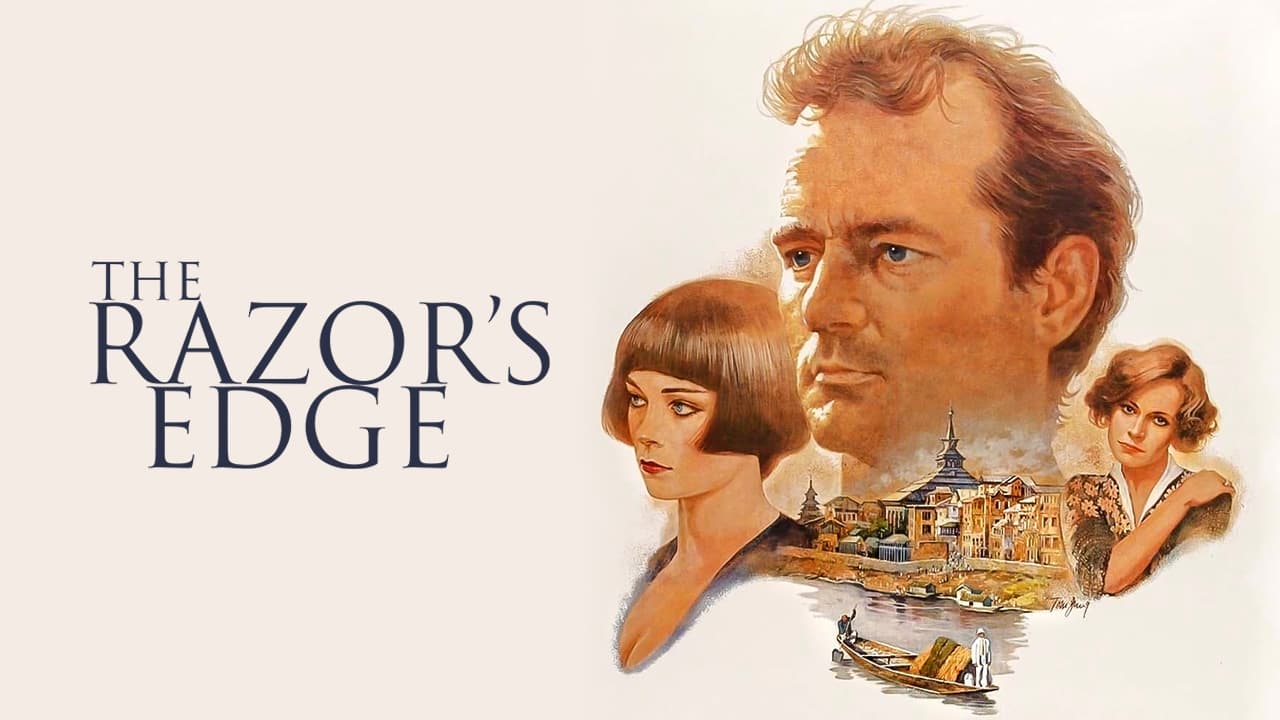
For many of us browsing the video store aisles back then, seeing Murray's face on the cover of The Razor's Edge might have caused a double-take. Wasn't this the guy cracking wise with gophers and ghosts? And indeed, the story behind the film is almost as fascinating as the narrative itself. This was Bill Murray's passion project. He reportedly only agreed to star in the megahit Ghostbusters (released the same year, a detail that feels almost cosmically ironic) if Columbia Pictures would finance this adaptation, which he co-wrote with director John Byrum. It was a gamble born from a genuine desire to explore deeper themes, a personal quest mirrored in the film's protagonist, Larry Darrell. Does that personal investment translate onto the screen? That remains the central question surrounding this film.
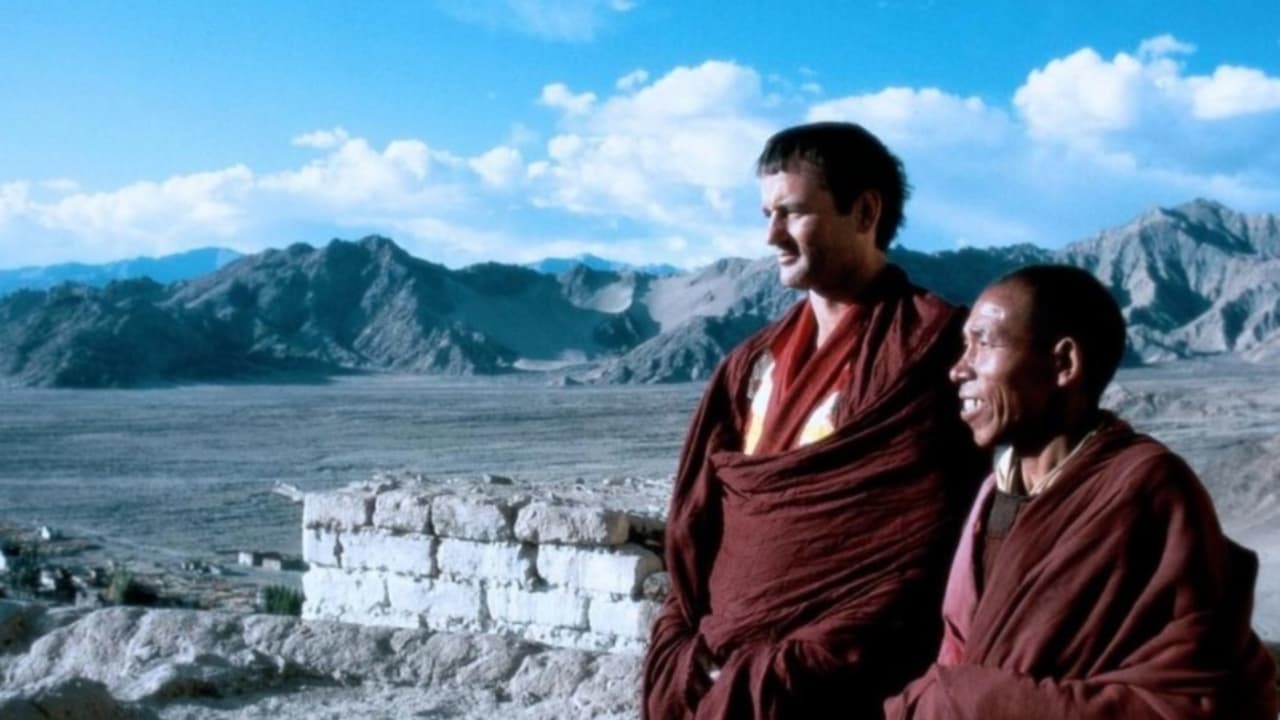
The story follows Larry Darrell (Murray), an American ambulance driver traumatized by his experiences in World War I (a change from the novel's post-WWI setting, perhaps to give Larry a more visceral starting point). Disillusioned with the materialism of his wealthy fiancée, Isabel (Catherine Hicks), and the shallow pursuits of high society, Larry embarks on a global odyssey, seeking enlightenment and a deeper understanding of life's purpose. His journey takes him from the decadent salons of Paris to the remote monasteries of the Himalayas, encountering tragedy, temptation, and fleeting moments of transcendence.
Capturing Lightning in a Bottle?
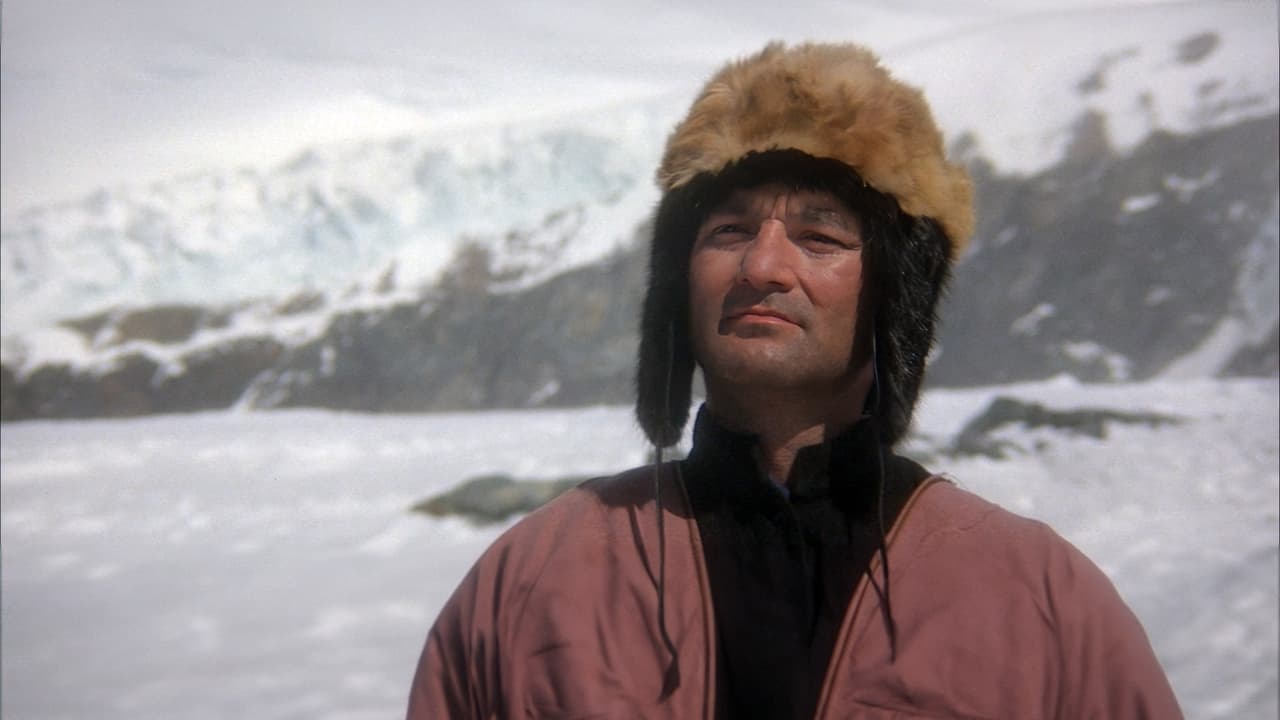
Translating Maugham's intricate exploration of spirituality and existential angst to the screen is inherently challenging. The novel relies heavily on internal monologue and philosophical rumination, things notoriously difficult to visualize compellingly. Byrum and Murray attempt to capture Larry's journey through evocative location shooting – the Parisian scenes feel appropriately weary, while the sequences in India and the Himalayas possess a certain grandeur. Yet, the film often struggles to convey the depth of Larry's internal transformation. We see him go places, but the spiritual awakening itself feels somewhat elusive, occasionally reduced to scenic montages rather than profound character development.
Murray's Leap of Faith
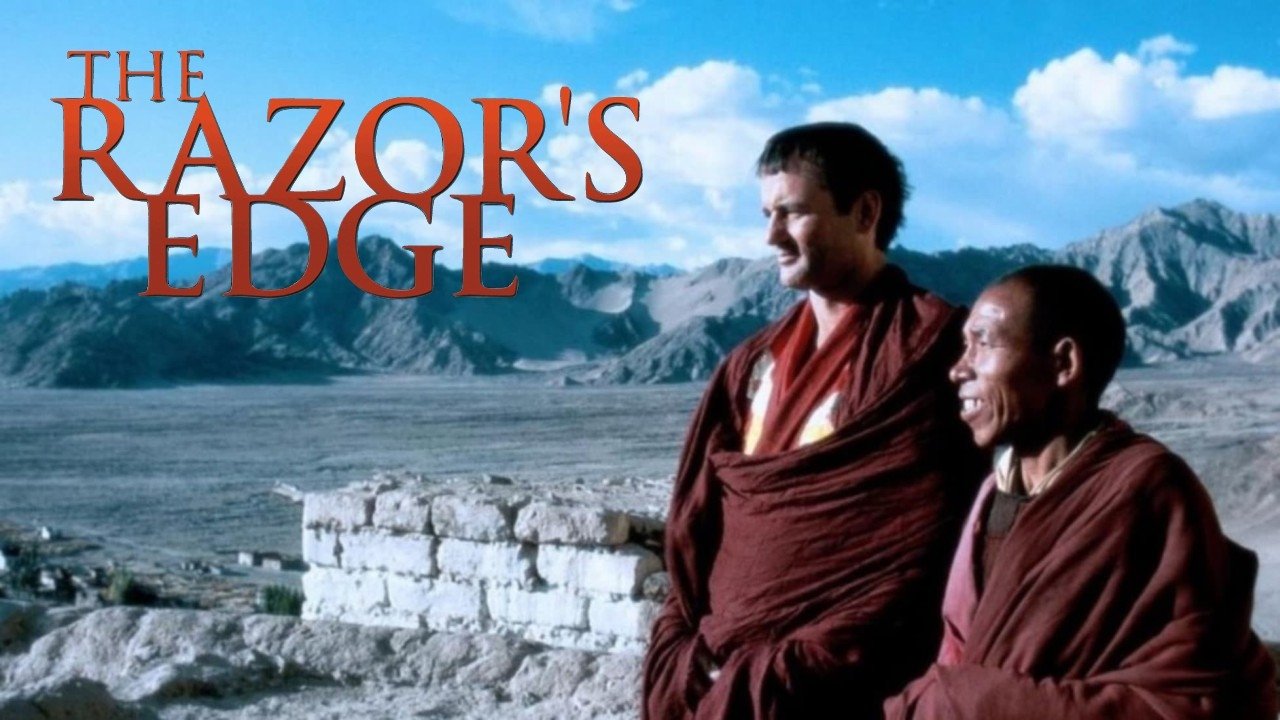
And then there's Bill Murray. It's impossible to watch The Razor's Edge without considering his performance as its anchor. He approaches Larry with a quiet sincerity, shedding his familiar comedic mannerisms for a more contemplative, almost melancholic presence. There are moments, particularly in his interactions with the tragic Sophie (Theresa Russell, delivering a raw, affecting performance), where Murray taps into genuine pathos. You see the weight of the world in his eyes, the earnestness of his search.
However, there are also times when the sheer weight of his comedic persona feels hard to shake entirely. Is it fair to the actor? Perhaps not. But for audiences so accustomed to his irony and detachment, watching him earnestly seek nirvana sometimes creates an unintentional dissonance. It's not that he isn't trying – his commitment is palpable – but the fit isn't always seamless. It’s like watching a beloved musician try their hand at opera; the technical skill might be there, but the ingrained expectations are hard to overcome. Does his attempt to portray profound spiritual awakening fully land? For many, myself included, it feels like an honorable near-miss.
The Weight of Expectation
The film's production wasn't without its own challenges, mirroring Larry's arduous journey. Murray's deep involvement reportedly led to friction, and the final product, while visually handsome, feels somewhat episodic and lacks the narrative urgency needed to truly grip the viewer for its runtime. It wanders, much like Larry, but doesn't always arrive at a destination that feels earned.
Critically panned upon release and a commercial disappointment (barely recouping its estimated $12 million budget with a $12.6 million gross), The Razor's Edge led Murray to take a four-year hiatus from acting, retreating to study philosophy and history in Paris – a case of life imitating art, perhaps? He wouldn't return to the screen until Scrooged in 1988. Looking back through the lens of VHS nostalgia, it represents a fascinating outlier, a testament to a star attempting to stretch beyond his established image. It’s the kind of film you might have rented out of curiosity, unsure what to expect, and perhaps came away from feeling… thoughtful, if not entirely satisfied.
Final Reflection
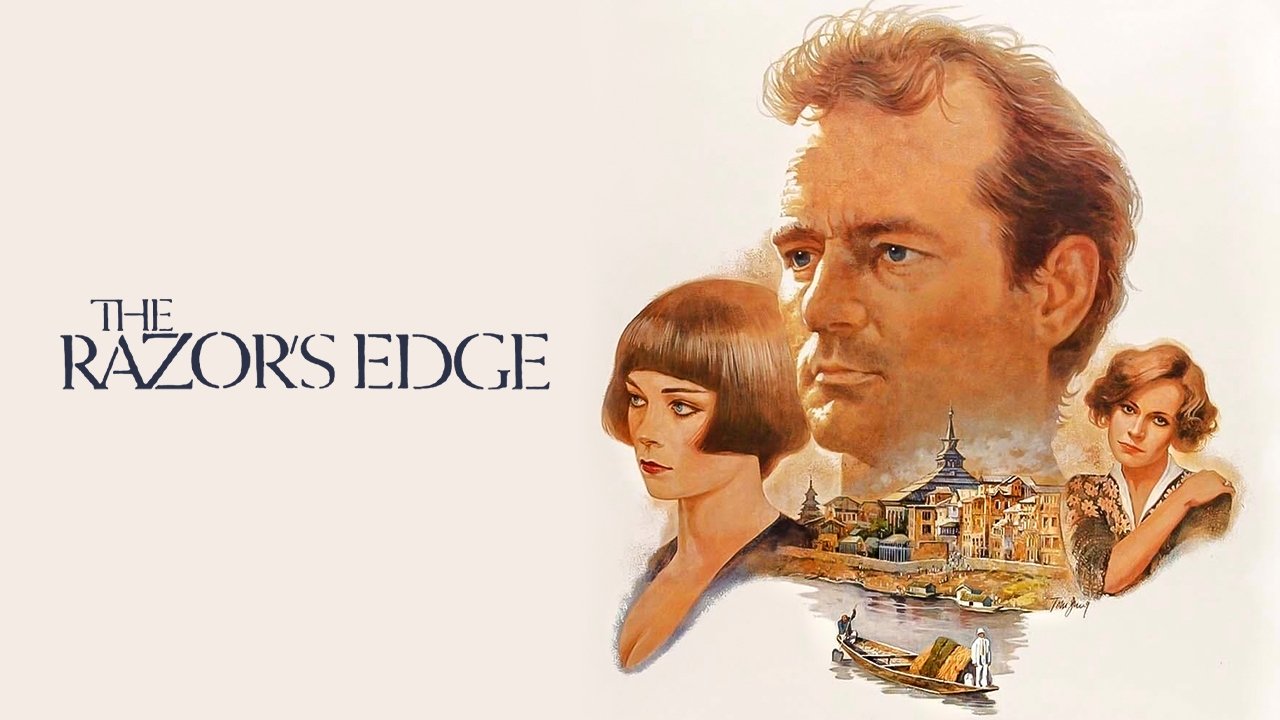
The Razor's Edge (1984) is a film defined by its ambition as much as its execution. It’s a sincere, often beautifully shot attempt to grapple with big questions, anchored by a brave, if not entirely successful, central performance from Bill Murray. While it might stumble in translating Maugham's philosophical depth and sometimes feels tonally uneven, its earnestness and the sheer novelty of seeing Murray in this mode make it a unique artifact of the 80s film landscape. It’s a reminder that even megastars sometimes yearn to walk a different path, even if it leads them over rough terrain.
Rating: 6/10
The score reflects the film's noble intentions, some strong supporting performances (especially Theresa Russell), and its visual qualities, balanced against the central casting's inherent challenges and a narrative that doesn't quite capture the profundity it reaches for. It’s a fascinating misfire, perhaps, but one born from genuine artistic aspiration, and that counts for something. What lingers most isn't necessarily the story itself, but the memory of Bill Murray taking that unexpected, searching detour. Didn't we all have moments like that, searching for something just beyond the familiar glow of the cathode ray tube?