What drives ordinary people to extraordinary acts of courage when faced with unimaginable evil? It's a question that echoes through history, and one that pulses at the very heart of Jack Gold's harrowing 1987 television film, Escape from Sobibor. Watching it again now, decades after first encountering its stark depiction of defiance on a worn VHS tape, the weight of that question feels heavier, the bravery depicted almost impossibly profound. This wasn't your typical Friday night rental fodder; this was something else entirely, something that burrowed under your skin.
The Unthinkable Reality
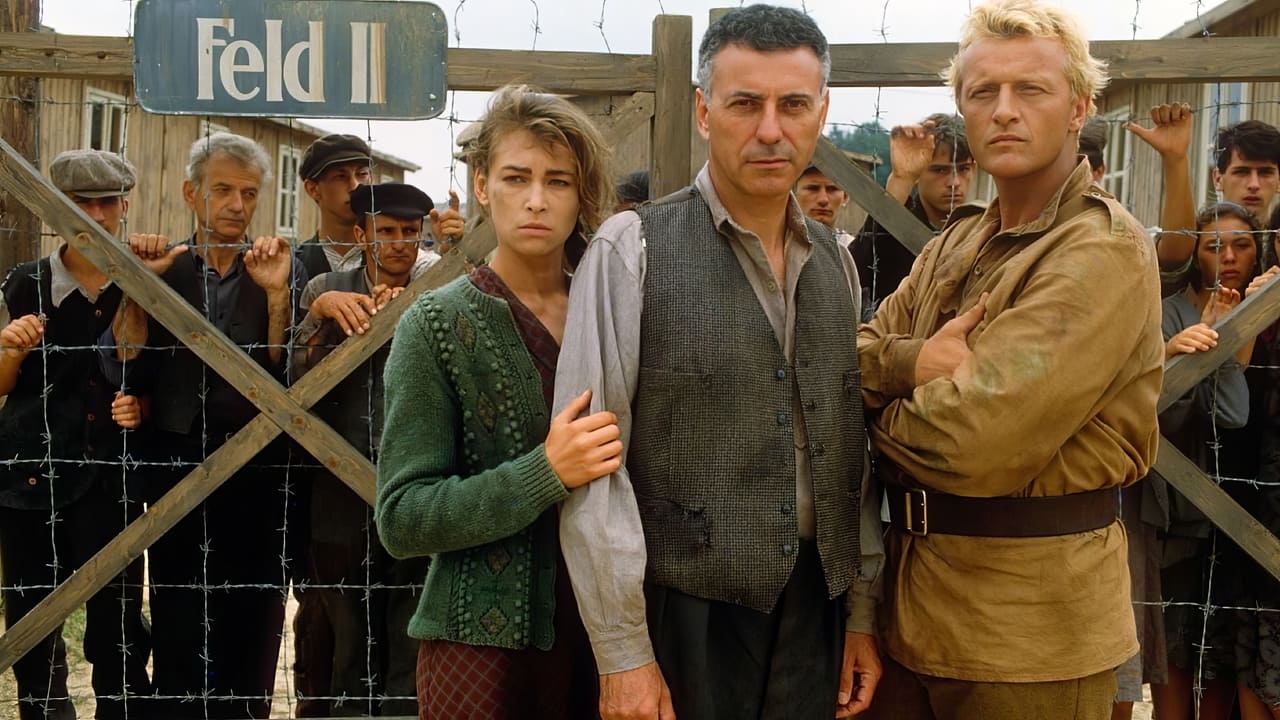
Escape from Sobibor plunges us directly into the horrifying efficiency of the Nazi extermination camp in occupied Poland. There's no Hollywood gloss here, no softening of the edges. Director Jack Gold, known for tackling tough subjects (The Naked Civil Servant), adopts a direct, almost documentary-like approach in the early stages. We see the grim routine, the casual cruelty of the guards (led by a chilling Eric P. Caspar as SS Sergeant Frenzel), and the systematic dehumanization designed to crush the prisoners' spirits long before their bodies were destroyed. The film establishes the grim calculus of Sobibor: arrival meant almost certain death. It’s a bleak canvas, rendered with a chilling matter-of-factness that makes the eventual uprising even more potent.
Seeds of Rebellion
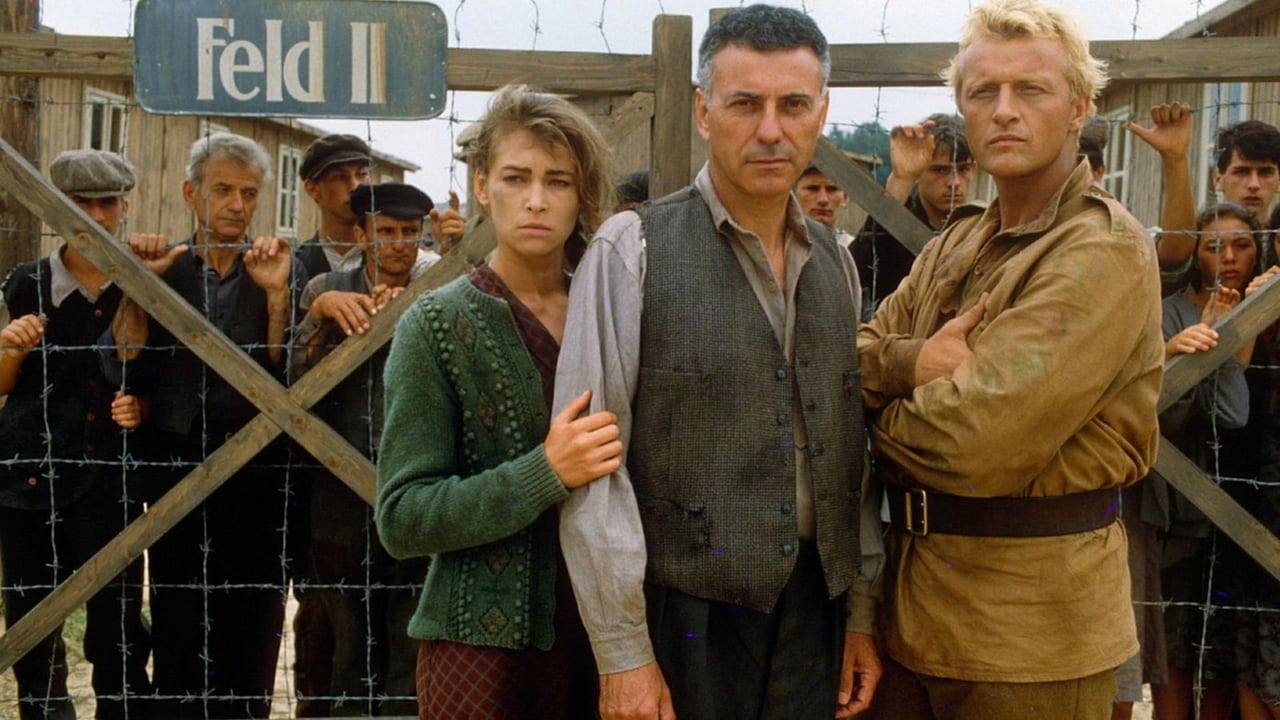
Amidst the despair, the narrative finds its anchor in Leon Feldhendler, portrayed with quiet, simmering intensity by Alan Arkin. Feldhendler, a Polish Jew, understands the camp's true purpose and recognizes that passivity is a death sentence. Arkin, an actor always brilliant at conveying internal turmoil, embodies the weary intelligence and burgeoning resolve of a man grappling with an impossible choice. He begins to secretly sound out others, planting the seeds for resistance, but the sheer scale of the task – escaping a fortified death camp – seems insurmountable. There's a palpable sense of fragility to these early plans, the constant threat of discovery hanging over every whispered conversation.
The Arrival of Sasha
The dynamic shifts dramatically with the arrival of a contingent of Soviet Jewish prisoners of war, led by Lieutenant Alexander "Sasha" Pechersky. Rutger Hauer, in one of his most commanding and grounded roles, steps into the part of Sasha. Fresh off more fantastical fare like Blade Runner (1982) and Ladyhawke (1985), Hauer brings a steely charisma and military pragmatism that galvanizes the desperate inmates. His Sasha is instantly credible as a leader – calm under pressure, decisive, and radiating an authority that offers a flicker of hope in the darkness. The chemistry between Arkin's thoughtful strategist and Hauer's decisive soldier forms the film's powerful core. They are different men, forged by different experiences, united by the desperate need to survive and fight back. Joanna Pacuła, as Luka, provides a vital perspective on the female prisoners' plight and participation, adding another layer to the complex web of resistance.
Crafting History on Screen
It's crucial to remember that Escape from Sobibor was made for television, premiering on CBS. Yet, it possesses a scope and intensity that belies its origins. Filmed in Yugoslavia, the production effectively recreates the oppressive atmosphere of the camp. The script, penned by the great Reginald Rose (of 12 Angry Men fame) based on Richard Rashke's meticulously researched book, avoids sensationalism. Rose focuses on the logistical and psychological challenges of orchestrating the escape, the intricate planning, the terrifying risks, and the sheer nerve required. We learn how the prisoners targeted specific SS officers, timing their actions with split-second precision. One fascinating detail often mentioned by survivors, and depicted in the film, was the careful coordination needed to lure guards into workshops or barracks individually to neutralize them quietly before the main breakout. The film doesn't shy away from the brutality, but its focus remains squarely on the prisoners' ingenuity and courage. It’s a testament to Gold’s direction and Rose’s writing that the tension builds so effectively, even when history tells us the outcome.
The Price and Power of Freedom
The escape sequence itself is chaotic, brutal, and ultimately heartbreaking. Not everyone makes it. The film honors the sacrifice, showing the high cost of defiance. But it also captures the sheer, primal urge for freedom, the desperate scramble through fences and minefields towards the uncertain sanctuary of the forest. What lingers long after the credits roll isn't just the horror, but the indelible image of resistance against impossible odds. This wasn't just a breakout; it was an assertion of humanity in the face of systematic annihilation. Reportedly, around 300 prisoners broke out during the actual Sobibor uprising on October 14, 1943; about 50 survived the war, including Pechersky and Feldhendler (though Feldhendler was tragically killed in post-war Poland). Pechersky, after facing suspicion back in the Soviet Union, eventually received honours decades later. These real-world postscripts add another layer of poignancy to the film's narrative.
Watching Escape from Sobibor on VHS back in the day felt different. It wasn't escapism; it was an education, a confrontation. Tucked between action blockbusters and sci-fi adventures, it served as a stark reminder of historical truths, delivered with compelling performances and unflinching honesty. It proved that television movies could tackle monumental subjects with grace and power.
Rating: 9/10
Escape from Sobibor earns its high rating through its powerful, fact-based storytelling, exceptional lead performances from Alan Arkin and Rutger Hauer, and its refusal to shy away from the grim realities of the Holocaust while simultaneously celebrating the resilience of the human spirit. It’s a gripping, moving, and essential piece of historical filmmaking that transcends its television origins.
It leaves you contemplating the extraordinary capacity for courage that can lie dormant within ordinary people, waiting for the most extreme circumstances to ignite it. A vital story, powerfully told.