Some films arrive like transmissions from a broken future, fragmented whispers across a void. On the Silver Globe (Na srebrnym globie) isn't merely watched; it's deciphered, experienced like a stunning, half-corrupted signal from a world that almost was. Forget pristine narratives; this is celluloid scar tissue, a testament to artistic ambition colliding head-on with political force, leaving behind an artefact as bewildering as it is mesmerizing. Released in a reconstructed form in 1988, its genesis in the mid-70s feels both ancient and chillingly prescient.

### A Genesis Torn Asunder
Imagine a sprawling sci-fi epic, conceived on a scale rarely attempted in Polish cinema. A group of dissident astronauts escapes a dystopian Earth, seeking freedom on a distant, Earth-like moon. They crash-land, their descendants forging a primitive, ritualistic society over generations, worshipping relics from the past and awaiting the arrival of "The Old Man," a messiah figure. When another astronaut, Marek (Andrzej Seweryn), arrives years later, he is hailed as that saviour, only to find himself trapped in their brutal cycles of faith, war, and despair against the indigenous, bird-like Szerns. Based on "The Lunar Trilogy" by director Andrzej Żuławski's own grand-uncle, Jerzy Żuławski, the scope is staggering – a philosophical treatise on religion, history, and human nature played out against an alien landscape.
But the story behind the camera is as dramatic as the one in front. After roughly two years of intense filming between 1976 and 1977, utilizing challenging locations like the Caucasus Mountains, the Gobi Desert, and the Wieliczka Salt Mine in Poland, production was abruptly halted by the Polish Ministry of Culture. Roughly 80% complete, the plug was pulled by Vice-Minister of Culture Janusz Wilhelmi (who himself died in a plane crash weeks later). Sets and costumes, painstakingly crafted to evoke a unique, organic alien world, were ordered destroyed. The reasons whispered were varied: thinly veiled critiques of authoritarianism, the sheer incomprehensibility and perceived nihilism of the vision, budgetary concerns blown out of proportion. Żuławski, known for his ferocious intensity seen later in films like Possession (1981), left Poland in anger and wouldn't return for years.
### The Phantom Edit
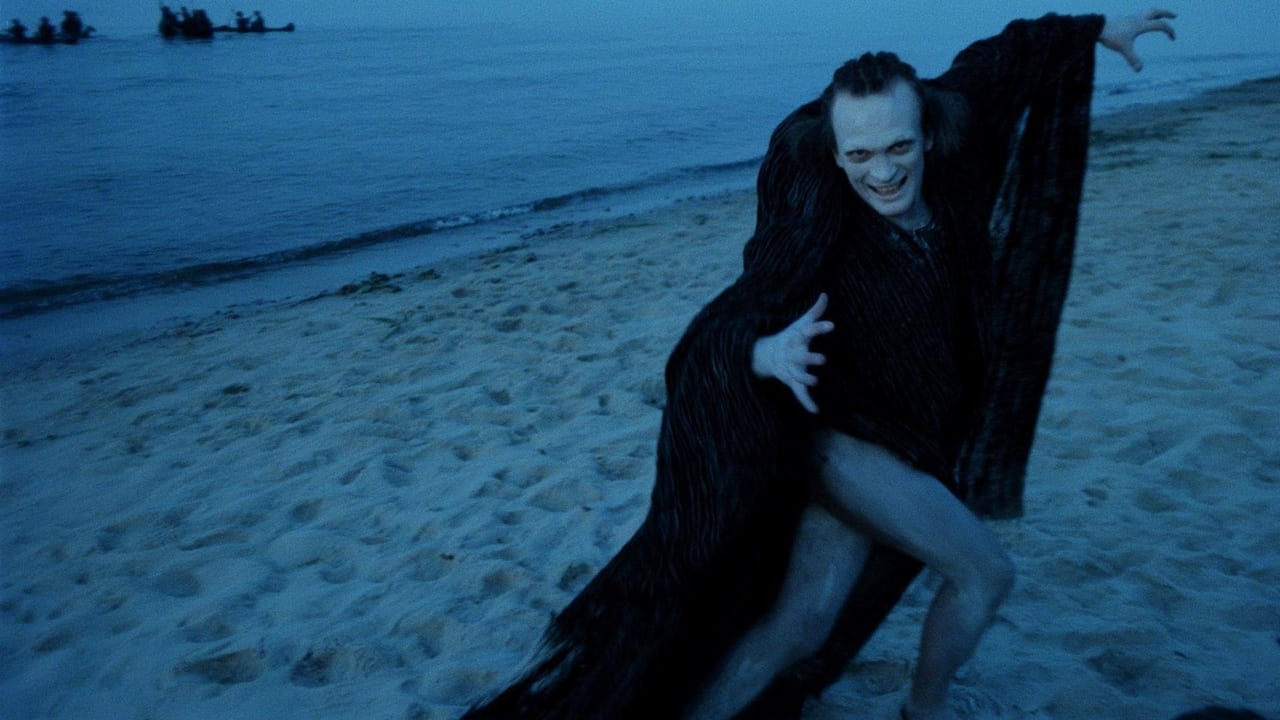
What we have today is a resurrection. A decade after the shutdown, following the fall of Communism, Żuławski was able to retrieve the surviving reels. Unable to shoot the missing 20%, he bridged the narrative gaps with voice-over narration, often delivered with a weary, philosophical detachment, layered over jarringly contemporary footage of Polish city streets, crowds, and landscapes. This wasn't just patching holes; it became an integral part of the film's identity. Watching On the Silver Globe is to constantly grapple with its incompleteness, the phantom limbs of missing scenes haunting the staggering power of what remains. The juxtaposition of alien vistas and mundane Earth locations creates a disorienting dialogue between the film's intended scope and the brutal reality of its interruption. It transforms the viewing experience into something active, forcing us to fill the voids, making the film's themes of fractured history and lost knowledge chillingly tangible.
### Raw Vision, Unfiltered Intensity
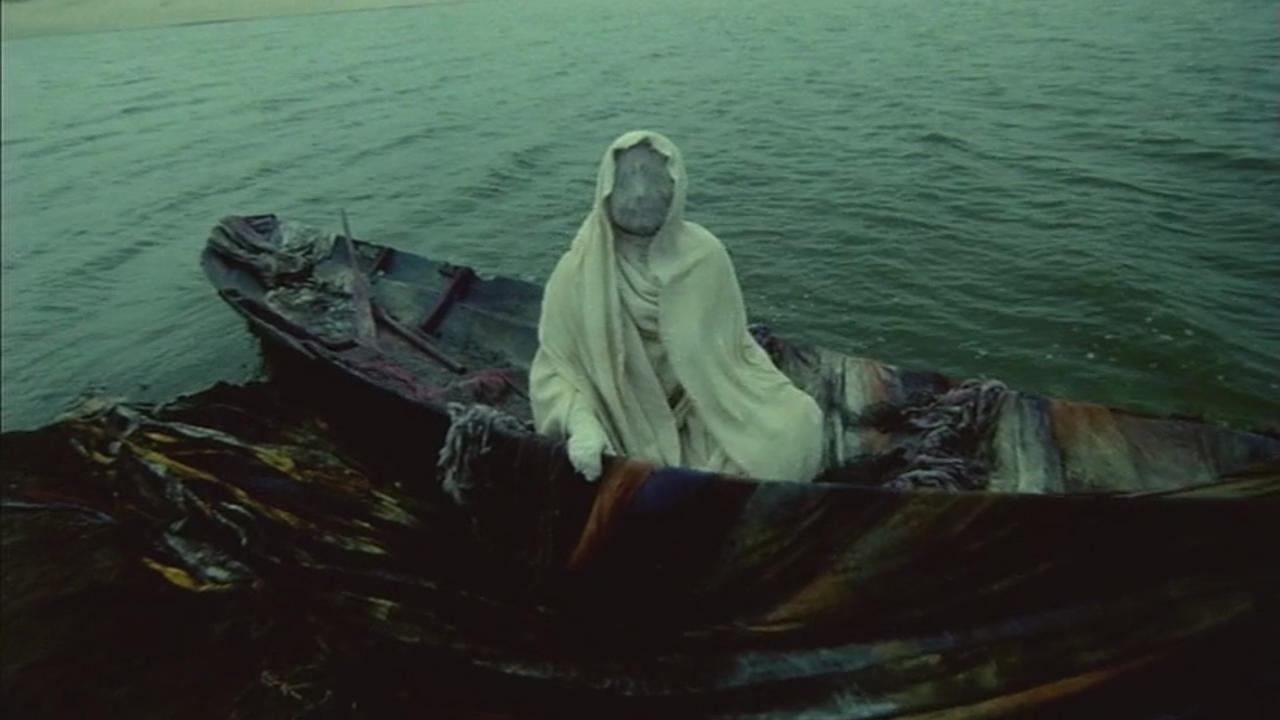
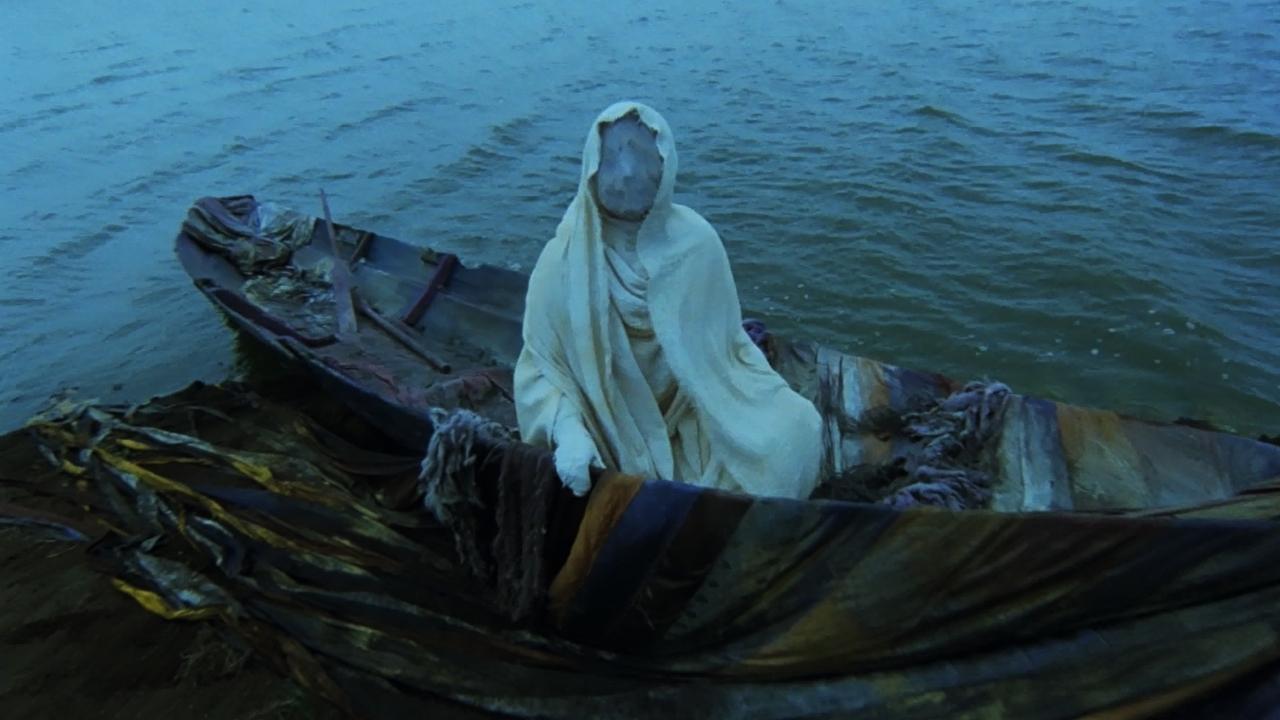
Even fragmented, Żuławski's vision burns through the screen. This is not sleek, sterile sci-fi. It's visceral, primal, almost unbearably intense. His signature style – the restless, often handheld camerawork that seems to plunge into the actors' faces, the wide-angle lenses distorting landscapes into fever dreams, the operatic emotional pitch – is pushed to its limits. The production design feels ancient and organic; costumes look cobbled together from bone, sinew, and scavenged technology. The world feels genuinely alien, hostile, and deeply unsettling. The score is dissonant and jarring, amplifying the sense of ontological dread. Performances, particularly from Andrzej Seweryn as the reluctant messiah Marek and Jerzy Trela as the priest Jerzy, are raw and almost shamanistic, conveying desperation and fanaticism with terrifying conviction. There's a scene involving a symbolic crucifixion against the vast, uncaring sky that remains one of the most potent and disturbing images in science fiction cinema. Doesn't that kind of raw, symbolic power feel worlds away from much of today's CGI-heavy fare?
### A Cult Legend Unearthed
For years, On the Silver Globe existed primarily as a legend, whispered about by cinephiles and fans of extreme cinema. Finding a copy, perhaps on a worn-out VHS tape likely sourced from a European broadcast or festival screening, felt like discovering forbidden knowledge. It wasn't an easy watch then, and it isn't now. It demands patience, attention, and a willingness to surrender to its strange, often harrowing beauty. Its influence might be subtle, but echoes of its gritty, organic aesthetic and philosophical weight can be felt in later, more grounded sci-fi efforts that dared to be different. It stands as a monument to artistic vision under duress, a film whose very existence is a story of defiance.
The commitment required from the cast and crew must have been immense. Imagine filming those elaborate, often frantic scenes in the harsh conditions of the Gobi Desert or the high altitudes of the Caucasus. Żuławski himself reportedly pushed his actors to extremes, seeking a level of raw, physical performance rarely seen. One anecdote suggests the sheer physical toll of the costumes and environment led to genuine exhaustion and emotional breakdowns, blurring the line between performance and reality – something Żuławski arguably cultivated.
### The Verdict
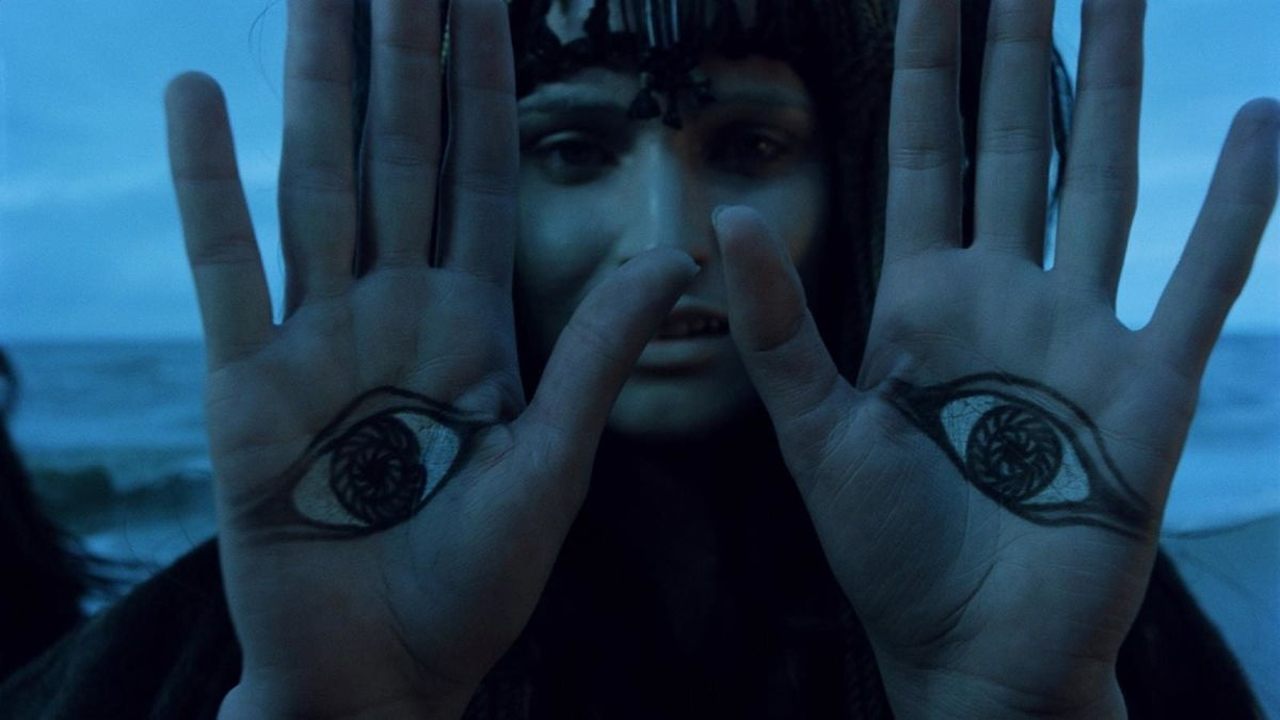
On the Silver Globe is less a conventional film and more a profound, fractured experience. It's demanding, bewildering, visually overwhelming, and philosophically dense. Its troubled production history is inseparable from its impact, adding layers of meaning to its themes of loss, faith, and the cyclical nature of human folly. Judging it solely as a finished narrative is impossible, yet its power as a piece of visionary, uncompromising cinema is undeniable. The reconstructed footage, rather than diminishing the film, adds a unique, haunting meta-commentary.
Rating: 9/10
The score reflects the film's staggering artistic ambition, its unique visual power, and its legendary status as one of cinema's most fascinating "what ifs." The missing star acknowledges the inherent fragmentation that, while adding to its mystique, inevitably prevents it from being the fully realized epic Żuławski intended. It remains a brutal, beautiful, and unforgettable transmission from a world that refused to be entirely silenced. It’s a ghost in the machine of cinema, and its spectral presence lingers long after the screen fades to black.