Okay, settle in. Sometimes a VHS tape pulled from the shelf isn't about revisiting comfortable thrills or familiar laughs. Sometimes, it confronts you with something stark, unsettling, and strangely beautiful, leaving you staring at the static long after the credits roll. That's the space Werner Herzog's Lessons of Darkness (1992) occupies – a film less like a documentary and more like a transmission from a devastated alien world, one that just happens to be our own.
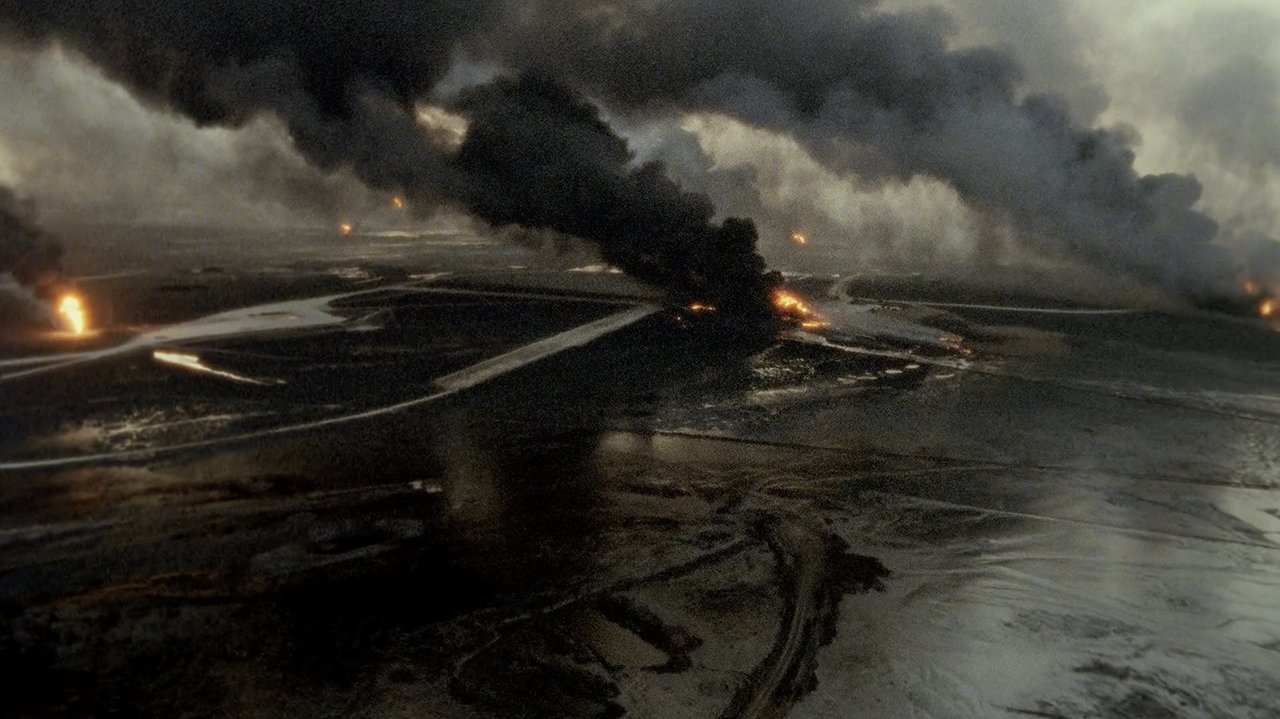
Remember the grainy news footage from the first Gulf War? The quick cuts, the talking heads, the urgent reports? Herzog takes that same subject – the burning Kuwaiti oil fields – and strips away nearly all context. There are no interviews, no political analysis, no historical exposition beyond brief title cards. Instead, we are simply immersed. The film opens with a quote attributed to the 17th-century philosopher Blaise Pascal: "The collapse of the stellar universe will occur – like creation – in grandiose splendor." It perfectly sets the tone, framing unimaginable destruction with a kind of cosmic awe. Only later might you discover, in a typically Herzogian move, that he likely wrote the quote himself, a small act of poetic license to steer our perception towards the mythic.
An Opera of Destruction
What unfolds is purely cinematic, relying on image and sound to convey its message. Herzog, ever the orchestrator of extreme landscapes (think Aguirre, the Wrath of God (1972) or Fitzcarraldo (1982)), uses slow, deliberate helicopter shots that glide over lakes of oil, infernos roaring against a blackened sky, and workers battling the blazes like figures in some hellish tapestry. The scale is staggering. Watching this on a CRT back in the day, the contained chaos flickering within that box felt both immediate and impossibly distant.
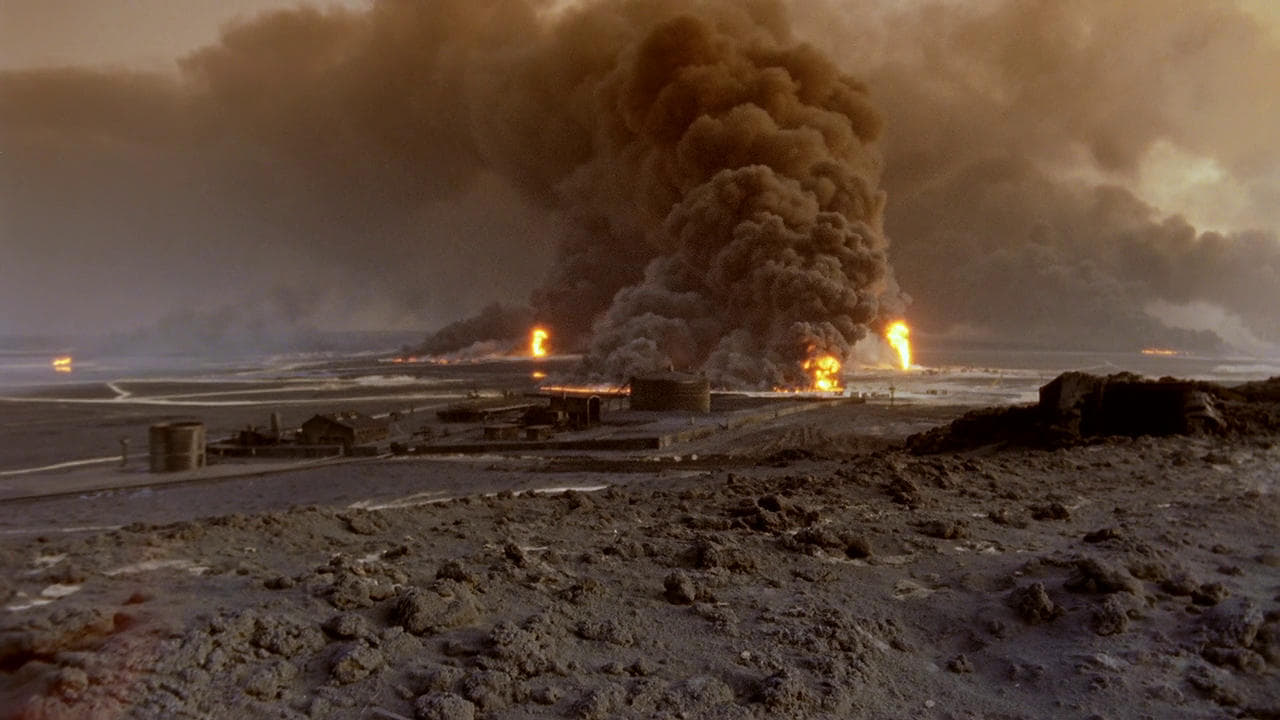
The masterstroke, however, is the soundtrack. Instead of grim realism, Herzog layers the visuals with soaring classical music – Wagner, Mahler, Prokofiev. Firefighters wrestling with burning wellheads move with the terrible grace of opera singers; the plumes of smoke become sublime, terrifying pillars against the sky. Is this aestheticizing tragedy? It's a question that inevitably arises, and one Herzog seems to invite. By elevating the destruction to something almost operatic, does he risk overshadowing the human cost? Or does he, perhaps, tap into a deeper, more primal understanding of chaos and creation, forcing us to see the familiar horror anew?
Witnessing from Another World
Herzog himself described Lessons of Darkness not as a documentary, but as "science fiction." It's a telling description. His sparse, poetic narration, delivered in that unmistakable Bavarian accent, treats the events with a kind of detached wonder, as if observing the bizarre rituals of an unknown species on a ruined planet. He speaks of creatures emerging from the smoke, of landscapes scarred beyond recognition. This perspective shifts the focus from the specific political event to something more elemental: humanity's capacity for creation and destruction, the terrifying beauty that can exist even within utter devastation.
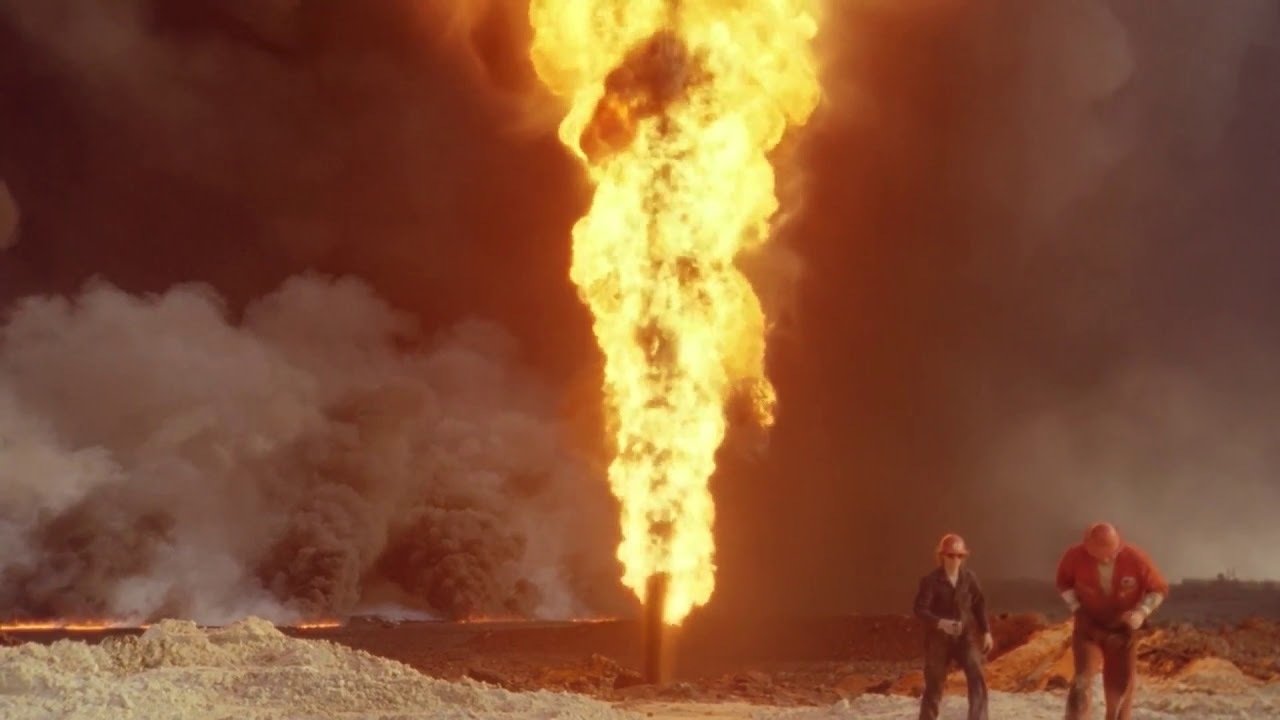

Filming under such conditions must have been intensely challenging. These weren't actors on a set; they were real people confronting an environmental catastrophe of unprecedented scale. The heat, the fumes, the sheer danger – it's palpable even through the screen. Herzog and his small crew captured these images likely on 16mm film, giving the visuals a tangible, grainy quality that feels inseparable from the era and the subject matter. There's an authenticity there, even amidst the high stylization, a sense of bearing witness to something profound and terrible. It premiered at the prestigious Cannes Film Festival, likely baffling some while captivating others with its audacious vision.
The Weight of the Image
Lessons of Darkness doesn't offer easy answers or comfortable viewing. It doesn't tell you what to think about the war or its aftermath. Instead, it presents incredibly powerful images and asks you to simply look. To consider the scale, the spectacle, the sheer unreality of it all. What does it mean to find beauty in destruction? Can art provide a different kind of truth than journalism? The film lingers because it refuses simple categorization. It's a visual poem, a philosophical inquiry, a disaster movie directed by an anthropologist from another dimension.
I remember first encountering this film, probably on some late-night channel or a dusty VHS rented from the 'arthouse' section, and feeling utterly transfixed, maybe even a little disturbed. It wasn't entertaining in the usual sense, but it was undeniably powerful, leaving images seared into my mind.

Rating: 9/10
Lessons of Darkness earns a high rating not because it's conventionally enjoyable, but because it's a masterful and unique piece of filmmaking. Herzog's audacious vision, his willingness to eschew documentary norms, and the sheer power of the visuals create an unforgettable, albeit challenging, experience. It's a testament to cinema's ability to grapple with overwhelming reality in ways that transcend simple reporting, forcing contemplation through sheer visual and auditory force. Its stylized approach might alienate some expecting a straightforward account, which slightly holds it back from a perfect score, but its artistic integrity and lasting impact are undeniable.
It leaves you contemplating the thin veil between civilization and chaos, and the strange, terrible beauty that can bloom in the most unexpected, desolate corners of human experience. A truly singular work from the VHS era, demanding to be seen, pondered, and never quite forgotten.