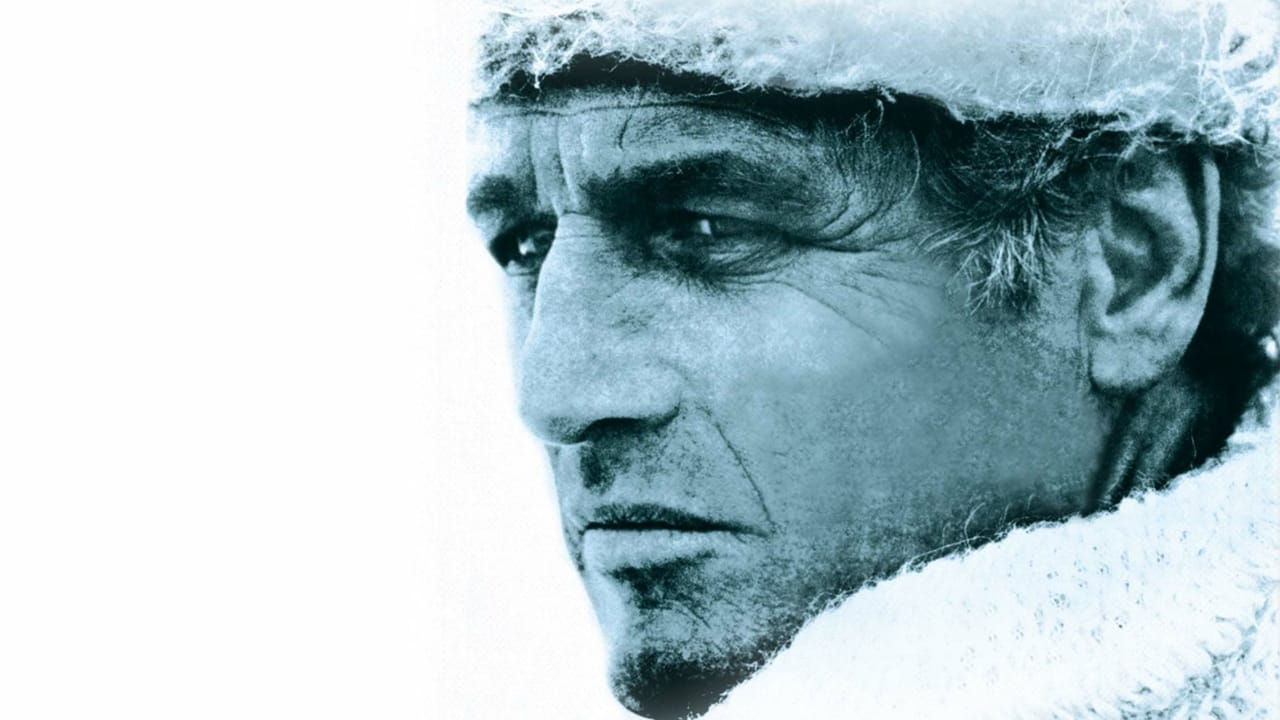
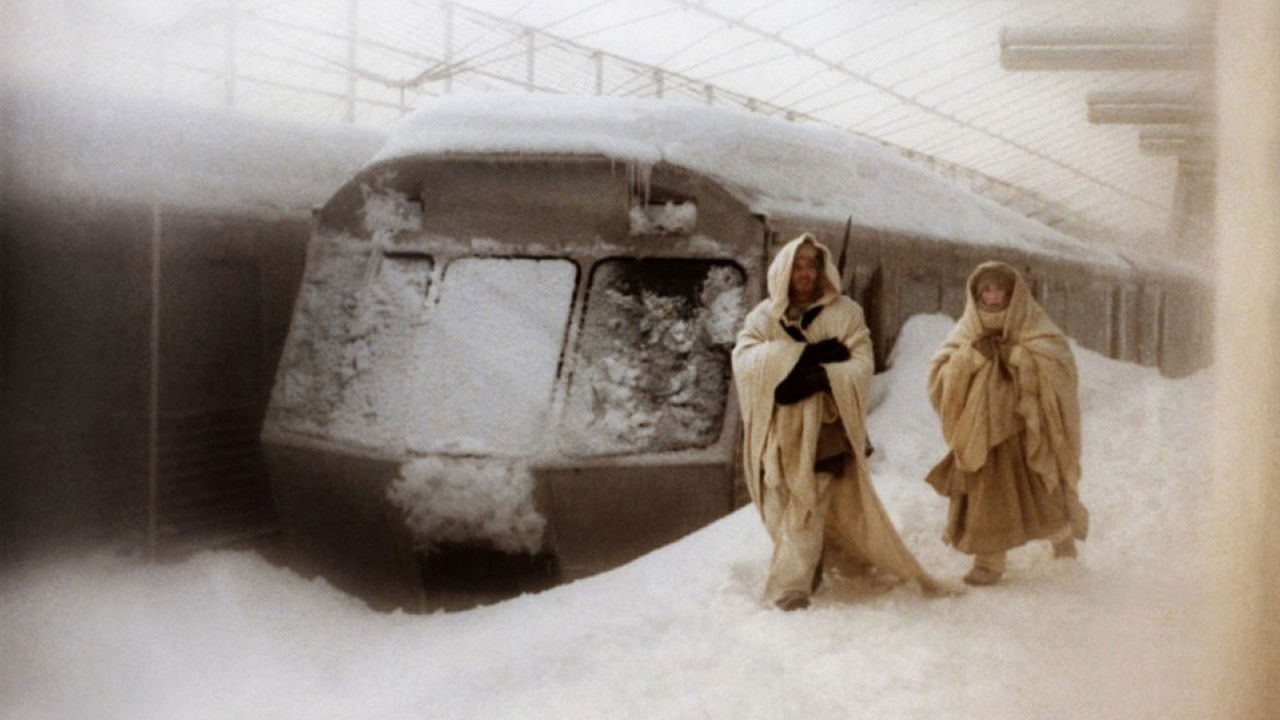
The silence isn't empty. It’s heavy, weighted with the vast, indifferent cold of a world frozen solid. Dogs, lean and desperate, pick through the icy drifts where bodies lie unburied, their presence the only flicker of life in a landscape bleached of warmth and hope. This is the chilling overture to Robert Altman’s Quintet, a film that arrived in 1979 but likely found its true audience huddled around flickering CRT screens years later, a strange, unsettling artifact pulled from the back shelves of the video store. It doesn't just depict a future ice age; it feels like one – brittle, beautiful, and profoundly unforgiving.
A Frozen World, A Deadly Game
In this unnamed, snow-choked city sometime in the future, humanity clings to existence. Society has fractured, resources are scarce, and the only apparent pastime, the only structure left, is the titular game, Quintet. Seal hunter Essex (Paul Newman) arrives from the desolate plains with his pregnant companion, Vivia (Brigitte Fossey), seeking refuge, only to find the city gripped by a chilling obsession. When a bomb detonates in their temporary lodging, killing Vivia and several others involved in the game, Essex finds himself drawn into its lethal orbit, seeking answers and perhaps vengeance in a world where life itself seems to have lost all meaning. The plot is sparse, almost secondary to the pervasive atmosphere of decay and the gnawing tension of the game itself, whose rules slowly, terrifyingly reveal themselves.
Altman's Uncharacteristic Chill
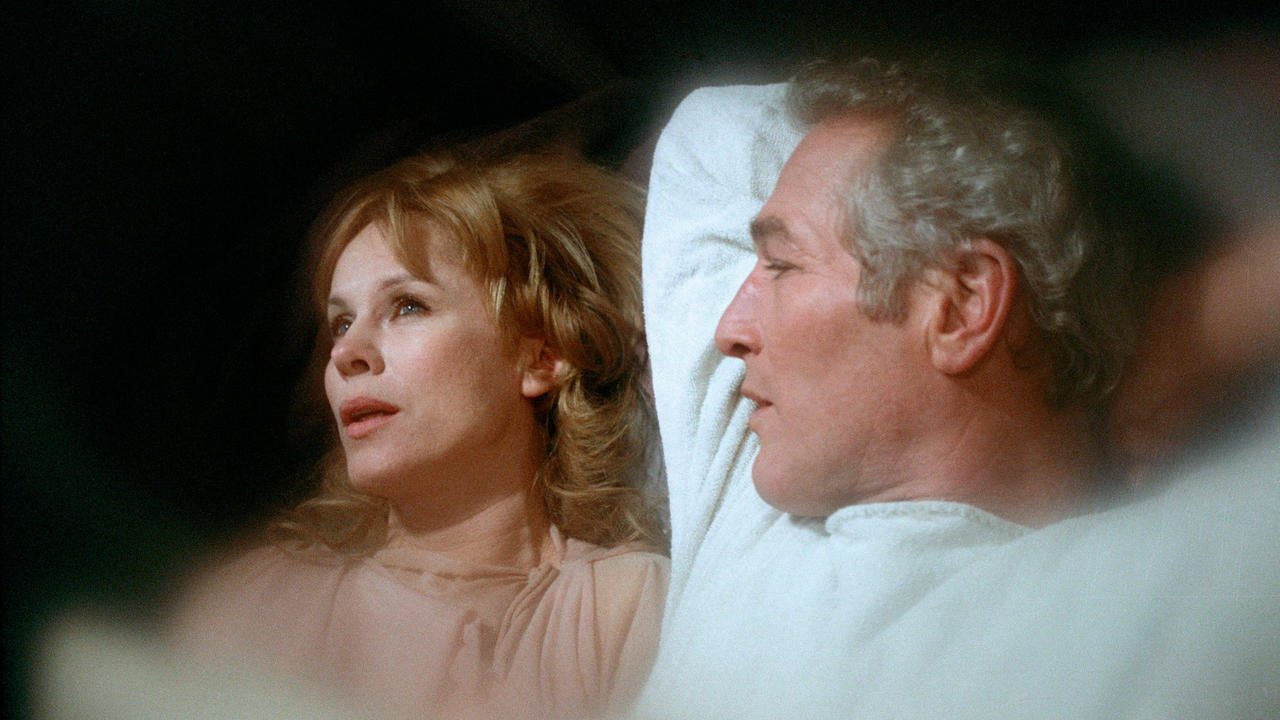
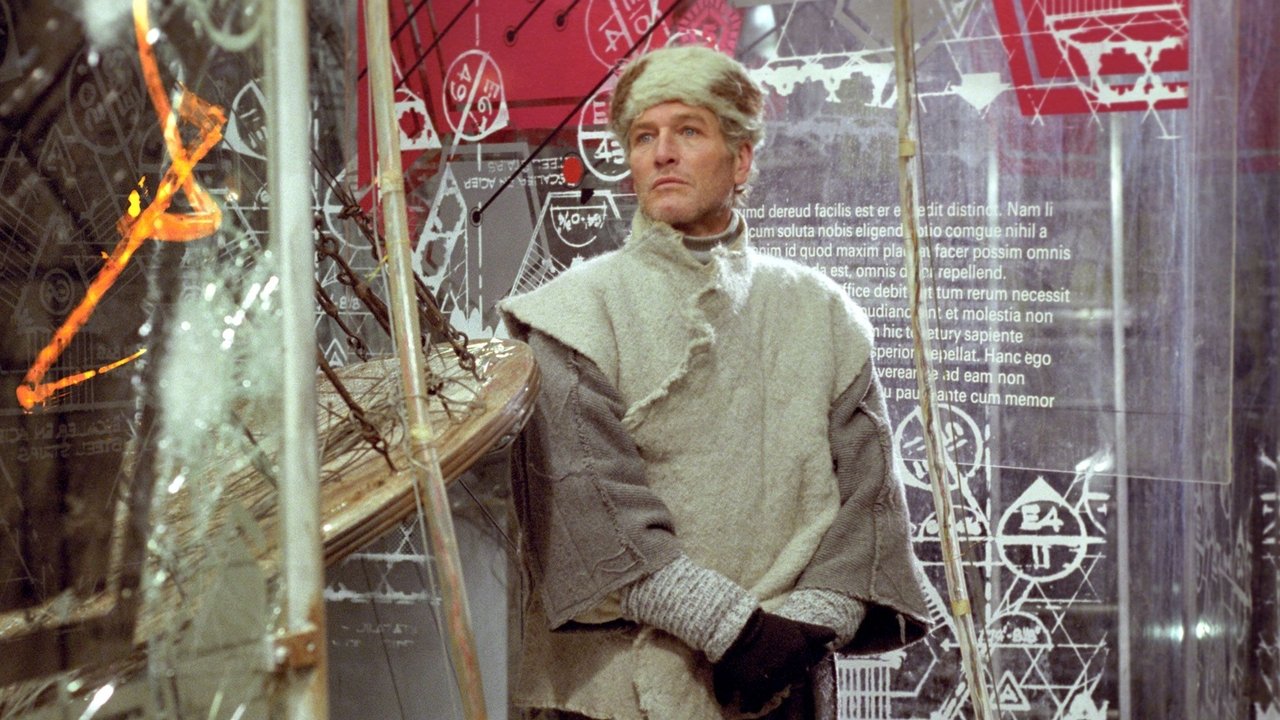
Known for sprawling ensembles and layers of overlapping dialogue in films like Nashville or MASH*, Robert Altman takes a starkly different approach here. Quintet is glacial in pace, minimalist in dialogue, and claustrophobic despite its seemingly vast, frozen exteriors. Filming took place in Montréal during a bitter winter, utilizing the striking, modular architecture of the Expo 67 site, particularly Moshe Safdie's Habitat 67 complex. The location wasn't just set dressing; it was the film's soul. Reportedly, temperatures plummeted far below freezing, a brutal reality that seeped into every frame, etching itself onto the faces of the actors. You don't just see the cold; you feel it deep in your bones. This film feels less like a typical Altman piece and more like a European art-house meditation on entropy, filtered through a uniquely American cinematic lens.
Newman Against the Void
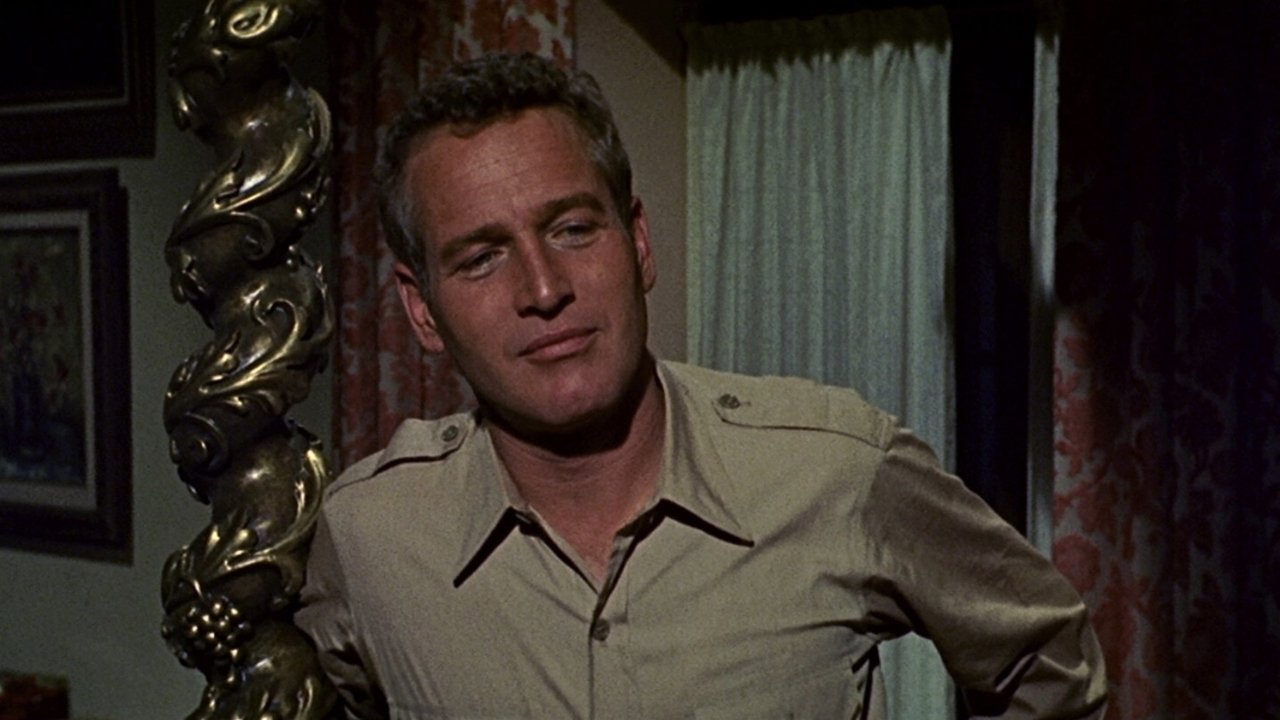
Anchoring this bleak vision is Paul Newman, an icon often associated with charismatic rebels or charming anti-heroes. As Essex, he’s stripped bare, a man defined by quiet endurance rather than swagger. His piercing blue eyes, usually conveying warmth or defiance, here reflect the surrounding ice – watchful, wary, and increasingly hollowed out by the nihilism he encounters. It’s a performance of stoic physicality, conveying more through weary posture and strained glances than through words. While Newman himself was apparently perplexed by the film's deliberate ambiguity and reportedly wasn't fond of the final product, his commitment grounds the abstract dread. Surrounding him are compelling European actors like the great Vittorio Gassman as the game's enigmatic orchestrator St. Christopher, and Fernando Rey as the weary Grigor, adding to the film's strangely detached, international feel.
Whispers from the Set
Quintet was not an easy film to make, nor was it an easy sell. On a budget of around $4 million, it barely made a ripple at the box office, confounding critics and audiences alike who perhaps expected something more conventional from Altman and Newman. The script, co-written by Altman and Lionel Chetwynd (who later penned The Hanoi Hilton), keeps its cards close to its chest, particularly regarding the specifics of the game – a five-player elimination contest where the 'fifth man' is the target. Is it state-sanctioned population control? A nihilistic sport for the terminally bored? A metaphor for natural selection in a dying world? The film refuses easy answers, a choice that frustrated many but arguably deepens its unsettling power. Some find its deliberate pace maddening, its plot obscure; others are mesmerized by its visual poetry and uncompromising mood.
The Unshakeable Cold
Watching Quintet today, especially if you first encountered it on a well-worn VHS tape, remains a unique experience. It’s a challenging, often opaque film that demands patience and rewards immersion. The score by Tom Pierson is dissonant and sparse, perfectly complementing the stark visuals. The production design is masterful in its depiction of a future built from the frozen remnants of the past. It doesn’t offer the thrills of a typical sci-fi dystopia or the clear narrative drive of a thriller. Instead, it offers something rarer: a mood piece, an existential tone poem about the end of things. Did the sheer bleakness turn you away back then, or did its strange, icy beauty pull you in? It's a film that lingers, not through jump scares or plot twists, but through the pervasive, unshakeable chill it conjures.
Rating: 6/10
Quintet is undeniably flawed if judged by conventional metrics – its narrative is elliptical, its pacing funereal, and its characters often feel like pawns in a larger, colder game. Yet, its power lies precisely in its uncompromising artistic vision. The atmosphere is masterfully crafted, the visuals are hauntingly beautiful, and its sheer audacity commands respect. It’s a film that fails commercially but succeeds atmospherically, earning its score through its unforgettable mood and the chilling commitment to its bleak premise, even if the journey is often as frigid and challenging as the landscape it depicts.
It remains one of Robert Altman's most divisive and perhaps misunderstood works, a stark reminder from the late 70s that sometimes the most unsettling futures aren't filled with explosions, but with silence, snow, and the quiet desperation of a game with no winners. A true deep-freeze cult curio from the shelves of VHS Heaven.