Okay, pull up a chair, maybe crack open something cold. Let's talk about a film that feels like finding a forgotten mixtape from the early 90s – familiar yet slightly strange, cool in a way that wasn't trying too hard, and definitely unlike anything else playing at the multiplex back then. I'm talking about Hal Hartley's 1992 offering, Simple Men. This wasn't the kind of tape you'd grab for explosions or car chases; it was more likely nestled in the "Independent" or "Drama" section of the video store, promising something… different. And different it certainly was.
A Certain Kind of Long Island Rhythm
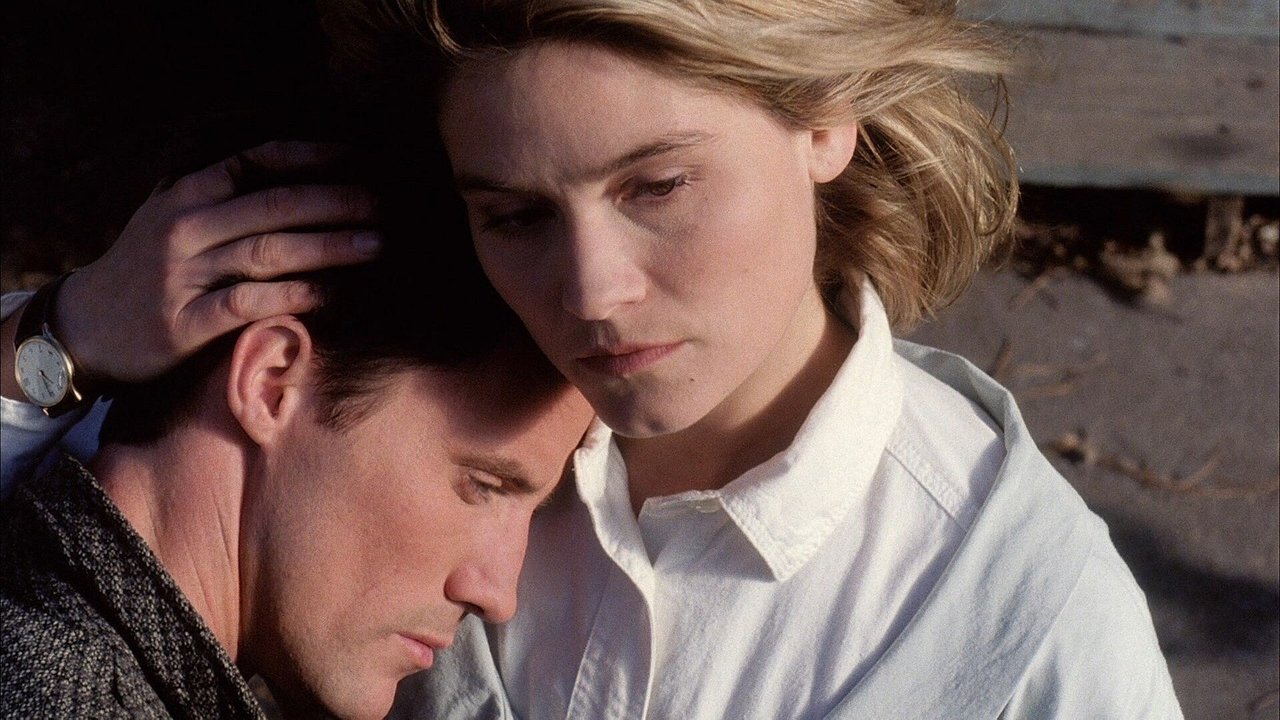
What strikes you first, revisiting Simple Men now, is its unmistakable rhythm. It’s a Hal Hartley joint through and through, carrying that signature blend of deadpan delivery, precisely framed shots that linger just a beat longer than expected, and dialogue that pirouettes between the profound and the profoundly mundane. The film follows brothers Bill (Robert John Burke) and Dennis (Bill Sage). Bill’s on the run after his girlfriend double-crossed him during a robbery, nursing a potent distrust of women. Dennis, cerebral and recently dumped, is fixated on finding their estranged father, a legendary radical bomber from the 60s, supposedly hiding out on Long Island. Their quest, however, unfolds less like a thriller and more like an existential road trip punctuated by philosophical non-sequiturs and unexpected connections. It's a film that asks, perhaps with a wry smile, what exactly we're all searching for, and whether finding it would even make a difference.
Dancing to a Different Beat

The performances are key to navigating Hartley’s stylized world. Robert John Burke, who Hartley fans would know from The Unbelievable Truth (1989), brings a wounded machismo to Bill. He's tough, cynical, yet there's a vulnerability beneath the surface, a yearning for something simpler despite his pronouncements. Opposite him, Bill Sage, in his first major role and soon to be a Hartley regular, embodies Dennis's intellectual searching, his pronouncements often masking a deeper confusion. Their interactions aren't naturalistic in the traditional sense; they speak Hartley’s distinct, almost formal language. Yet, there's an odd authenticity to it. It captures that feeling of trying to articulate complex emotions and ideas but only managing to stumble over carefully constructed sentences. It’s the sound of people thinking about how they feel, rather than just feeling it. Supporting players like Karen Sillas as the enigmatic Kate and Elina Löwensohn as the Romanian immigrant Elina further complicate the brothers' journeys, embodying different facets of trust, danger, and allure.
Indie Cred and Sonic Youth
You can practically feel the early 90s independent spirit radiating off this film. Made on a relatively modest budget (reportedly around $2 million), Simple Men premiered at the 1992 Cannes Film Festival, even competing for the prestigious Palme d'Or – a testament to its unique vision resonating beyond just niche circles. This wasn't a studio picture; it felt handcrafted, personal. Hartley, who also wrote the screenplay, had carved out a distinct authorial voice with his preceding films, The Unbelievable Truth and Trust (1990), forming an unofficial "Long Island trilogy" that explored themes of suburban disillusionment, fractured families, and the difficulty of connection. Trivia buffs might appreciate knowing that Hartley often wrote with specific actors in mind, contributing to that cohesive ensemble feel.
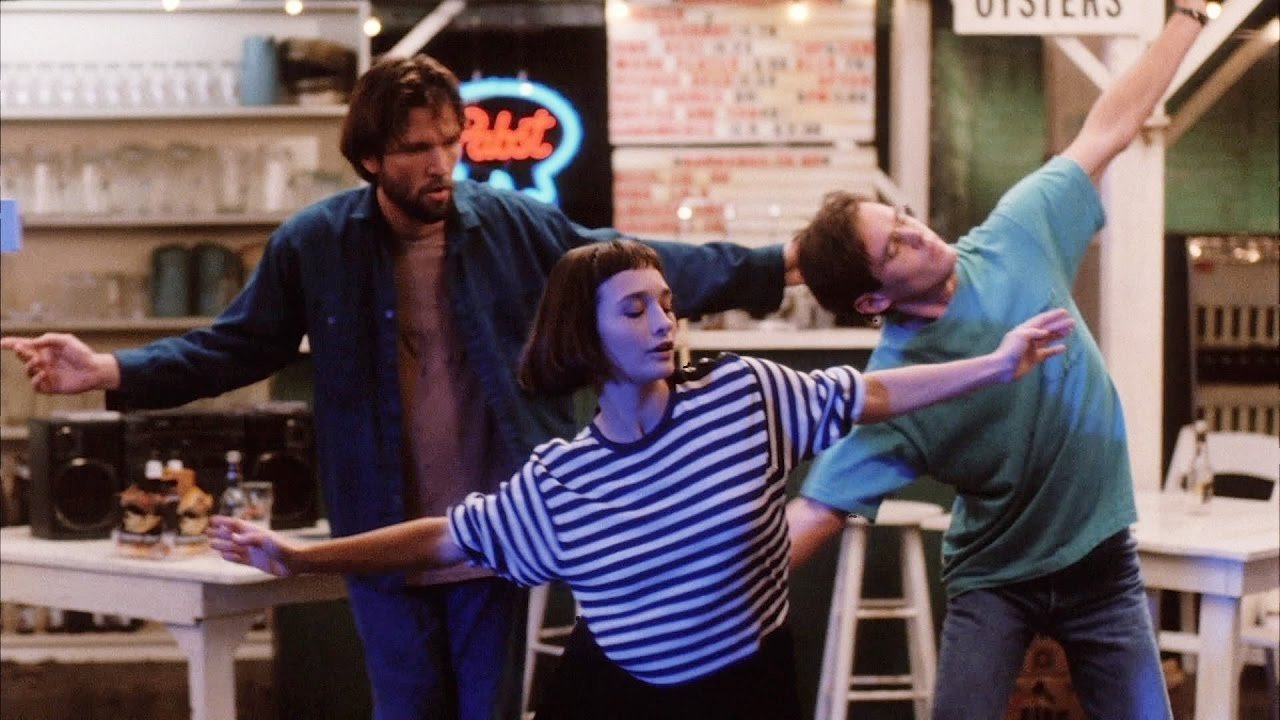

And then there’s the music. The film pulses with tracks from indie darlings like Yo La Tengo and, most iconically, Sonic Youth. The scene where the characters spontaneously, almost robotically, dance to Sonic Youth’s "Kool Thing" in a diner is legendary. It’s awkward, strangely beautiful, and perfectly encapsulates the film's blend of alienation and tentative connection. It’s a moment that feels purely cinematic, born from Hartley’s specific sensibility – you wouldn’t find anything quite like it in a mainstream Hollywood release of the era. That scene alone felt like a secret handshake for anyone discovering this kind of cinema on VHS.
Beneath the Deadpan Surface
While the quirky dialogue and stylized visuals are immediately apparent, Simple Men lingers because of the questions it quietly poses. The search for the elusive father becomes a metaphor for a broader search for meaning, for understanding the past and navigating a present filled with uncertainty. Bill’s misogyny and Dennis’s intellectualism are presented as flawed coping mechanisms, ways of structuring a world that feels fundamentally chaotic. Does finding their father, or falling in love, or figuring anything out actually lead to resolution? Hartley seems skeptical, suggesting that perhaps the journey, the asking of the questions, is the point itself. It avoids easy answers, leaving you chewing on its ambiguities long after the tape clicked off.
It wrestles with ideas of masculinity, betrayal, and the possibility (or impossibility) of genuine trust in relationships. What does it mean to be a "simple man" in a complicated world? Is simplicity even attainable, or just another carefully constructed illusion?
The Verdict
Simple Men isn't a film that shouts; it murmurs, observes, and occasionally smirks. It requires a certain patience, an attunement to its peculiar frequency. For those who connected with Hal Hartley's unique worldview back in the day, revisiting it is like catching up with an old, thoughtful friend. It's a snapshot of a specific moment in American independent filmmaking, confident in its eccentricities and unafraid to be philosophical without being pretentious. It might not be for everyone, especially those seeking conventional narrative payoffs, but its dry wit, melancholic charm, and understated intelligence hold up remarkably well. It perfectly captured that feeling of being young, smart, slightly lost, and trying to make sense of it all, one carefully worded sentence and indie rock track at a time.
Rating: 8/10
Final Thought: It's a film that reminds you that sometimes the most profound journeys are the ones happening inside, even when all you seem to be doing is driving around Long Island looking for a ghost. A true gem from the golden age of indie VHS discoveries.