There's a certain kind of quiet devastation that lingers long after the credits roll on Pen Densham's 1996 adaptation of Moll Flanders. It’s not the sprawling, witty, and often morally ambiguous journey Daniel Defoe penned in the 18th century. Instead, what landed on our rental shelves, often nestled between sweeping romances and gritty thrillers, was something different: a film that wears its heart, bruised and battered, squarely on its sleeve, anchored by a performance of staggering vulnerability from Robin Wright. Forget the picaresque romp; this is a dive into the abyss of survival, seen through eyes that refuse to lose their light entirely.
A World Away from the Page
Let’s be clear: if you grabbed this VHS expecting a faithful retelling of Defoe’s classic, you might have felt a jolt. Director and writer Pen Densham, perhaps more familiar to us then as a producer and co-writer on Robin Hood: Prince of Thieves (1991), took considerable liberties. He jettisoned much of the novel's episodic structure and Moll’s calculating pragmatism, opting instead for a narrative framed by memory and centred on a quest for belonging and redemption. This transformation was anchored by the invention of Hibble, played with characteristic gravitas by Morgan Freeman, a character who serves as both Moll’s confidant and the audience's guide through her harrowing recollections. Some critics at the time cried foul, missing Defoe’s sharper edges, but Densham’s choice creates a different kind of resonance – one focused less on cunning survival and more on the enduring human spirit against crushing odds.
The Unbreakable Gaze of Robin Wright
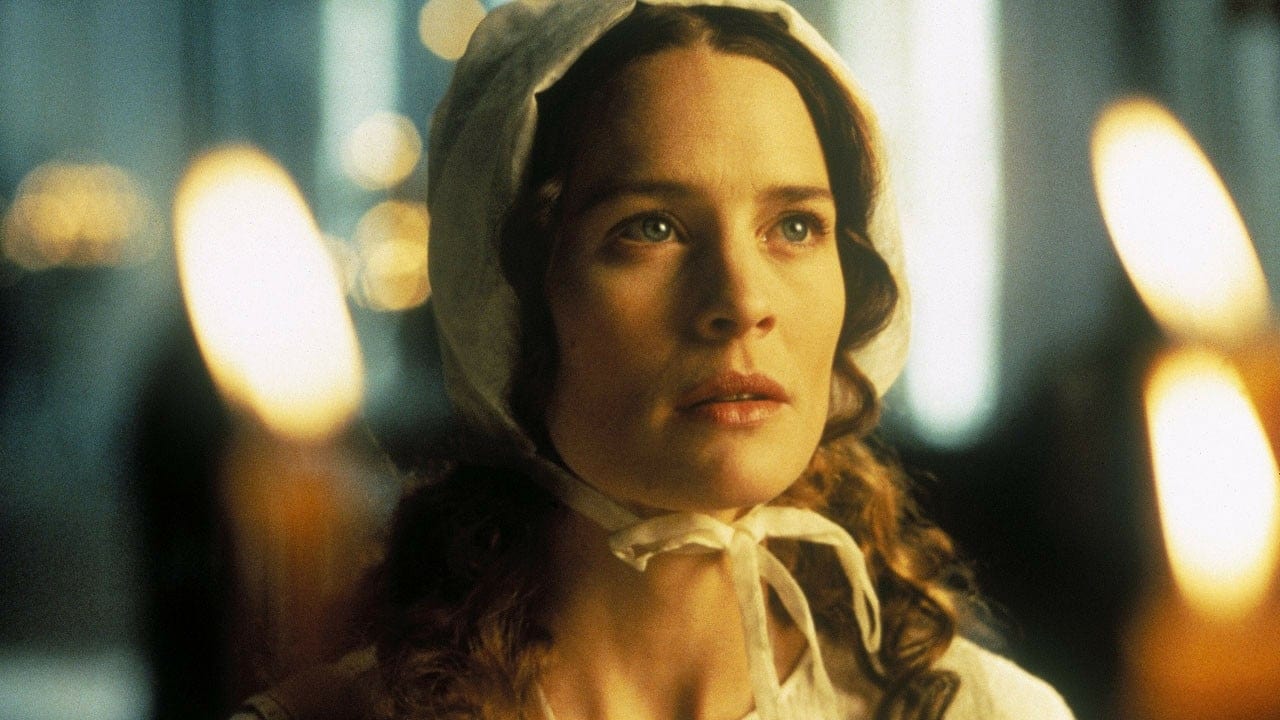
What truly elevates this Moll Flanders beyond a mere historical melodrama is Robin Wright. Fresh off roles like Buttercup in The Princess Bride (1987) and Jenny in Forrest Gump (1994), this felt like a conscious step into darker, more demanding territory. She embodies Moll not as a charming rogue, but as a woman forged in fire. Born in Newgate Prison, passed from pillar to post, exploited and betrayed – Wright carries the weight of this existence in her posture, her haunted eyes, and the flicker of defiance that never quite dies. There's a raw, unvarnished quality to her portrayal; she makes Moll's desperation palpable, her brief moments of joy heartbreakingly fragile. You see the calculations flicker behind her gaze, yes, but they feel less like cold strategy and more like the frantic moves of someone perpetually backed into a corner. It’s a performance that demands empathy, forcing us to confront the brutal realities faced by women without means in that era. Doesn't her struggle, in some ways, echo the impossible choices people still face when stripped of opportunity?
Atmosphere of Authenticity
The film doesn’t shy away from the grime and misery of 18th-century London. Densham and his team craft a world that feels tangible – the mud, the squalor of the streets, the stark interiors of brothels and prisons. This isn't the polished, drawing-room version of the past often seen in period pieces. There’s a damp chill that seems to permeate the screen, reflecting the coldness of the society Moll navigates. The production, filmed largely in Ireland, makes effective use of its locations to convey both the harshness of urban life and the fleeting beauty of the countryside where Moll experiences rare moments of peace. It reportedly cost around $15-20 million – a respectable sum, but perhaps modest for a period piece of this scope, necessitating a focus on atmosphere over opulent spectacle, which arguably serves the story better.
Moral Anchors in a Cruel World
While Wright carries the emotional core, the supporting cast provides crucial ballast. Morgan Freeman's Hibble, though an invention, feels essential to this version of the story. He offers Moll a space for reflection, a non-judgmental ear that allows her (and the audience) to process the trauma she endures. His calm presence is a counterpoint to the chaos of Moll's life. And then there's Stockard Channing as the formidable Mrs. Allworthy, the shrewd brothel madam who offers Moll a twisted form of security. Channing brings a compelling blend of world-weariness and sharp intelligence to the role, making Mrs. Allworthy more than just a simple villain; she’s a survivor playing the hand she was dealt, albeit ruthlessly.
A Different Kind of Treasure
I remember renting this tape, maybe drawn in by the familiar faces on the cover, expecting something perhaps a bit more… adventurous? What I found instead was a film that stuck with me, precisely because it dared to be emotionally raw. It wasn't the biggest hit, earning rather modest box office returns against its budget and dividing critics who debated its faithfulness versus its emotional impact. But for those of us who connected with Robin Wright's portrayal and the film's somber beauty, it felt like uncovering a hidden gem on the video store shelf. It’s a film less about clever escapades and more about the scars left by a life lived on the margins, and the quiet, tenacious hope for something better.
Rating: 7/10
This score reflects the film's powerful central performance and its evocative, gritty atmosphere, which successfully convey the emotional weight of Moll's journey. It loses points for the significant deviation from the source material, which might disappoint purists, and a script that occasionally leans into sentimentality where Defoe was sharp. However, Robin Wright's unforgettable portrayal and the film's sincere exploration of resilience make it a noteworthy and moving piece of 90s filmmaking, distinct from its period drama contemporaries.
It leaves you pondering not just the hardships of a bygone era, but the enduring strength required to simply keep putting one foot in front of the other when the world seems determined to push you back.