It arrives not like a gentle kickoff, but like a blindside hit – a sensory explosion of colliding pads, driving rain, rapid-fire cuts, and operatic intensity. Watching Oliver Stone’s Any Given Sunday (1999) again after all these years isn’t just revisiting a movie; it’s like stepping back into the eye of a meticulously crafted storm. It’s a film that assaults the senses, demanding attention, reflecting the very chaos and pressure cooker environment of professional football it portrays. You don't simply watch it; you feel it in your bones, much like the players feel every bruising tackle.
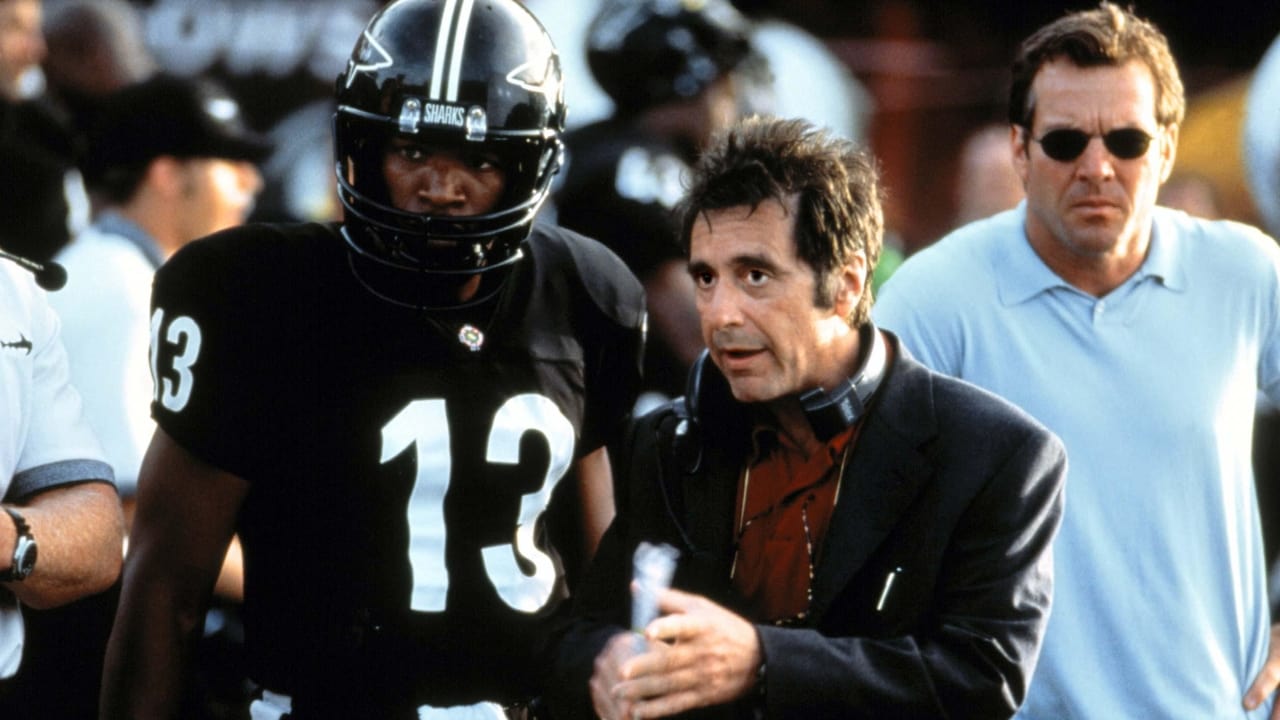
The Stone Imprint: Controlled Chaos
This is unmistakably an Oliver Stone picture, carrying the same hyper-kinetic energy and confrontational style he brought to films like JFK (1991) or Natural Born Killers (1994). Released right at the cusp of the new millennium, Any Given Sunday employs a dizzying mix of film stocks – crisp 35mm, gritty 16mm, even raw video – mirroring the multifaceted reality of the game: the slick corporate presentation, the muddy battlefield reality, the intrusive glare of the media. The editing is relentless, sometimes jarringly so, cutting between plays, locker room arguments, network commentary, and intimate character moments with a speed that mimics the adrenaline rush of competition and the fragmented nature of modern sports coverage. Does it sometimes feel excessive? Perhaps. But it’s a deliberate choice, forcing us to experience the overwhelming pressure felt by everyone involved, from the players on the field to the coach on the sideline.
Beneath the Surface: The Soul of the Game

Beyond the visceral spectacle, Any Given Sunday digs into the heart of professional sports, exposing the often-brutal intersection of passion and commerce. This isn't just about winning games; it's about contract negotiations, endorsement deals, media manipulation, and the constant, gnawing fear of obsolescence. The central conflicts aren't just opponent vs. opponent, but coach vs. owner, aging star vs. hungry rookie, tradition vs. the bottom line. It asks uncomfortable questions: What happens when the game you love becomes a business that sees you as disposable? How do you maintain integrity when fame and fortune beckon? These themes felt potent in 1999, and arguably resonate even more strongly today in our hyper-commercialized sporting landscape.
Warriors on the Gridiron: Standout Performances
Leading the charge is Al Pacino as Tony D'Amato, the veteran coach clinging to old-school values in a rapidly changing league. Pacino delivers a performance simmering with weariness, passion, and righteous fury. His famous locker room speech about fighting for "that inch" is legendary for a reason – it’s delivered with the raw conviction of a man who has seen it all and knows that victory, and life itself, often comes down to sheer will. It’s a moment that transcends the screen, feeling less like acting and more like a primal roar from the soul. I recall hearing that Pacino drew inspiration from coaching legends, channeling their gravitas and emotional weight.


Opposite him, Cameron Diaz, then known more for comedies like There's Something About Mary (1998), delivers a surprisingly sharp and effective performance as Christina Pagniacci, the pragmatic, ambitious new team owner. She embodies the cold, calculating business side of the sport, inheriting the team from her father and determined to modernize it, even if it means clashing with D'Amato's deeply ingrained methods. Her portrayal avoids caricature, presenting a formidable, intelligent counterpoint to D'Amato's traditionalism.
Then there's the dynamic between the quarterbacks. Dennis Quaid, no stranger to playing athletes after The Right Stuff (1983), brings a palpable sense of wounded pride and physical fragility to Jack 'Cap' Rooney, the aging legend facing the end of his career. His counterpart, Jamie Foxx as Willie Beamen, is a revelation. In a star-making turn, Foxx, who impressively played quarterback in high school, captures the electrifying talent, dangerous arrogance, and eventual vulnerability of a third-stringer thrust into the spotlight. The tension between these two characters encapsulates the film's core themes of legacy, ambition, and the unforgiving nature of the game. Adding further grit are strong supporting turns from James Woods as the cynical team doctor, LL Cool J as the loyal running back (who reportedly actually knocked Foxx out during one intense scene!), and a host of others, including Matthew Modine and Ann-Margret.
Retro Fun Facts: Building the League
The film’s authenticity is bolstered by its incredible roster of real-life football figures in cameos – legends like Jim Brown, Lawrence Taylor, Dick Butkus, and Johnny Unitas populate the sidelines and commentary booths. This level of detail was necessary partly because the NFL famously refused to cooperate with the production, denying Stone the use of real team names or logos. This forced the filmmakers to create the entirely fictional Associated Football Franchises of America (AFFA), complete with its own distinct team identities (Go Sharks!) and history, adding a layer of world-building that feels surprisingly robust. Made on a hefty $55 million budget, it pulled in around $100 million worldwide – a respectable sum, showing audiences were hungry for this kind of intense, adult sports drama. Stone's decision to shoot on multiple formats wasn't just stylistic flair; it was also a way to visually differentiate the various facets of the football world he was depicting.
The Final Whistle

Any Given Sunday is a loud, messy, sprawling, and deeply felt film. It's Oliver Stone operating at peak intensity, throwing everything at the screen – sometimes bordering on sensory overload, but always with purpose. It captures the brutality, the beauty, the business, and the human cost of professional football like few films before or since. The performances, particularly from Pacino and Foxx, are electrifying, anchoring the operatic scope with genuine human emotion. Watching it now, on the other side of two more decades of sports evolution, its portrayal of the clash between athletic purity and corporate machinery feels remarkably prescient. It may not be subtle, but its power is undeniable.
Rating: 8/10 - This score reflects the film's visceral impact, powerhouse performances (especially Pacino and Foxx's breakout), and ambitious scope in tackling the complexities of modern professional sports. Stone’s signature hyper-kinetic style perfectly matches the subject matter, even if it occasionally borders on overwhelming. The lack of NFL cooperation ultimately didn't hinder its authentic feel, thanks to clever world-building and numerous cameos. It earns its points for sheer energy, thematic depth, and unforgettable moments like "the inches speech," even if its relentless intensity isn't for everyone.
It leaves you breathless, maybe a little bruised, pondering the price of glory long after the credits roll. What really matters more – the game, or the business surrounding it? Any Given Sunday suggests the battle for that answer is fought every single down.