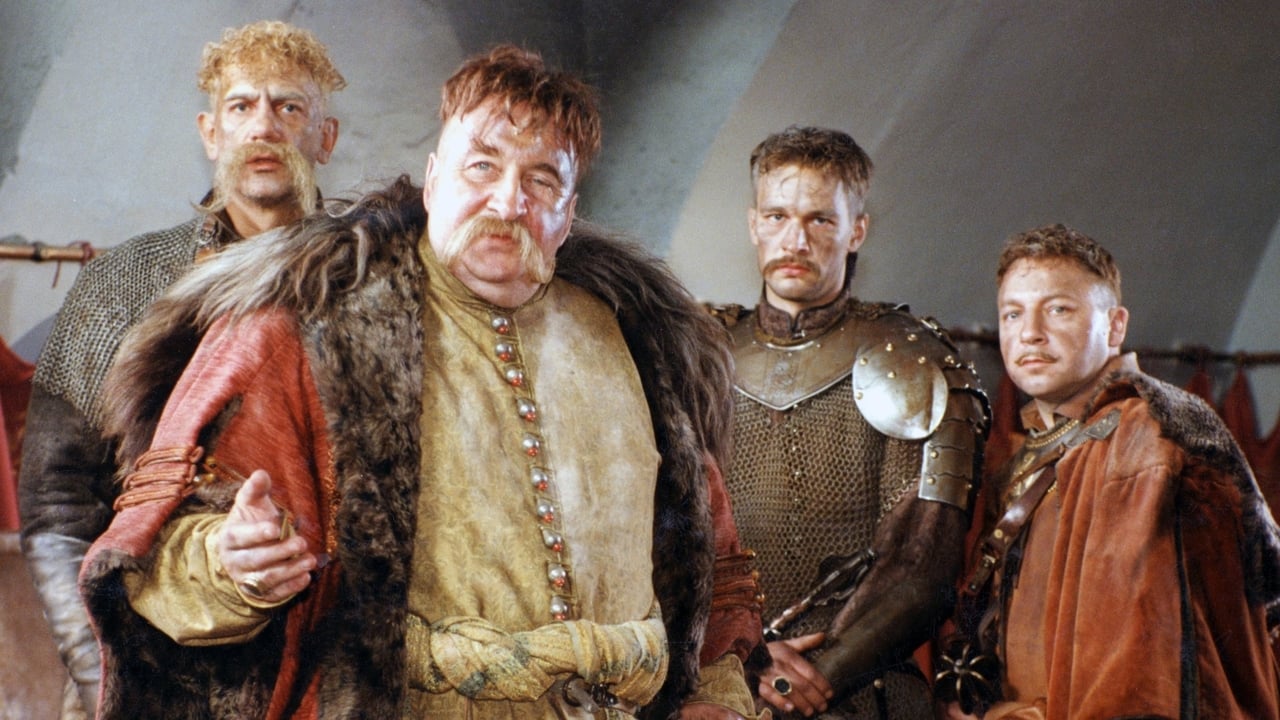
It arrived just as the twilight of the VHS era deepened, a monumental clash of steel and sentiment roaring out of Poland. Jerzy Hoffman's With Fire and Sword (Polish: Ogniem i Mieczem) from 1999 wasn't the kind of film typically found nestled between the latest Hollywood actioners at the local video store, at least not here in the States. Yet, discovering it, perhaps a little later on a borrowed tape or an early DVD, felt like unearthing a treasure chest – overflowing, ambitious, and deeply rooted in a history and literary tradition many of us hadn't encountered before. It carries the weight and grandeur of epics we knew, but speaks with a distinctly Slavic voice.
Echoes of a Nation's Saga
To understand With Fire and Sword, you have to grasp the significance of Henryk Sienkiewicz's novel, the first part of his revered Trilogy. For Poland, this isn't just historical fiction; it's foundational myth-making, chronicling the turbulent 17th-century Cossack uprising led by Bohdan Khmelnytsky against the Polish-Lithuanian Commonwealth. Director Jerzy Hoffman had already tackled the other two books decades earlier – Colonel Wolodyjowski (1969) and the Oscar-nominated The Deluge (1974). Completing the trio with the first book last was a lifelong ambition, a Herculean task finally realized. This decades-long dedication permeates the film; it feels less like a movie and more like a national monument brought painstakingly to life.
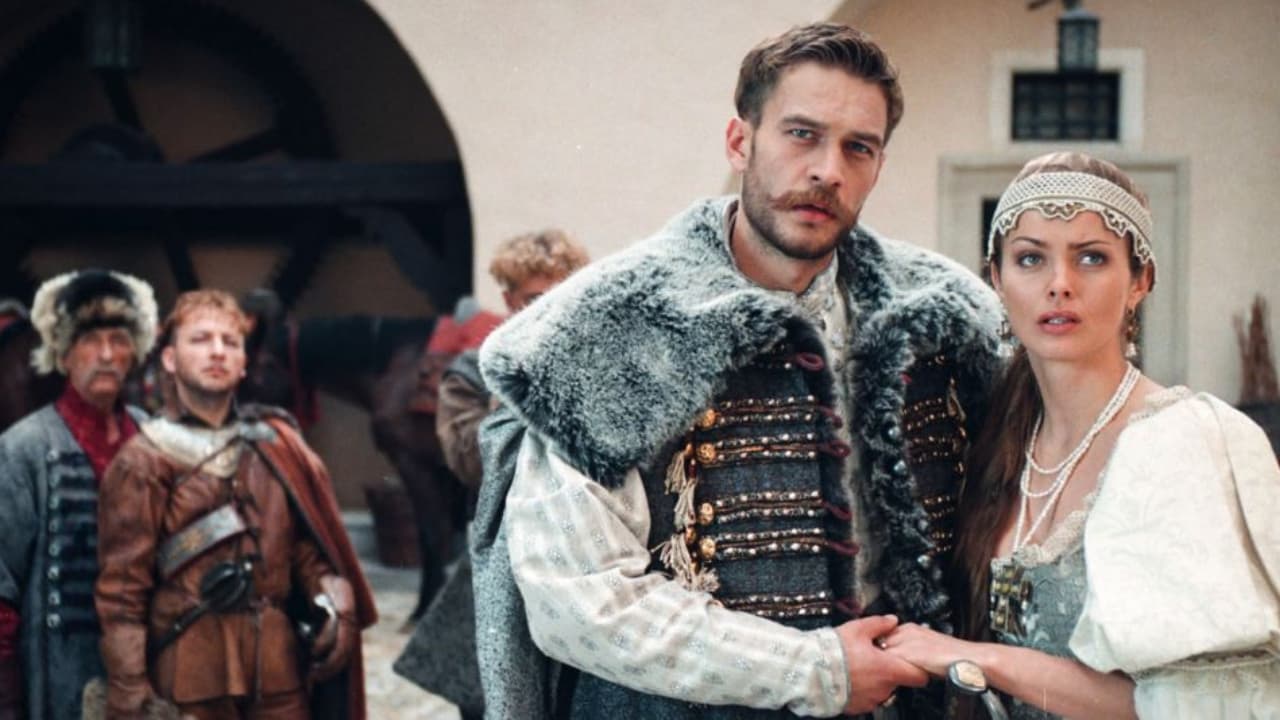
The story centers on Jan Skrzetuski (Michał Żebrowski), a noble Polish knight, and his fateful encounter with the fiery Cossack warrior Jurko Bohun (Aleksandr Domogarov). Both men fall irrevocably for the beautiful Ruthenian princess Helena Kurcewiczówna (Izabella Scorupco), setting a passionate, personal conflict against the vast canvas of war, rebellion, and shifting allegiances. It’s a classic triangle, but one charged with the brutal realities of a historical crossroads.
Grandeur on a Polish Scale
What immediately strikes you is the sheer scale. Reportedly the most expensive Polish film ever made at the time (around $8.35 million USD, a colossal sum locally, equivalent to roughly $15 million today), every złoty feels present on screen. Hoffman marshals vast armies of extras, thundering cavalry charges across sweeping landscapes, and meticulously detailed period costumes and weaponry. It evokes memories of David Lean, but with the mud and blood feeling grittier, less polished than Hollywood often delivered. The battle sequences, particularly the desperate defense of Zbarazh, are genuinely impressive, conveying the chaos and savagery of 17th-century warfare with visceral impact. There's a tangible quality to the production design, a lived-in feel that grounds the epic sweep. You can almost smell the woodsmoke and damp wool.
Interestingly, Hoffman’s decision to film this first part of the trilogy last allowed him to leverage not only a larger budget but also advancements in filmmaking techniques unavailable during his earlier adaptations. Yet, it retains an old-school sensibility, relying heavily on practical effects and stunt work rather than digital trickery, which gives it that authentic texture so many of us appreciate from the era's best epics.
Hearts at War
Amidst the spectacle, the performances anchor the human drama. Michał Żebrowski, then a rising star in Poland, embodies Skrzetuski's stoic heroism and conflicted sense of duty with quiet strength. He’s the honorable anchor in a swirling storm. Opposite him, Aleksandr Domogarov crafts a mesmerizing antagonist in Bohun. He’s not a simple villain; he's proud, passionate, fiercely loyal to his Cossack heritage, and driven by a love as intense as Skrzetuski's. Domogarov’s performance smolders with charisma and menace, making Bohun a truly compelling and tragic figure. Does his ferocity perhaps stem from a deep-seated sense of betrayal by the Commonwealth he once served?
And then there's Izabella Scorupco. Fresh off her international exposure as Natalya Simonova in GoldenEye (1995), her casting as Helena brought a touch of global recognition. She navigates a difficult role – the object of intense desire and a pawn in political games – lending Helena resilience and grace, even when the plot sometimes reduces her to needing rescue. Her presence provides a vital emotional core amidst the masculine world of war and honor codes. The chemistry between the three leads fuels the central conflict, making their personal struggles resonate against the historical backdrop.
A Different Kind of Epic
With Fire and Sword isn't without its challenges for a casual viewer. Its nearly three-hour runtime demands patience, and its intricate historical context, deeply familiar to Polish audiences, might require a bit more attention from outsiders. The pacing occasionally dips, lingering perhaps a touch too long on certain subplots or character introductions reflective of its dense source material. But isn't that part of the charm of these older, grander films? They asked you to settle in, to immerse yourself, not just consume bite-sized entertainment.
The film was a phenomenon in Poland, shattering box office records. Internationally, its reach was more limited, perhaps deemed too culturally specific or simply overshadowed by the Hollywood marketing machine. Yet, its achievement remains undeniable. Hoffman crafted a film that feels both deeply personal – a culmination of his life's work – and spectacularly epic. It's a powerful reminder that sweeping historical cinema wasn't solely the domain of English-language productions.
Rating: 8/10
This score reflects the film's immense ambition, stunning production value for its time and origin, compelling central performances (especially Domogarov's Bohun), and faithfulness to a significant piece of literature. It successfully transports the viewer to a brutal, romanticized past with remarkable scale. The deduction accounts for pacing that sometimes lags and a narrative complexity that might prove slightly dense for those unfamiliar with the historical context, preventing it from achieving universal, effortless appeal like some Hollywood counterparts. However, the sheer craft and passion on display make it a deeply rewarding experience.
With Fire and Sword might be one of the last great gasps of the truly traditional, nationally-funded historical epic before the digital age fully took hold. It stands as a testament to Jerzy Hoffman's vision and a stirring, if sometimes demanding, journey back to a world of clashing empires and hearts ablaze. What lingers most is that potent mix of grandeur and grit, a distinctly Polish epic well worth seeking out.