The image lingers, doesn't it? A field of vibrant flowers, meticulously tended, suddenly juxtaposed against the grainy, terrifying news reports from a world away. That jarring shift is the heart of Élie Chouraqui’s Harrison’s Flowers (2000), a film that arrived just as the VHS era was fading but carried the weight and intensity often found in the dramas we discovered tucked away on rental shelves. It’s a film that asks a brutal question: How far would you go for love, especially when the path leads directly into the inferno?
A World Torn Apart
The premise is deceptively simple on the surface. Sarah Lloyd (Andie MacDowell) lives a comfortable life in suburban America with her Pulitzer Prize-winning photojournalist husband, Harrison (David Strathairn), and their children. Harrison is renowned for his stunning nature photography, particularly his beloved flowers, a stark contrast to the conflict zones he occasionally covers. When he accepts one last assignment in war-torn Yugoslavia in late 1991, he vanishes during the brutal Siege of Vukovar. Everyone believes him dead. Everyone except Sarah. Driven by an unshakeable conviction – perhaps bordering on delusion – she packs a bag, leaves her children with family, and flies into the chaos, determined to find him. It’s a decision that feels simultaneously reckless and profoundly human.
Through the Lens, Darkly
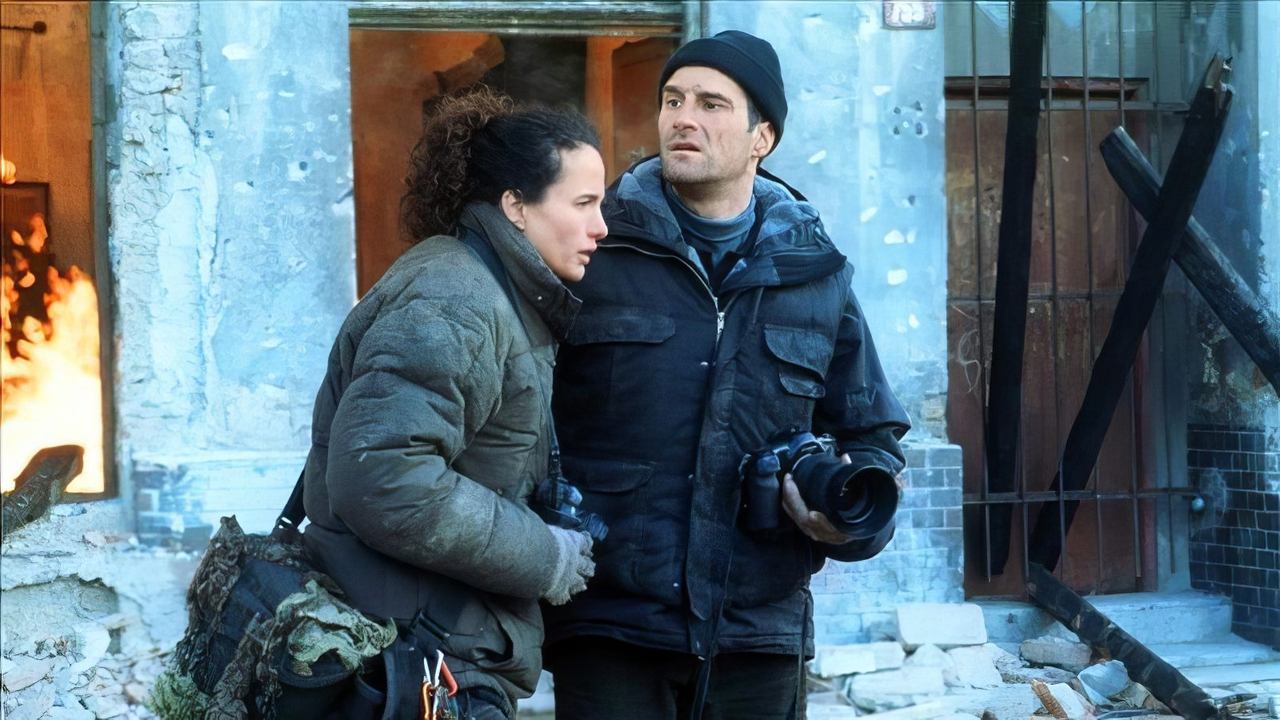
What follows is an uncompromising plunge into the hellscape of Vukovar. Chouraqui, who also co-wrote the script, doesn't shy away from the visceral horror. This isn't a sanitized Hollywood portrayal of conflict; it's muddy, bloody, and terrifyingly chaotic. The streets are rubble, the air thick with smoke and the sounds of shelling, snipers are an omnipresent threat, and neighbours turn on neighbours in brutal acts of ethnic violence. The film's power lies in its almost documentary-like feel at times, capturing the disorientation and suddenness of death. We see the war largely through Sarah's initially naive eyes, but also through the weary, cynical lenses of the seasoned war photographers she eventually falls in with – Yeager Pollack (Elias Koteas), Marc Stevenson (Brendan Gleeson), and the younger, ambitious Kyle Morris (Adrien Brody). Their performances are key to the film's authenticity. Koteas brings his signature intensity, Gleeson radiates a battered humanity, and Brody, in a role preceding his Oscar win for The Pianist (2002), captures the adrenaline-junkie aspect of the job mixed with a dawning horror. They embody the immense risks taken by those who bear witness.
An Unlikely Journey, An Unlikely Star
Casting Andie MacDowell, primarily known then for romantic comedies like Four Weddings and a Funeral (1994) and Groundhog Day (1993), was a bold move. Does it entirely work? Her performance is one of raw, sometimes frayed, determination. She effectively conveys Sarah’s desperate hope and gradual hardening as she witnesses unimaginable atrocities. Some might argue her character feels underprepared or acts illogically at times, yet perhaps that's the point – she’s not a soldier or a journalist, but a wife propelled by sheer force of will into a situation beyond comprehension. It's her unwavering focus, her almost tunnel-visioned love, that keeps her moving forward when any rational person would turn back. It’s a demanding role, and MacDowell commits fully, shedding her usual screen persona.
Capturing Chaos: Behind the Scenes
Bringing the Siege of Vukovar to the screen was a significant challenge. The film, a French production, was largely shot in the Czech Republic, recreating the devastated Croatian city with unsettling accuracy. Director Élie Chouraqui was reportedly deeply influenced by the work of real-life war photographers, aiming for a sense of immediacy and realism. You can feel this intent in the shaky camerawork during action sequences and the unflinching depiction of casualties. It’s interesting to note that the film’s title, Harrison’s Flowers, acts as a constant symbolic counterpoint. Those carefully cultivated blooms represent the peace, beauty, and domestic stability shattered by the conflict Harrison, and subsequently Sarah, enter. They are the 'why' behind Sarah's perilous quest – the life she is desperately trying to reclaim.
More Than Just a War Film?
While Harrison's Flowers is undeniably a harrowing war drama, it also explores the complex nature of love, grief, and denial. Is Sarah’s quest noble or naive? Is her love powerful enough to shield her, or is she simply lucky? The film doesn't offer easy answers. It forces us to confront the brutality humans are capable of, while simultaneously highlighting the extraordinary resilience of the human spirit. It also serves as a stark reminder of the dangers faced by journalists who risk everything to bring us the truth from the front lines – a theme that remains tragically relevant. Doesn't the unwavering dedication of these photographers, amidst such horror, speak volumes about the human need to document, to remember, even at immense personal cost?
I recall seeing this on a rented DVD shortly after its release, having missed it in theaters. Its intensity stayed with me far longer than many blockbusters from that period. It felt different – raw, European in its sensibilities despite the American protagonist, and unwilling to compromise its vision for comfortable viewing. It’s the kind of film that might have easily gotten lost in the shuffle, especially arriving at the tail end of the VHS boom and the dawn of DVD dominance, but its power remains undiminished.
Rating: 8/10
Harrison's Flowers is a tough watch, undeniably. Its graphic depiction of the Yugoslav Wars is brutal and often disturbing. However, it’s also a deeply felt film anchored by committed performances, particularly from the supporting cast of journalists and a challenging central turn by Andie MacDowell. The direction is immersive, effectively plunging the viewer into the chaos and desperation of Vukovar. While some may question the plausibility of Sarah's journey, her unwavering determination provides a powerful, if harrowing, emotional core. The film earns its 8 for its unflinching portrayal of war's reality, its tribute to the courage of war correspondents, and its exploration of love as a fierce, driving force against overwhelming darkness.
It’s a film that doesn't offer easy resolutions or comforting messages, but lingers long after the credits roll, leaving you to ponder the thin veil between civilization and chaos, and the extraordinary lengths people will go to for those they love. A potent reminder, discovered perhaps on a late-night rental run, of cinema's power to transport us not just to worlds of fantasy, but into the stark, challenging realities of our own.