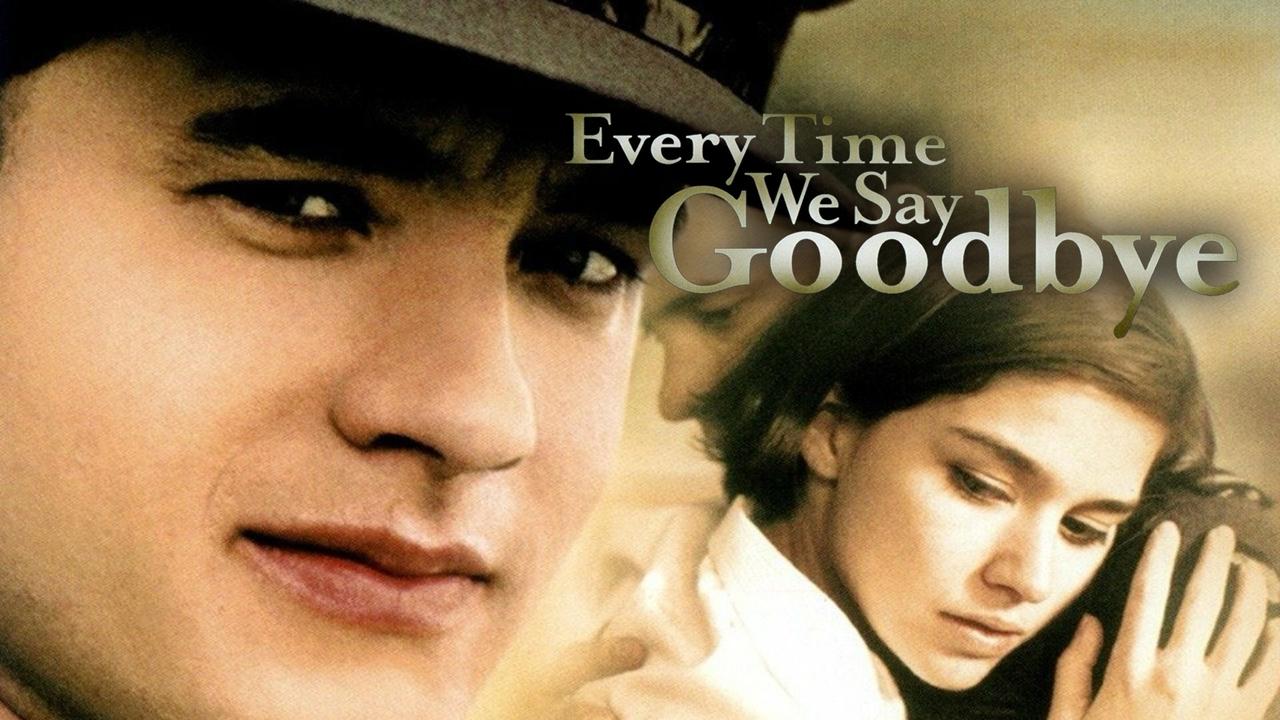
It strikes me now, looking back through the hazy glow of countless hours spent in front of a flickering CRT, that sometimes the most interesting finds weren't the blockbusters emblazoned across the video store walls, but the quieter films nestled on the shelves, hinting at something different. Every Time We Say Goodbye (1986) was one such tape for me. Seeing Tom Hanks' familiar face on the cover, fresh off comedies like Splash (1984) and Bachelor Party (1984), might have set certain expectations. What unfolded, however, was a detour, a gentle exploration of romance against a backdrop far removed from the usual 80s cinematic landscape.
### A Different Kind of Uniform
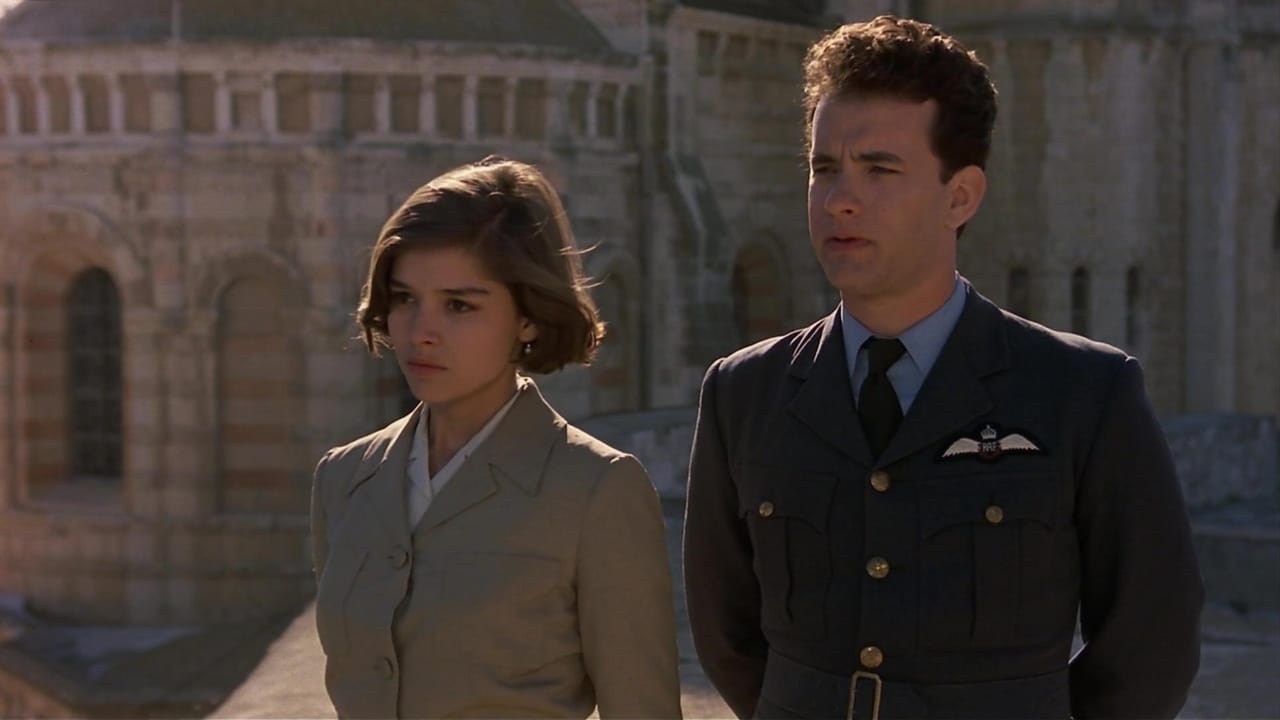
The film transports us to Jerusalem in 1942. The world is at war, and the ancient city itself feels like a character – steeped in history, simmering with unspoken tensions. Into this setting arrives David Bradley (Tom Hanks), a charming American pilot grounded by injury while serving with the RAF. He’s an outsider, navigating a world bound by traditions he doesn’t understand. It’s here he meets Sarah Perrara (Cristina Marsillach), a young woman from a strict Sephardic Jewish family. Their connection is immediate, magnetic, but fraught with the weight of cultural divides and familial expectations. This isn't the high-stakes drama of Casablanca; it's a more intimate portrayal of forbidden love blooming in the shadow of global conflict.
### Bridging Worlds, One Glance at a Time
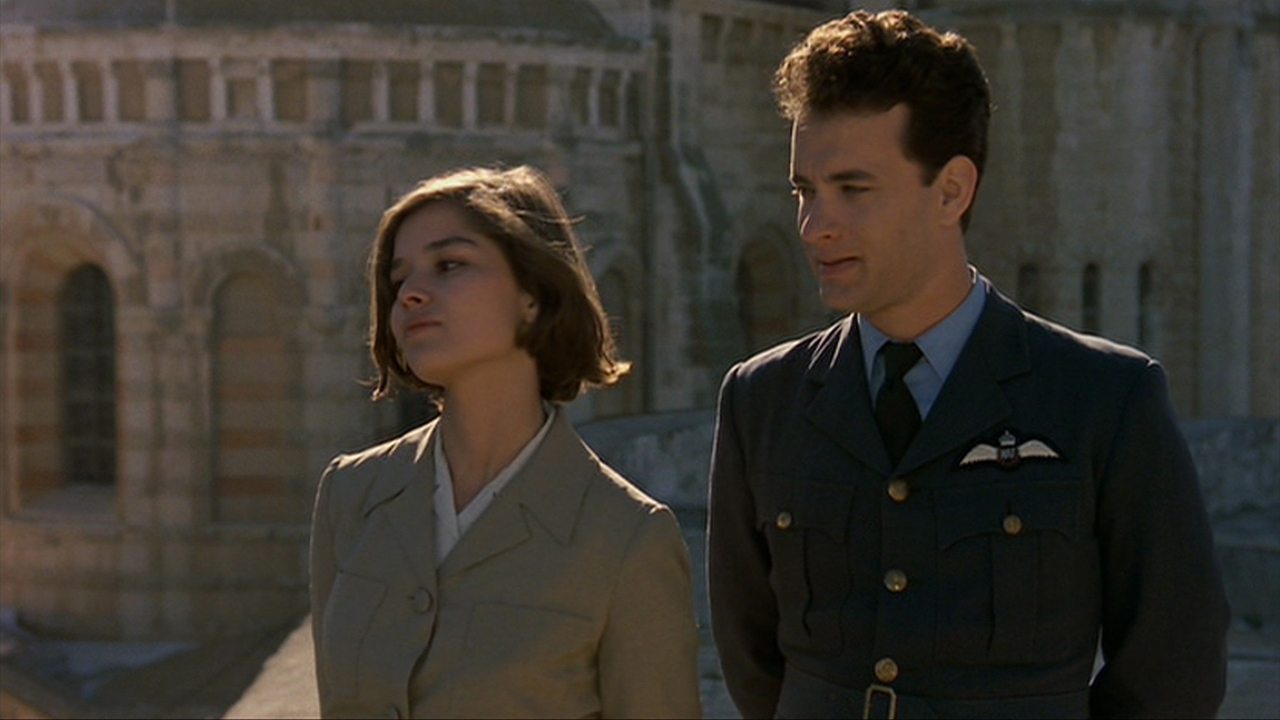
What truly anchors the film is the earnestness of its central performances. This was Hanks stepping away from the lovable goofball persona that had defined his early career. You see him reaching for something more serious, portraying David's earnest affection and frustration with a sincerity that foreshadows the dramatic weight he would later command. He’s not yet the Hanks of Philadelphia (1993) or Forrest Gump (1994), but the blueprint is there – that inherent likability grounding a character wrestling with deeper emotions. It’s fascinating to watch him test these waters.
Opposite him, Cristina Marsillach, a Spanish actress in one of her few English-language roles, brings a quiet intensity to Sarah. She beautifully conveys the internal conflict of a young woman drawn to a world beyond her own, yet deeply tied to her heritage and family. The chemistry between Hanks and Marsillach feels gentle and believable, built on stolen moments and tentative gestures rather than grand pronouncements. Their relationship becomes a microcosm of the larger cultural encounter, a space where understanding, however difficult, feels possible.
### The Quiet Craft of Moshé Mizrahi
Direction by Moshé Mizrahi, an Israeli filmmaker who had already won an Oscar for Best Foreign Language Film with Madame Rosa (1977), lends the film an authentic sense of place. Shot on location in Jerusalem, the city's textures – ancient stone walls, bustling marketplaces, quiet courtyards – feel lived-in and real. Mizrahi avoids sensationalism, opting for a patient, observational style that allows the cultural nuances and the central romance to breathe. The film doesn't shy away from depicting the richness and rigidity of Sarah's Sephardic community, treating its traditions with respect even as they form the primary obstacle to the lovers' happiness.
Retro Fun Facts: It's worth noting the effort Hanks put into the role, reportedly learning some basic Hebrew and Ladino (the Judaeo-Spanish language spoken by Sarah's family) to add authenticity to his interactions. This dedication hints at the serious actor waiting to fully emerge. Furthermore, the film itself was a bit of an anomaly – an Israeli production aimed at an international audience, relying on Hanks' burgeoning star power. It didn't set the box office alight, earning back only a fraction of its budget, perhaps because audiences weren't quite ready for this quieter, more dramatic Hanks, or maybe the specific cultural setting felt too niche for mainstream tastes at the time. Yet, its existence speaks volumes about Hanks' desire to stretch beyond comedy even then.
### More Than Just Romance
Beneath the surface of the love story, Every Time We Say Goodbye touches on themes of identity, belonging, and the constraints of tradition. How much of ourselves are we willing to sacrifice for love? Can two people from vastly different worlds truly bridge the gap between them, especially when familial and societal pressures are so immense? The film doesn't offer easy answers, presenting the dilemma with a sensitivity that feels quite mature for its time. The wartime setting adds another layer, a constant reminder of uncertainty and the preciousness of connection in a world teetering on the brink. It asks us to consider what truly matters when faced with profound separation and the potential for loss. Doesn't that underlying fragility resonate even now?
It’s not a perfect film; the pacing can sometimes feel leisurely, and the narrative occasionally leans into familiar romantic tropes. But its gentle spirit, the authentic setting, and the earnest performances – particularly seeing Hanks in this transitional phase – give it a unique charm. It’s a film that invites reflection rather than demanding attention, a quiet interlude in the often-boisterous landscape of 80s cinema.
***
Rating: 6.5/10
Justification: The film earns points for its authentic atmosphere, earnest performances (especially capturing Hanks at a key career moment), and sensitive handling of cultural themes. The location shooting and Mizrahi's gentle direction add value. However, the somewhat predictable plot and occasionally slow pacing prevent it from reaching greater heights. It’s a worthwhile, heartfelt effort, but lacks the dramatic punch or narrative innovation to be considered a true classic.
Final Thought: Every Time We Say Goodbye remains a fascinating curio – a quiet detour on the road to superstardom for Hanks, and a reminder that even amidst the neon glow of the 80s, there were films exploring softer shades of human connection and cultural divides, waiting patiently on the video store shelf.