The flickering static clears, and the opening chords of Alice Cooper's "I Am the Future" blast through the speakers. It’s not just a song; it’s a mission statement, a sneering promise delivered over images of a high school that looks less like a place of learning and more like a warzone. This isn't nostalgia filtered through rose-tinted glasses; this is the raw, uncomfortable, and still potent jolt of Mark L. Lester's Class of 1984 (1982), a film that felt dangerous spilling out of the VCR onto the late-night glow of a CRT screen. It captured a specific anxiety of the era – the fear that the kids were not alright – and cranked it up to a level of punk-rock nihilism that leaves a mark.
Welcome to Hell Week
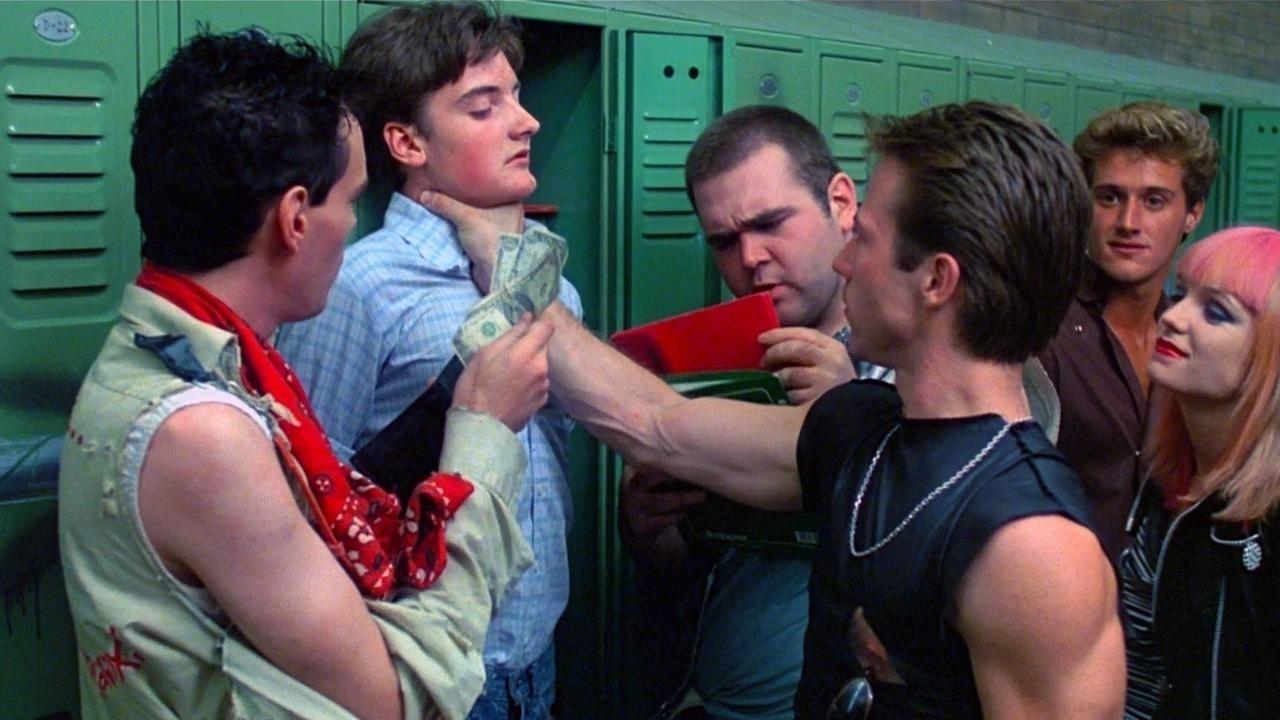
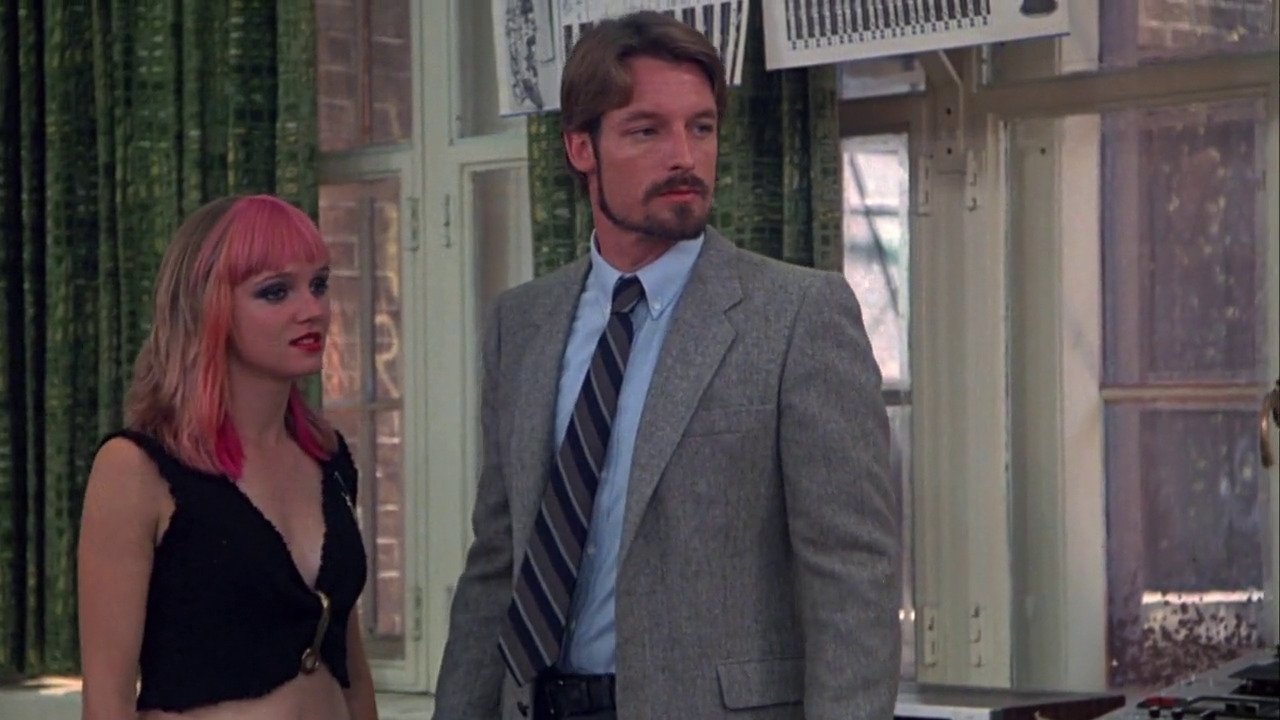
The premise is deceptively simple, almost a throwback to earlier "troubled school" dramas like Blackboard Jungle (1955). Andrew Norris (Perry King), a bright-eyed music teacher, arrives at the inner-city Lincoln High, eager to make a difference. What he finds is a crumbling institution lorded over by a gang of psychotic, drug-dealing punks led by the unnervingly magnetic Peter Stegman (Timothy Van Patten). Stegman isn't just a bully; he's a charismatic sociopath, a chillingly intelligent orchestrator of chaos who commands his followers with an icy stare and a penchant for extreme violence. Van Patten, in a career-defining role, imbues Stegman with a terrifying blend of youthful arrogance and soulless menace. Doesn't that performance still feel remarkably unsettling, even amidst the era's sometimes cartoonish villains?
The film wastes no time establishing the suffocating atmosphere. Lincoln High is depicted as a decaying battleground: graffiti everywhere, metal detectors at the doors (a detail that felt futuristic then, depressingly commonplace now), and teachers who are either shell-shocked veterans or naive newcomers like Norris. Director Mark L. Lester, who would later give us the explosive action of Commando (1985), uses the setting brilliantly. Filming largely took place at a real Toronto high school, Central Technical School, which apparently lent its authentic grit – you can almost smell the stale cigarette smoke and desperation clinging to the walls. This wasn't some stylized Hollywood version of urban decay; it felt disturbingly plausible, grounding the escalating madness in a recognizable reality.

Escalation Point
What makes Class of 1984 truly grip you, even today, is its relentless sense of escalation. Norris tries to play by the rules, to reach Stegman and his crew – Drugstore (Stefan Arngrim), Fallon (Michael J. Fox, in a small but memorable early role!), Barnyard (Keith Knight), and Patsy (Lisa Langlois) – through reason and the system. But the system is broken, impotent against Stegman's calculated cruelty. Each attempt by Norris to assert authority is met with a more vicious reprisal, pushing him further and further towards the edge. The tension isn't just about jump scares; it's the slow, agonizing crawl towards an inevitable explosion.
It's fascinating to note that one of the co-writers was Tom Holland, who would later tap into different veins of suburban horror with Fright Night (1985) and Child's Play (1988). You can see echoes of that dark sensibility here – the understanding that evil can wear a familiar, even youthful, face. The script, reportedly inspired by real accounts of increasing school violence that Lester encountered, doesn't shy away from the ugliness. There are sequences here that were genuinely shocking back in the day – the intimidation, the casual brutality, the violation of sanctuary – and they retain a nasty power. I distinctly remember renting this tape, perhaps a bit too young, and feeling that knot of dread tighten with each confrontation.

No Future? No Problem.
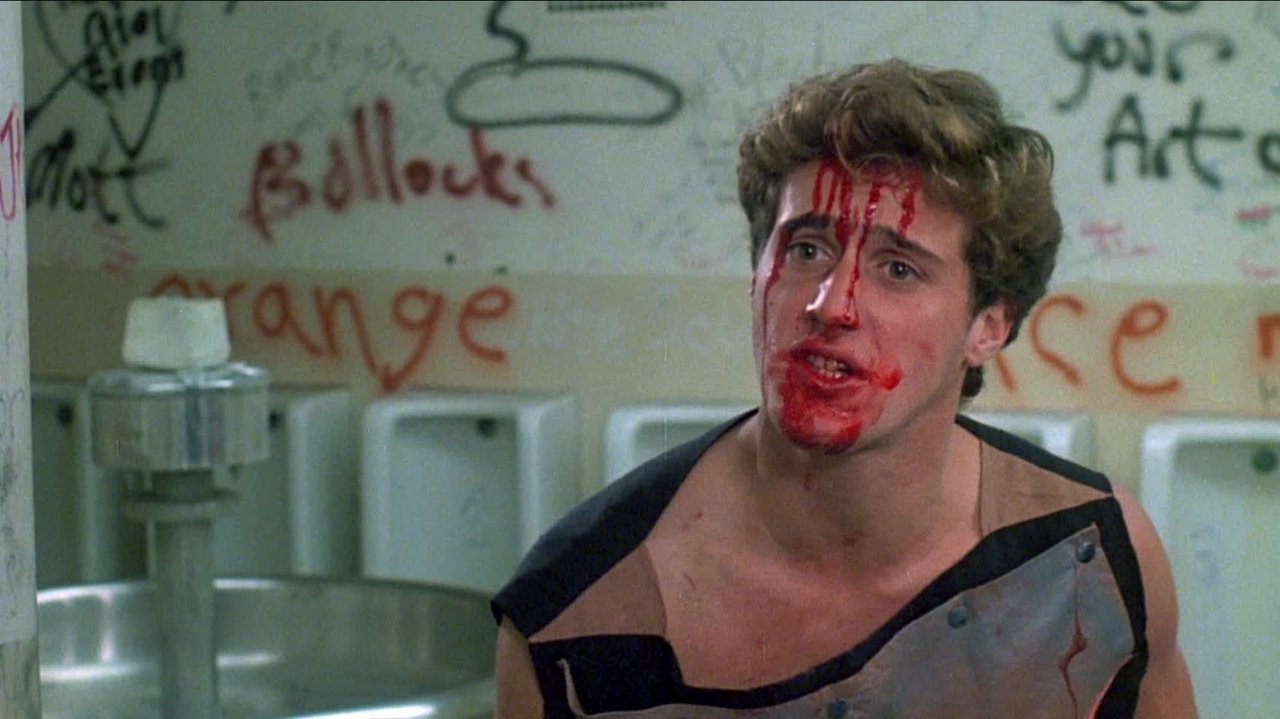
The film courted controversy upon release, facing bans or heavy cuts in several countries due to its violence. And let's be clear, the final act is brutal. Spoiler Alert! When Norris is finally pushed too far after a horrific attack on his pregnant wife (Merrie Lynn Ross), the film shifts into full-blown vigilante territory. The climactic confrontation isn't just a fight; it's a desperate, bloody purge within the school walls, culminating in a sequence that likely had audiences gasping back in '82. It’s raw, messy, and deliberately uncomfortable, refusing easy catharsis. It asks a terrifying question: what happens when the guardians become the monsters to fight monstrosity?
While the punk aesthetic might look dated now – the ripped shirts, the aggressive hair – it perfectly captured the alienation and nihilism the film explores. It wasn't just fashion; it was armor against a world the characters felt had abandoned them. The practical effects, particularly in the final showdown, have that tangible, gruesome quality that CGI often lacks. You feel the impact, the gristle, in a way that resonates with that specific VHS-era visceral thrill. Made on a relatively lean budget (around $4.7 million USD), Lester wrung every drop of tension and grit from his resources, creating something far more impactful than its exploitation roots might suggest.
The Verdict
Class of 1984 is a raw nerve ending of a movie. It’s confrontational, often unpleasant, and undeniably powerful. It taps into primal fears about societal breakdown and the loss of control, channeling them through a grimy, punk-infused lens. While its politics are debatable and its methods pure exploitation, its visceral impact is hard to deny. Perry King provides the necessary anchor of deteriorating decency, but it’s Timothy Van Patten’s unforgettable turn as Stegman that elevates the film to cult status. He’s one of the great unsung villains of 80s cinema. The film spawned a couple of sci-fi sequels, Class of 1999 (1990, also directed by Lester) and its follow-up, but neither captured the same raw, grounded terror of the original.
Rating: 8/10
This score reflects the film's undeniable effectiveness in creating tension and atmosphere, its iconic villain performance, and its status as a benchmark in gritty 80s exploitation cinema. It's provocative and memorable, even if its bleakness and violence make it a rough watch. It perfectly captures a specific cultural anxiety and delivers its payload with unapologetic force.
For those nights when you crave something genuinely unsettling from the shelves of VHS Heaven, Class of 1984 remains a potent, unforgettable lesson in fear. It’s a time capsule of early 80s anxieties, wrapped in leather and leaking dread.